

Delaware may be one of the smallest states, but its culinary character is remarkably distinct. Sitting between the Mid-Atlantic and the American South, it blends beach-town seafood shacks, rural farm traditions and old industrial cities into a compact but vivid food scene. From blue crabs pulled out of the bays to porky scrapple on a diner griddle, knowing what to eat in Delaware means tasting both its waters and its history.
Understanding Delaware’s Coastal Food Culture
Delaware’s food identity is shaped first by water. The state fronts the Atlantic Ocean and straddles the Delaware Bay and a network of inland bays and tidal creeks. These estuaries support blue crabs, oysters, clams and finfish, and commercial fishing remains an important industry, with shellfish providing a large share of the catch and value in recent years. Local waters are not just scenery for beachgoers; they are the starting point for many of the state’s signature dishes and everyday meals.
Shellfish aquaculture has grown alongside traditional wild harvests. Oysters have been taken from Delaware Bay for centuries, and in recent years growers have expanded leases in the inland bays, supplying restaurants with farmed oysters that can reach market size relatively quickly under the right conditions. This mix of wild and farmed shellfish means raw bars and seaside eateries can emphasize “local” not as a marketing phrase but as an accurate description of what is on the plate.
For travelers, the result is a landscape of crab houses, clam shacks and fish-centric eateries spread from Wilmington down to Fenwick Island. Small-town diners, farm markets and church suppers fill out the picture with home-style cooking, from chicken and dumplings to peach desserts. Eating your way through Delaware is less about refined tasting menus and more about simple preparations that foreground freshness, place and tradition.
Seasonality is central. Crab feasts peak in warm months, oyster offerings expand as waters cool, and peaches, sweet corn and tomatoes anchor late-summer menus inland. Planning what to eat in Delaware is easiest when you think in terms of when and where: steamed crabs in a bayside town in July, oysters in a coastal restaurant in October, peach pie from a farm stand in August and scrapple breakfast any day of the year.
Blue Crabs and Classic Crab Feasts
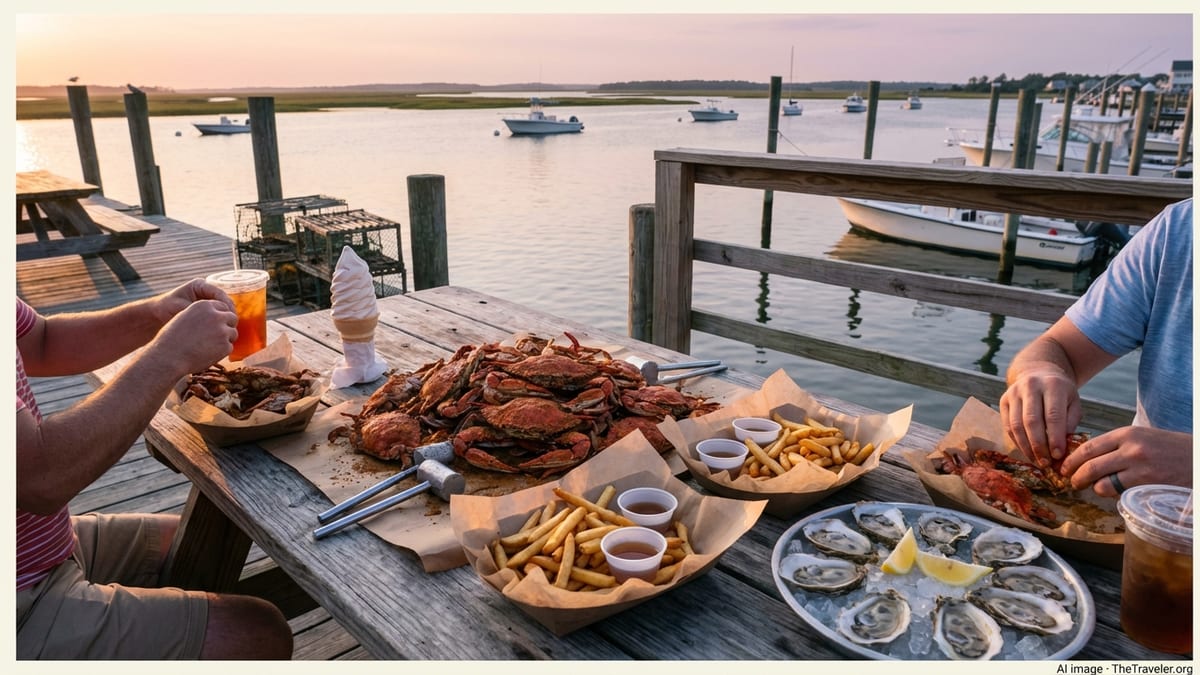
Blue crabs are the unofficial mascot of coastal Delaware. They thrive in the state’s estuaries, especially the Delaware Bay and the inland bays, where warm, shallow waters and sea grass beds offer ideal habitat. Crab season usually runs from late spring into fall, with peak activity in the warmer months when water temperatures climb. At this time of year, crab houses and casual seafood restaurants stack picnic tables high with newspaper, mallets and steaming crabs coated in seasoning.
The classic experience is a crab feast. Whole blue crabs are steamed with a generous layer of Chesapeake-style spice mix, often heavy on paprika, salt and celery seed. Diners crack the shells themselves, picking out the sweet meat from claws and body cavities. It is messy, communal and slow by design, best enjoyed with friends or family, cold beer or iced tea and plenty of time. Many long-established crab houses along the Route 1 corridor and in small bay towns devote much of their summer service to this ritual.
Soft-shell blue crabs are another seasonal highlight. These are crabs that have recently molted and not yet hardened their new shells. In Delaware they appear on menus in late spring and early summer, typically dredged in seasoned flour and pan-fried or deep-fried until crisp. Served on a sandwich roll with lettuce and tartar sauce, or plated with lemon and simple sides, soft shells capture the texture and flavor of the crab in a more delicate form than the hard-shell feast.
Travelers who prefer less hands-on eating can still enjoy crab in more approachable preparations. Crab cakes, often made with lump or jumbo lump meat and minimal filler, appear on menus from beach bars to upscale coastal restaurants. Creamy crab soups and chowders are common in cooler months, while crab-topped salads and crab dip with pretzels or bread are popular at beach-town happy hours. Wherever you encounter it, ask if the crab is local or regional to get a sense of how directly your meal connects back to Delaware waters.
Oysters, Clams and the Taste of the Bays
Oysters tell another side of Delaware’s seafood story. Delaware Bay oysters have long been valued for their balance of brininess and sweetness, and they continue to be harvested both from wild beds and from growing operations that raise seed oysters to market size in controlled gear. In the inland bays, aquaculture leases allow farmers to cultivate oysters in floating cages or bottom gear, which can produce plump, clean shells that are particularly prized by raw bars and upscale restaurants.
Ordering a plate of local oysters on the half shell is one of the best ways to taste Delaware’s waters directly. Depending on where they are grown, you might encounter subtle differences in salinity and texture. Some growers in the inland bays focus on smaller, deeply cupped oysters with a bright brine and crisp finish, while Delaware Bay oysters often show slightly stronger salinity and meatier bellies. Restaurants will often note the source on the menu, so look for mentions of the bay or specific farms when choosing.
Clams are equally integral, especially in the inland bays and tidal flats where they can be harvested in both intertidal and subtidal zones. Travelers might see littlenecks steamed in a white wine and garlic broth, chopped into chowder or baked casino-style with breadcrumbs and bacon. Casual crab houses frequently offer steamed clams by the dozen, cooked simply and served with drawn butter, alongside piles of blue crabs. In places with bay access, some diners even combine a day of recreational clamming with a cookout or campsite boil.
If you are visiting off season or prefer cooked preparations, look for roasted or fried oysters, clam strips and seafood platters that showcase multiple local species. In cooler months, robust seafood stews and chowders become more prominent, often featuring clams, fish and potatoes in either a creamy or tomato-based broth. While recipes vary by kitchen, the through line is straightforward: fresh shellfish, minimal embellishment and a focus on the natural flavor of the bays.
Boardwalk Eats: Fries, Ice Cream and Beach-Town Favorites
Delaware’s Atlantic coastline is lined with low-rise beach towns that orbit around their boardwalks. In summer, the food here is as much a part of the ritual as the surf and sand. The single most iconic bite is a bucket of boardwalk fries. Fresh-cut potatoes are fried hot, salted generously and served in paper tubs. Tradition holds that you splash them with malt vinegar; serious fans insist ketchup is unnecessary. Eating them from a warm, greasy bucket as the ocean wind blows is a rite of passage for visitors to Rehoboth and other resort towns.
Soft-serve ice cream and frozen custard stands are another pillar of Delaware’s boardwalk food culture. Swirled cones in vanilla, chocolate and twist flavors, along with orange and other seasonal varieties, draw long lines on hot evenings. Many families build annual rituals around specific stands and flavors, turning a simple ice cream cone into a multigenerational tradition. Milkshakes, sundaes and hand-dipped ice cream round out the sweet offerings, with plenty of toppings that nod to shore-town nostalgia.
Beyond fries and ice cream, boardwalks and nearby streets are dense with casual staples. Pizza by the slice, funnel cakes, caramel corn, saltwater taffy and fudge fill the gaps between meals. At the same time, the coastal dining scene has matured, and towns such as Rehoboth now boast raw bars, gastropubs and chef-driven restaurants that sit just a few blocks from arcades and t-shirt shops. Visitors can spend an afternoon grazing on snack foods and then sit down in the evening to a composed seafood plate or locally sourced tasting menu.
Part of the charm is the contrast between high and low. It is entirely plausible to start a day with a crab-topped omelet at a neighborhood cafe, wander the boardwalk with fries and soft-serve, and finish with oysters on the half shell and a carefully sourced fish entree. Together, these layers of food capture both the playful and the sophisticated sides of Delaware’s beach culture.
Scrapple, Chicken and Slippery Dumplings and Other Local Comforts
While the beaches draw much of the attention, Delaware’s inland and northern regions have their own culinary vocabulary rooted in farm country and working-class cities. Scrapple is perhaps the most talked-about example. A descendant of Pennsylvania Dutch cooking, scrapple is a loaf made from pork trimmings and broth thickened with cornmeal and flour, seasoned and set, then sliced and pan-fried. On the plate it looks like a crisp-edged rectangle, usually served at breakfast with eggs and toast, or tucked into a sandwich with ketchup or maple syrup on the side.
In Delaware, scrapple is an everyday diner staple and a point of regional pride. Visitors encountering it for the first time may find the idea of “everything but the squeal” intimidating, but the flavor is usually mild and savory, closer to a seasoned breakfast sausage than to an offal-heavy dish. Many locals grow up eating it, and debate the virtues of various brands and cooking styles, from thin and shatteringly crisp to thicker slices with a soft center. If you are curious about local foodways, ordering scrapple at least once is almost obligatory.
Chicken and slippery dumplings is another classic comfort food associated with Delaware and neighboring parts of the Delmarva Peninsula. Unlike fluffy drop-style dumplings, “slippery” dumplings are rolled and cut into flat, noodle-like strips that cook directly in a rich chicken broth. The resulting dish is closer to a hearty stew or thick noodle soup, with tender chicken pieces and glossy dumplings that slide off the spoon. It frequently appears at diners, church suppers and family tables, especially in cooler weather.
Beyond these two, travelers might encounter other local or regional specialties that speak to Delaware’s rural and coastal heritage. Muskrat dinners, shad roe in season, fried oysters on sandwiches and corn-rich side dishes reflect the state’s long history of hunting, fishing and farming. Not every visitor will seek out every traditional dish, but understanding that these foods exist helps paint a fuller picture of how Delawareans have eaten over generations.
Seasonal Produce and Sweet Delaware Desserts
Delaware’s mild climate supports a productive agricultural sector, and roadside markets and farm stands are common in summer and early fall. Sweet corn, tomatoes and melons travel only a short distance from field to table, appearing on restaurant menus and in simple home-style preparations. For many locals, the taste of a just-picked ear of corn or a perfectly ripe tomato sandwich is as evocative of Delaware summer as any seafood dish.
Peaches, in particular, have deep roots in the state. Delaware once had a large peach industry, and although it is smaller today, peaches remain a cherished seasonal crop. In late summer, farm stands and bakeries highlight peach pies, cobblers and crisps. Slices of warm peach pie served with vanilla ice cream, jars of peach jam and simple bowls of sliced peaches and cream all signal a short but treasured harvest window. Travelers visiting in August or early September should make a point of seeking out at least one peach dessert.
Other sweets show how Delaware’s food culture overlaps with neighboring states while retaining distinct local flair. Rice pudding and bread pudding are common at diners and family restaurants. Shore-town bakeries might sell gooey butter cakes and rich coffee cakes that pair well with morning beach walks. In communities with strong Pennsylvania Dutch influence, shoofly pie and molasses-based sweets can appear, while Italian-American bakeries in some towns offer cannoli and layered cakes that reflect different immigrant histories.
For families combining food with sightseeing, farm markets provide a relaxed way to sample local produce and baked goods. Many offer ice cream made with milk from nearby dairies, fresh-cut flowers and simple picnic fare. Pairing a visit to a historic site or state park with a stop at a market or orchard gives a broader sense of Delaware as a place where agriculture and coastal tourism intersect.
How and Where to Eat Like a Local
Eating well in Delaware is less about chasing a single famous restaurant and more about choosing the right kinds of places in each region. Along the beaches, visitors will find everything from decades-old crab houses and fry shacks to raw bars and chef-led bistros emphasizing local seafood. Look for menus that name the bay or region for their oysters, mention blue crabs specifically, or build dishes around seasonal catches such as flounder, striped bass or tilefish when in season.
Inland and in northern cities like Wilmington and Newark, neighborhood diners and casual family restaurants are the best places to discover everyday local foods. These are where scrapple appears as a default breakfast meat, where chicken and slippery dumplings might show up as a special and where peach cobbler can slide into the dessert case during late summer. Asking staff what they would consider a “Delaware” dish can yield suggestions that do not always appear in guidebooks.
Timing matters. Crab-centric meals are easiest to find in late spring, summer and early fall when blue crabs are abundant and active. Oysters tend to be more prominent in cooler months, though aquaculture has made year-round availability more practical. Peach desserts peak in August and early September. If you visit in winter, expect a shift toward chowders, stews and hearty braised dishes that rely more on storage crops and preserved ingredients than on fresh produce.
Finally, do not overlook community events. Church dinners, fire hall suppers and small-town festivals often spotlight regional specialties like chicken and dumplings, fried oysters, barbecued chicken, scrapple breakfasts and homemade pies. Many of these events are advertised locally rather than widely promoted, so keeping an eye out for signs or asking at your lodging can open doors to some of the most authentic food experiences in the state.
The Takeaway
Delaware’s food culture is tightly woven into its geography. Blue crabs, oysters and clams embody the state’s tidal bays and estuaries, while scrapple, chicken and slippery dumplings and peach desserts speak to its farms, small towns and overlapping cultural influences. Eating in Delaware is not about ticking off a list of high-profile restaurants so much as immersing yourself in everyday foods that locals love.
If you spend time along the coast, make room in your plans for at least one crab feast, a plate of local oysters or clams, and a stroll down the boardwalk with a bucket of fries and a soft-serve cone. Inland or upstate, seek out diners that serve scrapple, church suppers with chicken and dumplings and markets where peach pie appears when orchards are full. Together, these experiences deliver a vivid, flavorful portrait of a small state with a surprisingly big culinary story.
Whether your trip focuses on beach vacations, historic towns or quick stopovers along the corridor between larger cities, Delaware rewards travelers who are curious and a bit adventurous at the table. Taste the seafood, embrace the comfort foods and let the state’s humble but distinctive dishes tell you where you are.
FAQ
Q1. What seafood is Delaware best known for?
Delaware is especially known for blue crabs, along with oysters and clams from its bays and inland waterways. Crab feasts and raw oysters are signature experiences.
Q2. When is the best time of year to eat blue crabs in Delaware?
Blue crabs are most abundant from late spring through early fall, with peak availability in the warmest months when water temperatures are highest.
Q3. What is scrapple, and should I try it?
Scrapple is a seasoned pork and cornmeal loaf sliced and pan-fried, usually served at breakfast. If you are curious about local food traditions, it is worth trying at least once.
Q4. Where can I find authentic chicken and slippery dumplings?
You are most likely to find chicken and slippery dumplings at Delaware diners, small-town restaurants and church or community suppers, especially in cooler months.
Q5. Are Delaware oysters safe to eat raw?
Restaurants that serve raw oysters must follow state and federal safety regulations, including sourcing from approved waters. Choose reputable establishments and follow any seasonal advisories.
Q6. What are the must-try foods on the Delaware beaches?
On the beaches, do not miss boardwalk fries with vinegar, soft-serve or frozen custard, steamed blue crabs, crab cakes and local oysters or clams.
Q7. Does Delaware have a signature dessert?
Peach pies and cobblers are strongly associated with Delaware, particularly in late summer when local peaches are in season and featured at markets and bakeries.
Q8. Can I catch my own seafood in Delaware?
Yes, recreational crabbing, clamming and fishing are popular, but you must follow licensing rules, size limits and seasonal regulations. Check current guidelines before you go.
Q9. Is Delaware food more Mid-Atlantic or Southern?
Delaware’s cuisine blends both. Seafood, scrapple and boardwalk fare reflect Mid-Atlantic traditions, while dishes like chicken and dumplings show Southern and country influences.
Q10. How can I eat locally and sustainably in Delaware?
Look for menus highlighting Delaware Bay or inland bay seafood, visit farm stands for seasonal produce and support restaurants that name local farms or fisheries as suppliers.