

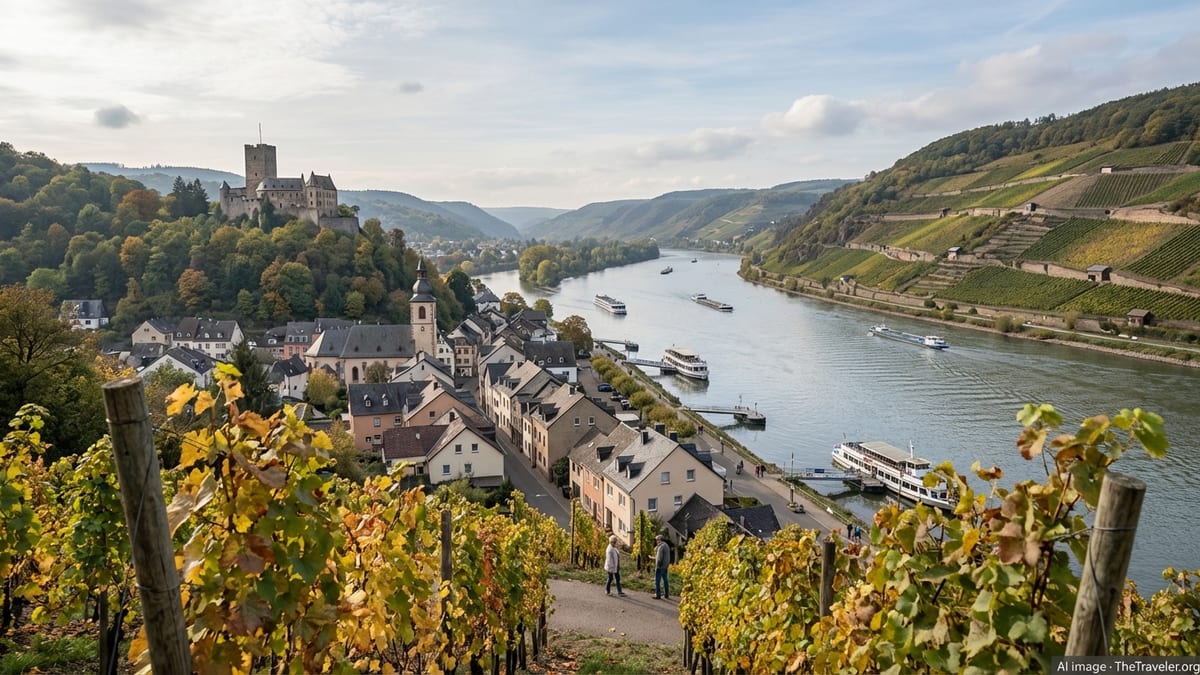
Lahnstein is one of those Rhine towns that rewards visitors who time their trip well. At the confluence of the Rhine and Lahn rivers, framed by steep vineyard slopes and castle crowns, its views change dramatically with the seasons.
Mists curl off the water in early spring, vines glow green in May, river cruise ships line the banks in summer, and autumn paints the valley in gold and copper. Timing alone can influence whether Lahnstein is worth visiting for your trip.
Understanding Lahnstein’s Climate and River Rhythm
Lahnstein sits in the Middle Rhine Valley in western Germany, with a temperate oceanic climate that avoids extremes. Winters are cool and damp but not brutally cold, while summers are comfortably warm rather than scorching. Across the year, average temperatures range from around 1 to 4 degrees Celsius in January to the upper teens and low 20s Celsius in July and August. This mild pattern means the town never fully “shuts down” for weather, yet certain months clearly offer better conditions for outdoor exploring and river scenery.
Rain is spread fairly evenly throughout the year, with a slight uptick in late spring and summer. On average, Lahnstein records roughly eight to ten days of rainfall a month, with May through August seeing a bit more frequent showers. Even then, rain usually comes in passing fronts rather than days of nonstop drizzle. Many visitors find these short showers a small trade-off for the lush greenery that gives the Rhine valley its character.
From a river perspective, water levels and flow can shift seasonally. These seasonal differences can also affect how Lahnstein vs Koblenz compares. Late winter and early spring may bring higher water on the Rhine and Lahn, especially after snowmelt and periods of heavy rain upstream. Summer often sees calmer conditions, favorable for cruising and recreational boating. By autumn, water levels tend to stabilize again, creating reflective river surfaces that mirror vineyards and castles on clear days.
Daylight is a crucial factor for enjoying the views. In midwinter, Lahnstein has only about eight hours of daylight. By June and early July, that expands to more than sixteen hours, with long evenings where you can still enjoy river views from promenades or hilltop lookouts well after dinner. Those extended daylight hours are one of the key reasons many travelers target late spring to early autumn for first-time visits.
Spring (March to May): Soft Light and Emerging Greens
Spring is when Lahnstein wakes from its winter quiet and the river valley begins to show color again. March can still feel chilly, with average highs around 9 to 10 degrees Celsius and nights close to freezing. However, you begin to see longer days, more sunshine, and clear views when high pressure systems settle over western Germany. Morning mist hanging over the Rhine and Lahn can make for atmospheric, almost ethereal photographs from elevated viewpoints.
By April, average highs climb into the mid-teens Celsius, and the hillsides start to green. Trees leaf out, early wildflowers appear along river paths, and vineyards show the first hints of new growth. It is often an ideal month for visitors who like to hike or walk without summer heat or crowds. Rainfall remains moderate, and with eight or so rainy days in the month, there is still a good chance of multiple clear, crisp days during a week-long stay.
May is particularly attractive for both weather and river views. Average daytime temperatures around 17 to 18 degrees Celsius feel mild and comfortable for being outdoors all day. The vineyards and riverbanks are fully green, but the dense summer foliage has not yet obscured some of the long-range views from castles and hill walks. This is also when river cruise traffic begins to pick up, adding movement and interest to the scenery without the full bustle of high season.
For many travelers, late April to late May represents one of the best windows to visit Lahnstein. You can expect agreeable temperatures for exploring historic Oberlahnstein and Niederlahnstein, climbing up to Lahneck Castle, or taking excursions along the Rhine. The light is often soft and flattering, and there is a good balance between tranquility and liveliness along the riverfront.
Summer (June to August): Peak River Views and Long Evenings
Summer is high season on the Rhine for good reason. In Lahnstein, June through August typically brings daytime highs from around 21 to 24 degrees Celsius. Nights are mild rather than hot, and relative humidity tends to be lower than in winter, which makes being outside for long stretches pleasant. It is the most reliable time for warm weather, and although showers are more frequent, they rarely disrupt entire days of sightseeing.
June offers an especially appealing combination of long days, full greenery, and moderate warmth. With average highs just over 20 degrees Celsius and up to ten hours of sunshine on many days, the town’s river promenades, outdoor terraces, and cycle paths are at their best. From hillside viewpoints, you see a lush green corridor of the Rhine and Lahn, dotted with boats, barges, and day-cruise vessels winding between bends and cliffs.
July and August are slightly warmer, with average highs approaching the mid-20s Celsius in some datasets, and they are often cited as the warmest months of the year. This is ideal if you want to spend time on the water, whether on scheduled Rhine cruises, smaller excursion boats, or ferries that shuttle between riverbanks. The clear, bright conditions make castle silhouettes stand out against blue skies, and reflections on the water are sharp and photogenic during calm spells.
The trade-off in summer is that Lahnstein and neighboring Rhine towns are busier. River cruise ships are more frequent, and popular viewpoints and castles can see steady streams of visitors, especially on weekends. If you plan ahead, though, you can use the long daylight to your advantage, visiting hilltop sites early or late in the day when the light is beautiful and crowds thinner. For travelers who prioritize clear river views, active pursuits, and lively riverside atmospheres, June and early July are often the sweet spot.
Autumn (September to November): Golden Vines and Atmospheric Rivers
Autumn can be a standout season for travelers focused on scenery rather than summer-style warmth. September offers a gentle transition from high season to shoulder season, with average highs in the high teens Celsius and cooler, comfortable nights. The weather often remains stable enough for clear views, and the river traffic is still active but somewhat reduced from August peaks.
October is when the Middle Rhine Valley truly transforms. Average daytime temperatures dip to the low to mid-teens Celsius, but on sunny days it can feel surprisingly mild, especially on sheltered slopes. Vineyards turn shades of yellow, orange, and red, and wooded hillsides follow suit, framing the Rhine and Lahn in autumn colors. On clear mornings and evenings, the combination of cool air and still water creates mirror-like reflections of these colors, especially when viewed from bridges, riverside promenades, or modest elevations above the town.
By November, temperatures fall toward single digits Celsius, and daylight shortens considerably. While the valley can still be beautiful in late autumn, visitors should be prepared for more frequent grey skies and a greater likelihood of drizzle or low cloud. That said, those conditions sometimes lend a moody, romantic quality to the river views, especially around historic sites and castle ruins. For photography focusing on atmosphere rather than bright color, late autumn can be unexpectedly rewarding.
For most travelers seeking a balance of agreeable temperatures, manageable crowds, and standout river vistas, mid-September to mid-October often rivals late spring as the best time to visit Lahnstein. The vineyards and forests deliver strong seasonal character, and the rivers run calmly enough to offer striking reflections and clear sightlines along the valley.
Winter (December to February): Quiet Beauty and Misty Valleys
Winter in Lahnstein is cool, damp, and relatively quiet, but it is not without appeal. December and January averages see daytime highs around 3 to 5 degrees Celsius and nights close to or slightly below freezing. Snow is possible, though not typically deep or persistent. More often, you encounter cold rain, low cloud, and frequent overcast skies, with short days that can feel even shorter in the narrow river valley.
These conditions might sound discouraging, yet they create a distinctive winter mood along the Rhine and Lahn. On calm days when mist lingers over the water and up the slopes, the castles and church spires around Lahnstein emerge like silhouettes, giving the landscape a storybook quality. The lack of foliage on trees also opens up some long-range views that are partially hidden in summer, particularly from higher vantage points.
From a practical perspective, travel in winter demands warmer clothing, a flexible mindset, and an interest in indoor attractions. You can use Lahnstein as a quieter base to explore historic sites in the region, then choose clear windows of weather for riverside walks or viewpoint excursions. Accommodation prices are often lower outside the holiday periods, and the town’s everyday life takes center stage instead of seasonal tourism.
However, for first-time visitors whose main goal is classic river views under blue or lightly clouded skies, winter is rarely the top recommendation. It is better suited to returning travelers, those focused on quiet and low-key exploration, or photographers seeking moody, low-light scenes rather than sunlit river panoramas.
Best Months Specifically for River Views
When the primary goal is to enjoy and photograph the Rhine and Lahn from Lahnstein, a narrower set of months stands out. Late April through June and mid-September through mid-October generally provide the clearest combination of good visibility, comfortable temperatures, and interesting scenery. In these windows, foliage is either emerging fresh and green or glowing with autumn color, yet humidity levels and heat are moderate enough to keep haze relatively low on many days.
In late spring, the key advantage for river views is clarity. The air tends to be cooler and drier than in midsummer, which can help keep the distant contours of the valley sharply defined. The rivers usually run at moderate levels, and the green of new leaves and vines contrasts well with the stone walls, cliffs, and townscapes. For photographers and landscape enthusiasts, this can be one of the most rewarding times to capture long perspectives along the Rhine from hilltop paths or castle terraces.
In early to mid-autumn, color becomes the defining feature. Even when the air is a bit more humid, the warm tones of the vineyards and forests give the valley dimension and depth. The sun sits lower in the sky compared with June, which means you can enjoy gentle side light on slopes and facades for more of the day, not just early morning and late evening. Reflections in the water can be particularly striking if you catch calm days with only light breezes.
Summer still has a strong case for river views, especially for travelers who want to be out on the water itself. July and August offer abundant light and plenty of options for cruises and boat excursions. However, heat waves and humidity can occasionally produce a slight haze, softening distant outlines. If you are especially sensitive to crowds and prefer more contemplative river panoramas, targeting late May, early June, or late September is often wiser than the peak summer holidays.
Planning Around Crowds, Events, and Practicalities
Beyond climate and visibility, the best time to visit Lahnstein also depends on crowds, opening hours, and regional events. The wider Middle Rhine Valley attracts river cruise ships and bus tours primarily from May through October, with peak activity typically from late June through early September. Lahnstein itself is not as overwhelmed as some neighboring hot spots, but you will still notice fuller riverbanks, busier boat landings, and higher accommodation demand in that period.
If you prefer a more relaxed pace but still want reliable weather, consider the shoulder periods of late April to mid-June and mid-September to mid-October. During these weeks, most seasonal services are running, including boat lines and castle visiting hours in the broader region, yet the pressure on restaurants and viewpoints is lower. Booking accommodation ahead remains wise, but you may find more choice and slightly better value than in the core summer months.
Events and festivals along the Rhine can add another dimension to your trip. Fireworks evenings, wine festivals, and local celebrations often take place between early summer and autumn, sometimes including illuminated river cruises or special evening openings. Planning your visit to coincide with such events can transform the river experience, but it also means greater demand for tickets and rooms, so early planning is essential.
For travelers prioritizing quiet, winter and early spring are the calmest periods, apart from Christmas and New Year holidays when German towns can be busier. Services such as some seasonal boat routes may be limited or paused altogether, and shorter daylight hours constrain how much scenery you can enjoy in a single day. On the plus side, this is when you are most likely to have promenades, viewpoints, and town streets largely to yourself.
The Takeaway
There is no single “perfect” month to visit Lahnstein, but the town’s climate and river setting strongly favor late spring and early autumn for most travelers. If you picture clear skies, comfortable walking temperatures, and vivid greens or golds framing the Rhine and Lahn, aim for late April through June or mid-September through mid-October. These windows deliver some of the finest conditions for river views, whether from the water itself, from castle terraces, or from the town’s own promenades.
Summer brings the longest days, liveliest river traffic, and the warmest weather, making it ideal for those who enjoy being outdoors from morning until late evening and do not mind sharing the scenery. Winter and early spring offer quieter, more introspective experiences, with moody river vistas and a more local flavor, though at the cost of colder temperatures and shorter days.
Ultimately, the best time to visit Lahnstein depends on the balance you seek between weather, light, foliage, and atmosphere. Decide whether bright summer energy, fresh spring clarity, golden autumn tones, or misty winter calm matches your travel style. Then plan a trip long enough to wait out the occasional shower so that when the sky opens and light hits the water, you are exactly where you want to be, watching the rivers do what they have always done: flow steadily through one of Germany’s most storied landscapes.
FAQ
Q1: What is the overall best month to visit Lahnstein for weather and river views?
Many travelers find May or late September to be ideal, with mild temperatures, relatively clear air, lush or colorful landscapes, and fewer crowds than in peak summer.
Q2: Is summer too hot in Lahnstein?
Summer in Lahnstein is usually pleasantly warm rather than oppressive, with average highs in the low to mid-20s Celsius, although brief heat waves are possible and should be planned for with flexible schedules and shade breaks.
Q3: Which months offer the clearest views along the Rhine and Lahn?
Late April through June and mid-September through mid-October often provide the best visibility, with moderate temperatures and generally less haze than in the warmest part of summer.
Q4: When are the vineyards around Lahnstein at their most colorful?
The vineyards typically peak in color from late September into October, when leaves turn shades of yellow, gold, and red and create dramatic contrasts with the rivers and castle-topped hills.
Q5: Are river cruises available in Lahnstein year-round?
Most regular river cruise services on the Rhine operate mainly from spring through autumn, with the fullest schedules in summer, while winter operations are more limited and can vary by company and route.
Q6: Is winter a good time to visit if I mainly want scenery?
Winter can offer evocative, misty views and occasional snow, but short daylight, more overcast days, and colder temperatures mean it is better for travelers who enjoy atmosphere and quiet rather than consistently bright panoramic vistas.
Q7: How much rain should I expect in spring and autumn?
In both spring and autumn you can expect around eight to ten days of measurable rain per month, usually in short spells, so packing waterproof layers and planning some indoor options is wise.
Q8: When are crowds and prices highest in Lahnstein?
Crowds and accommodation prices tend to peak from late June through August, especially when school holidays, river festivals, and cruise schedules overlap across the Middle Rhine Valley.
Q9: If I want to hike and photograph, what months are best?
Late April to early June and mid-September to mid-October are excellent for hiking and photography, with comfortable walking temperatures, good light, and strong seasonal character in the landscape.
Q10: How far in advance should I book for a peak-season visit?
For trips in late June, July, or August, it is prudent to book accommodation and any special cruises or event tickets several months ahead, particularly if you want river-view rooms or plan to visit during major regional festivals.