

Winnipeg surprised me in ways I was not fully prepared for, both good and bad. I went in with a vague sense of “prairie city with brutal winters and friendly people” and came home with a much more specific picture: a downtown that can feel rough around the edges, an artsy riverfront district that almost won me over, and a mental list titled “great location, but next time I’ll do this differently.” This is my honest account of where I stayed, how it actually felt on the ground, and what I would choose if I were planning the same trip again.
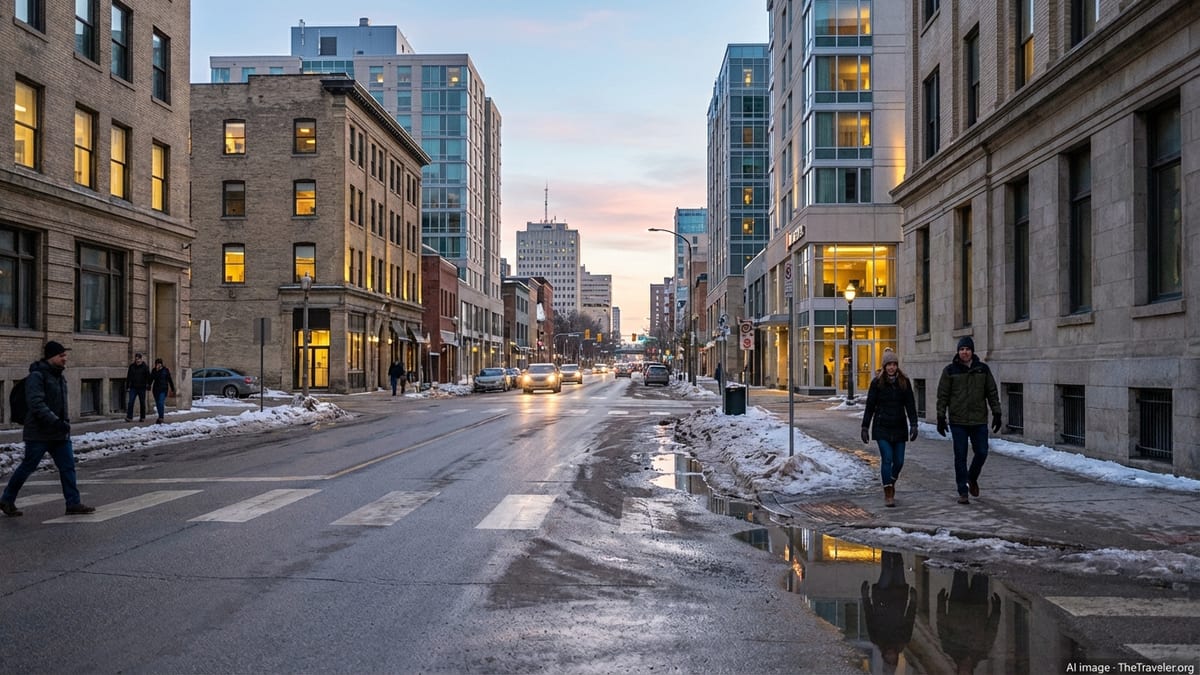
Why I Chose Downtown Winnipeg In The First Place
I booked myself into a downtown Winnipeg hotel because, on paper, it checked all the classic boxes: walking distance to the arena, connected to the skywalk system, and close to the Forks and the Exchange District. I also knew Winnipeg’s winters can be punishing, and even though I visited outside the coldest months, the idea of moving between buildings without stepping outside had a certain appeal. Between that and the relatively reasonable room rates compared to bigger Canadian cities, downtown felt like the logical base.
Another factor was simple convenience. I was flying in and out and did not want to deal with renting a car. Winnipeg Transit does connect the airport with downtown, and so do taxis and rideshares, so planting myself in the core meant I could land, grab a car, and be at the hotel in under 20 minutes. That easy airport transfer plus walkability to major venues tilted me firmly toward the central business district.
Online, the hotel I chose looked like the safe, mid‑range pick: a large, established property with a recognizable brand, a pool and fitness center, and plenty of reviews describing it as “fine” or “good for events.” In hindsight, “fine” was exactly what I got, which is not quite the same as “I’d stay here again in a heartbeat.” At the time of booking, though, the promise of direct access to the downtown skywalks and short walks to the Canada Life Centre and RBC Convention Centre carried a lot of weight.
I had also read mixed but generally reassuring comments about safety downtown if you stayed south of Portage Avenue and stuck to the more populated routes toward the Forks and St. Boniface. That aligned with my plan, and I assumed I could thread the needle between convenience and comfort. The truth on the ground turned out to be more nuanced.
The Reality Of Staying In A Big Downtown Hotel
Checking in, my first impression was that familiar conference‑hotel feeling: cavernous lobby, business travelers in name badges, a sports team drifting through, and a bank of elevators that always seemed to be just busy enough to delay you by a minute or two. My room itself was clean and about what I expected size‑wise, with the kind of fairly anonymous decor that could have been in almost any Canadian city. Nothing was outright wrong, which almost made the small disappointments more noticeable.
The building was older than the photos suggested, at least in the areas guests actually use. Hallway carpets had that slightly tired look, with a few stains that housekeeping can only do so much about. The fixtures in the bathroom worked but felt dated, and the ventilation struggled when I took a hot shower, leaving the mirror fogged long after I was finished. These are the kinds of things I do not mind at a budget motel, but at central downtown prices they register.
Noise was another trade‑off. Being in the core meant I heard sirens multiple times a night and the occasional late‑night shouting from the street. On one evening a group in a nearby room decided the hallway was their social space for about half an hour, and soundproofing was not robust enough to keep it out. None of this ruined my stay, but I never quite had that deeply rested feeling you hope for when you walk back into your room after a full day of exploring.
On the plus side, staff were consistently polite and seemed genuinely used to handling a mix of convention attendees, sports fans, and tourists. When I asked about walking routes to the Forks, they did not sugarcoat things, suggesting specific streets to use and times of day that felt more comfortable. That kind of candor matters in a city whose downtown reputation can be a little intimidating.
Downtown Convenience Versus Comfort And Safety
During the day, downtown Winnipeg worked more or less how I had hoped. I could walk to coffee, grab a quick bite, and reach the arena and convention centre with no drama. The presence of the Winnipeg Walkway system, with skywalks linking many buildings, made it easy to move around when the wind picked up or the weather turned. I understood immediately why locals value those indoor connections when winter hits hard.
Evenings felt different. Once the office crowd thinned out, some blocks went quiet very quickly while others drew a more chaotic mix of people. I never felt outright threatened, but I did find myself staying alert in a way I usually do not in smaller city centers. I stuck to well‑lit routes, avoided wearing headphones when walking alone, and planned my path rather than wandering at random. It was not about panic, just practical street sense.
The contrast was especially noticeable when I walked south toward the river and Broadway, and then further toward Osborne Village. Those areas had more of a neighborhood feel and, honestly, a more relaxed energy. By comparison, some north‑of‑Portage stretches felt stark and a bit hollowed out after business hours, creating that slightly uneasy mix of empty sidewalks and sudden clusters of activity around bus stops or resource centers.
If you are used to major urban cores, none of this will shock you. For me, it raised a simple question: did the convenience of staying at a big downtown hotel justify those evening trade‑offs, especially when my trip was not centered around all‑day conference sessions? By the end of my stay, my answer was “sometimes, but probably not for the way I travel.”
What Worked: Skywalks, River Walks, And Transit Access
To be fair, some aspects of staying downtown in Winnipeg worked extremely well. The skywalk connections were more than a novelty; they were practical. I appreciated being able to cut through buildings to avoid wind and rain and to move between the hotel, the convention centre, and shopping areas without constantly putting on and taking off layers. In a city built around long winters, that network is a real asset for visitors.
Proximity to the Forks was another highlight. From my hotel, I could walk there in a manageable time, crossing through segments of downtown that felt busier and more comfortable than the quieter backstreets. The Forks itself, with its riverfront paths, food hall, and open spaces, was where Winnipeg started to click for me. It was the one area where I consistently thought, “This is exactly where I want to be based,” even though there are only a limited number of accommodation options right on site.
Public transit access from downtown was also better than I had expected. Buses running along Portage and Broadway made it straightforward to reach other neighborhoods like Osborne Village or head further out without too much planning. As someone visiting without a car, I valued being on several bus corridors instead of tucked into a quieter but less connected suburb.
Finally, downtown made it easy to catch events. If your primary reason for being in Winnipeg is a concert at the Canada Life Centre, a conference at the RBC Convention Centre, or a big game, there is a strong argument for prioritizing a short walk over everything else. The crowd energy on event nights softened some of the city’s harsher edges and made the streets around the venues feel lively rather than sparse.
What Fell Short: Room Quality, Atmosphere, And Small Annoyances
The flip side is that my actual day‑to‑day experience in the hotel never rose above “adequate.” Housekeeping kept things tidy, but little details kept reminding me that this was a property living partly on its location rather than on recent investment. The in‑room climate control was temperamental, either running too hot or too cold, and the window did not open enough to balance it out. After a while I gave up and accepted a temperature that was not quite right.
Common areas were functional but lacked warmth. The lobby bar felt more like an overflow lounge for conference breaks than a place you would choose for a relaxed drink at the end of the day. I found myself leaving the building for atmosphere, heading toward the Exchange District or Osborne instead of settling into what was on offer downstairs. That is fine if you are energetic and happy to roam, but less ideal if you are hoping your hotel can double as a cozy retreat.
Pricing also landed in that awkward middle. My nightly rate was not outrageous, but once I added in taxes and the cost of parking for a visiting friend who joined me for part of the stay, the total started to feel like more than the experience justified. For roughly the same money, I could likely have had a more characterful stay in a smaller property or in a neighborhood that matched my style better.
None of this makes the hotel a bad choice, but it does place it squarely in the “I understand why people book here, but I am not eager to rush back” category. If you value reliable chain standards and an unbeatable walk to an event, you will probably be satisfied. If you are a traveler who notices ambiance, design, and those small thoughtful touches, you may come away feeling like I did: comfortable enough, but not exactly charmed.
Exploring Other Neighborhoods: Osborne Village, The Forks, And The Exchange
Once I had my bearings, I started spending more time outside the immediate downtown grid, and that is when my perspective on where I should have stayed really shifted. Osborne Village, across the Assiniboine River, felt instantly different. It had a mix of older houses, low‑rise apartments, and small businesses that made it feel lived‑in rather than purely functional. Cafes, bars, and shops were clustered close enough together that I could wander without a set plan and still find somewhere to stop.
I noticed that Osborne Village came up frequently in conversations with locals as a place that is energetic but not as intense as the core. People were honest about occasional noise, traffic, and the usual urban concerns, yet the tone was more “know your surroundings” than “avoid at all costs.” Walking back toward downtown along the river paths, I understood why many Winnipeggers see that whole area south of Broadway and along the Assiniboine as a sweet spot between access and livability.
The Forks, while not a traditional neighborhood in the residential sense, became my emotional center of gravity during the trip. If I had been able to base myself right there, with the river on my doorstep and the markets downstairs, I would have done it. It is busy and can feel touristy at times, but there is a warmth to the place that downtown’s glass and concrete cannot quite match. Even staying within walking distance of the Forks rather than on the property itself would be a strong improvement over my actual setup.
The Exchange District was the wildcard. Architecturally, it charmed me with its historic warehouses, brick facades, and pockets of culture, but it also felt uneven. Some streets were buzzing with galleries, bars, and festivals, while others emptied out and felt a bit isolated at night. I could see the appeal of staying in a boutique hotel or loft here if you are comfortable with the urban grit and willing to be more alert after dark. For me, it was better as a place to visit from a slightly quieter base.
What I Would Do Differently Next Time
Looking back, I would not repeat my exact accommodation choice. I would still prioritize walkability and transit access, but I would be more intentional about the feel of the immediate surroundings and the character of the property itself. Downtown delivered convenience, yet it left me wanting a stronger sense of place when I closed my room door at night.
On a return trip centered around events at the arena or convention centre, I would probably choose a smaller, newer downtown hotel with better reviews for room condition and noise control, even if that meant giving up a pool or some on‑site amenities. Alternatively, I would consider staying on or near the Forks and accepting a slightly longer walk, because that area lined up much more closely with how I like to experience a city.
If my visit was more about exploring Winnipeg’s neighborhoods, food, and local culture than about attending a specific event, I would seriously consider Osborne Village or the areas just south of Broadway and along the river. The trade‑off would be a bit more transit time to some sights, but the gain in street‑level atmosphere and everyday conveniences would be worth it. Being close to grocery stores, casual restaurants, and green spaces matters more to me than being directly under a conference escalator.
The other change I would make is on timing and planning. I would pay more attention to whether my stay overlapped with major events that could make downtown busier or louder, and I would ask more pointed questions about room location when booking: higher floors, away from elevators and busy streets, and ideally looking toward the river rather than deeper into the concrete canyons.
Who Downtown Winnipeg Still Makes Sense For
Despite my reservations, I do not think staying downtown in Winnipeg is a mistake across the board. It depends heavily on your priorities, your comfort level with big‑city environments, and the purpose of your trip. If you are coming for a short, event‑focused visit where you want to walk to a concert or game and head straight back afterward, a major downtown hotel still makes practical sense. You get straightforward logistics, predictable service, and a layout that is built around handling crowds.
Business travelers attending conferences at the RBC Convention Centre will also find downtown hard to beat. Being able to walk indoors between sessions and your room, especially in colder months, is a real advantage. In that context, the slightly bland atmosphere and dated decor become less of an issue because you are mostly using the hotel as a place to sleep, shower, and plug in your laptop.
It can also work for travelers who genuinely like the hum of a central business district and do not mind a bit of noise, uneven streets, or visible signs of social challenges. If you are used to downtown cores that are in transition and are comfortable navigating them, Winnipeg’s version will not feel shocking. You simply adjust your expectations, stay alert, and focus on the access it gives you to the city’s highlights.
Where downtown becomes harder to recommend, at least based on my experience, is for people looking for charm, relaxation, or a “neighborhood” feeling right outside the lobby. Families with young kids, solo travelers hoping for quiet evening strolls, or anyone sensitive to noise and street activity may be happier a river crossing or two away, even if that means a bit more planning around transit or rideshares.
The Takeaway
My stay in downtown Winnipeg did what it needed to do, but it did not quite win my heart. The location was undeniably convenient, the staff were kind, and the city’s skywalks and riverside walks gave me glimpses of a place that is more layered and interesting than its reputation sometimes suggests. At the same time, the hotel itself felt tired in places, the atmosphere leaned heavily toward functional rather than welcoming, and the surrounding streets demanded a level of alertness that kept me from fully relaxing at night.
If I had a do‑over, I would still include downtown in my Winnipeg story, but I would not make it the whole chapter. I would build my base either closer to the Forks or in a neighborhood like Osborne Village, then treat the core as a place to dip into for specific events, museums, or transit connections. That simple shift would align my sleeping arrangements with the parts of the city that felt most like where I wanted to linger.
In the end, Winnipeg is not a city that flatters you with easy, effortless charm from the moment you step outside your hotel. It asks you to look a little harder, to cross a bridge or two, and to adjust your expectations. If you are willing to do that, and if you choose your base with a clear sense of your own priorities and comfort level, staying in or around downtown can still be worth it. Just know that “central” does not automatically mean “ideal,” and that sometimes the better choice is a short bus ride away.
FAQ
Q1. Is downtown Winnipeg safe to stay in for a first‑time visitor?
It can be, but you need to use normal big‑city precautions. I stayed alert at night, stuck to well‑lit main routes, and avoided wandering alone through quiet backstreets. South of Portage and around the Forks felt more comfortable than some stretches further north.
Q2. Would I stay in downtown Winnipeg again?
Only if my trip revolved around an event at the arena or convention centre. For a more relaxed, exploratory visit, I would pick somewhere near the Forks or in Osborne Village instead.
Q3. Do you need a car if you stay downtown?
No, not necessarily. I managed with transit, walking, and rideshares. Staying downtown put me on several bus routes, and the skywalk system helped in bad weather, though a car can be handy for exploring farther‑flung neighborhoods.
Q4. How noisy was your downtown hotel?
There was regular street noise, including sirens and late‑night voices, plus occasional hallway chatter from other guests. It was not unbearable, but if you are a light sleeper, ask for a higher, quieter room away from elevators and busy streets.
Q5. What neighborhood would I choose next time in Winnipeg?
I would seriously consider staying near the Forks or in Osborne Village. Both areas felt more like real neighborhoods, with walkable cafes, restaurants, and green spaces, while still being reasonably close to downtown.
Q6. Is it worth paying extra to stay right at the Forks?
If your budget allows, I think it can be. The atmosphere, river views, and easy access to paths and food halls made the Forks the most enjoyable part of my daily routine, and being based there would amplify that feeling.
Q7. How did you get from the Winnipeg airport to your hotel?
I used a taxi for simplicity, though public transit also runs between the airport and downtown. The ride was short and straightforward, which is one of the perks of choosing a central location.
Q8. Was downtown a good base for using public transit?
Yes. Buses along Portage and Broadway made it easy to reach other neighborhoods. Staying downtown simplified transit planning, even if I sometimes preferred the vibe elsewhere once I arrived.
Q9. Would you recommend downtown Winnipeg for families?
Only with some caveats. For families attending events, the proximity is useful, but for a more relaxed stay with kids I would lean toward a quieter, more residential neighborhood with parks and less nighttime noise.
Q10. How many nights would you suggest staying in downtown versus other areas?
If I did it again, I might spend one or two nights downtown for event access, then move to a neighborhood like Osborne Village or near the Forks for the rest of the trip, to balance convenience with a more pleasant atmosphere.