

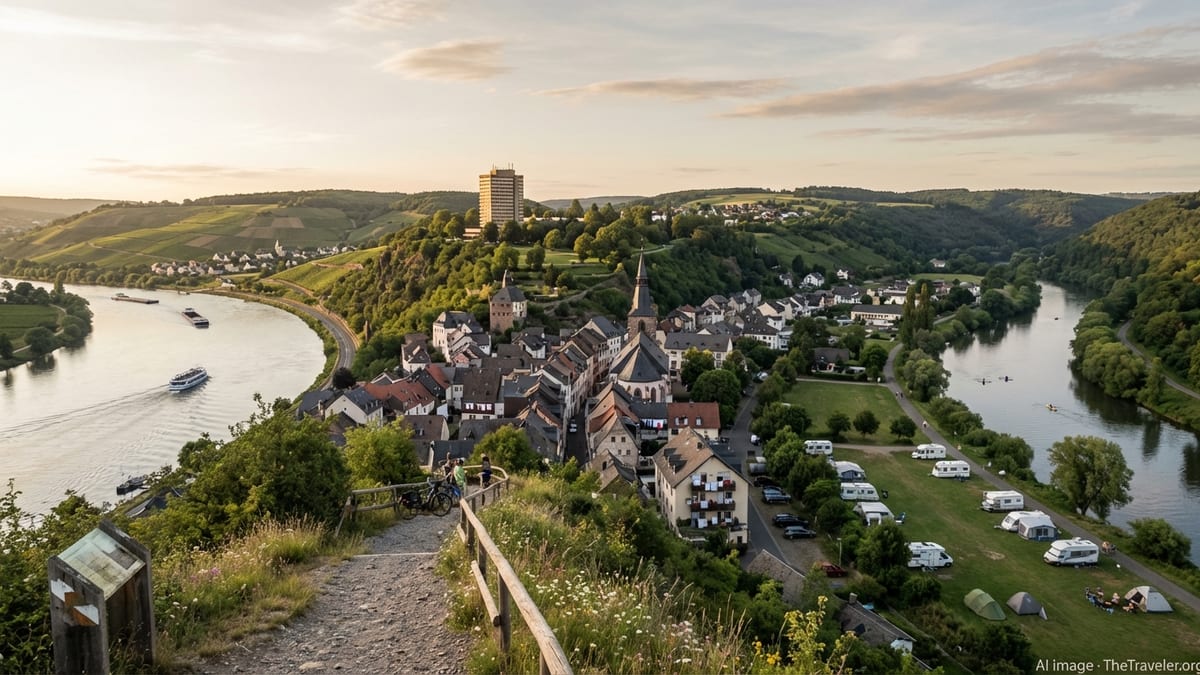
Lahnstein sits where the Rhine, Moselle and Lahn valleys come together in a sweep of vineyards, castle-topped hills and river bends that feel lifted from a romantic landscape painting. Choosing where to stay is as much about the view from your window as it is about comfort and convenience.
From parkland tower hotels and riverside campsites to traditional guesthouses in the old town, the area offers a surprisingly diverse range of places to base yourself while exploring Koblenz, the UNESCO-listed Upper Middle Rhine Valley and the quieter Moselle and Lahn corridors. If you are still deciding whether this small town fits your travel style, this overview of Lahnstein worth visiting helps clarify expectations.
Why Lahnstein Makes a Smart Base on the Rhine and Moselle
Lahnstein lies a short distance south of Koblenz at the confluence of the Rhine and the Lahn, with the Moselle joining the Rhine just upstream at the Deutsches Eck in Koblenz. For travelers, that geography is the main advantage. You can sleep in a smaller, more relaxed town with easy access by car, train or boat to three different river valleys, each with its own character. Day trips to well-known Rhine destinations such as Boppard, St. Goar, Bacharach or Rüdesheim sit comfortably alongside quieter Moselle excursions to villages like Winningen or Kobern-Gondorf.
The town itself has a split personality: Oberlahnstein rises above the river with Lahneck Castle on the heights, while Niederlahnstein hugs the banks below. A lattice of walking and cycling routes ribbons the hills and riverbanks, from the demanding Rheinsteig and Lahn hiking trails to gentler riverside paths. Staying in Lahnstein puts those routes at your doorstep, and several local hotels and guesthouses specifically market to walkers and cyclists with early breakfasts, bike storage and packed lunches.
Compared with busier Rhine hubs, Lahnstein feels lived in rather than curated. It has a compact historic core, the famed Wirtshaus an der Lahn inn and the fortifications of Lahneck Castle above town, but also supermarkets, bakeries and everyday restaurants. Accommodation prices often undercut those in Koblenz and the most touristy Rhine villages, especially outside peak summer and major wine festivals. If you are traveling by car, most properties offer on-site or nearby parking, which can be harder to find along the narrow Rhine embankments.
Staying Above the Rivers: Wyndham Garden Lahnstein Koblenz
The dominant hotel presence in Lahnstein is the Wyndham Garden Lahnstein Koblenz, a tower-style property set in parkland above the Rhine and Lahn. Originally built in the 1970s and updated in the 2010s, it offers 228 rooms and suites, most from the third floor upward with balconies and broad views across the Rhine valley and surrounding low mountain ranges. The immediate feeling on arrival is of space and greenery rather than of a tight old-town street or riverside promenade.
For travelers looking for a full-service base, the Wyndham Garden covers most needs. There are several dining options including a main Park Restaurant that serves a large buffet breakfast and evening meals, a bar for late drinks, and in good weather a garden terrace in the shade of mature trees. Higher up, a top-floor restaurant space is used for private events, weddings and special dinners, making the most of the panoramic views over the valley. Interiors reflect its function as both leisure and conference hotel, with broad corridors, generous lobby areas and multiple lifts.
Wellness and activity facilities are a clear plus here. Guests have access to Finnish saunas and a fitness room, and the surrounding park leads directly into hiking territory, including routes toward Lahneck Castle and the steep, forested Ruppertusklamm gorge. The hotel is frequently used as a base for walking holidays in the Upper Middle Rhine Valley and for bus tours combining river cruises and castle visits. Business travelers and event groups also make use of the fifteen meeting and event rooms, which range from small breakout spaces to a large hall suitable for banquets and conferences.
Location is slightly outside the town center on a ridge road, so you trade immediate access to riverbank strolls and old-town restaurants for quiet and open views. Drivers reach the center of Lahnstein in around ten minutes and Koblenz in about twenty minutes under usual traffic conditions. Public transport connections are more limited at night, so if you plan on wine tastings or late dinners in Koblenz, factor in taxi costs or designated drivers. For families and couples who value space, on-site parking and amenities over a purely historic atmosphere, this is often the most practical choice.
Riverside Simplicity: Camping and Guest Rooms at Campingplatz Runkel
At the opposite end of the scale from a tower hotel sits Campingplatz Runkel, a riverside campsite on the Lahn in Lahnstein that has quietly expanded its offerings in recent years. Open year-round, it occupies a grassy meadow on the riverbank with pitches for tents, caravans and motorhomes, complemented by a separate motorhome parking area and flood-free zone for long-stay guests. For many visitors, the appeal here is waking to mist over the Lahn, hearing the call of waterbirds and watching paddlers pass by from a camping chair.
The campsite has a set of modern, practical amenities: heated sanitary blocks with showers, individual wash cabins, toilets and hot water; electricity connections; disposal facilities for motorhomes; and site-wide Wi-Fi. A small on-site restaurant and the option of a breakfast bread roll delivery service make it easy to manage meals without leaving the riverbank. Dogs are warmly welcomed but must be kept on a leash, which reflects the site’s popularity with both local families and touring campers from elsewhere in Europe.
What makes Campingplatz Runkel relevant even if you are not traveling with your own equipment is its pair of simple double rooms. These basic but comfortable rooms appeal to budget-conscious couples or solo travelers who want a close-to-nature stay without sleeping under canvas. You still share the atmosphere of the campsite, with barbecues in the evening and the gentle buzz of a holiday community, but can retreat to a bed and four walls at night. Advance booking is recommended, especially in summer and around public holidays, as capacity is limited.
The location on the Lahn rather than the Rhine gives a quieter, more introspective waterside feel. You are a short drive or cycle ride from central Lahnstein and its connections onward to Koblenz and Rhine boat services, while canoe hire and bike routes along the Lahn itself offer more languid adventures. If you enjoy the idea of days structured around swimming, paddling, grilling and reading by the river, this is one of the most atmospheric and affordable options in the area.
Traditional Charm in Town: Small Hotels and Guesthouses
Alongside the larger hotel and the riverside campground, Lahnstein has a patchwork of smaller hotels, inns and guesthouses, many of them family-run. These properties often occupy historic buildings in Oberlahnstein and Niederlahnstein or sit on quieter residential streets a short walk from the river. They typically offer a more intimate atmosphere with fewer rooms, personalized tips from owners and a breakfast room that doubles as a living room for the neighborhood.
Rooms in these establishments are generally simple, clean and geared toward travelers who spend most of their time outside exploring. Expect a combination of traditional wood furnishings and modern touches such as updated bathrooms and Wi-Fi. Breakfasts lean toward German classics: fresh rolls, cold cuts, cheeses, yogurt, fruit and coffee. Some houses cater explicitly to cyclists along the Rhine and Lahn, offering locked bike storage, repair tools and flexible check-in times to suit long riding days.
Staying in the town itself puts you within an easy stroll of Lahnstein’s historic sites. Lahneck Castle crowns the hill above Oberlahnstein and can be reached on foot, combining a steep walk with rewarding views and a glimpse into medieval fortifications. Down by the river, the Wirtshaus an der Lahn inn continues to trade on its centuries-old reputation, linked to literary visitors and local lore. Evenings in town tend to be low-key, centered on traditional restaurants, wine taverns and seasonal festivals instead of nightlife.
For travelers who prefer to immerse themselves in the daily rhythm of a small German town rather than retreat to parkland or campsite seclusion, these smaller properties strike a good balance. They are often priced competitively and can be especially good value in shoulder seasons like late spring and early autumn, when hiking conditions are excellent but peak summer crowds have not yet arrived or have already faded.
Choosing Between Rhine, Moselle and Lahn Perspectives
One of the subtle questions when choosing where to stay around Lahnstein is which river you want to wake up to. The Rhine is the headline name, with vistas of cargo barges, excursion boats, castles and vineyards sweeping along a dramatic, sometimes steep-sided valley. The Moselle, meeting the Rhine just upstream in Koblenz, twists more sinuously through wine villages with half-timbered fronts and riverside promenades. The Lahn, by contrast, is quieter and more intimate, its banks more wooded and less built-up, with a strong orientation toward kayaking, canoeing and cycling.
Properties above town, such as the Wyndham Garden, leverage broad, multi-valley views rather than close contact with any single river. From a high balcony you may see stretches of the Rhine, Lahn and the ridges that divide them, but you will not hear the clank of moorings or the slosh of water against embankments. Campsites and guesthouses along the Lahn put you in direct touch with the river environment, trading grandeur for tranquility. Town-center and near-Rhine lodgings balance the two, offering quick access to bridges, train stations and river cruise jetties.
Your choice may come down to the type of trip you are planning. If river cruises on the Rhine and day-trips by train to multiple Rhine and Moselle villages are central to your plans, staying closer to Koblenz or at least near its rail links makes sense. If you prefer hikes on the Rheinsteig and Lahn trails, and are happy making occasional forays into Koblenz, a parkland or hillside hotel outside the urban core can feel more relaxing. For multi-day cycling or paddling itineraries along the Lahn, the campsite or simple guesthouses near the river reduce daily logistics.
Season also plays a role. In high summer and on sunny weekends, Rhine promenades and well-known towns can be crowded. Lahnstein and its immediate surroundings often feel calmer, and properties with gardens or balconies come into their own. In cooler months, the appeal of a full-service hotel with saunas and an on-site restaurant increases, while riverside camping and outdoor-focused guesthouses shift more toward hardy travelers with warm gear.
Planning Your Stay: Practical Tips and Booking Pointers
Because Lahnstein sits at a crossroads of popular touring routes, availability can tighten quickly during certain periods, particularly public holiday weekends, local wine festivals and school vacation weeks in Germany and neighboring countries. For full-service hotels like the Wyndham Garden and for the limited number of fixed rooms at Campingplatz Runkel, early booking is advisable if you are aiming for specific dates between late May and early October.
When comparing options, consider how you will move around the region. Travelers arriving by train typically come via Koblenz, then connect to Lahnstein’s stations or use local buses or taxis. If you rely on public transport, staying closer to a station in town simplifies day trips; from there, regional trains and boats can carry you along both the Rhine and Moselle. Drivers enjoy more flexibility: hillside hotels and riverside campsites are easier to reach, and you can day-trip to smaller villages with limited or patchy public transport.
Weather is an important factor for camping and for walking-focused trips. Spring and autumn can be ideal for hiking, with cooler temperatures and often clear air that sharpens views from castles and ridges.
However, rivers can also run high after heavy rain, occasionally affecting lower-lying camping areas, so it is wise to confirm current conditions when booking outdoor accommodations. Choosing accommodation becomes easier once you understand the main things to do in Lahnstein and where they are located. In winter, options narrow, but many hotels stay open with reduced rates, making Lahnstein a cost-effective base for visiting Koblenz’s cultural attractions and Christmas markets in the wider region.
Finally, think about your comfort priorities. If you value predictable levels of service, on-site dining, wellness facilities and staff at a 24-hour reception, a larger hotel will feel reassuring. If character, direct river access and a stronger sense of place matter more, a small inn, guesthouse or campsite will likely resonate better. The good news is that, in and around Lahnstein, the distances between these options are short, and the rivers and castles are never far away.
The Takeaway
Lahnstein’s strength as a base lies in its blend of accessibility and atmosphere. It sits at the hinge of three celebrated river landscapes yet maintains the scale and rhythm of a small Rhineland town. Whether you choose the commanding views and facilities of a parkland hotel, the relaxed community of a riverside campsite or the homely charm of a town guesthouse, you will be well-placed to explore the Rhine, Moselle and Lahn in unhurried fashion.
For travelers prioritizing comfort, amenities and year-round reliability, the large hillside hotel in Lahnstein offers a solid, well-equipped anchor with sweeping valley views. Those seeking closeness to the water and a casual, outdoorsy routine gravitate toward the riverside campsite and its simple guest rooms. Visitors who want to step straight out into cobbled streets and everyday German life lean toward smaller town hotels and guesthouses.
Ultimately, the right place to stay hinges on how you picture your evenings: watching the sun set over the Rhine valley from a high balcony, grilling by the Lahn as kayaks drift past, or strolling to a centuries-old inn in the old town. In Lahnstein, all three versions of the river dream sit within a few minutes of each other, making it easy to tailor your stay to the way you like to travel.
FAQ
Q1: Is Lahnstein a good alternative to staying in Koblenz itself?
Lahnstein works well if you prefer a quieter base with easier access to nature while still being close to Koblenz. You can reach Koblenz by car or regional transport in a short time, but return in the evening to a smaller town with less traffic and more relaxed surroundings.
Q2: Do I need a car to stay comfortably in Lahnstein?
A car offers more flexibility, especially if you stay at hillside hotels or campsites and plan to explore smaller villages. However, it is not essential. With some planning, you can use trains, buses and boats from Lahnstein and Koblenz to see much of the Rhine and Moselle.
Q3: When is the best time of year to visit Lahnstein and the surrounding rivers?
Late spring and early autumn are often ideal, with milder temperatures and good hiking conditions. Summer brings lively river traffic and festivals but also more crowds. Winter is quieter and can be atmospheric, particularly around Christmas, though options for outdoor activities and camping are more limited.
Q4: Are there good options for hikers and cyclists in Lahnstein?
Yes. Lahnstein sits on important long-distance routes like the Rheinsteig and Lahn trails and is connected to river cycling paths. Several accommodations cater to active travelers with early breakfasts, packed lunches, bike storage and information about local routes.
Q5: How suitable is Lahnstein for families with children?
Lahnstein is well-suited to families who enjoy outdoor activities. Larger hotels often have family rooms, saunas and green space, while the campsite offers room for children to play near the river. Easy day trips on boats, to castles and along short walking trails keep itineraries varied without long travel times.
Q6: Can I combine a stay in Lahnstein with river cruises on the Rhine and Moselle?
Yes. Many travelers use Lahnstein as a base for day cruises. You can access Rhine and Moselle boat departures in nearby Koblenz and in several towns along both rivers, making it easy to intersperse hiking or cycling with one or two cruise days.
Q7: Is it necessary to book accommodation far in advance?
Booking ahead is recommended for peak periods such as summer weekends, public holidays and wine festival dates, especially for larger hotels and the limited fixed rooms at the riverside campsite. Outside these times, you often have more flexibility, though advance reservations still secure better choice and rates.
Q8: What kind of food can I expect in Lahnstein hotels and guesthouses?
Breakfasts typically follow German patterns, with breads, cold cuts, cheeses, eggs, cereals and fruit. Larger hotels offer broader buffets, while guesthouses provide simpler spreads. For other meals, you will find traditional Rhineland dishes, seasonal game and fish, and regional wines in town restaurants and surrounding villages.
Q9: Are there wellness facilities available in Lahnstein accommodations?
Some of the larger hotels include wellness areas with saunas and fitness rooms, and Lahnstein is within reach of regional thermal spas. Smaller guesthouses generally do not have full wellness facilities but may partner with local providers or recommend nearby spas.
Q10: How long should I plan to stay in Lahnstein to explore the region?
Three to four nights is a comfortable minimum, allowing time for at least one Rhine-focused day, one Moselle or Lahn excursion and some time in Koblenz. A week gives you space to add extra hikes, longer cruises and visits to more distant castles and wine villages without rushing.