

Italy’s great travel question is not just when to go, but where to base yourself. The same country that offers glittering coastlines and glamorous islands is also home to grand Renaissance cities and quiet hilltop villages surrounded by olive groves. With tourism surging again and more flights arriving from North America and beyond, choosing the right setting for your stay has never mattered more. Whether you are dreaming of a balcony over the Tyrrhenian Sea, a palazzo in the historic center, or a farmhouse between vineyards, understanding what each side of Italy offers will help you plan a smoother, more rewarding trip.
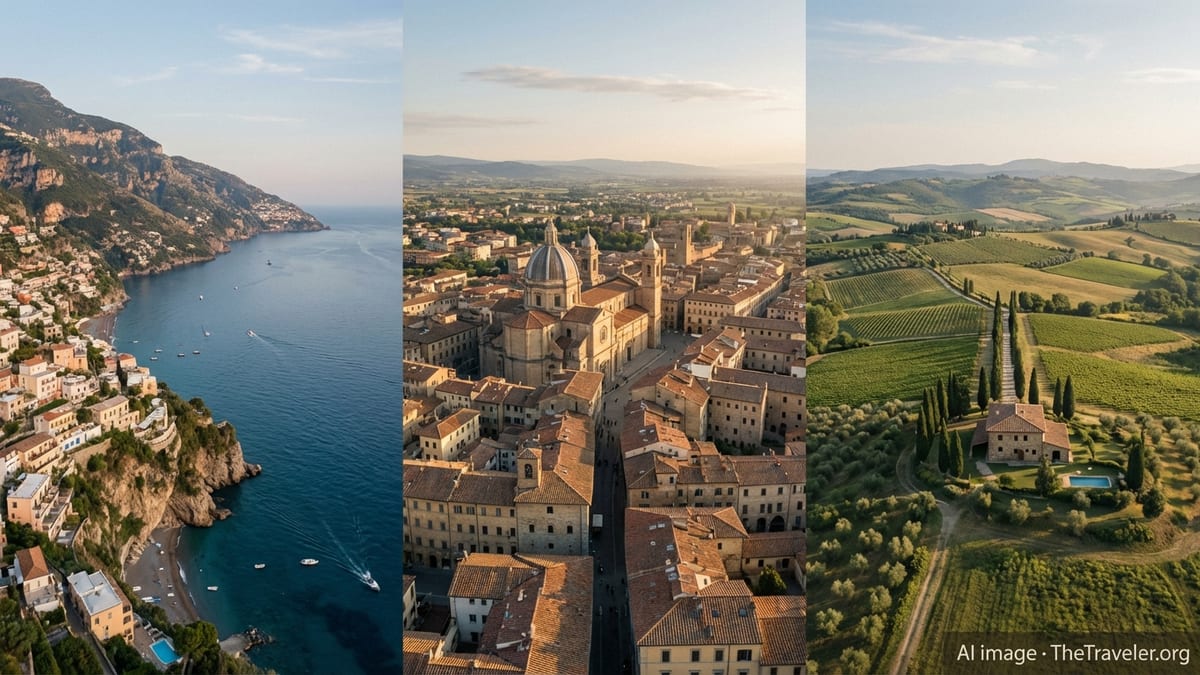
How Italy Is Traveling Now: Coast, City, or Countryside
Italy is in the middle of a tourism high, with international overnight stays setting new records and demand spreading beyond the classic hotspots into southern regions and rural areas. Industry reports for 2025 show that cities such as Rome, Milan, Florence, and Venice remain the most-booked destinations, while coastal hubs like Sorrento, Palermo, and Catania are increasingly popular with agents planning Mediterranean escapes. At the same time, the countryside in regions like Tuscany and Umbria continues to attract visitors seeking space, food, and slower travel.
Current trends also reveal a shift in how travelers stay. Many visitors now divide their time between at least two contrasting bases, for example combining a few nights in a major city with a coastal or countryside retreat. This split approach works particularly well in Italy, where rail links connect urban centers and regional hubs efficiently, while domestic flights and ferries open up islands and more remote coasts.
Safety and regulations matter too. Italy is under a Level 2 “exercise increased caution” advisory from the United States, largely related to the general European terrorism risk, so visitors are encouraged to stay aware of their surroundings, especially in busy urban and tourist zones. In addition, authorities have tightened rules for short-term rentals and self check-ins, particularly in big cities, so guests may find that hotels and professionally managed accommodations provide smoother, more predictable experiences than highly informal rentals.
With these dynamics in mind, it helps to think about Italy not only in terms of famous names but in terms of the environments you want around you. The coast delivers drama and sea views, the cities deliver culture and convenience, and the countryside delivers calm and a closer link to regional food and wine. Each choice shapes everything from your daily rhythm to what you see when you open your window in the morning.
Staying on the Italian Coast: Sea Views and Cliffside Villages
If your ideal day begins with a swim and ends with a sunset aperitivo by the water, the Italian coast makes a natural base. From the vertical villages of the Amalfi Coast to the pastel harbors of the Cinque Terre and the long sandy stretches of Puglia and Sicily, coastal stays are all about scenery and sea air. Tourism data for 2025 shows that seaside destinations remain stable or slightly growing compared with already high pre-pandemic numbers, confirming the continued appeal of Italy’s shores.
The Amalfi Coast is the country’s most iconic coastal stay, with towns like Positano and Amalfi tumbling down to the Tyrrhenian Sea. Positano, perched in the hills of Campania, pairs small beaches with panoramic hotels and dramatic cliffside terraces. Amalfi, the historic maritime republic, offers a compact center, a striking cathedral, and easy boat connections along the coast. These bases work well for travelers who are comfortable with steps, narrow lanes, and higher price tags, especially in summer.
Further north, Liguria’s Cinque Terre offers a different coastal experience. Villages such as Manarola, Vernazza, and Monterosso al Mare cling to the cliffs above the Gulf of Genoa and are linked by hiking trails and local trains. These car-free or low-car towns are small and atmospheric, with pebbled coves, vineyards overhead, and harbors filled with fishing boats. Stays here tend to feel more intimate, but capacity is limited, so advance booking is essential in peak months.
For travelers seeking warmer water, longer beaches, and slightly better value, southern coasts in Puglia, Calabria, and Sicily have grown rapidly in international popularity, helped by improved air links and regional promotion. Coastal cities such as Palermo and Catania combine historic centers with access to nearby beaches, while smaller beach towns around the Salento peninsula in Puglia offer a mix of whitewashed centers and Caribbean-blue seas. These regions are particularly appealing from late May to early October, when many coastal resorts operate at full strength.
Pros and Cons of Coastal Bases
Choosing the coast as your main base in Italy comes with clear rewards. A sea-facing stay frames your trip around swimming, boating, and lazy afternoons on the terrace. The scenery is often extraordinary, especially on cliff-lined stretches like Amalfi or the Ligurian Riviera, and many coastal towns have a strong culinary identity rooted in seafood and local wines. For travelers craving a holiday feel above all else, waking up by the water sets the tone instantly.
On the practical side, though, coastal bases can be demanding. Prices in famous hotspots climb sharply from late spring to early autumn, and availability can be tight. In cliffside towns, you may rely on steps, steep lanes, and local buses or ferries rather than private cars, which suits slow travelers but can be tiring for visitors with mobility issues or large luggage. Stormy weather, especially in shoulder seasons, can also disrupt boat services and make coastal transport less predictable.
Connectivity is another trade-off. While the Amalfi Coast and Cinque Terre are reachable by regional trains and buses, they are not ideal bases for frequent day trips across the country. If you stay at the coast, expect to spend more of your time enjoying the local area rather than hopping regularly to distant regions. This is a benefit for travelers who want to settle in, but it can frustrate those trying to see “all of Italy” in one short visit.
Coastal bases also come with crowds. Well-known seaside villages are often packed in July and August during the day, as cruise passengers and day-trippers arrive. Guests who stay overnight can reclaim some quiet in early mornings and late evenings, but those craving solitude may find the constant buzz tiring. If that is a concern, consider less-famous stretches of coastline or plan your stay for shoulder months such as May, June, September, or early October.
Staying in Italy’s Cities: Culture, Convenience, and Nightlife
Italy’s cities are among Europe’s great urban destinations, and they remain the country’s top accommodation choices by volume. Rome, Milan, Florence, and Venice consistently rank as the most-booked urban bases, propelled by iconic art, architecture, fashion, and food. If your priority is museums, major landmarks, and strong transport connections, a city stay is usually the best anchor for your itinerary.
Rome, the capital, is a natural base for first-time visitors. Its neighborhoods around the historic center, Trastevere, and Prati place you within reach of the Colosseum, Vatican Museums, and countless piazzas without needing a car. The city’s main train stations and two airports connect you efficiently to the rest of the country, which makes Rome an excellent starting or ending point for multi-stop itineraries.
Florence and Venice provide more compact, atmospheric city experiences, with historic centers that can mostly be explored on foot. Florence suits travelers focused on Renaissance art, Tuscan food, and easy rail excursions to nearby towns such as Pisa, Lucca, and Siena. Venice offers canals instead of cars, lagoon views, and a unique sense of place that makes even simple walks feel special, although costs are high and visitor numbers remain tightly managed in peak seasons.
Milan, Italy’s business and fashion hub, is often treated as a transit point but makes a strong base for travelers interested in design, contemporary culture, and efficient side trips to lakes such as Como or to Alpine foothill towns. Its modern hotel stock, extensive metro system, and major international airport connections appeal to visitors who value convenience and variety more than old-world atmosphere.
Pros and Cons of City Bases
Urban stays provide density of experience. Within a few blocks you may have access to museums, galleries, historic churches, busy markets, and local trattorias, all connected by public transport. City hotels and apartments range from heritage palazzi converted into boutique stays to business hotels and budget guesthouses, so travelers at different price points can usually find options that fit both taste and schedule.
Another major advantage is connectivity. From Rome, Milan, Florence, and other hubs like Bologna or Naples, Italy’s rail network fans out across the peninsula, making it realistic to use one city as a base and take day trips to nearby towns. This model works especially well for travelers uncomfortable with driving but eager to see more than one place. Even coastal and countryside destinations can often be reached by a combination of trains and regional buses.
Cities, however, have trade-offs. Popular centers are busy year-round, and major sights can feel crowded and commercial, particularly during peak hours. Accommodation inside historic cores often comes at a premium, and some areas experience noise late into the night. In large cities, you also need to pay more attention to petty crime such as pickpocketing in transport hubs and tourist zones, and to basic urban safety precautions, especially late in the evenings.
It is also worth noting that regulations around short-term rentals have tightened, with greater enforcement of registration rules and a move away from anonymous self check-in for many properties. Guests may find that hotels, licensed guesthouses, and serviced apartments offer clearer standards and more consistent support, especially if they arrive late or face travel disruptions.
Staying in the Italian Countryside: Hill Towns, Vineyards, and Lakes
For many travelers, Italy’s magic is found less in city streets and more in its patchwork of vineyards, olive groves, and stone hamlets. Countryside stays in regions such as Tuscany, Umbria, Piedmont, and Lombardy’s lesser-known wine districts offer a slower rhythm, closer contact with local producers, and often better value in terms of space and amenities. These areas may not register in headline tourism statistics as loudly as Rome or the Amalfi Coast, but they remain quietly in demand, especially among returning visitors.
Tuscany is the classic rural base, with the rolling hills of Chianti, Val d’Orcia, and the Crete Senesi dotted with agriturismo farm stays and converted estates. Guests typically sleep in restored farmhouses, stone villas, or small countryside hotels, often with pools, countryside views, and on-site restaurants focused on local produce and wine. Nearby hill towns such as San Gimignano, Montepulciano, and Pienza provide day-trip destinations filled with medieval alleys and tasting rooms.
Neighboring Umbria, centered around the province of Perugia, offers a similar landscape with fewer crowds and slightly softer prices. Hill towns like Assisi, Spello, and Montefalco sit among vineyards and forests, and the region’s farmhouses and villas are popular with travelers looking for privacy and long stays. Around Lake Trasimeno and other inland waters, countryside properties combine rural quiet with water views, making them good alternatives to more expensive northern lake resorts.
Beyond central Italy, regions such as Piedmont, with its Langhe and Monferrato wine hills, and Lombardy’s Oltrepo Pavese are gaining attention as “next Tuscany” areas. These landscapes mix vineyards, chestnut woods, and small stone villages, with family-run inns and wine estates that are still relatively under the radar internationally. For travelers who prioritize food and wine experiences and do not mind renting a car, these rural bases can be deeply rewarding.
Pros and Cons of Countryside Bases
Countryside stays come into their own if you are looking for space, quiet, and a sense of local rhythm. Agriturismo properties often include breakfasts drawn from the farm’s own production, and many offer dinners that showcase regional recipes and house wines. Pools, gardens, and terraces are common, so days can alternate between short excursions and relaxed hours on the property. Families and small groups, in particular, appreciate the extra room and the ability to spread out compared with compact city hotels.
However, the countryside is almost always easier with a car. Public transport between rural towns can be limited, especially in the evenings and on weekends, which can restrict dining options and make it harder to reach more remote villages or wineries. Driving in Italy requires attention to local rules, including speed limits, ZTL (limited traffic zones) boundaries when entering historic centers, and parking regulations, all of which are enforced with cameras in many areas.
Another consideration is seasonality. Many countryside properties operate on a clear seasonal schedule, with pools unheated, restaurants closed a few days per week, or entire complexes shuttered in the coldest months. While spring and autumn can be glorious for walking and wine tasting, winter stays may be very quiet outside larger towns. Guests should check what facilities are open at the time of travel, especially if visiting in late autumn, winter, or early spring.
Finally, a rural base can make day trips to distant cities more time-consuming. While staying in the hills outside Florence or Siena may keep you within reach of major sights, using a remote farmhouse in southern Tuscany as a base for seeing Rome, for example, will involve long drives or multiple train connections. The countryside works best when you are ready to narrow your focus to one or two regions rather than trying to cover all of Italy from a single remote property.
How to Choose Your Ideal Base in Italy
With three distinct types of setting on offer, the key to choosing where to stay in Italy is to begin with your priorities rather than with famous names. If you dream primarily of swimming and boat trips, a coastal base in regions such as Campania, Liguria, Puglia, or Sicily will support that rhythm. If you are motivated by museums, food tours, and architecture, starting in a city like Rome, Florence, Venice, Milan, or Bologna is often the most logical move. If you want to slow down, cook, and wake up to birds instead of traffic, the countryside may be your strongest fit.
In practice, many travelers combine at least two of these environments in one trip. A classic pattern is to fly into a major city, spend three or four nights exploring its museums and neighborhoods, then transfer by train and car to a countryside base or coastal town for four or five nights of relaxation. This mix lets you experience Italy’s cultural intensity and its slower side without feeling rushed every day. With rail and regional flights improving, it is increasingly possible to connect, for example, Rome to Puglia’s coast, Milan to the lakes or wine regions, and Florence to Tuscan hillsides in a few hours.
Budget is another filter. Coastal hotspots and historic centers command the highest nightly rates, especially in high season, while rural properties often offer more space for the same or lower prices, particularly outside marquee destinations. Travelers watching their budgets closely might structure stays to include a few nights at a high-impact but expensive address, balanced with longer stretches in countryside or secondary cities where nightly costs are gentler.
Finally, consider logistics and comfort. Think about how much you enjoy or dislike driving, how often you want to change hotels, and how comfortable you feel in busier urban environments. If you dislike packing and unpacking, two well-chosen bases in contrasting settings may serve you better than a fast-moving itinerary with many stops. If you are traveling with children or older relatives, minimizing steep streets and long, hot walks can be more important than staying in the most photographed village on the coast.
Choosing Accommodation Types: Hotels, Rentals, and Agriturismo
Once you have chosen your general setting, the next step is deciding what kind of place to stay in. In cities and larger coastal towns, traditional hotels remain the simplest option, offering staffed reception, daily housekeeping, and help with transport or restaurant reservations. Mid-range and upscale hotels in Italy often occupy historic buildings, so rooms may be individually shaped rather than standardized, but they typically deliver the easiest arrival, especially when trains or flights are delayed.
Short-term rentals and serviced apartments are common in cities, coastal areas, and some rural regions, although regulations have tightened in recent years. Guests may need to provide identification in person on arrival and cannot always rely on key boxes or fully remote check-ins. Before booking, it is wise to read house rules carefully, confirm check-in procedures, and make sure someone can meet you if you arrive late. Well-reviewed, legally registered rentals can provide valuable extras such as kitchen facilities, laundry, and additional bedrooms for families.
In the countryside, agriturismo stays are a distinctive Italian option. These are working farms or rural estates that host guests, usually in restored farmhouses or smaller purpose-built lodgings. They may offer breakfasts and dinners sourced heavily from their own production, tastings of house wines or olive oil, and experiences such as cooking classes or farm tours. Many agriturismi have pools and walking paths, making them comfortable bases for longer stays where daily sightseeing is not the only focus.
Across all settings, look carefully at location and access. In coastal or hilltop towns, a “sea view” or “historic center” room may involve flights of stairs and limited vehicle access, which are charming for some and challenging for others. In cities, staying a short walk from major sights or a central station can outweigh small savings from distant neighborhoods, especially on short visits. In rural areas, check driving distances to the nearest town, supermarket, and medical services so that you are not surprised by how remote your property feels after dark.
The Takeaway
Deciding where to stay in Italy based on coast, cities, or countryside is less about choosing the single “best” option and more about aligning your base with your personality, interests, and practical needs. The coast delivers drama, water, and a holiday atmosphere; the cities deliver density of culture, easy connections, and vivid street life; the countryside delivers space, calm, and a close link to regional food and wine traditions. Each setting can shape your days in entirely different ways.
For many visitors, the most satisfying approach is to combine at least two of these environments in one itinerary, using Italy’s growing network of flights, trains, and regional services to move between them without too much strain. Build in enough time in each place to settle into its rhythm rather than treating every base as a quick stop, and avoid overloading your schedule with distant day trips. With demand for accommodation high across the country, booking ahead, reading the fine print on rentals, and staying flexible about exact towns can help you find places that match both budget and style.
Ultimately, the “right” stay in Italy is the one that supports the kind of days you actually want to live on your trip. Visualize how you would like to spend a typical morning and evening, then let that vision guide you to the coastline, the city streets, or the winding roads of the countryside. Italy is varied enough that, with a bit of planning, you can have all three in a single journey.
FAQ
Q1. Is it better to stay on the coast or in a city for a first trip to Italy?
For a first visit, many travelers start in a major city such as Rome or Florence for a few nights, then add time on the coast. Cities make it easier to see major landmarks and adjust to the country, while a coastal stop provides relaxation and scenery at the end of the trip.
Q2. Do I need a car if I stay in the Italian countryside?
A car is not absolutely required everywhere, but it makes countryside stays far more practical. Public transport between rural villages can be limited, and driving lets you reach wineries, hill towns, and trailheads on your own schedule.
Q3. Which coastal areas in Italy are less crowded than the Amalfi Coast?
Parts of Puglia, Calabria, and some corners of Sicily often feel less crowded than Amalfi and Cinque Terre, especially outside August. Even there, though, popular towns are busy in high summer, so shoulder seasons usually offer a calmer experience.
Q4. Are Italian cities safe to stay in right now?
Major Italian cities are generally safe for visitors who follow normal urban precautions. Authorities advise travelers to remain aware of their surroundings, especially in crowded areas, and to watch for petty crime such as pickpocketing on public transport and around major sights.
Q5. When is the best time to stay at the coast in Italy?
Late May, June, September, and early October usually provide warm weather with slightly fewer crowds than peak summer. July and August bring the hottest temperatures and highest visitor numbers, especially on famous stretches such as the Amalfi Coast.
Q6. How far in advance should I book accommodation in Italy?
For popular cities and famous coastal or lake regions in high season, booking several months in advance is wise, especially for weekends and holidays. Countryside stays and shoulder-season trips may allow more flexibility, but booking ahead still secures the best range of options.
Q7. What is an agriturismo and who is it best for?
An agriturismo is a working farm or rural estate that hosts guests in farmhouse-style accommodation. It suits travelers who enjoy local food, quiet, and country scenery, and who do not mind being a drive away from big cities and nightlife.
Q8. Can I use one city as a base for all my Italy day trips?
Using a single city such as Rome or Florence for multiple day trips works for nearby destinations, but distances in Italy can be longer than they look on a map. For itineraries that span several regions, two or three bases usually make travel days shorter and more enjoyable.
Q9. Are short-term rentals still a good option in Italian cities?
Short-term rentals can be a good choice, but guests should pay attention to local rules and check-in requirements. Choosing well-reviewed, registered properties and confirming arrival procedures in advance helps avoid surprises, especially now that anonymous self check-ins are less common.
Q10. How should I split my time between coast, city, and countryside?
A balanced one- or two-week itinerary might include three or four nights in a major city, three or four nights on the coast, and three or more nights in the countryside. The exact split depends on whether you prioritize sightseeing, relaxation, or rural experiences.