

Ohio stretches from the industrial shores of Lake Erie to the rolling hills of Appalachia, with big cities, college towns and storybook villages stitched between. Choosing where to stay can shape your entire experience, whether you crave skyline views, vineyard sunsets or quiet streets lined with historic homes. This guide explores the state’s standout urban neighborhoods, lakeside enclaves and scenic small towns to help you find the perfect Ohio base, from quick weekend breaks to longer road trips.
Understanding Ohio’s Regions and Accommodation Styles
For trip planning, it helps to think of Ohio in a few broad bands. In the north, the Lake Erie shoreline is anchored by Cleveland and a chain of beach towns and islands. Central Ohio orbits around Columbus, the state capital and home to one of the country’s largest universities. To the southwest, Cincinnati and Dayton form a corridor along the Ohio River, while the southeast and far south are where the flatlands give way to the Appalachian foothills, forested state parks and curving country roads.
Each region has its own signature places to stay. Ohio’s major cities offer familiar downtown hotels, design-forward boutique properties and short-term rentals in walkable historic neighborhoods. Around the lakes and along the river, you will find classic waterfront resorts, independent motels and simple cabins. In Amish Country and the hill country, accommodation skews toward cozy inns, B&Bs, cabins and lodges inside or beside state parks.
Season also matters. Summer and fall are peak times around Lake Erie, in college towns and in southeastern hiking hubs, when demand for cabins, cottages and campgrounds spikes. Winter can be an appealing time for lower rates and quieter city breaks, though holiday weekends and special events remain busy. When in doubt, book early for summer weekends, holiday periods and any stay during major events or college football home games.
Across the state, travelers can generally expect mid-range prices and solid value compared with coastal destinations. The exception is extremely popular small towns or resort areas during peak season, where rates rise and minimum stays are common. If you are flexible on dates and location, looking just beyond headline destinations often yields quieter stays and better prices without sacrificing character.
Where to Stay in Columbus: Neighborhoods With Personality
Columbus sits in the center of the state and makes a practical base for exploring central Ohio. Its compact, walkable core and ring of distinct neighborhoods give visitors a range of experiences within a short drive. The city’s main accommodation clusters include Downtown, the Short North Arts District and the university-adjacent areas near Ohio State.
Downtown Columbus works well for first-time visitors who want easy access to major venues and a central jumping-off point. You will find a mix of business-style hotels and contemporary properties within walking distance of the Scioto Mile riverfront, the Arena District, and cultural attractions such as theaters and galleries. Staying here simplifies transit and puts you close to major highways for day trips in every direction.
Just north of Downtown, the Short North Arts District and adjacent Victorian Village have evolved into one of Columbus’s most sought-after areas. Historic streets lined with brick townhouses and restored mansions sit a block or two from High Street, where galleries, bars and restaurants run for blocks. Many visitors choose boutique hotels or short-term rentals here for a more residential feel, with nightlife, coffee shops and public art outside the front door.
Families and travelers more focused on campus life often gravitate toward the neighborhoods around Ohio State University to the north, or to close-in suburbs such as Grandview Heights, Bexley, Dublin or Westerville. These communities offer a small-town feel with leafy streets, local eateries and easy freeway access back into the city center. They can be appealing bases if you prefer quieter evenings, free parking and quick drives to both urban attractions and rural day trips.
Staying in Cleveland and Along the Lake Erie Shore
Cleveland pairs a revitalized downtown with distinctive neighborhoods spilling out from the Cuyahoga River and Lake Erie. For visitors, the main decision is whether to stay in the city center near stadiums and museums or opt for a neighborhood or suburb that emphasizes lake access and local character.
Downtown Cleveland suits travelers coming for sports, concerts or museum-hopping. The cluster of hotels in and around the Historic Gateway and Warehouse districts keeps you within walking distance of the Rock and Roll Hall of Fame, the stadiums, the main theater district and the lakefront green spaces. Many properties occupy renovated historic buildings, so you can expect combinations of brick facades, tall windows and updated interiors.
On the near west side, neighborhoods such as Ohio City and the Hingetown area are popular with visitors who prioritize dining and nightlife in walkable surroundings. Renovated loft-style accommodations, small inns and apartments tucked into side streets make it easy to stroll to breweries, markets and restaurants while staying a short ride from downtown attractions. These areas tend to feel lively in the evenings while remaining residential in character.
Travelers who want Lake Erie front and center might look toward suburbs that hug the shoreline. Communities west and east of the city offer quieter stays with parks, beaches and marinas, plus straightforward driving routes back into downtown. These locations are particularly appealing in warm months, when lake breezes, waterfront trails and public beaches become the main draw. Expect a mix of chain hotels, roadside motels and independent inns, many catering to repeat summer visitors.
Where to Stay in Cincinnati and Ohio’s Southwest Corner
Cincinnati cascades down hillsides to meet the Ohio River, with a compact downtown framed by historic neighborhoods on the surrounding slopes. Choosing where to stay here often comes down to whether you want a city-center hotel or a vantage point in a hillside district with skyline and river views.
Downtown Cincinnati and the adjacent riverfront district offer the densest concentration of hotels, from business-class towers to renovated historic properties. Staying here places you within walking distance of major sports venues, the riverfront parks, the contemporary arts museum and the streetcar, which connects to several central neighborhoods. It is a practical option for quick city breaks or travelers relying on public transportation and rideshares.
Across downtown, Over-the-Rhine has become one of Cincinnati’s most distinctive neighborhoods, with 19th-century brick buildings now home to breweries, restaurants and performance venues. Accommodation here leans toward boutique hotels and loft-style rentals, which appeal to travelers who enjoy nightlife and historic architecture. The district can feel lively late into the evening, so it suits visitors comfortable with a bit of urban energy.
For a different perspective, hillside neighborhoods on both the Ohio and Kentucky sides of the river offer hotels and inns with views across to the skyline and the water. These areas, along with close-in suburbs around the I-275 loop, tend to be quieter at night and often provide more parking and quicker access to outlying attractions. They can be smart bases if you plan to explore the broader Cincinnati region, drive day trips into rural southwest Ohio or split time between city sights and state parks.
College Towns, Culture Hubs and Small Cities Worth a Stay
Beyond the three largest cities, several of Ohio’s mid-sized cities and college towns make rewarding bases in their own right. These places often pair walkable historic cores or campuses with strong arts scenes, independent restaurants and easy access to nature.
In the northeast, Akron and nearby Kent offer a blend of urban comforts and trail access, with the Cuyahoga Valley National Park within an easy drive. Visitors often choose to stay in or near the small downtowns for access to dining and entertainment, then use their base for day trips into the park’s waterfall trails and canal towpaths. Lodging ranges from standard hotels to restored historic inns in surrounding communities.
To the west, Dayton has a compact center and a growing focus on aviation heritage, riverfront recreation and nearby small towns. Staying downtown positions you close to museums and performance venues, while suburbs and neighboring communities provide quieter accommodations and straightforward access to bike-friendly river trails and regional parks. As in other Ohio cities, short-term rentals in historic districts can give you a residential feel.
Smaller college towns across the state, including places like Athens and Yellow Springs, skew heavily toward locally owned inns, B&Bs and simple motels. These destinations can be especially appealing for weekend travelers who value quirky main streets, farmers markets and trailheads minutes from their lodging. Because room counts are limited, it is wise to book early for popular festivals, graduation weekends and peak foliage season.
Scenic Small Towns, Amish Country and Countryside Retreats
For many travelers, the most memorable Ohio stays happen far from the interstates. The state’s small towns and rolling countryside are dotted with inns, farm stays and cabins that lean into scenery, quiet and regional flavor. These can serve as stand-alone getaways or as stops on a longer road trip between the major cities.
In eastern Ohio, communities within and around Amish Country provide a distinctive setting of farmland vistas, horse-drawn buggies and hillside wineries. Lodging here ranges from modest motels on the edges of town to suites and cabins overlooking patchwork fields. Many properties emphasize simple comforts, country breakfasts and porches that invite you to slow down and watch the evening light across the hills.
Further south and east, the transition to the Appalachian foothills brings deeper forests, winding roads and state parks carved around rivers and gorges. Cabins and lodges here often sit on wooded hillsides or near lakes, offering fire pits, dark skies and trail access. Some are rustic, while others add hot tubs, large decks and big windows framing the tree canopy. Travelers seeking a technology-light escape or a base for hiking, paddling and stargazing tend to favor these pockets of rural Ohio.
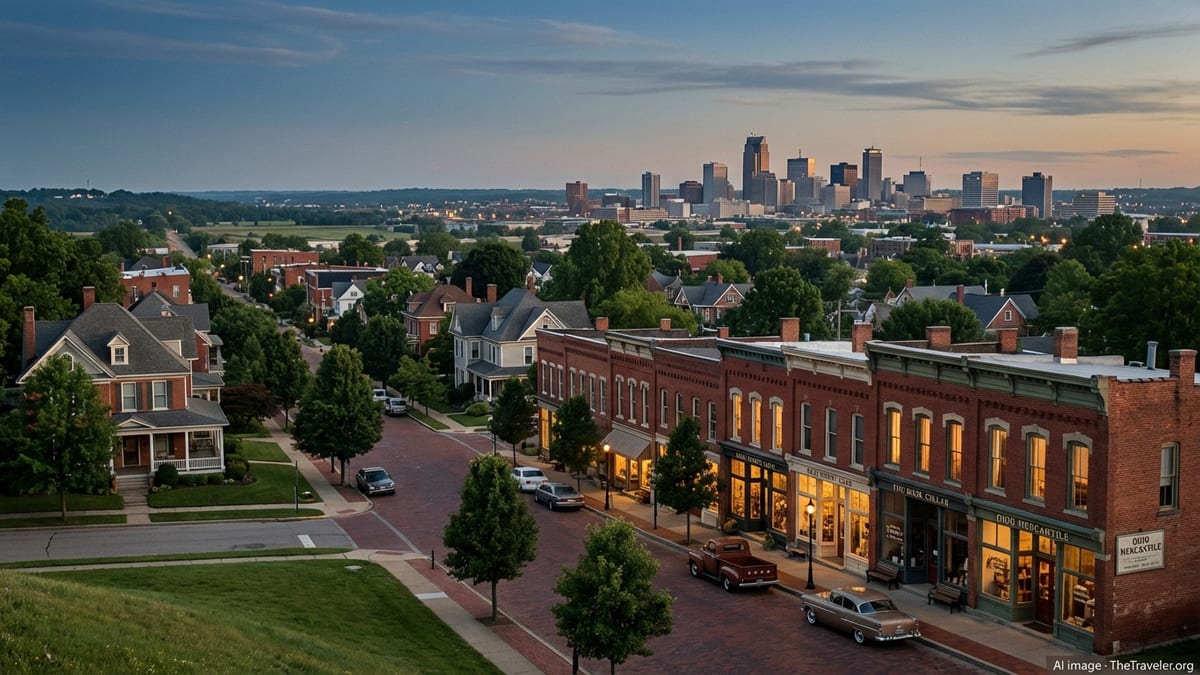
Throughout the countryside, traditional downtowns in villages and small towns remain natural hubs for independent inns and historic hotels. Many of these main streets preserve brick storefronts, antique shops and cafes in walkable blocks. Staying in or near the center of a small town makes it easy to explore by foot, chat with locals and use the community as a jumping-off point for scenic drives through the surrounding farms and forests.
State Parks, Forest Lodges and Nature-Focused Stays
One of Ohio’s underappreciated strengths is the depth of its state park system, which includes lakeside beaches, river gorges and large tracts of forest in the south and east. Many of these parks offer their own lodges, cabins and campgrounds, making it possible to base yourself directly inside the landscape you came to see.
Lakeside parks in central and southern Ohio combine reservoir views with full-service lodges and family-friendly amenities. These properties typically sit beside marinas, small swimming beaches and networks of hiking and biking trails, so you can step outside and be on the water or in the woods within minutes. Room types range from standard hotel-style units to multi-bedroom cabins, and many are designed to host families, groups and small conferences.
In the hillier southeast and south, state parks and adjoining state forests protect rugged hills, rock formations and deep ravines. Lodges in this region feel more like mountain retreats, with wooded views, fireplaces and easy access to trailheads. Simple camper cabins and tent sites provide lower-cost options for travelers who prefer campfires and starry skies to indoor amenities. Because these areas can fill up in peak hiking seasons and fall foliage periods, advance reservations are strongly recommended.
Nature-focused stays in Ohio are not limited to public lands. Private cabins, tiny houses and glamping sites have expanded in recent years on farms, ridges and riverbanks across the state. These accommodations usually emphasize seclusion, views and outdoor features such as decks, hot tubs or outdoor showers. When choosing among them, read recent reviews carefully to understand access roads, proximity to neighbors and how truly remote the setting feels.
Practical Tips for Choosing Where to Stay in Ohio
With so many options, narrowing down where to stay in Ohio starts with clarifying your priorities. If this is a first-time visit or a short trip, basing yourself in or near Columbus, Cleveland or Cincinnati provides the greatest concentration of attractions, dining and nightlife, plus straightforward transportation. For repeat visitors or travelers who prefer slower-paced surroundings, mixing in a small town or state park stay can show a different side of the state.
Transportation is a key consideration. Public transit within the major cities is serviceable in core areas, but most travelers find a car helpful or necessary, especially if they want to explore suburbs, small towns and natural areas. When you plan to drive extensively, look for accommodations that include parking and sit near major routes, such as beltways or interstates, to shorten travel times between regions.
Weather can influence both where you stay and what type of lodging you choose. Lake-effect snow and variable winter conditions in northern Ohio may nudge some travelers toward centrally located city hotels in the coldest months, while summer heat and humidity might make lakefront or shaded forest cabins more appealing. Spring and fall shoulder seasons often provide a balance of comfortable weather, lighter crowds and moderate prices across the state.
Finally, pay attention to local calendars. College football games, festivals, big concerts and regional fairs can dramatically increase demand in certain cities and small towns. Booking early, considering weeknight stays and being flexible on your exact neighborhood or town can all help you secure better rates and more interesting properties, especially during peak travel periods.
The Takeaway
Ohio’s variety can surprise travelers who know it only from highway signs. Within a day’s drive, you can sleep in a downtown tower steps from a major museum, a century-old inn on a brick-lined main street, a cabin in oak woods or a family lodge overlooking a quiet lake. The best place to stay depends less on a single “top spot” and more on how you like to balance culture, nature and downtime.
For energy-packed weekends heavy on food, sports and nightlife, the urban neighborhoods of Columbus, Cleveland and Cincinnati make natural bases. If your ideal trip leans toward browsing antique shops, watching the sunset over farm fields or hiking along a gorge, the state’s small towns and park lodges offer a calmer rhythm. Many travelers find that an itinerary combining both city and countryside stays delivers the richest sense of what Ohio has to offer.
Whichever region you choose, approach your stay with a bit of curiosity and flexibility. Explore a side street, linger in a coffee shop, or take the scenic route between towns. In a state where distances are manageable and landscapes shift subtly from county to county, the journey between overnight stops can become as memorable as the destinations themselves.
FAQ
Q1. What is the best city in Ohio to use as a base for a first visit?
Columbus is often the most practical base for a first trip, thanks to its central location, major airport, walkable core and easy day trips to other regions.
Q2. Is it better to stay downtown or in a neighborhood in Ohio’s big cities?
Downtown areas give you simple access to major venues and transit, while neighborhoods offer more local character and quieter streets. Many travelers split time between the two on longer stays.
Q3. When should I book cabins or lodges in Ohio’s state parks?
For summer weekends, fall foliage and holiday periods, it is wise to reserve cabins and park lodges several months in advance, as they can sell out quickly.
Q4. Are small-town and rural stays in Ohio suitable for families?
Yes. Many small-town inns, farm stays and park lodges cater to families with larger rooms, outdoor space, easy parking and proximity to low-stress activities like short hikes and lake beaches.
Q5. Do I need a car to enjoy staying in Ohio’s cities?
You can manage without a car in central neighborhoods of Columbus, Cleveland and Cincinnati, but a vehicle makes it much easier to explore suburbs, small towns and countryside attractions.
Q6. What time of year is best for a nature-focused stay in Ohio?
Late spring through mid-fall usually offers the best conditions for hiking, lake activities and scenic drives, with autumn standing out for colorful foliage in the hill country.
Q7. How can I find quieter places to stay near popular destinations?
Look one or two towns beyond well-known hotspots, or consider staying in residential neighborhoods instead of main commercial corridors. These areas often have fewer crowds and more relaxed evenings.
Q8. Are there budget-friendly lodging options across Ohio?
Yes. Budget hotels, motels and simple cabins are widespread, especially along major highways and near state parks. Booking midweek and outside peak seasons can keep costs lower.
Q9. What should I consider when choosing between a hotel and a short-term rental?
Hotels usually provide consistent service, on-site staff and predictable amenities, while rentals offer more space and a home-like feel. Your choice may depend on how much independence and support you prefer.
Q10. Is it safe to stay in Ohio’s downtowns and small towns?
Most downtowns and small towns that attract visitors are generally safe, especially around main attractions. As in any destination, it is sensible to stay aware of your surroundings and follow local guidance.