

More news on this day
Airline mobile apps are quietly turning into real-time control centers for disrupted trips, as carriers race to give passengers clearer information about delays, rebookings and their rights when flights go off schedule.
Get the latest news straight to your inbox!
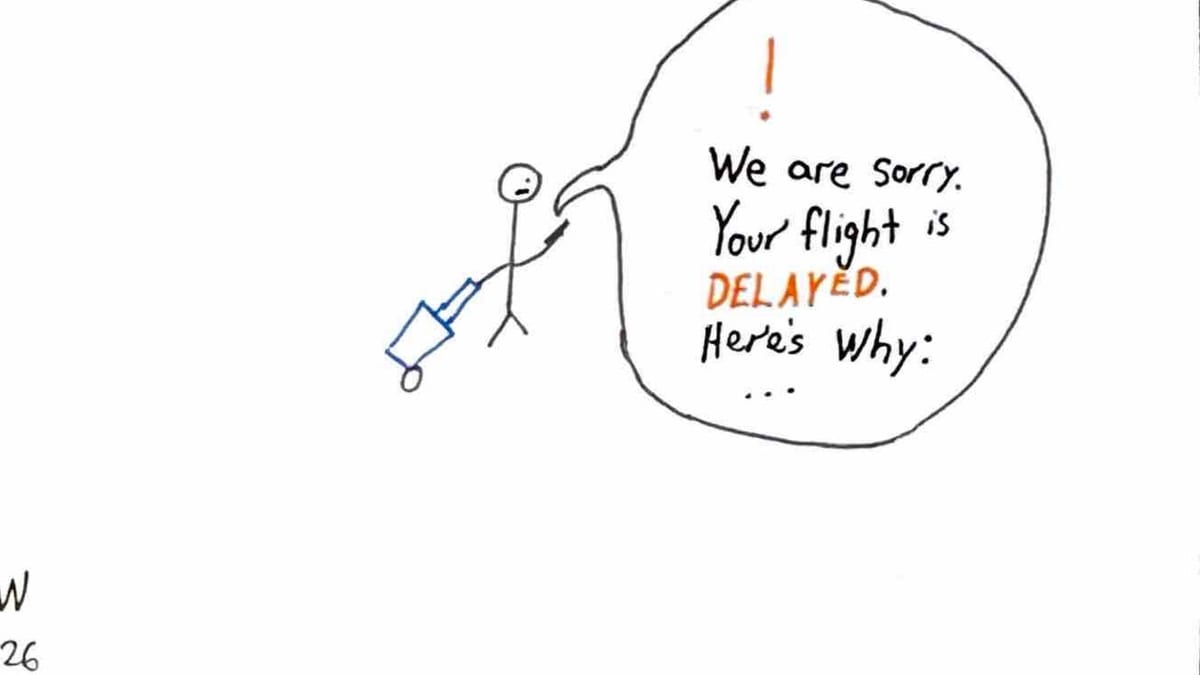
Image by USA Today
Regulation and reputation are pushing new transparency
Rising scrutiny of airline reliability and customer service is accelerating investment in more transparent mobile tools. Publicly available information from the U.S. Department of Transportation shows that carriers must already report detailed on-time performance and delay causes, providing a regulatory baseline that can be repurposed into consumer-facing updates inside apps.
Recent rulemaking activity has also kept pressure on airlines to communicate disruptions more clearly. Analyses of federal consumer protection initiatives indicate that regulators are examining how quickly and accurately passengers are told about significant delays, cancellations and compensation options. Even when specific fee and compensation rules are delayed or challenged, industry observers note that airlines have strong incentives to show they are improving disclosure on their own digital platforms.
At the same time, reputational risk from high-profile meltdowns has made opaque communications less acceptable. After major system outages and weather events in recent years, media coverage has often focused as much on poor communication as on the operational failures themselves. Airlines have responded by highlighting app upgrades in earnings calls and public statements, positioning better delay transparency as a visible sign of lessons learned.
This mix of regulatory expectations, political attention and brand pressure is encouraging carriers to surface more granular details through their apps, from the specific cause of a delay to rebooking and refund pathways that once required a long line at the airport.
Richer data feeds are powering real-time delay insights
Behind the cleaner interfaces, airline apps are increasingly driven by powerful data pipelines. Aviation standards such as the Aviation Information Data Exchange, along with schedule and minimum connection time databases maintained by industry associations, have created common formats for sharing information on flight status, disruption codes and operational times between airlines, airports and technology providers.
Specialized aviation data firms now supply real-time and predictive information that can be integrated directly into airline apps. These providers combine radar tracking, aircraft telemetry, airport congestion metrics and weather data to generate more accurate estimates of departure and arrival times. Many also offer predictive models that flag potential downstream delays when an aircraft, crew or airspace sector begins to fall behind schedule.
Consumer travel apps have demonstrated how these techniques can be used to warn passengers of trouble earlier, offering proactive alerts when an inbound aircraft is late or when historical patterns suggest a high risk of delay. Airlines are increasingly bringing similar capabilities into their own branded apps, giving customers a single, authoritative view of their journey rather than forcing them to cross-check multiple third-party services.
By consolidating internal operations data with external feeds, airline apps can now explain not just that a flight is delayed, but why, how long the disruption is likely to last and what knock-on effects may appear later in the itinerary. That shift from simple status boards to contextual explanations is at the heart of the new transparency push.
From static notifications to proactive disruption management
Several large carriers have moved well beyond basic push alerts to offer in-app disruption management tools that activate as soon as delays cross certain thresholds. Public coverage of recent product launches describes systems in which passengers receive automatic notifications when a delay exceeds an hour, along with options to accept alternative flights, request meal vouchers or explore hotels, all within the mobile interface.
These tools draw on the same internal decision engines used by airport agents, but expose them directly to travelers’ phones. In many cases, the app can process rebookings in the background, reserving seats on backup flights before queues even form at customer service desks. This reduces pressure on airport staff while giving passengers clarity on their options during tense moments.
Some airlines are also experimenting with more conversational, plain-language explanations. Publicly described initiatives include the use of generative artificial intelligence models to translate technical delay codes and operational notes into messages that explain, for example, that an inbound aircraft is stuck behind a ground stop or that crews have exceeded duty time limits. The goal is to replace vague references to “operational reasons” with narratives that feel credible and specific.
These features are not perfect and sometimes highlight inconsistencies between app messages and what passengers see at the gate. Nevertheless, the general direction is toward more detailed, self-service delay handling on mobile, turning the app into the primary channel for understanding and managing disruptions.
Competition and customer expectations set a higher bar
Intense competition among airlines has made technology a key differentiator, with mobile experience now featuring prominently in advertising and loyalty pitches. When one major carrier introduces more precise delay countdowns, live boarding clocks or automatic meal vouchers in its app, rivals face pressure to match or exceed those tools to retain frequent flyers.
Third-party travel apps and flight-tracking platforms also shape expectations by showing what is technically possible. Travelers have grown used to seeing detailed aircraft positions, gate changes and historical delay patterns on independent services, and many now question why an airline’s own app should offer less information than public trackers. This comparison effect has encouraged carriers to close the gap and integrate more sophisticated tracking and prediction features.
Passenger behavior has evolved in parallel. Surveys cited in industry coverage suggest that travelers increasingly rely on smartphones as their primary source for journey updates, often trusting app notifications more than airport announcement systems. With mobile screens becoming the default information channel, airlines risk backlash when delay information arrives late, conflicts with departure boards or omits key details such as likely connection risks.
The result is a technology race in which richer delay transparency is one of the most visible wins. Features that once appeared as premium perks for elite customers, such as detailed disruption timelines or proactive rebooking suggestions, are moving into the mainstream of airline app design.
Challenges and limits to full transparency
Despite rapid progress, truly comprehensive delay transparency remains difficult to achieve. Flight operations are influenced by an intricate web of factors including air traffic control constraints, crew scheduling rules, maintenance issues and fast-changing weather systems. Many of these inputs evolve minute by minute, forcing airlines to balance the desire for early warnings with the risk of sending information that later proves inaccurate.
There are also commercial and legal sensitivities around how much operational detail to share. Publicly available commentary from industry lawyers notes that airlines must weigh transparency against potential liability, particularly when apps surface estimates or explanations that differ from official airport or regulator messaging. Overly specific claims about causes and timelines can become problematic if they are later challenged.
Technical debt within airline IT systems adds another constraint. Incidents in recent years have revealed how legacy infrastructure can struggle under pressure, limiting the quality and speed of data flowing into customer-facing channels. In some cases, apps lag behind gate updates or display cached information, eroding traveler trust precisely when reliability matters most.
Even with these hurdles, the trajectory is clear. As data standards mature, regulatory scrutiny persists and travelers demand more candid communication, airline apps are steadily shifting from generic delay banners to nuanced, real-time stories about what is happening to each flight and what passengers can do about it.