

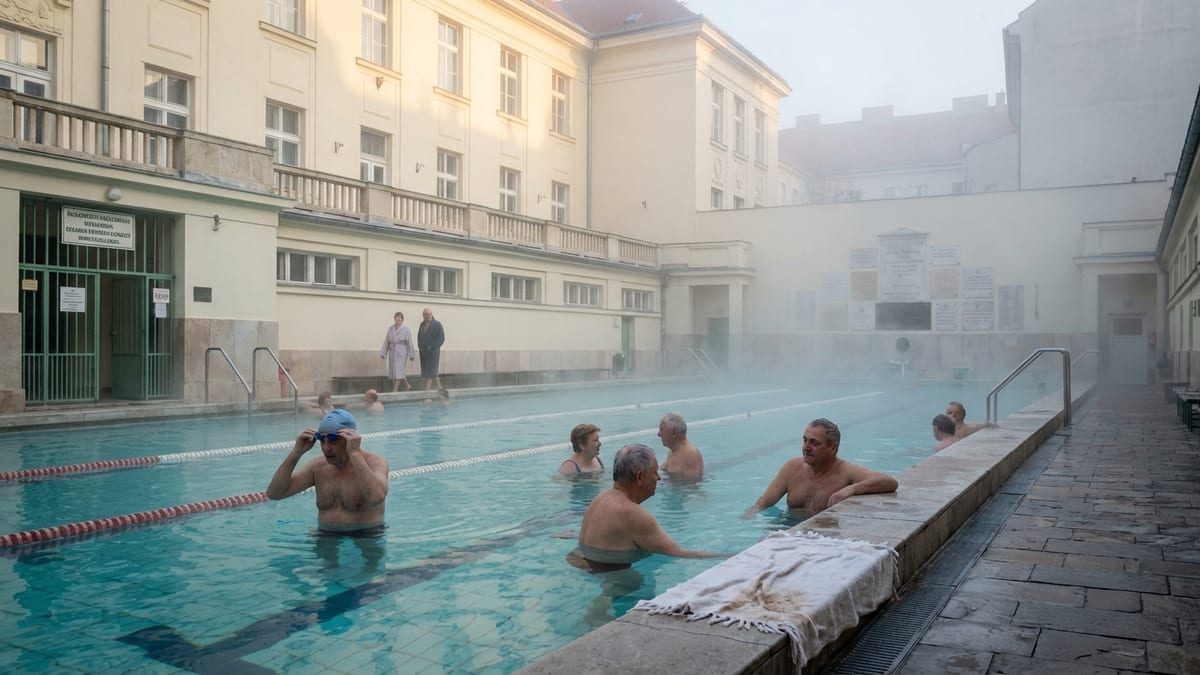
On a misty morning in Budapest, when the city’s trams rattle awake and the Danube is still half asleep, there is one bath complex where the chatter is mostly Hungarian, the towels are a little frayed, and the air smells faintly of minerals and eucalyptus.
This is Lukács Bath, a place where Budapest locals quietly turn their backs on the city’s blockbuster spas and slip instead into a ritual that feels more neighborhood club than sightseeing stop. To understand why, you have to look past the brochures and Instagram feeds and follow the people who actually live here.
The Soul of a Neighborhood Bath
Lukács Bath is not the thermal equivalent of a theme park. While Széchenyi steams beneath Baroque facades and selfie sticks, and Gellért glitters with art nouveau mosaics, Lukács feels almost understated by comparison. The architecture is handsome but not theatrical, the outdoor pools cheerful rather than grand. What draws locals is not spectacle but familiarity: they come on Tuesday before work, on Thursday after physiotherapy, on Saturdays to catch up with an old friend between soaks.
The tone is set the moment you walk in. The ticket hall feels functional, almost municipal, in a way that tells regulars this place exists first for them. Staff recognize repeat visitors, pensioners move with easy confidence, and the signage is geared more toward clear information than curated photo opportunities. While foreign languages drift through the air, Hungarian still dominates, and the vibe is calm, quietly social, and unhurried.
There is also a strong sense that Lukács is still part of a living city rather than a sealed-off attraction. Its Buda-side location, near Margaret Bridge and residential streets, means it slots easily into daily routines. Locals stop by before the office, between medical appointments, or after a walk along the Danube. It feels like a community center with hot springs attached, not an excursion you plan a month in advance.
That ordinariness is exactly the appeal. For Budapesters, baths are not a bucket-list item but a habit. Lukács, more than the marquee spas, preserves that everyday rhythm in a way that feels authentic and resistant to the city’s booming tourism economy.
From Knights and Gunpowder to Modern Rheumatology
The roots of Lukács Bath run as deep as its springs. Thermal waters have been tapped on this spot since at least the 12th century, when the Knights Hospitaller established a hospital and bath complex here. Over the centuries, other religious orders followed, constructing monastic baths that used the hot water primarily for healing rather than luxury.
During Ottoman rule, the same springs helped power a very different enterprise: an imperial powder mill that harnessed thermal water energy for grinding and production. Intriguingly, fragments of this industrial past still survive in the complex, with sections of wall preserved from the old mill. Lukács is one of those rare places where you can float in a pool while surrounded by centuries of layered history that never became stage set or theme.
The modern incarnation of Lukács truly took shape in the late 19th century, when entrepreneur Fülöp Palotay bought the bath from the state treasury in 1884. He added a spa hotel and a then-advanced hydrotherapy department, turning the bath into a magnet for health seekers from across Europe. Grateful patients began mounting marble plaques in the courtyard to thank doctors and the institution for cures, a tradition that continues today. Anyone wandering through the garden will see hundreds of tablets in multiple languages, all testifying to knees, backs, and hearts that found relief here.
This medical legacy deepened in the 20th century. A drinking hall was constructed in 1937 so guests could take the mineral water internally, and in 1979 Lukács became home to Budapest’s first daytime hospital department dedicated to complex balneotherapy. Even today a rheumatology and physiotherapy institute occupies part of the complex. For locals, this continuity matters. Lukács is not just a beautiful bath repurposed as a wellness brand; it is still tied to Hungary’s health system and to a tradition of prescribed treatments that gives the water a seriousness other spas sometimes lack.
Medicinal Waters and Quiet Routines
Ask a Budapest resident why they prefer Lukács, and you will often hear about the water itself. Fed by Buda’s limestone hills, the springs here are rich in calcium, magnesium, sulfates, and fluoride, minerals long associated with easing joint pain, supporting rehabilitation after orthopedic surgery, and improving certain circulatory and spinal conditions. General practitioners and specialists still prescribe courses of bathing, weight traction therapy, and mud treatments at Lukács for patients with arthritis, rheumatism, and chronic back issues.
That medical function shapes the mood. Locals do not come only to relax; many are here under doctor’s orders, respecting time limits in each pool and alternating between hot and cold according to therapeutic regimens. The thermal hall is a place of slow conversation and introspection, not champagne and loud laughter. Signs gently remind visitors to keep noise down, and regulars enforce these norms with a simple shush when needed.
Outside, the main leisure pool has jets, effervescent beds, and a lazy river corridor, but even here the ambience is tempered. Families with young children are not the core audience, and thrill-seeking tourists often turn elsewhere, leaving space for locals to use the amenities as intended: as tools to unwind tight muscles after a week at a desk, to stretch rehabilitating shoulders beneath waterfall jets, to sit quietly in warm water with closed eyes and a familiar skyline above.
There is also the drinking hall, where guests can sip lukewarm mineral water straight from the source. Locals line up at the fountains with reusable cups, discussing dosage and taste. It is not glamorous, but it is part of a deeper relationship with the spring, one based on trust and routine, not novelty.
Less Instagram, More Authenticity
Budapest’s most famous baths have become icons in the age of social media. Széchenyi’s ochre courtyards and winter steam, Gellért’s stained glass and indoor colonnades, and even the Ottoman dome of Rudas have all starred in global travel campaigns. Lukács rarely makes the front of the brochure. That is precisely why many locals love it.
With fewer tour buses dropping passengers at the door, Lukács maintains a more organic crowd. Travelers do come, of course, but they tend to be those who have looked beyond the first page of search results or who have been tipped off by a Hungarian friend. The result is an atmosphere that feels less performative. There are fewer people angling for the perfect shot, fewer inflatable props, fewer long queues at the outdoor chessboards or whirlpools.
Prices also reflect this quieter status. Entry to Lukács is generally cheaper than Széchenyi or Gellért, especially on weekdays. For locals buying monthly passes or returning frequently, that difference is significant. Many see no reason to pay a premium to compete with crowds for similar pools when Lukács offers high quality thermal water, multiple saunas, lap lanes, and a wellness area at a more approachable cost.
For Budapest residents, the value is not only financial. Lukács demands less emotional energy. There is no need to navigate hordes of stag parties, no blaring music in the thermal hall, no sense that the space has been fully repurposed as a tourist spectacle. When you slip into the 36-degree pool here, you are surrounded by people largely using the bath the way Hungarians always have: to heal, to socialize quietly, and to press pause on the week.
A Culture of Etiquette and Mutual Respect
Part of what distinguishes Lukács from the more tourist-heavy spas is the shared code of behavior. Budapest’s baths all have posted rules, but at Lukács regulars actively uphold them, creating a self-regulating culture that locals find reassuring. Visitors are expected to shower thoroughly before entering any pool, to move calmly between areas, and to respect posted time and temperature guidelines in thermal and steam sections.
Noise is perhaps the most important unwritten rule. In indoor thermal halls, voices are kept low, phones are used discreetly if at all, and group silliness is frowned upon. Staff and frequent bathers would rather gently correct someone than see the space slide toward chaos. For residents who come to unwind aching joints or decompress from work, this quiet is non-negotiable and they know they are more likely to find it at Lukács than at the headline spas.
The etiquette extends to photography. While taking pictures is allowed, snapping constant selfies or photographing strangers is considered bad form. Lukács simply is not built as a backdrop: there are fewer ornamental flourishes and dramatic vistas, so the focus naturally shifts back to the experience itself. Locals appreciate that the space encourages presence rather than performance.
Finally, there is a subtle sense of mutual care. People look out for elderly bathers wobbling on wet tiles, give a nod of recognition to the same faces they see every week, and make space for those moving gingerly in and out of the water. In a city that can feel hectic on the surface, Lukács offers a pocket of old-fashioned civility, shaped as much by regular guests as by management.
Everyday Practicality: Location, Layout, and Cost
Beyond atmosphere and history, locals are practical. Lukács scores highly on convenience. Its Buda-side address near Margaret Bridge places it within easy reach of tram lines and riverside bike paths. People can arrive in swimwear under a coat, spend two hours soaking and stretching, and be back at their desks or home kitchen without crossing the entire city.
The layout also suits habitual use. Lukács offers a distinct swimming section with lap pools that stay cooler, ideal for training and cardiovascular exercise, alongside the warmer leisure and thermal areas. Regulars can combine a serious swim with a short therapeutic soak, which fits both medical prescriptions and personal fitness routines. Saunas range from milder herbal rooms to intense Finnish heat and infrared cabins, so locals with varying tolerances and goals can customize a circuit that works for them.
From a budget perspective, Lukács tends to be kinder to repeat visitors. Full-day tickets are typically a few euros lower than at Széchenyi or Gellért, weekday pricing can be noticeably cheaper, and city residents often benefit from passes and discounts. For pensioners, people on fixed incomes, or anyone incorporating baths into weekly healthcare, those price differences accumulate quickly across months and years.
Then there is the matter of add-ons. At Lukács, massages, weight-bath treatments, and mud therapy are pitched not only as indulgences but also as part of a structured therapeutic toolkit. Locals know which physiotherapist they like, or which traction treatment has helped their spine, and they book accordingly. Far from a once-in-a-lifetime splurge, these services become part of an ongoing, affordable health strategy grounded in the bath’s medical identity.
A Living Link Between Medicine and Leisure
One of the distinctive features of Lukács is the way it blends clinical and casual worlds. Within the same complex, you find a national rheumatology and physiotherapy institute, hospital wards, consultation rooms, and a full public spa. Patients arrive clutching referrals for weight baths or specialized therapies, while next door office workers check in for a simple afternoon soak and sauna.
This coexistence shapes how locals perceive the place. At Lukács, hot water is not merely a lifestyle accessory; it is a prescribed treatment backed by decades of orthopedic and rheumatologic practice. People see physicians in hallways, hear snatches of clinical Hungarian about diagnoses and protocols, and watch fellow bathers wearing neck harnesses or ankle weights during traction sessions. The water’s medicinal reputation is thus constantly being reinforced by the visible presence of healthcare professionals and patients.
At the same time, Lukács is not austere. Outside the hospital areas, the wellness pool’s massage jets, outdoor decks, and lounging corners invite pleasure and relaxation. For locals, the appeal lies in that duality. They can treat a soak both as a small luxury and as a valid form of self-care prescribed by a doctor. The bath becomes a place where well-being is both serious and quietly enjoyable, without the pressure of spa marketing vocabulary.
In an era when wellness is often packaged as an aspirational consumer product, Lukács offers something more grounded: a centuries-old urban infrastructure that residents use day in and day out to stay mobile, manage chronic conditions, and simply feel better in their bodies.
The Takeaway
Budapest’s thermal baths are all part of the same geothermal story, but they play different roles in the city’s daily life. Széchenyi and Gellért deliver the postcard images and the grand settings that first-time visitors understandably flock to. Rudas offers atmospheric Ottoman stonework and rooftop vistas. Yet when the tourists go home and the city settles into its routines, many locals still turn to Lukács.
They choose it because it feels like theirs: modest, medically serious, and comfortably worn-in. Lukács offers mineral-rich waters with centuries of healing behind them, a culture of quiet etiquette, and a pattern of regular use that transforms bathing from experience into habit. It is less about spectacle and more about continuity, a place where marble plaques, hospital corridors, and steaming outdoor pools all tell versions of the same story.
For travelers curious about how Budapest really bathes, following locals to Lukács can be more revealing than any grand facade. Go on a weekday morning, leave your camera mostly in your locker, watch how Hungarians move through the space, and let yourself become, if only for a few hours, part of a ritual that predates tourism by many centuries.
FAQ
Q1: Is Lukács Bath really less touristy than Széchenyi and Gellért?
Yes. While visitors do come to Lukács, it attracts far fewer large tour groups and party crowds than Széchenyi or Gellért, especially on weekday mornings. The atmosphere is quieter, more local, and more focused on relaxation and therapy than on spectacle.
Q2: What makes Lukács Bath’s water special?
The springs feeding Lukács are rich in minerals such as calcium, magnesium, and sulfates that have long been associated with easing joint and spine problems, rheumatism, and post-surgery recovery. This medicinal reputation is supported by the bath’s long-standing connection with rheumatology and physiotherapy clinics on site.
Q3: Why do locals see Lukács as more authentic?
Locals view Lukács as authentic because it has functioned for generations as a neighborhood health bath rather than a showpiece. Hungarian is still the dominant language, medical treatments are part of daily operations, and regular visitors use it as part of their weekly routine, not as a one-off attraction.
Q4: Is Lukács cheaper than the big tourist baths?
Generally yes. Standard day tickets at Lukács tend to cost less than at Széchenyi or Gellért, especially on weekdays. For locals who visit frequently or purchase passes, this price difference adds up and makes Lukács an economical choice without sacrificing quality.
Q5: What is the etiquette like at Lukács?
Lukács prioritizes calm and respect. Guests are expected to shower before entering pools, keep voices low in thermal and indoor areas, use phones discreetly, and avoid disruptive behavior. Regulars are quick to defend this atmosphere, which is one reason many locals prefer the bath.
Q6: Are children allowed at Lukács Bath?
Lukács is primarily designed for adults and teenagers, in line with the medicinal nature of its hot pools and saunas. Children under a specified age are often restricted from thermal sections for health reasons, and families with young kids usually choose more family-oriented complexes elsewhere in the city.
Q7: How does Lukács compare in terms of facilities?
Lukács offers a full suite of amenities: indoor and outdoor thermal pools, leisure pools with jets, cooler lap pools, multiple saunas and steam rooms, a drinking hall, and medical treatment areas. It may lack some of the ornate decoration of Gellért or the sprawling courtyards of Széchenyi, but it delivers everything needed for serious bathing and relaxation.
Q8: When is the best time to visit Lukács for a local feel?
Weekday mornings are ideal. You will find mainly residents, regular bath-goers, and patients combining their treatments with a soak. Late afternoons and weekends can be busier, but Lukács stays more manageable than the most famous spas even then.
Q9: Can I combine a medical treatment with a regular spa visit?
Yes. Many people come to Lukács with a doctor’s referral for weight baths, mud therapy, or physiotherapy sessions and then enjoy the wellness and thermal sections before or after. This blend of medicine and leisure is part of what makes the bath distinctive among Budapest’s spas.
Q10: Should a first-time visitor to Budapest choose Lukács over Széchenyi?
It depends on your priorities. If you want iconic architecture and a classic postcard experience, Széchenyi or Gellért may be your first stop. If you prefer a calmer, more local atmosphere with a strong medicinal focus and fewer crowds, Lukács is a compelling alternative, and many seasoned travelers and residents quietly consider it the better long-term companion.