

More news on this day
More than half a century after its first flight and years after passenger operators began retiring it, the Boeing 747 remains one of the most sought-after aircraft in the global cargo market, even as newer, more fuel-efficient freighters arrive on the scene.
Get the latest news straight to your inbox!
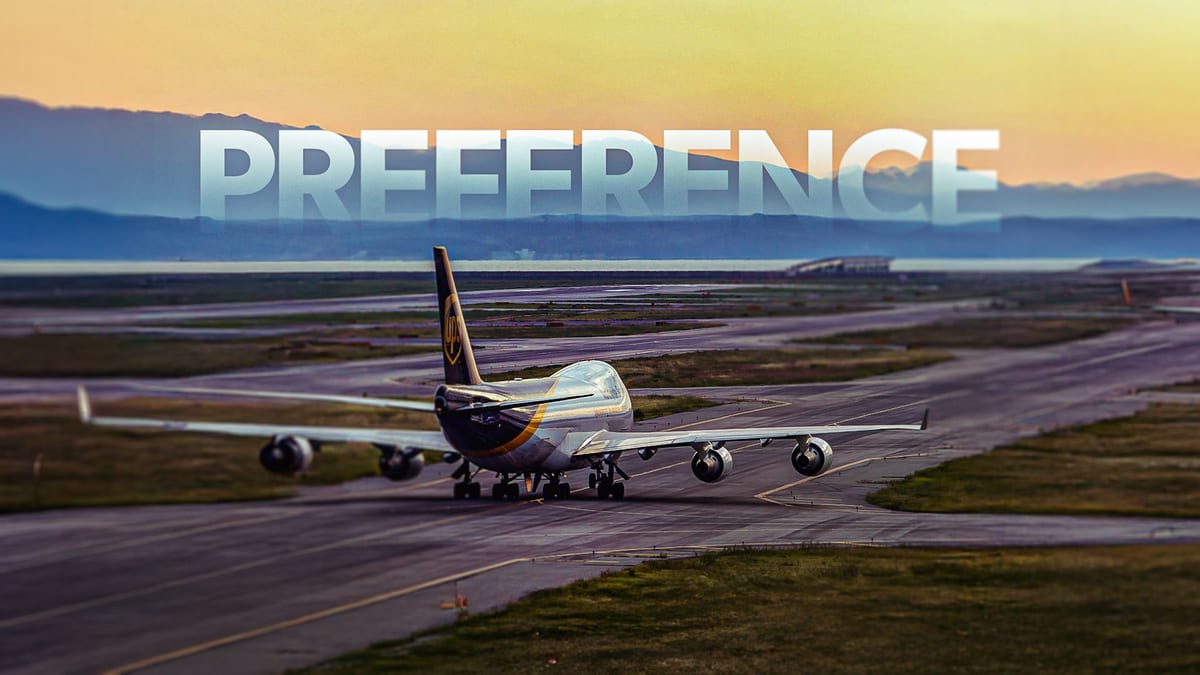
Image by Simple Flying
A Freighter Designed Around Cargo, Not Passengers
The 747’s enduring appeal starts with the way it was engineered. Unlike many modern freighters that began life as passenger jets and were later adapted for cargo, the 747 was conceived from the outset with freight in mind. Its signature raised cockpit allowed a continuous main-deck cargo floor, creating a vast, unobstructed space that airlines can monetize across a wide mix of loads and route types.
The latest purpose-built version, the 747-8F, offers one of the highest volume capacities of any commercial freighter in service. Publicly available technical data shows that its combination of volume, payload and range positions it at the top of the large widebody segment, especially for dense long-haul lanes. Operators indicate that this flexibility is difficult to match with twin-engine types optimized primarily for belly cargo or lower-deck freight.
Production of the 747 ended in 2022, with the final aircraft, a 747-8F, delivered to Atlas Air in January 2023. Yet fleet data available from industry reports shows dozens of 747-400F and 747-8F aircraft still flying with dedicated cargo carriers from North America to Europe and Asia, underscoring the type’s continued economic relevance.
For cargo specialists, the 747’s mature support ecosystem is another advantage. Decades of operational experience have built a deep global network of maintenance providers, spare-parts inventories and trained crews. This lowers operational risk compared with brand-new types that are still ramping up support infrastructure.
The Unique Nose Door Advantage
The most visible feature that keeps the 747 in high demand is its swing-up nose cargo door. Industry analyses describe how this capability allows ground teams to load exceptionally long, tall or awkwardly shaped cargo items directly along the length of the main deck, something that is impossible on most other commercial freighters that rely solely on side doors.
This feature makes the aircraft a preferred platform for outsized loads such as industrial machinery, power-generation components, rail equipment, helicopters and even military vehicles. Aviation trade coverage explains that cargo pieces measuring well over 20 meters in length can be accommodated, turning the 747 into a commercial alternative to rarer heavy-lift types like the Antonov An-124, which themselves operate in limited numbers.
Specialized logistics firms that charter entire aircraft for project cargo frequently favor the 747 for this reason. Reports on the air-cargo charter market highlight that being able to use cranes and high-loaders unobstructed through the nose reduces ground time and handling complexity. For shippers of high-value industrial goods, that translates into meaningful savings and fewer risks of damage.
Crucially, no new-generation freighter currently entering the market offers a comparable nose-loading capability. While aircraft such as the Airbus A350F and Boeing 777-8F promise strong fuel-burn improvements, they rely on conventional side cargo doors. For airlines whose business model depends on outsized and project cargo, that limitation keeps the 747 at the center of fleet planning.
Economics: Paid For, Flexible and Convertible
Another reason cargo airlines continue to prefer the 747 lies in basic economics. Many of today’s 747 freighters, especially the 747-400F and passenger-to-freighter (P2F) conversions, are largely or fully depreciated assets. That significantly lowers capital costs compared with ordering next-generation freighters, which can cost well over 150 million dollars per aircraft at current list levels before discounts.
Analysts note that for an 11 to 20-year-old widebody airframe, conversion to a freighter can be achieved for a fraction of the price of a new-build jet. While this is more common for types like the 767 and 777, the broader lesson still applies: in volatile cargo cycles, operators value aircraft that can be acquired or upgraded at relatively low capital outlay. The 747’s long production run and large installed base have created a pool of airframes that can be maintained and modernized without committing to entirely new types.
Fuel burn and emissions performance are areas where newer twins hold clear advantages, and manufacturers promote that gap aggressively. Yet cargo-market studies over the past two years show that total trip economics still favor older large freighters on certain dense, long-haul routes, especially where payload can be maximized in both directions. When high utilization is possible, lower ownership costs can offset higher fuel bills.
Flexibility in mission profile also matters. The 747 can operate scheduled trunk routes for express carriers, fly ad hoc charters for humanitarian missions or project cargo, and support wet-lease and ACMI contracts for other airlines. This ability to move between business models is attractive to operators seeking to smooth out sharp swings in demand.
E-Commerce, Network Hubs and the Travel Connection
The rapid growth of e-commerce has reshaped global cargo flows, and the 747 has adapted well to that shift. Recent industry research on online retail logistics points out that high-volume widebody freighters, including the 747-8F, have become workhorses on Asia to North America and Asia to Europe lanes, where parcel integrators need both space and range.
Airports such as Hong Kong, Anchorage, Dubai, Leipzig, Louisville and Cincinnati have emerged as key cargo superhubs where integrators and cargo airlines schedule dense waves of arrivals and departures. Reporting on these hubs notes that 747 operations remain a visible part of the nightly traffic patterns, with aircraft moving both bulk e-commerce shipments and higher-yield freight.
There is also an indirect link to passenger travel. Aviation market analysis shows that cargo hubs frequently evolve into broader aviation ecosystems, attracting connecting passenger flights, maintenance providers, logistics companies and tourism investment. As 747 freighters help sustain high cargo volumes into cities like Dubai, Seoul or Miami, they reinforce the case for airlines to add or maintain long-haul passenger routes that benefit leisure and business travelers.
For tourism boards and airport authorities, reliable widebody freighter capacity can be part of a strategy to position their city as a trade and travel gateway. While belly cargo in passenger aircraft handles much of the world’s freight, dedicated freighters such as the 747 provide scheduling control and specialist capabilities that support just-in-time supply chains for industries from fashion to electronics.
New Freighters Are Coming, But Transition Will Be Slow
Despite the 747’s advantages, the market is clearly shifting toward new-generation freighters. In March 2026, Atlas Air, the world’s largest 747 freighter operator, agreed to purchase 20 Airbus A350F aircraft, becoming the largest customer for the type so far. Industry coverage of the deal indicates that the A350F will complement, rather than immediately replace, Atlas’s 747, 767 and 777 fleets.
Manufacturers forecast that aircraft such as the A350F and Boeing’s planned 777-8F will deliver double-digit reductions in fuel burn and comply with upcoming emissions standards taking effect later this decade. Airbus promotional material emphasizes that the A350F is being designed to meet 2027 ICAO CO2 requirements, while Boeing continues to market its current 777F alongside future derivatives for freight operators planning renewals.
However, widebody freighter programs involve long lead times. The A350F is not expected to enter service until the second half of the decade, and delivery slots for early customers run well into the 2030s. Public presentations from cargo airlines show that many operators plan to operate mixed fleets for years, using 747s for niche, high-volume or outsized missions while gradually introducing newer twins on fuel-sensitive lanes.
Forecasts from cargo-market consultancies suggest that dedicated freighter demand will keep rising through at least the early 2040s, with growth particularly strong in large widebody segments. Within that context, the 747’s combination of capacity, nose-loading capability and fully amortized cost base ensures it will remain a fixture in cargo fleets long after production has ended and as tourism, trade and e-commerce continue to reshape global air routes.