

More news on this day
Estonia, a compact Baltic nation long known for medieval skylines and digital innovation, is rapidly gaining attention as one of Europe’s most secure and empowering destinations for solo female travelers.
Get the latest news straight to your inbox!
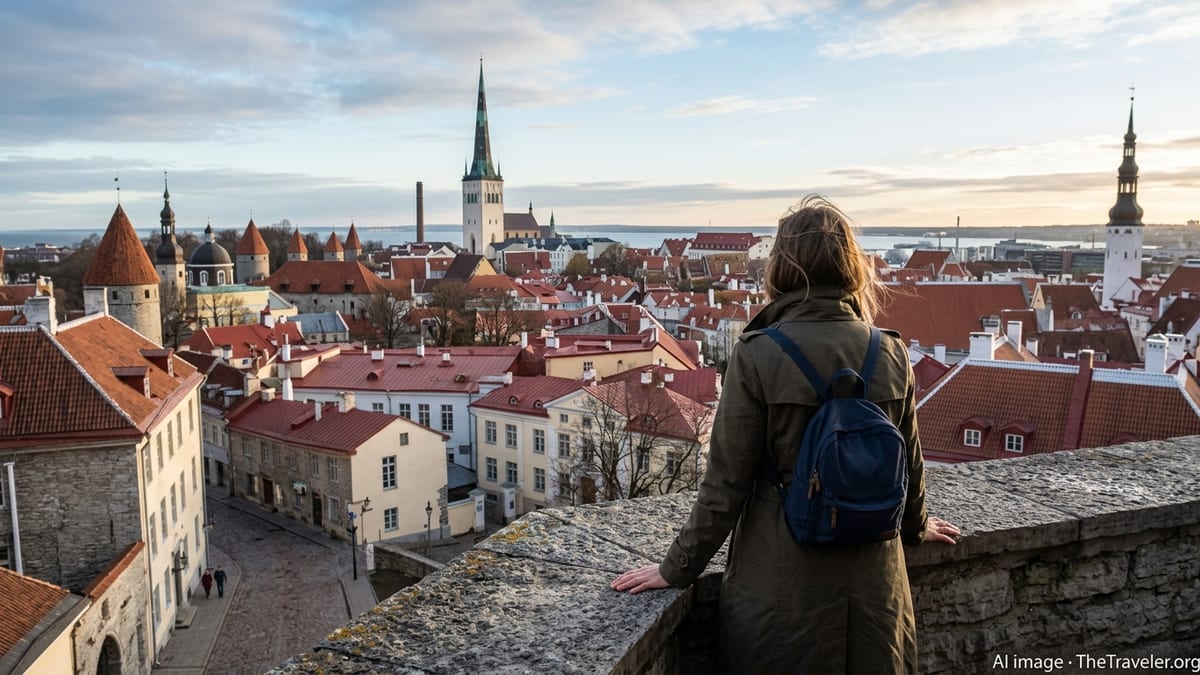
Strong Safety Ratings Put Estonia on Solo Travelers’ Radar
Recent global safety and peace indices increasingly position Estonia among the more secure countries in the world, a key factor in its appeal to women traveling alone. The Global Peace Index places Estonia in the top tier of peaceful nations, while travel safety rankings highlight low levels of violent crime and political instability compared with many larger destinations. Additional assessments, such as terrorism risk indices, show Estonia with negligible threat levels, reinforcing its image as a calm and predictable place to explore.
City-level evaluations echo this picture. Travel risk reviews for Tallinn published in early 2026 describe the capital as generally very safe, including for solo female visitors, citing low rates of street crime in central areas and reliable emergency services. Community-driven rating platforms focused specifically on solo female travel report high scores for Tallinn and the university city of Tartu, pointing to a combination of walkability, lighting, and the visible presence of everyday residents in public spaces at most hours.
Perceptions from travelers themselves also play a part in Estonia’s rising profile. Discussions in online solo female travel communities regularly characterize the country as one of the safest places they have visited in Europe, with many contributors noting they felt comfortable walking alone in the old towns and using public transport after dark with basic precautions. These converging indicators are helping move Estonia from under-the-radar option to serious contender on safety-focused destination shortlists.
Digital Society Makes Independent Travel Smoother
Estonia’s reputation as one of the world’s most advanced digital societies is increasingly visible in the day-to-day experience of visitors. Publicly available government and tourism information highlights extensive e-services, from digital ticketing to cashless transport and wide access to fast public Wi-Fi. For solo female travelers, this infrastructure can reduce stress by making it easier to navigate, plan routes, and stay in contact with friends or family while on the move.
Contactless payments are widely accepted even for small purchases, and transit systems in Tallinn and regional hubs are designed to be easily managed via apps and smart cards. Reports from recent visitors indicate that schedules, route planners, and real-time updates are readily available in English, lowering language barriers. The combination of reliable connectivity and intuitive digital tools allows solo travelers to change plans at short notice, research neighborhoods, and arrange rides or accommodation on the go.
Estonia’s emphasis on transparency and efficient public administration can also add a layer of reassurance. International comparisons of rule of law and economic freedom consistently place Estonia among the higher-ranked European countries, reflecting relatively strong institutions and low perceived corruption. For solo travelers, that often translates into clear regulations, predictable pricing in public services, and fewer surprises when interacting with local systems.
Progressive Social Climate Supports Inclusive Travel
Estonia’s evolving social landscape is another factor in its growing appeal, particularly for women and LGBTQ travelers. Over the past decade, the country has moved toward more liberal policies on equality and inclusion. By 2024, Estonia became the first Baltic state to legalize same-sex marriage, and European human rights organizations now rank it in the mid-to-upper range of the continent for LGBTQ protections and legislation.
Anti-discrimination laws that cover gender and sexual orientation, alongside growing public support for equality, create a more predictable environment for diverse solo travelers. While social attitudes can still vary between urban and rural areas, major destinations such as Tallinn and Tartu are generally described in traveler reports as open and relatively relaxed. Cafes, coworking spaces, and cultural venues in these cities regularly host events that draw an international, mixed-gender crowd, giving solo visitors low-pressure opportunities to connect with others.
For women who are new to solo travel or cautious about cultural norms, this combination of legal protections and visible diversity can be reassuring. Travel guides aimed at solo female audiences frequently note that Estonian locals tend to respect personal space, with relatively little overt street harassment in central districts compared with many other European capitals. While isolated incidents do occur, as in any country, current coverage suggests they are the exception rather than the rule.
Nature, Small Cities and Low-Pressure Exploration
Beyond its capital, Estonia offers a network of compact cities, coastal towns, and forested national parks that lend themselves to low-pressure exploration, especially for solo travelers seeking a slower pace. Publicly available tourism data shows that domestic and regional visitors are increasingly drawn to protected areas such as Lahemaa National Park, where well-marked hiking routes, bog boardwalks, and coastal trails allow for independent day trips without technical experience.
Estonia’s relatively small size means that many destinations are within a few hours of Tallinn by bus or train. This accessibility makes it easier for solo travelers to base themselves in one city yet sample different landscapes, from the islands of Saaremaa and Hiiumaa to lakes and wetlands in the interior. Reports from hikers and cyclists describe trails that are generally well maintained, with wayfinding signage and shelters that make spontaneous outings more feasible, even for those traveling alone.
Crime statistics and regional comparisons indicate that rural Estonia experiences particularly low levels of violent crime, which contributes to a sense of security on country walks and in smaller towns. Local travel advisories still recommend standard precautions such as informing someone about longer hikes and checking seasonal weather, but overall guidance portrays outdoor adventures in Estonia as accessible to solo women, including those with limited previous experience.
Empowering Infrastructure for Work, Wellness and Community
Estonia’s emergence as a hub for digital workers is further reinforcing its attraction for solo female travelers who want to combine leisure with work or skill-building. The government’s pioneering digital nomad visa and the country’s strong performance in economic freedom and tax competitiveness indices have helped draw a growing number of remote professionals. This has, in turn, supported a network of coworking spaces, cafes with reliable Wi-Fi, and tech meetups where visitors can find community.
For solo women, these shared spaces can serve as informal support networks. Travel accounts describe Tallinn’s creative districts, including areas just outside the old town, as places where international visitors regularly mix with local entrepreneurs, artists, and students. These environments often feel more approachable than traditional nightlife settings, providing social options that do not revolve around alcohol-centric venues.
Wellness-oriented offerings round out the picture. Estonia’s long-standing sauna culture and growing interest in nature-based retreats appeal to travelers seeking rest and personal reset. From renovated spa hotels along the Baltic coast to lakeside cabins reachable by public transport, many options are positioned as suitable for individual guests, not only couples or groups. Combined with the country’s emphasis on environmental performance and protected natural areas, this focus on restorative experiences supports an empowering narrative for women looking for both safety and self-discovery on the road.