

More news on this day
From the US state of Georgia to the Republic of Georgia in the South Caucasus, two very different regions share one striking development: both are rapidly consolidating their status as essential aviation hubs, reshaping global passenger flows, cargo routes, and traveler choices in the process.
Get the latest news straight to your inbox!
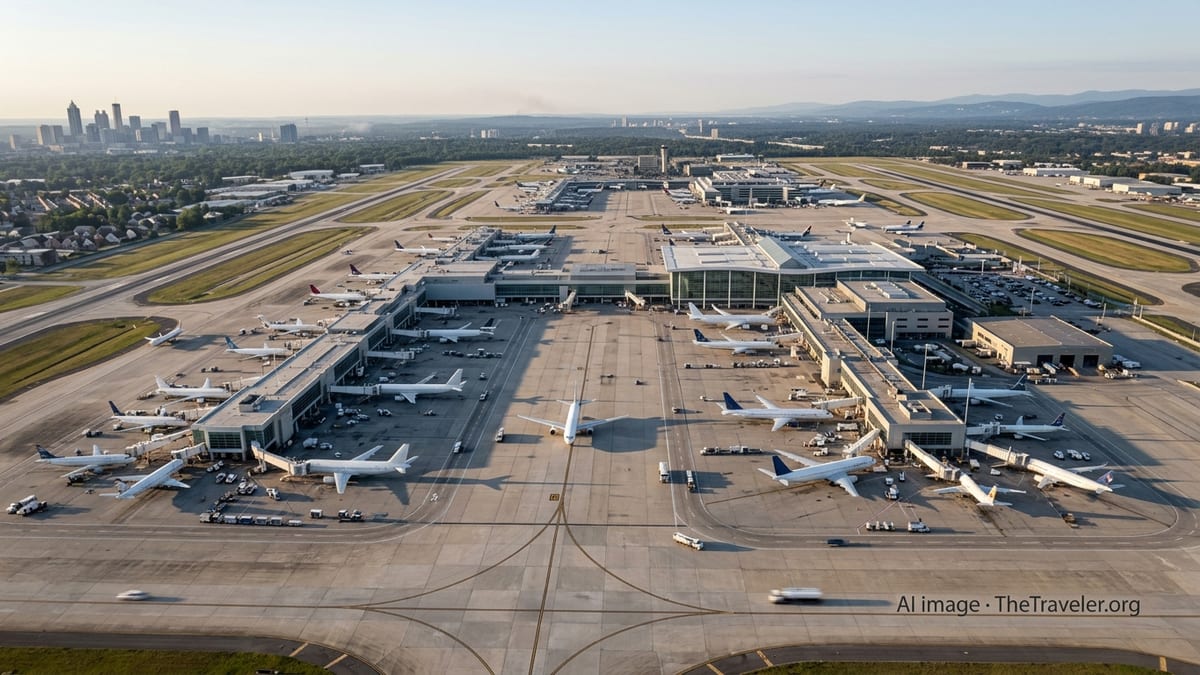
Atlanta’s Relentless Growth Keeps Georgia at the Center of the Skies
In the United States, Georgia’s place on the global aviation map continues to be dominated by Hartsfield-Jackson Atlanta International Airport, which remains the world’s busiest airport by passenger traffic and a core hub for Delta Air Lines. Published data show that the Atlanta gateway consistently handles more passengers than any other airport worldwide, reflecting the strength of the state’s role in connecting domestic and international networks.
Recent disclosure documents from the City of Atlanta indicate that passenger volumes and infrastructure investment at Hartsfield-Jackson continued to climb through 2025, supporting new capacity upgrades across terminals, airfield projects, and cargo areas. The airport’s historic advantage as a national mail and logistics hub has evolved into a modern multimodal platform that links air travel with rail, trucking, and port activity across the Southeast.
For travelers, this means that Atlanta is increasingly unavoidable on itineraries across the United States and between continents. With dense schedules and multiple daily frequencies on many routes, Georgia residents and connecting passengers benefit from competitive fares and a high likelihood of same-day connections, even when disruption elsewhere in the system occurs.
At the same time, the concentration of flights through Atlanta can amplify typical hub challenges such as congestion, longer taxi times, and pressure on peak-hour security and immigration queues. Observers note that while efficiency initiatives are under way, travelers passing through the hub should continue to allow generous connection times, especially during major holidays and summer weekends.
Republic of Georgia: Tbilisi’s Ascent as a New East-West Gateway
On the other side of the world, the Republic of Georgia is undergoing its own aviation transformation. Government statistics and sector briefings show that Georgia’s three main international airports handled about 7.4 million passengers in 2024, with further double-digit growth reported in 2025. By late 2025, Tbilisi Shota Rustaveli International Airport alone had surpassed 5 million passengers in a year, marking an all-time record for the country’s primary gateway.
Industry analyses describe Georgia as one of the fastest-growing aviation markets in Eastern Europe, with Tbilisi leading overall growth and Batumi and Kutaisi registering strong increases in leisure and low-cost traffic. New and returning airlines, including major European network carriers and low-cost operators, have launched or announced routes to Tbilisi and regional destinations, turning the country into an increasingly important stop between Europe, the Middle East, and Central Asia.
Publicly available information also highlights the rapid expansion of Georgia’s cargo and overflight business. The country’s location on the so-called Middle Corridor between Europe and Asia has drawn attention from freight operators seeking alternatives to traditional northern routes. Georgia’s air navigation service provider has partnered with regional counterparts on modernized airspace management, aiming to handle rising flows more efficiently.
For travelers, this emerging role translates into more non-stop connections from European capitals, Gulf hubs, and Asian cities, as well as growing options for one-stop itineraries that use Tbilisi as a bridge between regions. The surge in routes is widening access not only to the capital but also to Georgia’s mountain resorts, wine regions, and Black Sea coast.
Massive Expansion Plans: Vaziani, Tbilisi Upgrades and Savannah’s Growth
What makes Georgia’s aviation story particularly timely is the wave of infrastructure projects now under way. In the Republic of Georgia, published coverage details a 150 million dollar expansion of Tbilisi International Airport to increase terminal capacity, modernize facilities, and improve passenger flow after the latest record year. Parallel to this, planning and preparatory work is advancing on a new international airport at Vaziani, east of Tbilisi, envisioned as a large-scale hub that could eventually handle both passenger and cargo traffic without the physical constraints of the current site.
Analysts involved in regional aviation projects argue that Vaziani could fundamentally reshape air connectivity across the South Caucasus by adding long-haul runway capacity, expanded cargo zones, and space for future growth. While timelines and final designs are still evolving, the proposal underlines how seriously Georgia is positioning itself as a long-term East-West connector rather than a niche tourism market.
In the US state of Georgia, the expansion story extends beyond Atlanta. Savannah/Hilton Head International Airport has reported rapid passenger growth in recent years and is in the middle of a multiyear capacity upgrade, including additional gates and enhanced security lanes scheduled through late 2025. These works are designed to cope with rising demand from both leisure visitors to coastal Georgia and South Carolina and a surge in regional business travel linked to manufacturing, logistics, and port activity.
Together, these investments across both Georgias demonstrate a common pattern: aviation infrastructure is being scaled up not just to catch up with current demand, but to anticipate future growth in tourism, trade, and strategic connectivity. For travelers, this suggests that capacity constraints seen in past peak seasons may gradually ease, but construction-related disruptions and terminal changes will remain a factor in the near term.
Aerospace, Cargo and the Quiet Rise of Supporting Hubs
Beyond passenger terminals, Georgia’s aviation ambitions are also visible in manufacturing and cargo activity. In the US, industry publications describe significant growth in the state’s aerospace sector, with Georgia outpacing national averages in aerospace employment and investment, including new facilities tied to advanced aircraft and electric air mobility projects at smaller airports.
On the cargo side, Georgia’s position is reinforced by the close relationship between air hubs and the Port of Savannah, one of the country’s leading container and roll-on/roll-off gateways. Economic reports emphasize that the combination of a major seaport, efficient rail links, interstate highways, and a global air hub in Atlanta has turned the state into a powerful logistics platform serving the broader Southeast and inland markets.
In the Republic of Georgia, cargo-focused carriers based in Tbilisi have expanded their fleets and route networks, according to civil aviation data. New widebody freighters and growing schedules on routes linking Georgia with the Middle East, Europe, and Asia are helping the country capture a larger share of e-commerce shipments, perishables traffic, and specialized freight moving along the Middle Corridor.
Secondary and regional airports in both regions are also playing a subtle but important role. Airports such as Kutaisi and Batumi in the South Caucasus, and Columbus and other regional fields in the US, are being upgraded to handle greater volumes of point-to-point, charter, and general aviation operations, easing pressure on primary hubs while supporting local economies.
What Travelers Need to Know Before These Hubs Get Even Busier
For travelers planning trips through any of the airports in either Georgia, timing and preparation are becoming increasingly important. As passenger numbers rise and construction progresses, peak periods at Atlanta, Tbilisi, Savannah, and other facilities can mean longer check-in, security, and immigration times than travelers may have experienced a few years ago. Allowing extra time at the airport, especially for international departures or tight connections, reduces the risk of missed flights in a busier, more complex environment.
Another key consideration is routing strategy. With Tbilisi adding more non-stop links to European and Middle Eastern hubs, and Atlanta maintaining dense transcontinental schedules, travelers now have more options to avoid backtracking or multiple connections. Monitoring newly announced routes and seasonal services can unlock more direct journeys, particularly for trips between Europe and Central or Western Asia, or between secondary US cities and global destinations.
Pricing dynamics are also shifting as competition intensifies. Expanded low-cost operations at Kutaisi and increased capacity from large network carriers at Tbilisi and Atlanta can put downward pressure on fares for flexible travelers who book early and remain open to alternative airports. Conversely, premium travel through peak-time banked connections may command higher prices as hubs lean into their connectivity advantages.
Finally, observers note that both Georgias are marketing themselves not just as transit points, but as destinations in their own right. Passengers transiting through Tbilisi or Atlanta may find growing opportunities for short stopovers, with improved ground transport, urban redevelopment projects near airport districts, and tourism campaigns designed to capture more of the value from the increased flow of people and goods through these rapidly evolving aviation hubs.