

Of the five Great Lakes, Lake Michigan is the one that defies easy definition. It is at once a wild freshwater sea bordered by national lakeshore and a ring of small harbor towns, a maritime highway layered with shipwreck stories and a playground for beachgoers, sailors, hikers and city explorers. Stretching past four U.S. states and more than a thousand miles of shoreline, it delivers a depth and diversity of landscapes, cultures and experiences that few inland waters on earth can match.
A Freshwater Sea With Remarkable Range
Lake Michigan’s sheer scale is the starting point for its diversity. It is the only Great Lake located entirely within the United States, touching Michigan, Wisconsin, Illinois and Indiana. Its elongated, north–south orientation creates distinctive regional characters: cool, pine-fringed coasts in the north, wide sandy beaches and agricultural country in the middle, and industrial heritage along its southern arc. Traveling the perimeter feels less like visiting a single destination and more like crossing several subtly different coastal regions that all happen to share the same water.
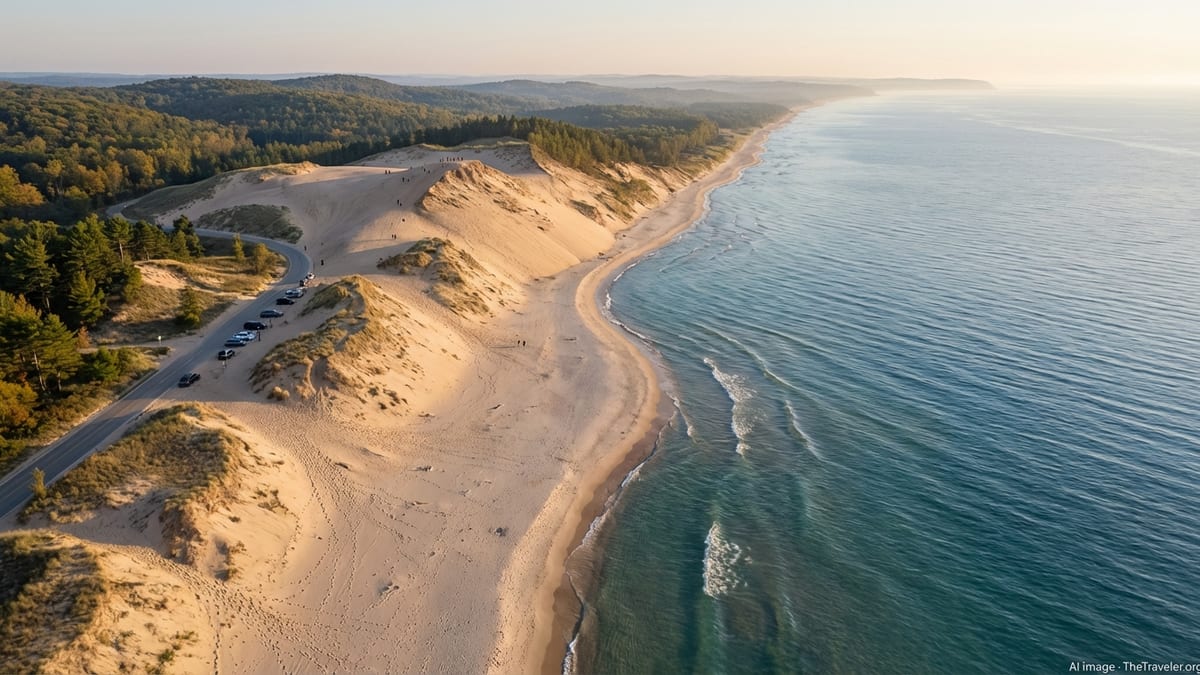
Geologically, Lake Michigan is the legacy of retreating Ice Age glaciers that carved a deep basin and left behind a mosaic of landforms. Longshore currents have since stacked up some of the largest freshwater dune systems on the planet along its eastern shore, while ancient bedrock and moraines shape more rugged headlands to the west. This variety in topography underpins everything from local microclimates to the kinds of outdoor pursuits each stretch of coastline supports, giving visitors a different way to interact with the lake at almost every bend.
Because it is nearly enclosed by land, Lake Michigan can also feel more intimate and accessible than its sister lakes, even while it stretches far beyond the horizon. Ferries, state highways and scenic byways trim the shore, connecting communities that face one another across narrow straits and wide bays. For travelers, that connectivity makes it surprisingly easy to string together very different experiences in a single trip, from island camping to skyline dining.
Dune Coasts and Protected Wild Shorelines
The eastern shore of Lake Michigan is dominated by sand, and in places the dunes rise to dramatic heights. One of the best-known examples is Sleeping Bear Dunes National Lakeshore in northwestern Michigan’s Lower Peninsula. Here, bluffs tower hundreds of feet above the water, offering sweeping views over the open lake and the nearby Manitou islands. The protected area stretches for more than 30 miles of shoreline and includes forests, inland lakes and preserved farmsteads, placing wild nature and cultural history side by side.
South along the same coast, a series of state parks and local preserves continue the dune story. Silver Lake State Park pairs steep, shifting dunes with off-road vehicle areas and quiet hiking zones, illustrating how the same landscape can serve both adrenaline seekers and families looking for a secluded picnic above the surf. Closer to the southern end of the lake, Indiana Dunes National Park and Indiana Dunes State Park protect a rare blend of dunes, wetlands, prairies and oak savannas in the shadow of Chicago’s metropolitan area, underscoring just how tightly nature and industry coexist around Lake Michigan.
These dune systems are more than photogenic backdrops. They shelter specialized plants and migrating birds, buffer inland communities from storms and create microhabitats where everything from delicate wildflowers to scrubby jack pines thrive. For visitors, the variety translates into different styles of exploration: steep climbs rewarded with big-lake panoramas, boardwalks threading through marshes, and long beach walks where each headland reveals a new angle on the same inland sea.
Because many stretches of dune coast are now under federal or state protection, they are also living classrooms for how freshwater shorelines adapt to changing water levels and harsher storms. Seasonal closures, shifting access points and habitat restoration projects are increasingly part of the visitor experience, giving travelers a front-row seat to how this dynamic landscape is being cared for and reshaped over time.
Island Adventures and Lighthouse Heritage
Islands are not usually the first thing people associate with the Great Lakes, yet Lake Michigan is dotted with them, particularly in its northern reaches. Off the coast of the Leelanau Peninsula, North Manitou and South Manitou islands form a wild offshore extension of Sleeping Bear Dunes National Lakeshore. Reached by seasonal ferry, they offer rustic camping, backcountry trails and quiet cobble beaches, plus historic sites such as an 1870s lighthouse and remnants of early farming settlements. The experience here feels far removed from the busy mainland, even though the mainland dunes remain visible on the horizon.
Across the lake in Wisconsin waters, Washington Island at the mouth of Green Bay provides a different island character entirely. Here, small farms, forested interior roads and rocky shorelines give the place a northern, almost maritime feel. Just to the south, the Door County peninsula projects into the lake with its own tapestry of state parks, harbors and historic light stations. From the Cana Island Lighthouse to the beacons on Rock Island and Plum Island, the area showcases how navigational history has shaped Lake Michigan’s identity as a working waterway.
Lighthouses fringe the entire lake, from the red-brick towers of Michigan’s western shore to the steel and concrete structures guarding busy harbor mouths near Chicago and Milwaukee. Many are open seasonally for tours, and even those that are not can often be viewed from roadside pullouts, beaches or boat decks. For travelers, these lights do more than add visual romance to sunsets. They trace the contours of shipping lanes, immigrant journeys, and the grain, timber and ore trades that helped build the region’s cities.
Island-hopping and lighthouse-chasing are natural ways to explore the lake’s maritime heritage. Charter boats, sea kayak outfitters and local ferry services allow access to places that would otherwise remain out of reach, and each crossing offers a reminder of the lake’s power. Even on calm days, waves slap at hulls and weather shifts quickly, hinting at the conditions mariners have long faced here.
Urban Energy: Chicago and the Southern Shore
No other Great Lake pairs wild coastline with a metropolis quite like Lake Michigan does with Chicago. The city’s downtown core rises almost directly from the water, with beaches and public parks forming a green-and-sand buffer between skyscrapers and the shoreline. Miles of lakefront trail accommodate joggers, cyclists and casual strollers, while marinas and harbors teem with sailboats in summer. It is a classic urban waterfront, yet the water itself remains the same inland sea that washes remote sand spits hundreds of miles to the north.
Chicago’s position on the lake has shaped its development as a transportation and cultural hub. Historic piers, museums and neighborhoods cluster near the shore, tying everything from architecture to public art back to the presence of this vast freshwater body. Visitors can spend the morning at a world-class museum, then walk a few blocks to sink their feet into sand and watch the afternoon sun glitter along the horizon. Evening brings lakeside concerts, dining with water views, and the glow of city lights reflected in the waves.
Beyond Chicago, the southern arc of Lake Michigan sweeps past Indiana and into southwestern Michigan. Here, industrial port facilities share space with surprisingly tranquil beaches and migratory bird hotspots. Indiana Dunes, in particular, sits within sight of refineries, transmission lines and freight rail yards, yet delivers dune hikes, quiet backwaters and broad lake views. This juxtaposition of heavy industry and delicate ecosystems is part of what makes the region compelling and instructive for travelers curious about the relationship between natural and human-shaped landscapes.
Farther north, small resort towns in southwest Michigan such as St. Joseph, South Haven and Holland present yet another personality: walkable downtowns, seasonal festivals, fishing piers and marinas, all oriented toward the water. Here, wine trails and fruit orchards just inland give visits an agricultural flavor, while restored lighthouses, lakeside carousels and historic districts add a sense of place that differs notably from both big-city Chicago and the wild dune coasts farther north.
Small Harbors, Beach Towns and Seasonal Flavors
What truly sets Lake Michigan apart is the ring of small harbor towns that encircles much of its shoreline. In Michigan, places like Ludington, Manistee, Frankfort, Traverse City and Petoskey form a chain of marinas, piers and public beaches that feel tailor-made for summer road trips and weekend escapes. Each town has its own rhythm, from fishing charter departures at first light to evening ice cream walks along the waterfront. Local festivals celebrate everything from cherries to classic wooden boats, creating an ever-changing calendar of reasons to linger.
On the Wisconsin side, communities such as Kenosha, Racine, Sheboygan and Manitowoc offer access to broad public beaches, lakefront promenades and maritime museums. North of Milwaukee, the shoreline becomes more rural and forested, with state parks and smaller villages providing gateways to calmer stretches of water. Door County, often described as the “Cape Cod of the Midwest,” concentrates galleries, orchards and preserved shoreline in a compact, easily explored peninsula that juts far into the lake.
Seasonality adds another layer of diversity. Summer is the obvious high point, with warm water along the shallower southern and eastern shores, long daylight hours and a steady buzz of visitors. But autumn brings vineyard harvests, color-drenched hillsides and quieter beaches, while winter transforms parts of the shore into a stark world of shelf ice, frozen piers and snow-dusted dunes. In spring, bird migration peaks and orchards bloom, giving the lake a softer, more ephemeral charm. Travelers who return in different seasons often remark that they feel as if they are getting to know entirely new destinations, even when they are revisiting the same towns.
Culinary experiences follow the seasons as well. Fish boils and fresh whitefish dinners recall the lake’s commercial fishing heritage, particularly in northern ports. Farm markets and roadside stands stock cherries, apples, berries and vegetables grown in the lake-moderated climate. In recent years, craft breweries, wineries and cideries have multiplied around the basin, drawing on local ingredients and creating a food-and-drink culture that feels distinct to Lake Michigan’s shores.
Recreation From Shoreline Trails to Open-Water Crossings
Because Lake Michigan combines wild spaces with easily reached access points, it supports an unusually wide range of outdoor activities for a single body of water. Hikers can tackle short dune climbs near roadside parking areas or set out on multi-day backpacking trips along remote stretches of shoreline and island trails. Cyclists ride paved lakeshore paths in urban areas or pedal quiet backroads that rise and fall with ancient glacial hills. In winter, cross-country skiers and snowshoers take over many of the same routes, turning the lakeshore into a silent, snow-covered playground.
On the water, the options multiply. Casual swimmers flock to guarded beaches in cities and state parks, while paddlers explore sheltered bays, rivers that empty into the lake, and more exposed coastal routes on calm days. Sea kayaking along dune-backed shores offers an intimate view of the constantly shifting boundary between land and lake, although outfitters and rangers stress the importance of proper gear and local knowledge in a place where conditions can deteriorate quickly. Sailors and powerboaters, meanwhile, take advantage of extensive marina networks, harbors of refuge and established cruising routes that link ports across state lines.
For those drawn to longer journeys, cross-lake ferry routes offer a novel experience. The car ferry between Ludington, Michigan, and Manitowoc, Wisconsin, for example, connects two very different shorelines in a single voyage, turning the open water itself into a central part of the trip. Farther south, passenger ferries link Milwaukee and Muskegon, creating fast, seasonal connections that appeal to both vacationers and residents. Standing on the deck of a ferry in mid-lake, with land only a faint smudge on the horizon, it becomes easy to understand why early travelers often referred to Lake Michigan as an inland ocean.
Angling is another layer of recreation, with charter boats targeting salmon and trout offshore and surf casters working the beaches during seasonal runs. Although fish populations and regulations evolve over time, the presence of a robust recreational fishery adds yet another dimension to how visitors can interact with the lake. Whether casting from a breakwall at sunset or trolling deep, cold water far from shore, anglers engage with a side of Lake Michigan that remains invisible to many casual beachgoers.
Cultural Stories, Indigenous Roots and Living Communities
Beneath the surface of any Lake Michigan trip is a rich human story that predates modern tourism by many centuries. Indigenous nations long navigated these waters, established trading routes and wove the lake into their spiritual and cultural traditions. Legends such as the story of the sleeping bear and her cubs, tied to the dunes and islands off the Leelanau Peninsula, continue to shape how many visitors experience the landscape. In various places around the lake, cultural centers, interpretive trails and public art projects acknowledge these deeper roots and invite travelers to consider the shoreline as ancestral homeland as much as recreation space.
The arrival of European settlers layered new narratives on top of these older ones. Logging camps, fishing villages, farming settlements and port cities emerged in response to the lake’s resources and transportation possibilities. Today, preserved farm districts, historic downtowns, working fish tugs and maritime museums help tell those stories. In some communities, shipwreck exhibits and coastal heritage trails guide visitors through episodes of tragedy and resilience, reminding them that Lake Michigan’s beauty has always coexisted with risk.
Modern communities around the lake reflect a blend of these influences and newer arrivals drawn by education, technology and tourism. University towns, creative enclaves and resort areas sit alongside industrial centers that continue to rely on shipping and manufacturing. Events ranging from shoreline cleanups and film festivals to regattas and cultural celebrations highlight different facets of lake life. For travelers willing to look beyond the postcard views, conversations with local residents, guides and tribal representatives reveal a complex, evolving relationship between people and water.
Environmental stewardship is increasingly part of that conversation. Volunteer programs at national and state parks, local watershed organizations and beach monitoring efforts all look for public involvement. Visitors who participate, even briefly, often leave with a more nuanced understanding of the lake’s challenges, including invasive species, coastal erosion and changing water temperatures, as well as the collaborative work underway to address them.
The Takeaway
Among the Great Lakes, Lake Michigan stands out not just for its size, but for how many different experiences it contains along a single continuous shoreline. In a matter of days, a traveler can progress from towering dunes and quiet island campsites to bustling beach towns, working ports and one of North America’s great cities, all while remaining in sight of the same stretch of freshwater. That rare combination of wildness and accessibility, of deep history and ongoing reinvention, is what makes the lake uniquely diverse to explore.
For visitors, this means that no single trip can fully capture what Lake Michigan has to offer. Each season, each region and each way of engaging with the water reveals a different personality. Families might focus on sandy beaches and lighthouses, outdoor enthusiasts on backcountry trails and paddling routes, culture seekers on museums and festivals, and food travelers on vineyards and harborfront dining. Yet all of these journeys intersect along the same shifting line where waves meet sand, stone and steel.
In the end, Lake Michigan rewards curiosity and return visits. It invites travelers to see beyond the idea of a single destination and instead embrace a living, changing freshwater world. Whether you arrive by car, bike, ferry or on foot, the most diverse of the Great Lakes offers a reminder that you do not have to cross an ocean to experience widely varied coasts, cultures and stories. Sometimes, they are all linked by the same horizon.
FAQ
Q1. What makes Lake Michigan more diverse to explore than the other Great Lakes?
Lake Michigan combines extensive protected dunes, multiple islands, a major global city, small harbor towns and accessible recreation in one continuous, easily traveled shoreline.
Q2. Which side of Lake Michigan has the best beaches?
The eastern shore in Michigan is especially known for long sandy beaches and tall dunes, though Wisconsin, Illinois and Indiana also offer notable public beaches.
Q3. Are there islands on Lake Michigan that visitors can reach?
Yes, several islands are accessible by seasonal ferries, including the Manitou islands in Michigan and Washington Island in Wisconsin, each offering distinct experiences.
Q4. Can you visit both wild areas and big cities on the same Lake Michigan trip?
Yes. It is easy to combine national lakeshores and small parks with time in Chicago or other urban waterfronts because they are linked by highways and ferry routes.
Q5. Is Lake Michigan safe for swimming?
Many designated beaches are suitable for swimming in season, but visitors should heed local warnings about currents, waves, water quality and changing weather.
Q6. What is the best season to explore Lake Michigan?
Summer offers the warmest water and widest range of activities, while spring, autumn and winter each provide quieter, more specialized experiences and different scenery.
Q7. Do I need special equipment to hike the dunes along Lake Michigan?
No technical gear is required for most dune trails, but sturdy footwear, sun protection, water and awareness of trail conditions are important, especially on hot days.
Q8. Can I camp along Lake Michigan’s shores?
Yes. Campgrounds exist in national lakeshores, state parks and some local parks, with options ranging from backcountry island sites to modern campgrounds with amenities.
Q9. Are there cultural or historical sites to see around Lake Michigan?
Travelers can explore lighthouses, historic farm districts, preserved downtowns, maritime museums and sites that share Indigenous and immigrant histories tied to the lake.
Q10. How long does it take to drive around Lake Michigan?
A full loop can be done in several days, but many travelers recommend at least a week or more to appreciate the varied regions and allow for unplanned stops.