

Rochester rarely tops the list when travelers think of New York. Many picture New York City’s skyline or the college-town charm of Ithaca before they consider this mid-size city on the Genesee River. Yet Rochester has quietly evolved into one of the state’s most rewarding places to visit and live, combining a serious arts and food scene with accessible nature, rich history, and a cost of living that feels almost nostalgic in today’s market. For travelers willing to look beyond the obvious, Rochester delivers a relaxed, authentic slice of New York that feels profoundly underrated.
A River City Built on Waterfalls and Waterfront Revival
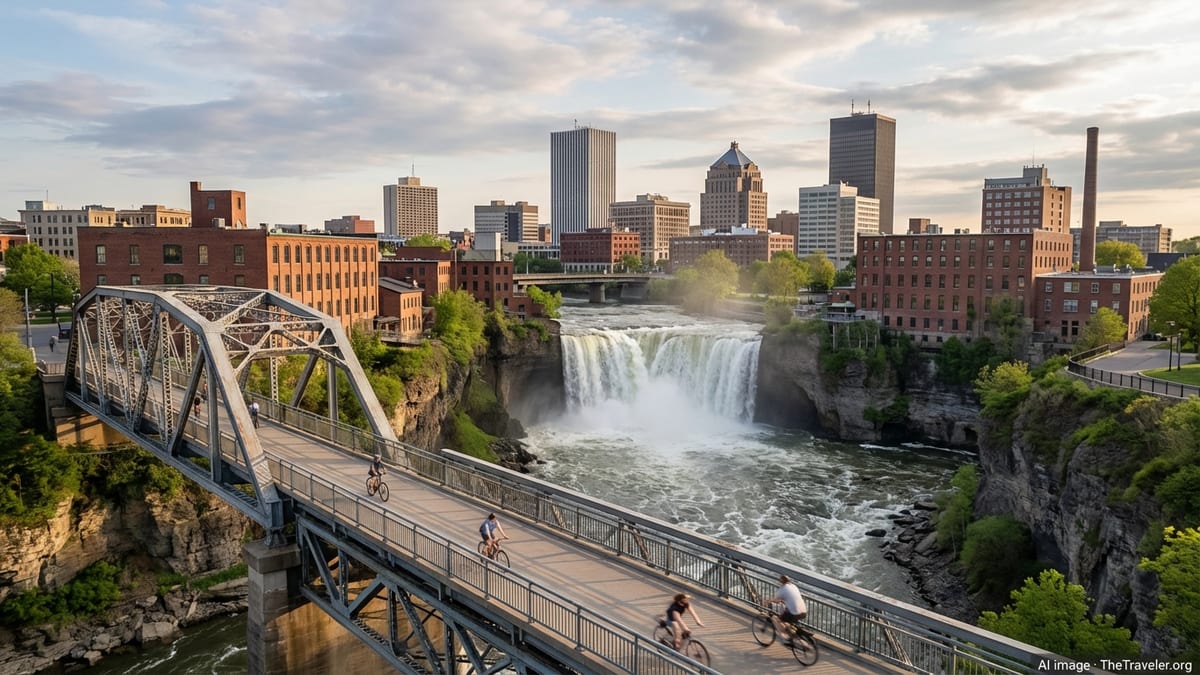
Rochester’s geography is one of its biggest surprises. The Genesee River cuts through the heart of the city, dropping dramatically over a 96 foot waterfall at High Falls, framed by historic brick mills and factory buildings that once powered Rochester’s boom. Today, this industrial canyon is being reimagined as public space. A planned 40 acre High Falls State Park is underway, part of a long term effort to turn the downtown river corridor into a network of parks, overlooks, and trails rather than just a forgotten industrial zone. Remediation and construction are scheduled in phases over the next several years, signaling that Rochester’s most spectacular natural feature is finally being treated as a centerpiece rather than a backdrop.
Alongside the new park, the broader ROC the Riverway initiative is transforming how residents and visitors experience the river. More than two dozen projects, backed by substantial state funding and private investment, are knitting together both banks of the Genesee with new promenades, upgraded parks, and public gathering spaces. The historic Broad Street Aqueduct, which once carried the Erie Canal across the river and later hosted a subway line, is being redesigned as a pedestrian focused landmark, while nearby riverfront stretches are adding seating, lighting, and easier access to the water. The result is a downtown that is steadily turning outward toward its river, offering visitors photogenic views and locals a more walkable, livable core.
Even long beloved landmarks are seeing new life. The Pont de Rennes Bridge, a late 19th century steel truss that spans the gorge at High Falls, has been a favorite viewpoint for decades. After more than a year of structural repairs and upgrades, it reopened in late 2024, once again offering panoramic views of the falls and the Kodak Tower that anchors Rochester’s skyline. With the bridge restored and the state park emerging around it, Rochester’s river gorge is poised to become one of the most distinctive urban landscapes in the Northeast, yet it remains largely off the radar for travelers fixated on coastal cities.
Beyond downtown, the Genesee flows north to Lake Ontario, where marinas, beaches, and parks give Rochester an almost coastal feel in summer. The combination of a dramatic river gorge, waterfalls in the city center, and easy access to a Great Lake is rare in American cities of this size, and it shapes the laid back, outdoors oriented ethos that quietly defines life here.
Culture and Creativity That Rival Bigger Cities
Rochester’s cultural scene often catches visitors off guard. For a city of its size, the depth of museums, music, and theater feels closer to what you might expect in a much larger metro area. At the center of this is The Strong National Museum of Play, a sprawling, highly interactive institution that houses the world’s most comprehensive collection of toys, games, and play related artifacts. It fills more than a city block with hands on exhibits, from pinball and video game halls to re-creations of comic book worlds and child sized marketplaces. For families, it is a destination museum that can easily fill an entire day and has grown in recent years with a major new wing focused on video games and technology.
Rochester’s creative legacy extends far beyond play. The city is also home to the George Eastman Museum, located in the former mansion of the Kodak founder, which is one of the world’s oldest museums dedicated to photography and film. Its galleries and archives celebrate both the history and artistry of the medium, a fitting tribute in a city whose fortunes were long tied to the camera. Elsewhere, the Memorial Art Gallery, operated by the University of Rochester, offers a broad survey of art from antiquity to contemporary work, anchoring the city’s more traditional museum offerings.
On the performance side, Rochester punches well above its weight. The Eastman School of Music, one of the country’s most prestigious conservatories, fuels a lively calendar of student recitals, faculty concerts, and visiting artist performances that spill out into venues across the city. The Rochester Philharmonic Orchestra maintains a robust season, while smaller theaters and independent companies stage everything from classic plays to experimental work. What distinguishes Rochester is not only the quantity of culture on offer, but the ease of access: tickets are typically far more affordable than in larger markets, and visitors are rarely fighting for last minute seats.
Neighborhoods reflect this creative energy in more informal ways too. The Neighborhood of the Arts, just east of downtown, is packed with galleries, studios, murals, and small performance spaces that showcase Rochester’s contemporary scene. Former industrial buildings have been converted into artist lofts and shared workspaces, while public art brightens alleyways and street corners. For travelers, it offers an easy way to explore the city’s creative side on foot, ducking into small cafes, boutiques, and galleries that feel local rather than curated for tourists.
A Food and Drink Scene with Serious Local Flavor
Rochester has long been associated with a few iconic comfort foods, but in recent years its culinary scene has matured into something broader and more interesting. You can still find the legendary late night “garbage plate,” a messy, deeply local combination of meat, potatoes, and toppings that traces back to a humble neighborhood restaurant, but you are just as likely to discover inventive farm to table menus, modern cocktail bars, and bakeries experimenting with global flavors. Independent chefs have taken advantage of relatively affordable rents to open small, personal restaurants that would be financially out of reach in larger cities.
Coffee and craft beer culture are particularly strong. A wave of roasters has brought single origin beans and carefully sourced blends to neighborhood cafes, which double as informal community hubs and coworking spaces. Microbreweries, many tucked into historic buildings or former warehouses, pour everything from classic lagers to bold IPAs and barrel aged specialties. Seasonal beer gardens and outdoor patios appear as soon as the snow melts, making the most of Rochester’s temperate summers. With each passing year, more small producers join the scene, from distilleries to cideries that draw on the agricultural richness of the surrounding Finger Lakes region.
The city’s location between fertile farmland and one of the state’s major wine regions shapes what appears on local menus. Farmers’ markets operate throughout the warmer months, bringing in fresh produce, cheeses, and meats from the countryside. Nearby wineries and breweries provide an easy excuse for day trips, but their products also show up on Rochester wine lists and tap handles, anchoring the city firmly within the broader Finger Lakes culinary landscape. Diners benefit from a direct connection to local growers without the premium prices associated with many coastal food capitals.
Rochester’s diversity is increasingly reflected in its restaurants as well. A growing Latino community, newcomers from Puerto Rico, and long established immigrant neighborhoods contribute to a wide spectrum of cuisines, from Caribbean and Mexican to East African and Southeast Asian. Small, family run spots mix with more polished dining rooms, and the overall tone remains welcoming and unpretentious. For travelers, this means you can eat extraordinarily well at a wide range of price points, often in places that feel like genuine discoveries rather than heavily promoted hotspots.
Festivals, Seasons, and a Climate Haven Reputation
Rochester is a four season city, and locals make a point of celebrating each one. In spring, the famous Lilac Festival draws visitors to Highland Park, where hundreds of varieties of lilacs perfume the air and hillside lawns fill with food vendors and live music. As summer arrives, the Rochester International Jazz Festival turns downtown streets and venues into an extended block party, with major headliners sharing the bill with up and coming acts. Throughout the warmer months, smaller neighborhood events, outdoor movie nights, and waterfront concerts ensure that there is rarely a quiet weekend.
Autumn in Rochester brings crisp air, brilliant foliage, and the harvest season in the surrounding countryside. Apple picking, farm stands, and winery visits become popular day trips, while in the city parks and tree lined streets turn vivid shades of red and gold. Winter, meanwhile, is embraced rather than endured. Snow is a regular visitor, but residents respond with outdoor skating, sledding, and lights festivals that soften the darker months. For travelers who are prepared for cold weather, Rochester offers a less crowded, more atmospheric version of winter than major East Coast cities, with cultural institutions and restaurants humming along even on the coldest nights.
In recent years, Rochester has attracted attention for another seasonal reason. As climate change drives more extreme weather in many parts of the United States, the city’s relatively temperate climate, ample freshwater from Lake Ontario and the Finger Lakes, and lower exposure to hurricanes, wildfires, and sea level rise have prompted some observers to label it a potential climate haven. National coverage has noted that people from states like California and regions battered by severe storms have begun relocating here, drawn by a combination of environmental stability, affordability, and inclusive community values.
City leaders have responded with ambitious sustainability targets, including efforts to significantly reduce carbon emissions in the coming decade. While Rochester has not aggressively marketed itself as a climate refuge, the conversation has highlighted qualities that residents have long valued: four distinct seasons without the most punishing extremes, reliable water supplies, and a built environment that is dense enough to support transit and cycling yet open enough to avoid the congestion and heat island effects of much larger cities. For travelers, that translates into a destination where outdoor plans are rarely derailed by catastrophic weather and where the rhythms of the year remain relatively predictable.
Affordability, Livability, and Rochester’s Quiet Appeal
Perhaps the most persuasive argument for Rochester’s underrated status lies in the relationship between quality of life and cost. In an era when housing costs in many American cities have soared, Rochester continues to appear on lists of places where both homeownership and renting remain within reach for a wide swath of residents. Recent analyses have placed the metro area among the few large markets where two adults earning minimum wage can still afford typical rents, a rarity among the country’s biggest cities. National rankings aimed at first time buyers have gone further, naming Rochester one of the top markets for those entering the housing ladder, thanks to relatively low median list prices and short commute times.
Beyond headline numbers, everyday costs like groceries, transportation, and entertainment remain moderate compared with coastal hubs. Local supermarkets, including a flagship regional grocery chain that originated here, keep prices competitive, while the city’s layout allows many residents to live near work or bus routes operated by the regional transit system. For those who prefer to drive, congestion is minimal by big city standards, and parking remains widely available and often inexpensive. This combination of manageable bills and reduced daily stress has made Rochester attractive not only for young professionals and families, but also for retirees seeking value without sacrificing cultural amenities.
National personal finance publications have taken note, frequently including Rochester on lists of the most affordable places to retire in the United States. Analysts point to its relatively low housing costs, solid healthcare access, and strong sense of community as key advantages. At the same time, its university presence, arts institutions, and steady schedule of events keep it from feeling like a purely budget choice. For visitors, this affordability is equally appealing: hotels, restaurant meals, tickets, and experiences typically cost less than in larger Northeastern cities, allowing travelers to build richer itineraries without inflating their budgets.
What sets Rochester apart is that this affordability does not come at the expense of vibrancy. The city has a robust base of employers in education, healthcare, technology, and advanced manufacturing, along with a long history of innovation that stretches back to its days as a photography and optics capital. This economic diversity provides a foundation for continued revitalization and new investment, particularly along the riverfront and in historic neighborhoods that are seeing sensitive redevelopment rather than wholesale demolition. Taken together, these factors create a sense that Rochester is not a city resting on nostalgia, but one actively shaping a more sustainable and equitable future.
Neighborhoods, Nature, and Day Trips Beyond the City
Rochester’s charm often reveals itself at the neighborhood level. The Park Avenue area, with its tree lined streets, porch fronted houses, and cluster of independent cafes and boutiques, offers a relaxed, walkable slice of city life. South Wedge, just across the river from downtown, has evolved into a creative, slightly bohemian enclave, where historic homes mix with new apartments and locally owned bars, bakeries, and restaurants. Corn Hill, one of the city’s oldest residential neighborhoods, pairs Victorian homes with riverfront paths and a popular summer arts festival. Each of these districts has its own identity, yet all are close to the city center, making it easy for visitors to sample more than one in a short stay.
Green space is another of Rochester’s quiet strengths. Many of its parks bear the imprint of Frederick Law Olmsted, the famed landscape architect behind New York City’s Central Park. Highland Park, Genesee Valley Park, and others weave rolling lawns, wooded paths, and river views into the urban fabric, giving residents and visitors easy access to nature without leaving the city. As ROC the Riverway and the new High Falls State Park continue to expand trails and overlooks, the connections between neighborhoods and the water will only grow stronger, inviting more people to experience the city on foot or by bike.
Just beyond city limits, day trip options multiply. To the south and east, the Finger Lakes region offers some of New York’s most scenic countryside, with long, glacial lakes lined by vineyards, wineries, and state parks with their own waterfalls and gorge trails. To the north, Lake Ontario’s shoreline provides beaches, fishing, and sunset views that can feel almost oceanic in scale. Small canal towns along the historic Erie Canal are within easy driving distance, offering towpaths for cycling and paddling routes that recall the waterway’s 19th century heyday. Rochester’s central position in western New York means that these varied landscapes are close enough for spontaneous excursions rather than complex expeditions.
For travelers, this mix of neighborhoods and nearby nature creates a rare kind of flexibility. You can spend the morning exploring world class museums or working from a downtown cafe, the afternoon hiking along a river gorge or sampling wines overlooking a lake, and the evening listening to live music in a neighborhood bar. Everything feels accessible, both geographically and financially, yet crowds remain surprisingly thin compared with more famous destinations. It is this balance of options and ease that quietly wins over many first time visitors and convinces some to stay.
The Takeaway
Rochester’s status as one of New York’s most underrated cities has less to do with a lack of assets than with a lack of national spotlight. For decades, it has been overshadowed by the outsized presence of New York City and the tourist draw of the Adirondacks and Finger Lakes. Yet look closely and a different picture emerges: a mid size city with a dramatic river and waterfall at its core, a revitalizing waterfront, serious cultural institutions, and a cost of living that makes both daily life and travel feel refreshingly attainable.
The city’s ongoing investments in public space, from High Falls State Park to the broader ROC the Riverway initiative, signal a future in which Rochester’s natural and historic strengths are more visible and more accessible. Pair that with a diverse food scene, a full calendar of festivals, and emerging recognition as a climate resilient, retirement friendly, and first time buyer friendly market, and it is clear that Rochester’s appeal is broad and growing. For travelers willing to look beyond the obvious New York itineraries, Rochester offers the chance to experience a city in the midst of a thoughtful, river centered renaissance.
In the end, what makes Rochester so compelling is its sense of proportion. It is large enough to support world class museums, orchestras, and universities, yet small enough that you can cross much of it in fifteen minutes, recognize faces at neighborhood cafes, and find quiet corners along the river. It feels both grounded and forward looking, with a deep respect for its industrial past and a clear focus on sustainability and livability. Underrated for now, perhaps, but for many who discover it, Rochester quickly becomes one of the most rewarding cities in New York.
FAQ
Q1. Is Rochester, New York, a good place to visit for a long weekend?
Yes. Rochester works especially well for a long weekend because key attractions, neighborhoods, riverfront areas, and parks are all within a short drive or transit ride of one another.
Q2. How expensive is Rochester compared with New York City or other major East Coast cities?
Rochester is generally far more affordable than major coastal cities, with lower typical housing costs, moderate rents, and everyday expenses that make travel and dining noticeably easier on the budget.
Q3. What is Rochester best known for among travelers?
Travelers often come for the Strong National Museum of Play, the George Eastman Museum, the High Falls area, seasonal festivals like the Lilac Festival, and easy access to nearby Finger Lakes wine country.
Q4. Is Rochester family friendly?
Very. Interactive museums, parks designed by Frederick Law Olmsted, a lively zoo, accessible riverfront walks, and a full calendar of family oriented festivals make it a strong choice for trips with children.
Q5. Do I need a car to explore Rochester?
A car offers the most flexibility, especially for exploring the Finger Lakes and Lake Ontario, but central neighborhoods, major museums, and parts of the riverfront can be reached by bus, rideshare, bike, or on foot.
Q6. What is the weather like in Rochester throughout the year?
Rochester has four distinct seasons, with snowy winters, mild and colorful springs and autumns, and pleasantly warm summers that are typically cooler and less humid than many East Coast cities.
Q7. Is Rochester safe for visitors?
Like any city, safety varies by neighborhood and time of day, but visitors who use standard urban common sense and focus on well traveled areas generally find Rochester comfortable and welcoming.
Q8. How many days should I plan for a first visit to Rochester?
Three to four days lets you see major museums, explore a few neighborhoods, experience the riverfront, and add a short day trip to the Finger Lakes or Lake Ontario.
Q9. What makes Rochester feel different from other upstate New York cities?
Rochester’s combination of a dramatic urban waterfall, strong cultural institutions, a major music school, and an emerging riverfront park system gives it a distinctive mix of nature and arts.
Q10. When is the best time of year to visit Rochester?
Late spring through early fall is ideal for outdoor festivals, gardens, and waterfront activities, but winter visits can be rewarding if you enjoy museums, cozy dining, and snowy cityscapes.