

More news on this day
New 2026 rankings of global safety and travel conditions for women are propelling the Netherlands into the top tier of destinations for solo female travelers, placing it alongside long-established favorites such as Denmark, Norway, Sweden, Finland and Luxembourg as one of the most reliable choices for women planning independent trips this year.
Get the latest news straight to your inbox!
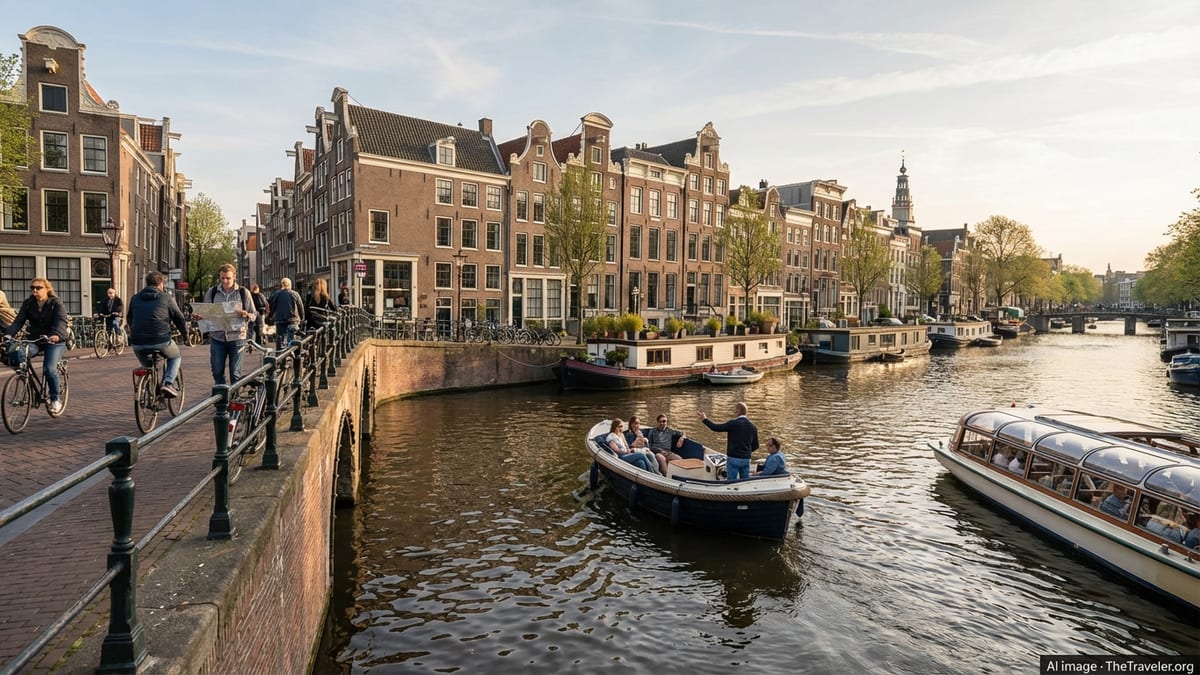
How the Netherlands Climbed Into the Top Solo Female Travel Tier
The latest solo female travel indexes released in early 2026 highlight a cluster of northern European countries that consistently perform well on peace, public safety and gender equality. Published analyses of where women travel safest now group the Netherlands with Denmark, Norway, Sweden, Finland, Luxembourg and other high-income democracies that show low violent crime rates and strong protections for women in public life.
Recent comparative rankings focused specifically on women traveling alone point to several shared attributes across this group: stable political systems, low levels of interpersonal violence, robust social welfare programs and reliable urban infrastructure. Within that field, the Netherlands has moved from being seen as a convenient European gateway to being recognized as a destination that performs strongly on data-driven measures related to women’s safety.
Global peace and gender indexes compiled between 2024 and 2025 already showed the Netherlands improving on indicators such as perceived safety, rule of law and gender parity in education and employment. Travel-focused research released in early 2026 builds on this foundation, combining those datasets with tourism metrics such as transit reliability, walkability and health care access, reinforcing the Netherlands’ new status in the top bracket for solo female travel.
For travelers, the practical takeaway is that the Netherlands is no longer just an optional add-on to a Scandinavia itinerary. It now appears in the same top safety tier as Nordic countries that have long dominated lists of ideal first-time solo destinations for women.
Why Northern Europe Dominates 2026 Solo Female Safety Rankings
The 2026 lists put Denmark, Norway, Sweden, Finland and Luxembourg alongside the Netherlands as some of the most consistently safe and straightforward destinations for solo female travelers. Analysts attribute this dominance to a convergence of factors: relatively low overall crime, strong legal frameworks around gender-based violence, comprehensive public transport and widespread English proficiency.
Nordic states in particular are frequently near the top of global peace and happiness reports, and they typically score highly on gender equality and trust in public institutions. When these elements are combined with dense, well-lit city centers and extensive train, bus and ferry networks, they create environments where women can navigate independently with a lower baseline of everyday risk compared with many other parts of the world.
Luxembourg and the Netherlands share some of these characteristics, especially high per-capita income, compact urban layouts and strong rule-of-law scores. In European travel safety indexes released for 2025 and 2026, these countries sit in clusters labeled as “elite” or “very safe” for solo women, reflecting both statistical indicators and traveler feedback collected over the past several seasons.
However, the same rankings emphasize that such destinations are not risk-free. Large city centers, nightlife districts and major transport hubs in Amsterdam, Copenhagen, Oslo or Stockholm still report opportunistic theft, harassment and isolated violent crime. The data instead suggests a comparatively favorable risk profile, not an absence of danger.
What Makes the Netherlands Especially Attractive in 2026
Several factors are supporting the Netherlands’ elevated position in 2026. Publicly available statistics show that the country scores strongly on European gender equality indexes, ranking near the top of the European Union on measures such as women’s participation in education, employment and politics. These same indexes are regularly used by travel researchers as proxies for how societies treat women in everyday spaces.
Infrastructure is another key advantage. Dutch cities feature extensive cycling networks, pedestrian paths and integrated public transport, which studies of European walkability and urban planning link to greater perceived safety in public spaces. Trams, trains and buses generally run on regular schedules and are widely used by locals, including women commuting alone late into the evening.
For visitors, this translates into predictable, ticketed routes from airports into city centers, frequent intercity trains and clear wayfinding in English. Accommodation options span from large, standardized hotel chains near central stations to smaller guesthouses in residential neighborhoods, giving travelers flexibility in choosing areas that match their comfort levels and budgets.
The Netherlands’ location also matters. Amsterdam, Rotterdam and Utrecht function as natural hubs for multi-country trips, with high-speed rail links to Belgium, Germany, France and beyond. For solo travelers, this means that an itinerary anchored in the Netherlands can be expanded to include day trips or short hops into nearby countries that also rank highly for women’s safety, including Luxembourg, Belgium and the Scandinavian capitals via short flights.
Balancing Positive Rankings With Real-World Risks
Despite its new status at the top of solo female travel lists, the Netherlands has seen incidents that have prompted public debate about women’s safety in recent years. High-profile violent crimes and reports of harassment on public transport and in nightlife districts have sparked domestic conversations about how safe women feel in streets and parks, particularly after dark.
Surveys conducted by national statistics agencies in 2025 reported a rising share of residents, especially women over 25, who feel unsafe in certain situations, even as overall crime levels remain relatively low by international standards. These findings are now being considered by travel analysts when interpreting safety rankings, as they highlight a gap that can exist between recorded crime and lived experience.
For solo female travelers, the implication is that strong national scores should be read as a supportive backdrop rather than a guarantee. The Netherlands and its northern European peers may offer fewer structural barriers and better legal protections than many destinations, but visitors still need to consider the nuances of individual neighborhoods, late-night routes and personal boundaries.
Travel safety experts recommend that women cross-check city-level data, review up-to-date local news and remain attentive to changing conditions, especially around major events, protest activity or nightlife hotspots where crowds and alcohol can heighten risks, even in countries with otherwise strong safety reputations.
Practical Planning Tips for Solo Women Heading to the Netherlands and Its Peers
For 2026 trips, timing and routing are central considerations. Peak summer months bring dense crowds to Amsterdam’s historic core and to Scandinavian capitals, increasing the likelihood of pickpocketing and other non-violent crime. Shoulder seasons such as late spring and early autumn often provide a balance of daylight hours, manageable visitor numbers and full transport schedules.
Accommodation choice can play an outsized role in how safe a trip feels. Many solo female travelers are increasingly opting for smaller, professionally run guesthouses, business-class hotels or serviced apartments close to main stations instead of the cheapest hostels in nightlife districts. In northern European cities, neighborhoods slightly outside the most touristed centers frequently offer calmer streets, reliable transit links and easier access to supermarkets and pharmacies.
Transit planning is another core element. Public information suggests that Dutch and Nordic cities are generally safe to move around using late-night trams, buses and metro lines, but travelers are advised to plan end-to-end routes in advance, including the final walk from a station to their accommodation. Keeping digital copies of IDs, using reputable taxi or ride-hail apps where available and being cautious with alcohol consumption in unfamiliar environments remain standard best practices.
Finally, many observers note that these high-ranking countries are well suited to first-time solo travelers because they combine strong safety data with user-friendly logistics. Clear signage, widespread card payments, extensive English use and predictable transport timetables reduce the cognitive load of navigating alone. In 2026, that combination is helping the Netherlands, along with Denmark, Norway, Sweden, Finland and Luxembourg, stand out as some of the most approachable destinations for women who want to travel on their own terms.