

More news on this day
More than two decades after Boeing ended production of the 757, the narrowbody jet continues to anchor key routes for major US airlines, particularly on transatlantic and premium domestic services where capacity, performance and revenue demands intersect.
Get the latest news straight to your inbox!
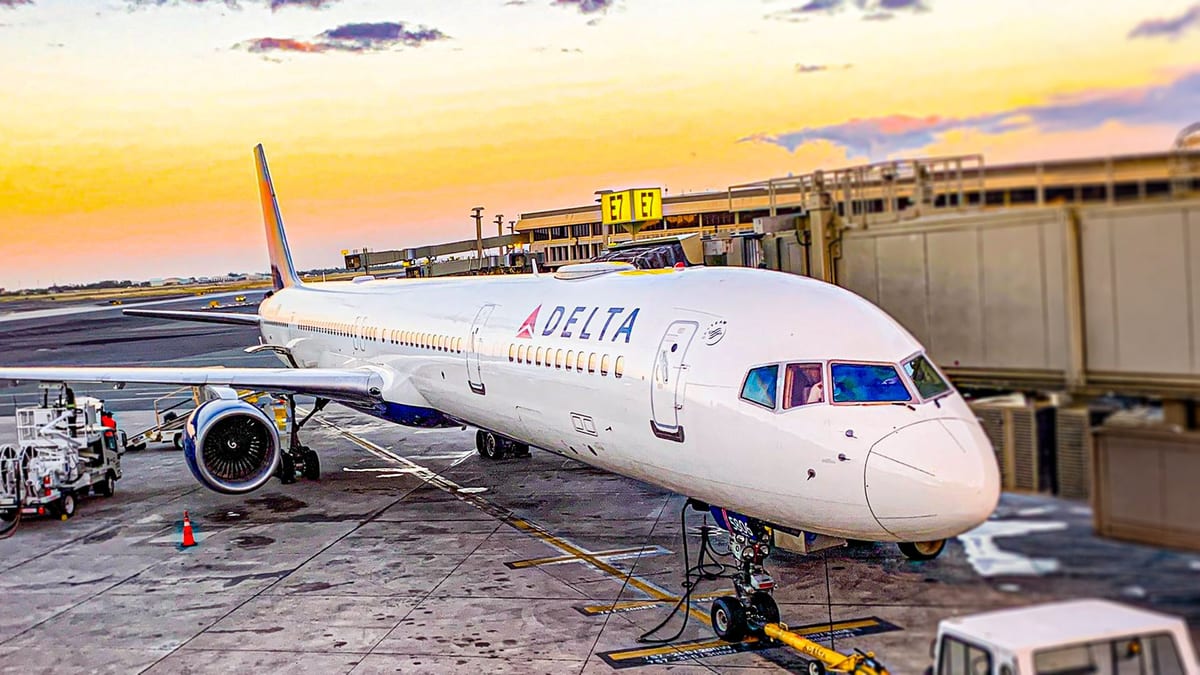
Image by Simple Flying
An Aging Airframe That Still Fits Key Missions
The Boeing 757 occupies a niche that newer narrowbody and widebody aircraft have not fully replaced. Designed with powerful engines and a relatively high maximum takeoff weight, the type pairs single-aisle economics with near widebody range. Publicly available fleet data shows that as of 2025 Delta Air Lines still operates more than 100 passenger 757s, while United Airlines flies over 60, underscoring how embedded the model remains in US mainline operations.
For routes that are too thin to justify a widebody but too long or performance‑challenging for many other narrowbodies, the 757 remains a practical solution. Airlines can offer a full set of cabins, including lie‑flat premium seating on many aircraft, without the cost and risk of deploying a larger twin‑aisle jet that might be difficult to fill year‑round.
This combination of range, payload, and relatively modest seating capacity explains why the 757 still appears on city pairs that blend business and leisure demand but fluctuate seasonally. The type allows carriers to flex capacity while preserving schedule presence in markets that might otherwise lose nonstop service.
Transatlantic “Long and Thin” Routes Keep the 757 Busy
Nowhere is the 757’s niche more visible than across the North Atlantic. Schedules and route announcements for recent summer seasons show United deploying 757‑200s from Newark to European secondary cities such as Faro, Malaga and Reykjavik, as well as on additional frequencies to Brussels. Industry coverage of the airline’s summer 2025 plans highlights Newark–Stockholm as one of its longest seasonal 757 flights, illustrating how the jet continues to push narrowbody boundaries over the ocean.
These flights typically operate to airports that may not consistently fill a widebody but attract strong demand during peak months. The 757 allows daily or near‑daily frequencies with a business cabin and extra‑legroom economy, keeping the product aligned with larger hubs while matching capacity to demand. Publicly available analyses of transatlantic schedules indicate that the type still accounts for a meaningful share of US carrier departures to secondary European markets in the summer season.
Other airlines have followed similar patterns over the years, using 757s to extend their North Atlantic footprint beyond traditional trunk routes. While new long‑range narrowbodies such as the Airbus A321LR and XLR are entering the market, delivery backlogs and certification timelines mean the 757 continues to bridge the gap on these “long and thin” routes for at least the mid‑2020s.
Premium Domestic and Niche High‑Yield Markets
Within the United States, the 757 retains a prominent role on high‑yield domestic sectors, especially premium transcontinental flights. On routes such as New York to San Francisco or Los Angeles, schedule data and traveler reports show a mix of widebodies and 757s equipped with lie‑flat seats up front and enhanced economy products. The aircraft’s seat count and range make it a good fit where demand is strong but not always widebody‑level throughout the day.
Delta and United in particular continue to schedule 757s on select long‑haul domestic and near‑international routes where performance margins are important, such as services to higher‑altitude or shorter‑runway airports and longer sectors into Latin America. Industry tracking of seasonal adjustments, for example, shows United assigning 757‑200s on certain Houston–Bogota rotations and other mid‑continent to South America flights during peak periods.
These markets benefit from the 757’s ability to offer a competitive premium cabin while operating from challenging airfields or within tight slot constraints. The aircraft’s flexibility helps airlines maintain a differentiated onboard product on routes that support higher fares without oversupplying seats.
Performance Advantages at Challenging Airports
The 757’s performance profile remains another reason US airlines have been reluctant to retire it from key routes. The type was engineered for strong climb capability and good field performance, which translates into useful margins at airports with hot temperatures, shorter runways or terrain constraints. This has long made the aircraft a favorite for operations at airports such as Denver and certain East Coast fields where runway length and weather can limit other narrowbodies.
Because the 757 can depart heavy, with full passenger loads and baggage, while still achieving the required climb gradients, it can open or sustain nonstop routes that might otherwise require payload penalties. Industry route analysis often cites this capability as a factor behind the type’s presence on long westbound sectors from the US East Coast and Midwest to destinations at higher elevation or lower latitudes.
For airlines balancing operational resilience and cost, keeping a subfleet of 757s in service offers insurance against the performance limits of newer single‑aisle jets that are optimized primarily for fuel burn rather than absolute takeoff performance.
A Stopgap Until True Replacements Arrive
US airlines have been clear in fleet plans and investor presentations that they do not intend to keep the 757 indefinitely. Order books at American, Delta and United show large commitments for new‑generation narrowbodies, including long‑range variants designed to take over many of the 757’s missions. However, certification delays, supply‑chain constraints and strong post‑pandemic demand have slowed the pace at which older aircraft can be retired.
Industry commentary notes that manufacturers have yet to deliver a perfect like‑for‑like replacement for the 757’s combination of range, payload and performance. As a result, airlines are investing selectively in cabin refurbishments and life‑extension maintenance programs on their remaining 757 fleets, keeping the aircraft viable while they wait for enough new jets to arrive.
The result is a fleet strategy built on pragmatism. For now, the 757 continues to earn its keep on routes where its capabilities translate into strong yields and reliable operations. As new long‑range narrowbodies gradually take over transatlantic and premium domestic duties later this decade, the 757’s role will likely shrink, but its longevity on key US routes illustrates how well the aircraft was tailored to some of the most demanding segments in modern commercial aviation.