

More news on this day
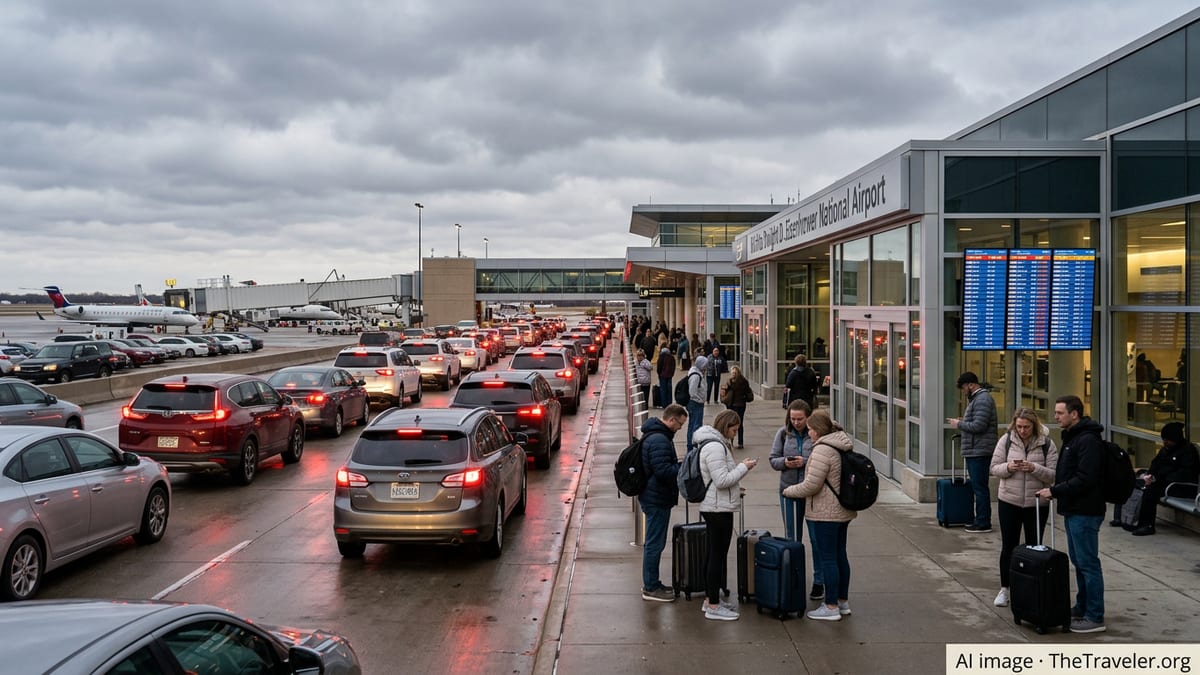
Wichita Dwight D. Eisenhower National Airport is feeling the strain of a widening U.S. air travel disruption, as a mix of severe weather, system-wide schedule pressures and ongoing construction projects converges to slow flights, lengthen lines and unsettle travelers across south-central Kansas.
Get the latest news straight to your inbox!
Storm Systems and a Fragile National Flight Network
The latest turbulence for travelers in Wichita is closely tied to a broader pattern of volatile weather and a highly interconnected airline network. A major late-winter storm system affecting large swaths of the central and northern United States in mid-March 2026 has triggered thousands of delays and hundreds of cancellations at major hubs, particularly in Chicago, Houston, Boston and Washington. Wichita’s role as a spoke airport means that many of its departures depend on aircraft and crews arriving from these heavily impacted hubs.
When flights into Chicago O’Hare or other key connecting cities are delayed or grounded, aircraft and crews can arrive late or not at all in Wichita. That can result in last-minute schedule changes, rolling delays and occasional cancellations even when skies over south-central Kansas remain relatively calm. Publicly available data on recent national operations shows that this type of “ripple effect” is now one of the main drivers of disruption, magnifying the impact of severe weather hundreds of miles from where passengers first check in.
Recent coverage of the nationwide situation describes what many analysts call an operational “stress event,” in which airlines and airports are working close to capacity and have limited buffers when storms or staffing issues hit. For Wichita passengers, that can translate to abrupt changes in departure times, tighter connection windows and crowded rebooking desks, particularly during peak spring break travel.
Local Pressures at Wichita: Construction, Security Lines and Isolated Incidents
On top of the national challenges, Wichita Dwight D. Eisenhower National Airport is navigating its own local pressures. The airport began a series of terminal renovation projects in early 2026 designed to refresh passenger facilities and improve the flow through key areas of the building. Public information from the airport notes that this work is being phased to limit disruption, yet any construction in and around security checkpoints or boarding areas can add friction at busy times.
Travelers have also been raising questions about security wait times amid broader transportation staffing concerns linked to the ongoing federal government shutdown. While reports specific to Wichita suggest that lines have generally remained manageable compared with some larger hubs, social media posts and local discussion boards from early March indicate that passengers are watching for signs that longer waits seen at other airports could spread to Kansas, especially during morning and late-afternoon peaks.
The airport has also experienced isolated safety incidents in recent months, including a flight that returned to Wichita in February after a passenger’s external battery caught fire mid-flight. Published local coverage reports that the aircraft landed safely and emergency crews evaluated several individuals. Although that particular event did not spark a sustained operational shutdown, it serves as a reminder that unscheduled incidents can quickly absorb airport resources and briefly disrupt normal flows during an already tense travel period.
Travelers Confront Cancellations, Missed Connections and Tight Rebookings
For passengers passing through Wichita in mid-March 2026, the practical consequences of this layered disruption are becoming clear. With national statistics pointing to elevated levels of delays and cancellations, even a single missed inbound aircraft can cascade into schedule reshuffles on regional routes serving Kansas. Travelers report facing later departures, tighter connections at major hubs and, in some cases, overnight rebookings when onward flights from cities like Chicago or Denver are already full.
Because Wichita relies heavily on connections through larger airports, its travelers are especially exposed to problems elsewhere. When storms or traffic-management programs limit arrivals at those hubs, airlines sometimes preemptively trim flights from smaller markets to free up capacity where it is most needed. That can leave Wichita-bound or Wichita-originating passengers with fewer same-day alternatives when something goes wrong, particularly during peak school holiday periods.
At the same time, industry guidance highlights that not all disruption is directly tied to weather or government policy. Airlines are still working to rebuild staffing and aircraft availability after several intense years of irregular operations. Maintenance backlogs, crew duty-time limits and aircraft repositioning can all contribute to delays that appear sudden from a passenger’s perspective, even on clear days. When those operational constraints collide with a strong spring travel surge, the result can feel like a localized crisis even at medium-sized airports such as Wichita.
What the Latest Updates Mean for Upcoming Trips Through ICT
For anyone scheduled to fly into or out of Wichita Dwight D. Eisenhower National Airport over the coming days, the latest updates point to a period of ongoing uncertainty rather than a single isolated disruption. National weather forecasts call for shifting storm systems across the Midwest and Great Lakes region through March 16, 2026, and major airlines have issued travel waivers for several affected airports. While Wichita is not at the center of those advisories, the city’s reliance on connections through impacted hubs means indirect effects are likely to continue.
Publicly available airport and aviation bulletins continue to describe Wichita as open and operating, but with travelers urged to build in extra time and flexibility. Current renovation works and the possibility of longer security lines during the federal shutdown add to the case for arriving earlier than usual, particularly for early morning departures. Travel analysts also emphasize the importance of monitoring both departure and connection airports, since a storm, staffing issue or ground stop far away can be the real cause of a delay in Kansas.
For Wichita and similar regional airports across the United States, the present moment underscores how closely local reliability is tied to the health of the broader aviation system. As national weather patterns, political debates and infrastructure projects continue to shape the movement of aircraft and people, passengers in south-central Kansas are likely to feel the effects quickly whenever the wider network comes under strain.