

More news on this day
Low cost carrier Wingo is preparing to broaden its Latin American footprint with new flights from Medellín to Jamaica and Guatemala, moves that reinforce the Colombian city’s role as a regional leisure gateway and promise more budget friendly options for Caribbean and Central American travel.
Get the latest news straight to your inbox!
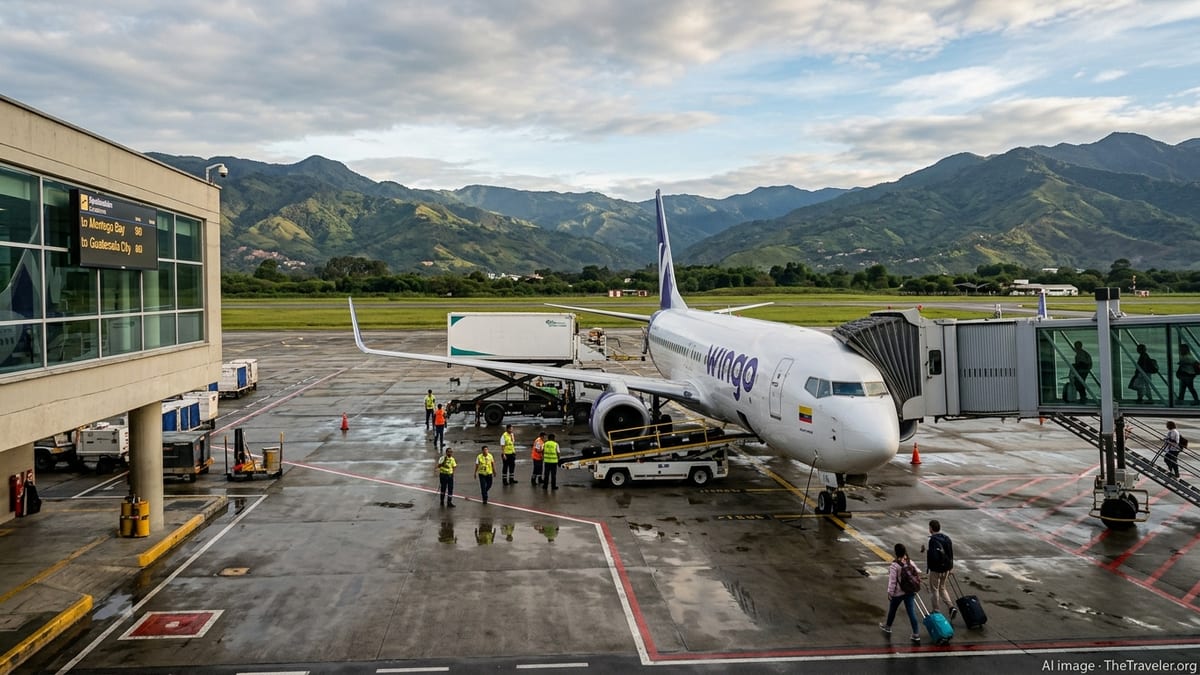
New Caribbean Link From Medellín to Jamaica
Publicly available airport scheduling data indicates that Wingo plans to inaugurate nonstop service between Medellín’s José María Córdova International Airport and Montego Bay’s Sangster International Airport in Jamaica in June 2026. The route is expected to operate several times per week using Boeing 737 aircraft, adding a direct, low cost connection between one of Colombia’s fastest growing outbound markets and one of the Caribbean’s most established beach destinations.
The launch builds on Wingo’s earlier charter and seasonal operations into Montego Bay from Colombian cities, which local Jamaican media have described as an important step in tapping Latin American demand for the island’s resorts. By moving from limited seasonal offerings toward a more structured schedule out of Medellín, the airline is signaling growing confidence in year round traffic flows between Colombia and Jamaica.
For travelers in both countries, the new service is expected to cut travel times and remove the need for connections through other Caribbean or Central American hubs. Industry observers note that the combination of a short flight time and a low cost fare structure is likely to appeal to Colombian travelers seeking quick beach breaks, as well as Jamaicans interested in city tourism, shopping, and medical or educational trips to Colombia.
The move also supports Montego Bay’s strategy to diversify its air service mix. Recent route developments at Sangster International have focused on expanding beyond traditional North American and European markets, and the addition of a Medellín link strengthens the city’s position as a Caribbean hub with growing ties to Latin America.
Planned Medellín Connection to Guatemala City
The Medellín expansion is also set to reach Central America, with industry reports pointing to a forthcoming Wingo route linking José María Córdova International Airport and Guatemala City’s La Aurora International Airport. While exact launch dates and frequencies have not been formally detailed in public timetables, the planned link would mirror Wingo’s earlier growth between Bogotá and Guatemala City and extend that connectivity to Colombia’s second largest urban area.
Guatemala City has emerged as a key gateway for both business and leisure traffic in northern Central America, with access to colonial Antigua, Lake Atitlán, and highland cultural attractions. A direct, low cost option from Medellín is expected to appeal to Colombian travelers seeking new regional destinations that combine nature, culture, and relatively short flight times.
On the Guatemalan side, tourism and trade stakeholders have been working to attract more Latin American carriers, and Wingo’s interest in a Medellín connection aligns with broader efforts to reduce dependence on long haul markets. More point to point capacity from South America could support multi destination itineraries that combine Colombia with Guatemala and neighboring countries.
For Wingo, a Medellín to Guatemala City service would help consolidate its network logic in Central America. By adding another Colombian origin beyond Bogotá, the airline can deepen its presence in a market where low cost competition has been intensifying and where price sensitive travelers are looking for alternatives to traditional full service carriers.
Strengthening Medellín as a Low Cost Hub
The new Jamaica and Guatemala routes fit into a wider evolution of Medellín as a significant secondary hub for low cost traffic in northern South America. Over the past several years, airlines have steadily increased their presence at José María Córdova International Airport, adding regional links that allow travelers to bypass the congestion and higher costs sometimes associated with larger capitals.
Analysts observing Colombian aviation trends note that Wingo has been gradually reallocating capacity toward routes that connect high growth leisure markets, rather than focusing exclusively on Bogotá centered patterns. Medellín’s sizable population, expanding tourism profile, and relative proximity to Caribbean and Central American destinations make it a natural candidate for additional low cost links.
The decision to connect Medellín to both Montego Bay and Guatemala City also plays to the strengths of narrow body aircraft that can operate efficiently on routes of three to four hours. This distance band has become a sweet spot for low cost operators across the Americas, allowing them to maximize aircraft utilization while keeping operational complexity manageable.
As new services are introduced, there is likely to be a ripple effect on local tourism ecosystems in the Medellín region. Easier access for Jamaican and Guatemalan visitors may encourage more two way tourism, with travelers pairing Medellín’s urban regeneration, cultural attractions, and nearby coffee region with beach or heritage experiences in their home countries.
Affordable Travel Opportunities Across the Region
Wingo’s planned Medellín links to Jamaica and Guatemala underline the broader role of low cost carriers in reshaping travel patterns across Latin America and the Caribbean. By targeting city pairs that historically required at least one connection and higher fares, the airline is contributing to a gradual democratization of international travel in the region.
Published coverage of Wingo’s strategy shows a consistent emphasis on keeping base fares competitive while offering optional paid services, a model that has been widely adopted in mature low cost markets. Applied to cross border routes from Medellín, this approach can open up international trips to first time flyers, student travelers, and families who previously viewed Caribbean or Central American vacations as out of reach.
Industry observers also highlight the potential for these routes to support diaspora and business travel. As commercial, cultural, and educational ties among Colombia, Jamaica, and Guatemala deepen, the availability of more affordable nonstop flights can facilitate small business exchanges, creative collaborations, and community visits that do not always appear in headline tourism statistics.
While all new services remain subject to regulatory approvals and possible schedule adjustments, the direction of Wingo’s network planning points to sustained interest in strengthening Medellín’s international reach. For travelers across the region, the combination of shorter journeys, competitive pricing, and a broader choice of destinations signals a more connected Latin America built around accessible air travel rather than a handful of dominant hubs.