

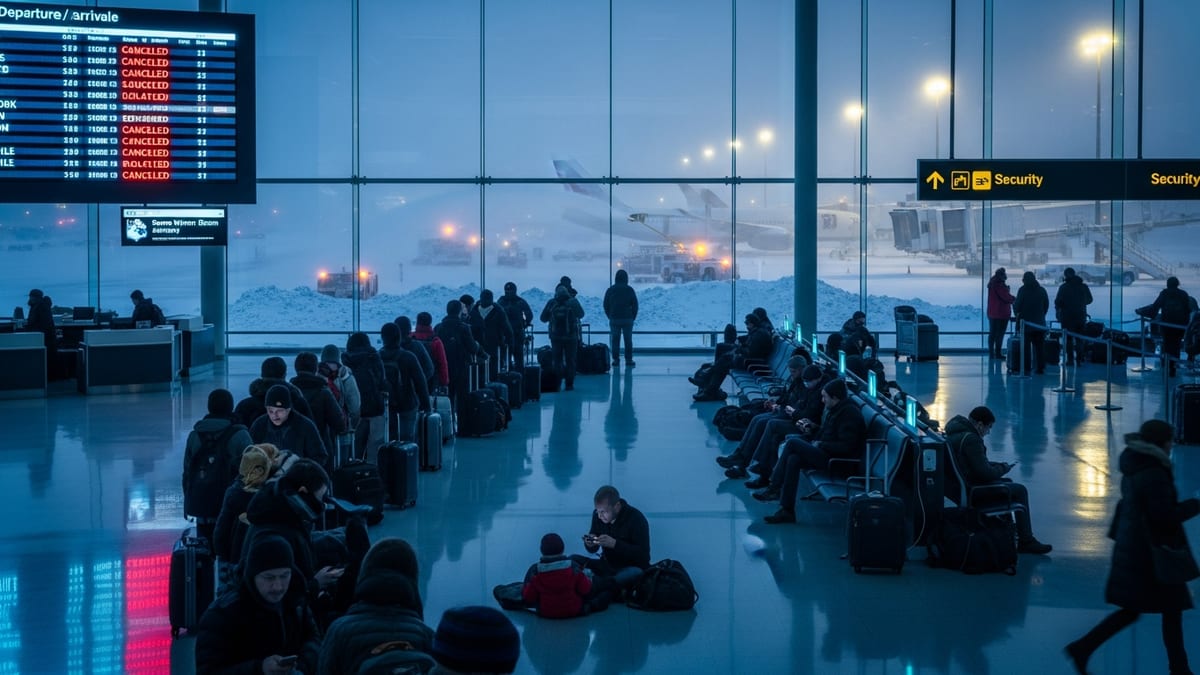
Nearly 1,300 flights in the United States have already been canceled as airlines, airports, and travelers brace for a sprawling winter storm expected to sweep across more than 40 states this weekend, snarling air and ground transportation from the Southwest deserts to the New England coast.
More News
- Deadly Tauranga Landslides Spur New Zealand Summer Travel Warnings for 2026 Visitors
- Storm Ingrid Disrupts Winter Travel Plans in Scotland and Northern England
- Stormy Seas and Torrential Rains Disrupt Bali Travel at Peak Rainy Season
Airlines Slash Schedules as Flight Cancellations Mount
Major U.S. carriers began aggressively trimming schedules on Friday, January 23, as forecasters warned that the storm could bring heavy snow, sheets of ice, and dangerous winds to a vast stretch of the country over the coming days. Data from flight-tracking services show more than 1,300 flights canceled in advance, with the bulk of disruptions focused on Saturday’s operations, when the system is expected to intensify across key travel corridors.
Dallas Fort Worth International Airport has emerged as the epicenter of early cancellations, with about 900 flights scrubbed from its Saturday schedule. Nearby Dallas Love Field has also seen more than half its flights removed for the day. Other affected hubs include Atlanta, Oklahoma City, Memphis, Nashville, and several mid-sized airports across Texas, Oklahoma, Arkansas, and Tennessee that lie directly in the storm’s projected path.
Airlines say the proactive cancellations are designed to keep planes, crews, and passengers from becoming stranded in the wrong cities once conditions deteriorate. By reducing operations ahead of the worst weather, carriers hope to speed recovery later in the weekend and into early next week, when they will face the challenge of reuniting passengers with their original itineraries and repositioning aircraft throughout the network.
Industry analysts warn, however, that the wave of preemptive cuts is likely only a preview. Forecasts from private weather services and the National Weather Service suggest that thousands more flights could be delayed or canceled from Saturday through Monday as the storm crosses the central United States and then rides up the East Coast.
Winter Storm Fern Poised to Sweep From Desert Southwest to New England
The powerful system, named Winter Storm Fern by some forecasters, is expected to stretch more than 2,000 miles, affecting travel in as many as 40 states from Arizona and New Mexico through the Southern Plains, Midwest, Mid-Atlantic, and Northeast. Weather models indicate that the storm will draw in ample Gulf moisture and collide with an entrenched mass of Arctic air, creating a volatile mix of heavy snowfall, sleet, and freezing rain.
Snow totals could exceed a foot in parts of the Ohio Valley, central Appalachians, and interior Northeast, with some locations likely to see even higher accumulations where narrow bands of intense snowfall set up. Along the Interstate 95 corridor from Washington, D.C., through Philadelphia, New York City, and Boston, meteorologists are warning of the potential for the biggest snowstorm in several years, with plowable snow, gusty winds, and whiteout conditions possible during the height of the storm.
Farther south, the threat shifts from snow to ice. The National Weather Service has highlighted the risk of “catastrophic ice accumulation” from portions of Texas and Oklahoma across the Lower Mississippi Valley and into the Carolinas, where even a quarter inch of ice can down power lines and tree limbs, and a half inch or more can render roads nearly impassable. Travel in these regions could become extremely hazardous, especially on elevated surfaces like bridges and overpasses.
In the Upper Midwest and northern Plains, extremely cold air on the back side of the storm will compound the danger. Wind chills are forecast to plunge well below zero, making any time spent outdoors without proper protection risky and raising concerns for stranded motorists and travelers facing long delays in unheated vehicles, buses, or terminals.
States Declare Emergencies as Millions Fall Under Weather Alerts
As the storm system gathers strength, governors and emergency managers across a broad swath of the country are moving to get ahead of the impacts. States including Texas, Missouri, Tennessee, Georgia, Virginia, North Carolina, South Carolina, and New York have issued emergency declarations or formal preparedness orders, unlocking additional resources for road crews, utility workers, and first responders.
By Friday afternoon, winter storm warnings, watches, and winter weather advisories covered more than 160 million people from New Mexico to New England. In major metropolitan areas such as Dallas, Atlanta, Washington, New York, and Boston, local officials urged residents to limit nonessential travel once precipitation begins and to prepare for the possibility of power outages lasting from several hours to multiple days in the hardest-hit zones.
Departments of transportation from New Mexico through Oklahoma, Alabama, and Texas were already pre-treating major interstates and secondary highways with brine and de-icing chemicals on Friday. Many agencies have warned that, despite these efforts, conditions could deteriorate rapidly as heavy snow rates and ice formation outpace plowing and treatment capacity, particularly overnight when temperatures plunge.
In the Northeast, commuter rail agencies and transit authorities have begun modifying weekend schedules, boosting staffing for snow and ice removal at stations and rail yards, and preparing to issue real-time updates as the storm arrives. Long-distance rail operator Amtrak has already announced changes on several routes and cautioned travelers that additional adjustments may be necessary depending on the exact track and intensity of the system.
Travelers Face Difficult Choices and Packed Rebooking Lines
For air passengers, the early cancellations offer both a warning and, in some cases, an opportunity. With airlines scrubbing flights in advance, many travelers still have the option to alter their itineraries before the worst conditions arrive. At the same time, those who delayed rebooking have found themselves competing for a limited number of seats on remaining flights, particularly out of busy hubs like Dallas and Atlanta.
At airports across the central United States on Friday, departure boards filled with red “canceled” notices as check-in lines lengthened. Travelers encountered long waits at customer service counters while trying to secure seats later in the week or reroute through less affected cities. Some inbound travelers opted to cut trips short, flying home a day early to avoid getting stuck on the wrong side of the storm.
For those who choose to ride out the storm where they are, the emphasis has shifted to contingency planning. Hotels near airports in affected cities have reported increased bookings from passengers preemptively reserving rooms in case of missed connections or extended layovers. Rental car counters, particularly in the South and Midwest, have seen last-minute requests from those hoping to drive around localized flight disruptions, though officials strongly caution against driving in icy or blizzard conditions.
Travel apps and airline mobile platforms have become critical tools as travelers attempt to monitor real-time changes. With call centers overwhelmed, carriers are pushing customers toward digital self-service options to rebook flights, request trip credits, or track checked baggage that may be separated from owners amid the operational shuffle.
Carriers Roll Out Waivers and Flexible Policies
Recognizing the storm’s extraordinary reach, nearly every major U.S. airline has issued travel waivers covering dozens of airports from the Southern Plains to New England. American Airlines, Delta Air Lines, United Airlines, Southwest Airlines, JetBlue Airways, Alaska Airlines, and Spirit Airlines have all announced some form of fee-free change policy for customers originally scheduled to travel over the coming days.
These waivers generally allow travelers to move their departure dates forward or backward within a specified window without incurring change fees or paying a fare difference, as long as they keep the same origin, destination, and cabin. In some cases, particularly at heavily affected hubs such as Dallas Fort Worth, Atlanta, and the New York area airports, airlines are also offering refunds or credits for those who opt not to travel at all.
Several carriers confirmed that they are repositioning aircraft out of the storm’s direct path and staging additional staff at recovery airports to help restart operations as soon as conditions permit. That includes repositioning crews ahead of the system, so that pilots and flight attendants are already in place rather than stuck behind in grounded cities once runways are cleared.
Canadian carriers have joined the effort as well, with Air Canada and WestJet rolling out flexible ticketing options for flights connecting Canadian cities to storm-affected U.S. destinations such as Dallas, Nashville, Houston, and major East Coast hubs. These cross-border adjustments highlight how widely the impacts of the storm may be felt, even beyond the contiguous United States.
Ground Transportation and Power Infrastructure Under Strain
While headlines focus on flight cancellations, ground systems are also bracing for a punishing stretch. State highway patrols from Texas to Pennsylvania have prepared for a spike in spinouts, jackknifed trucks, and multi-vehicle pileups as snow and ice accumulate. Many agencies are urging long-haul truckers and motorists to adjust routes or arrival times to avoid being caught in dangerous conditions.
Public transit agencies in cities such as Dallas, Nashville, Charlotte, Washington, and New York have lined up additional crews to keep rail switches, overhead wires, and bus depots operational. Still, they warn that heavy snow and ice could force route curtailments, bus detours, or full service suspensions in some corridors if conditions become unsafe for operators and riders.
Utilities across the South and Mid-Atlantic are on high alert for potential widespread outages. Ice storms are particularly damaging to above-ground power lines and equipment, and many of the areas under the highest ice risk have large tree canopies overhanging older infrastructure. Power companies are pre-staging repair crews, mutual aid teams from other states, and specialized equipment near forecast hot spots, but restoration efforts could be slowed if roads are blocked by fallen branches, downed lines, or heavy snow.
For travelers, the dual risk of transportation disruptions and power failures means making extra preparations. Airports and train stations in vulnerable regions have stocked up on backup supplies and fuel for generators to keep key systems running, while hotels are encouraging guests to charge devices, keep flashlights handy, and plan for the possibility that elevators and electronic locks may be temporarily affected if the grid goes down.
What Travelers Should Know in the Hours Before the Storm Hits
With the worst of the storm expected to unfold between late Friday night and Monday, travel experts recommend that anyone with imminent trips treat the next 24 hours as a critical decision window. Passengers are being urged to check their flight status repeatedly, even after receiving email confirmations, and to enable airline app notifications for immediate alerts about cancellations or gate changes.
Those who have flexibility are advised to consider rebooking to earlier departures on Friday or pushing their plans to later in the week, particularly if they are traveling through known hot spots such as Dallas, Atlanta, Charlotte, or any of the major Northeastern hubs. Travelers already at their destinations should weigh whether an early return could avoid getting stuck for several extra days if airports and rail lines experience prolonged disruptions.
For road trippers, officials are warning against underestimating the storm’s reach. Weather conditions may change quickly across state lines, and stretches of interstate that are passable in one region can become treacherous a few hours down the road. Checking state department of transportation maps, planning frequent rest stops, and carrying extra food, water, warm clothing, and blankets in vehicles are strongly recommended practices.
As Winter Storm Fern bears down on much of the country, the message from airlines, meteorologists, and emergency officials is strikingly unified: expect disruptions, travel only if necessary once conditions deteriorate, and build extra time and flexibility into any journey over the coming days. For millions of travelers, patience and preparation will be as essential as tickets and boarding passes this weekend.