

More news on this day
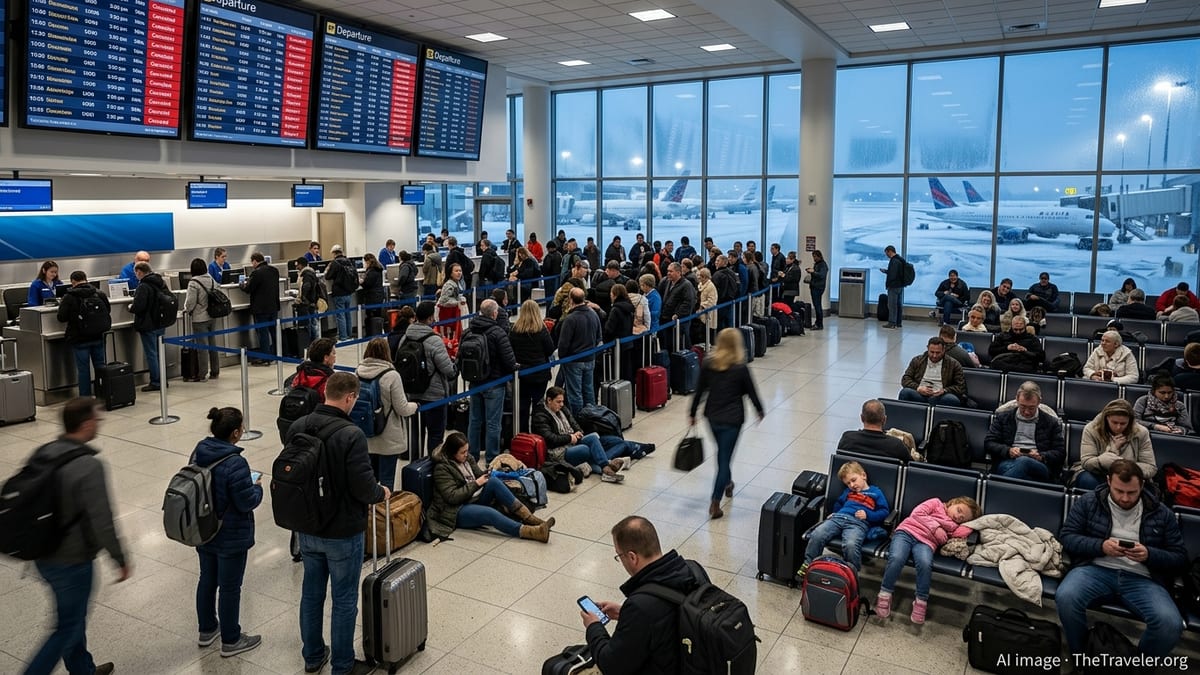
Winter Storm Iona has unleashed major disruption across the United States aviation network, with more than 4,800 flights canceled over several days and thousands of passengers stranded at major hubs as airlines struggle to restore normal operations.
Get the latest news straight to your inbox!
Storm Iona Slams Key U.S. Travel Corridors
The powerful system, part of a broader March 13 to 17, 2026 storm complex affecting large swaths of the country, has combined heavy snow, ice and severe winds to bring some of the busiest air corridors in the United States to a near standstill. Publicly available meteorological analyses describe the event as a large and intense extratropical cyclone that delivered blizzard conditions to the Upper Midwest and High Plains, while also driving dangerous ice and thunderstorms farther south.
Unofficially labeled Winter Storm Iona by weather outlets, the system has produced multiple feet of snow in parts of the Upper Midwest, whiteout conditions in rural areas and hazardous crosswinds at exposed runways. In response, airlines have proactively scrubbed large portions of their schedules while also issuing rolling day-of cancellations as the storm’s path and intensity shifted.
Flight tracking data and media tallies indicate that cumulative cancellations tied to Iona have climbed past 4,800 across several days, with the total number of delayed flights far higher. The ripple effects continue to spread far beyond the direct impact zone, as aircraft and crews remain out of position and turnaround times slow at already congested airports.
Major Hubs Face Gridlock as Cancellations Cascade
Major hubs across the Upper Midwest and central United States have borne the brunt of Iona’s aviation fallout. Airports in Minnesota, Wisconsin and neighboring states have seen hundreds of arrivals and departures canceled as blizzard conditions and low visibility made safe operations difficult or impossible for extended periods.
While some hubs outside the core storm zone have remained technically open, reduced arrival and departure rates, runway de-icing queues and intermittent ground stops have constrained capacity. Airlines have also implemented broad schedule reductions into affected metros to avoid stranding aircraft and crews in locations where they might be unable to depart for days.
The result has been crowded concourses, long customer service lines and scarce rebooking options at coast-to-coast gateways, including major connection points in the Midwest, Rockies and along the East Coast. Published coverage shows that even travelers originating in mostly clear-weather regions have found their plans disrupted because their aircraft or onward connection was tied to a route crossing Iona’s sprawling footprint.
Airlines Struggle With Crew, Equipment and Recovery Windows
Although airlines entered the late-winter period with more experience managing large-scale storms than in previous years, Winter Storm Iona has underscored persistent structural challenges. Publicly reported operational data and expert commentary highlight how tightly scheduled fleets and crews leave little buffer when a multi-day, multi-region weather event unfolds.
As Iona intensified, carriers repositioned aircraft out of high-risk airports and consolidated flights in an effort to protect their most critical routes. However, widespread runway closures, ground delays and airspace flow restrictions sharply limited how quickly they could move planes and crews back into place once windows of calmer weather appeared.
Airlines also faced crew time-out issues as pilots and flight attendants reached regulatory duty limits after long days of managing delays, diversions and extended tarmac waits. This created an additional wave of cancellations even after the worst weather moved east, prolonging the disruption for travelers who expected operations to rebound more quickly once snow totals tapered off.
Industry observers note that the pattern echoes previous winter disruptions in recent years, when major storms triggered initial weather-related cancellations, followed by a second phase driven by software, staffing and logistical challenges during the recovery.
Thousands of Passengers Stranded With Limited Alternatives
For travelers, the impact of Winter Storm Iona has been immediate and deeply disruptive. Reports from airports across the country describe passengers sleeping in terminals, scrambling for last-minute hotel rooms and rental cars, and confronting multi-day waits for the next available seat on already full flights.
With spring break travel ramping up and many flights operating near capacity before the storm, rebooking has proven especially difficult. Publicly available booking data and consumer reports show that some travelers have had to accept itineraries with multiple connections, departures several days later than planned, or arrivals into alternate airports hundreds of miles from their original destination.
Passengers on international itineraries connecting through U.S. hubs have faced additional complications, including new entry formalities, missed cruise and tour departures, and the need to rebook onward segments with non-U.S. carriers. Travel insurance providers and credit card issuers are being widely consulted as customers seek partial reimbursement for extra hotel nights, meals and alternative transportation.
Social media posts and consumer advocacy updates indicate a growing frustration among travelers over inconsistent information about the causes of cancellations, eligibility for vouchers, and the availability of hotel and meal support, particularly when an airline categorizes a disruption as weather-related.
Longer-Term Questions for U.S. Airline Resilience
As Iona’s snow bands weaken and conditions gradually improve, attention is turning to how long it will take the U.S. aviation system to fully recover. Historical data from other major winter storms suggests that even after runways are cleared and skies brighten, airlines can need several days to return aircraft and crews to their planned rotations.
Analysts and transportation specialists are already drawing comparisons between the Iona disruption and earlier winter events that exposed gaps in scheduling systems, staffing levels and contingency planning. While early reports suggest that airlines have avoided some of the worst-case operational breakdowns seen in prior years, the scale of cancellations and the number of stranded passengers indicate that vulnerabilities remain.
Consumer advocates are again raising questions about communication practices during large-scale weather disruptions, including how clearly airlines explain passengers’ rights, the distinction between weather and non-weather cancellations, and the processes for securing refunds instead of travel credits.
For now, publicly available forecasts and airline advisories suggest that travelers with flights in and out of affected regions over the next several days should continue to expect schedule changes, and where possible, build extra flexibility into their plans as the industry works to move stranded passengers home and reset the U.S. air travel system after Winter Storm Iona.