

More news on this day
More than 11,000 flights have been canceled and tens of thousands more delayed as a historic blizzard slams the U.S. Northeast, turning major airports from Washington to Boston into snowbound parking lots and plunging late February travel into chaos.
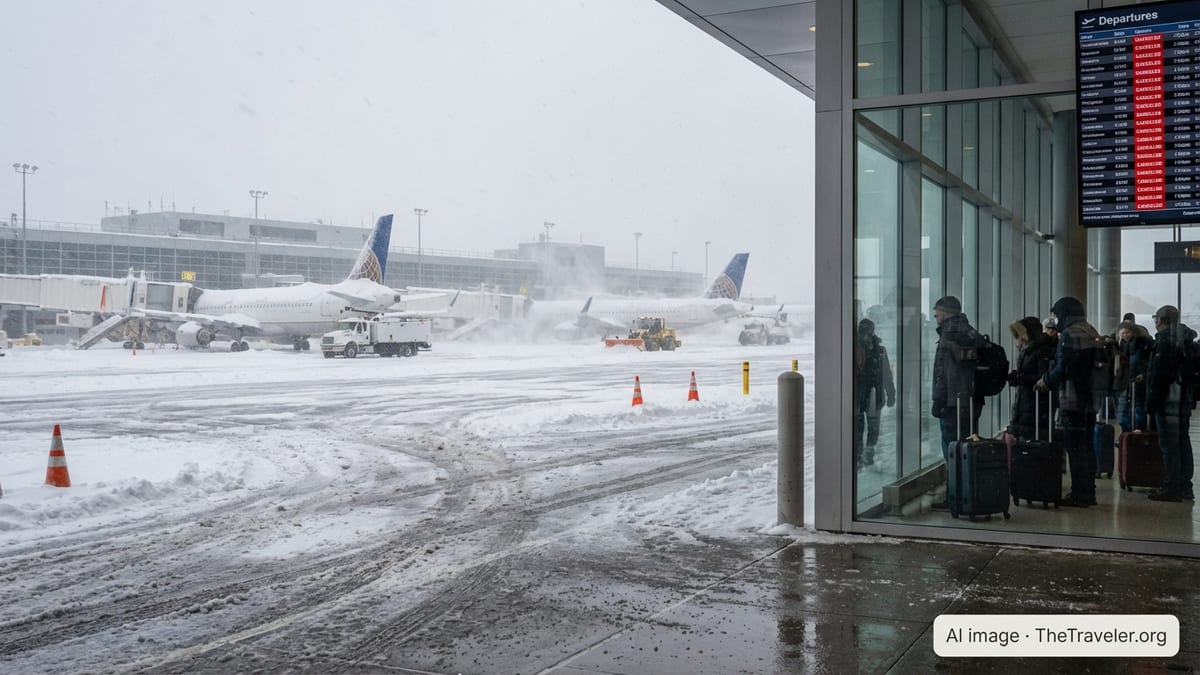
Air Travel Grinds to a Halt Across Key Northeast Hubs
The powerful winter storm, which intensified into a bomb cyclone over the Atlantic before hammering the Interstate 95 corridor, has brought operations at some of the nation’s busiest airports close to a standstill. Data from flight tracking services over several days show airlines canceling and delaying flights in cascading waves as heavy, wind-driven snow and low visibility swept through the region.
Boston Logan, New York’s John F. Kennedy, LaGuardia and Newark Liberty, along with Philadelphia International, have borne the brunt of the disruption. At the height of the blizzard, Boston and the New York City airports scrubbed nearly all departures, while Philadelphia canceled most of its schedule. Smaller but strategically important hubs such as Providence’s T.F. Green and Hartford’s Bradley International also saw widespread cancellations or full-day shutdowns.
From Sunday, February 22, through Tuesday, February 24, airlines cut more than 10,000 flights as the storm intensified, followed by thousands more cancellations and delays as the system moved offshore but left behind blocked runways, stranded aircraft and crew misalignments. By Wednesday, February 25, cumulative cancellations tied to the blizzard had pushed well past the 11,000 mark, impacting nearly every major U.S. carrier and many international airlines with routes into the Northeast.
The scale of the turmoil has rippled across the wider U.S. network. Planes and crews scheduled to originate or connect through the Northeast never left the ground, triggering knock-on disruptions in cities far from the snow zone, from Florida leisure gateways to Midwestern business hubs.
Passengers Stranded, Rebooked and Sleeping in Terminals
For travelers caught mid-journey, the historic blizzard has turned routine trips into multi-day ordeals. Images from airports in New York, Boston and Philadelphia show rows of cots and clusters of passengers sleeping in jackets and hats under fluorescent lights, while departure boards glow red with canceled and delayed notices.
Many flyers describe long lines at check-in counters and gate desks as they scramble for scarce rebooking options. With most flights into and out of the region grounded at the height of the storm, some travelers were told the next available seat could be several days away. Others opted to abandon air travel entirely, renting cars or vying for limited seats on intercity buses and the reduced rail services still operating around the storm zone.
Airlines have responded with a suite of waivers, allowing passengers to change dates and routes without fees across wide swaths of the Northeast. Carriers have urged customers to use mobile apps and websites instead of queuing at crowded airport counters, and in some cases advised travelers to stay away from the airport until they have a confirmed new itinerary.
Even as skies clear, stranded passengers are likely to feel the effects for days. The backlog of displaced travelers, coupled with aircraft and crew still out of position, means that full normal operations will lag well behind the end of the snowfall. For many, winter vacations, business meetings and family visits planned around the late-February weekend have been reduced to hours of waiting on hold and watching the weather radar.
Record Snow, Power Outages and Travel Bans Across the Region
The air travel collapse is only one dimension of a storm that forecasters say will be remembered as one of the most intense winter systems to hit the Northeast in decades. Blizzard warnings stretched for hundreds of miles from the Mid-Atlantic into New England, with more than 40 million people under some form of winter weather alert as the system peaked.
Cities across the region reported eye-popping snowfall totals and ferocious winds. In New England, parts of Rhode Island and Massachusetts recorded hurricane-force gusts and more than two feet of heavy, wet snow. Providence logged record-breaking two-day and single-day accumulations, surpassing benchmark storms from 1978 and 1996, while coastal communities battled near whiteout conditions and coastal flooding at high tide.
By the morning of February 23, more than half a million customers across the Northeast were without power, with Massachusetts and New Jersey among the hardest hit. Crews have been working around the clock to restore electricity, but deep snow, drifting roads and blowing snow have slowed efforts. Authorities warned that some communities, particularly in coastal and rural New England, could face extended outages as utility workers navigate downed lines and blocked access.
On the roads, multiple states, including parts of New York, New Jersey and Massachusetts, imposed travel bans or severe restrictions for nonessential vehicles during the height of the storm. Plows struggled to keep up with snowfall rates that, in some bands, climbed to several inches per hour. Officials urged residents to stay home, both to keep themselves safe and to prevent further strain on emergency services already stretched by crash responses and medical calls.
Airlines Race to Rebuild Schedules as Another Storm Looms
Behind the scenes, airline operations centers are now engaged in a complex reset. With the worst of the snowfall moving offshore, carriers are focused on clearing runway backlogs, repositioning aircraft and rebalancing crew schedules knocked out of compliance by weather delays and duty-time limits.
Industry analysts say Monday was the most punishing day for airlines, with close to one in five scheduled flights canceled across the United States as the blizzard peaked over the Northeast. By Tuesday and Wednesday, the share of cancellations had begun to fall, yet thousands of delayed and scrubbed flights remained as carriers methodically restored their networks.
JetBlue, with its outsized footprint in Boston and New York, has been among the hardest hit, cutting a major share of its schedule through midweek to avoid last-minute disruptions and to give crew schedulers time to reset. Other big carriers, including Delta, United, American and Southwest, preemptively trimmed departures and offered waivers to keep passengers off flights likely to be affected.
Complicating recovery efforts, forecasters are tracking another fast-moving winter system diving out of Canada, expected to brush parts of the Northeast later this week. While not anticipated to match the historic intensity of the current blizzard, any additional snow or high winds could slow the reset and compound frustration for travelers already weary from days of uncertainty.
What Travelers Should Expect in the Days Ahead
For those yet to travel, experts recommend approaching itineraries with caution. Even if local conditions appear calm, flights that depend on aircraft or crews cycling through the Northeast could still face last-minute changes. Flyers are being advised to build in extra time for connections, pack medications and essentials in carry-ons and be prepared for schedule shifts as airlines fine-tune operations.
Travel advisors suggest that anyone with nonessential trips consider flexible dates or alternative modes of transport while the system stabilizes. In some cases, rail may resume faster on key corridors once tracks are cleared, offering a viable backup for routes like Washington to New York or New York to Boston, though some services were also canceled during the height of the storm.
For international travelers whose long-haul flights connect through Northeast gateways, rebooking is likely to remain challenging in the near term. Many transatlantic and transcontinental services rely on tightly choreographed aircraft rotations that have been thrown off by days of weather disruptions. Some carriers are upgauging select flights to larger aircraft to help clear backlogs, but seats remain in short supply on the most popular routes.
As the Northeast begins the slow process of digging out, the blizzard has once again highlighted how dependent global travel has become on a small cluster of weather-sensitive hubs. For millions of passengers this week, a single storm system has turned winter wanderlust into a lesson in the fragility of modern air travel.