

More news on this day
A major winter storm hammering the U.S. Northeast has cascaded into severe disruptions at Palm Beach International Airport on Monday, with more than 125 flight cancellations and at least 25 delays rippling across routes to the United States, the United Kingdom, Canada, Mexico and other international destinations.
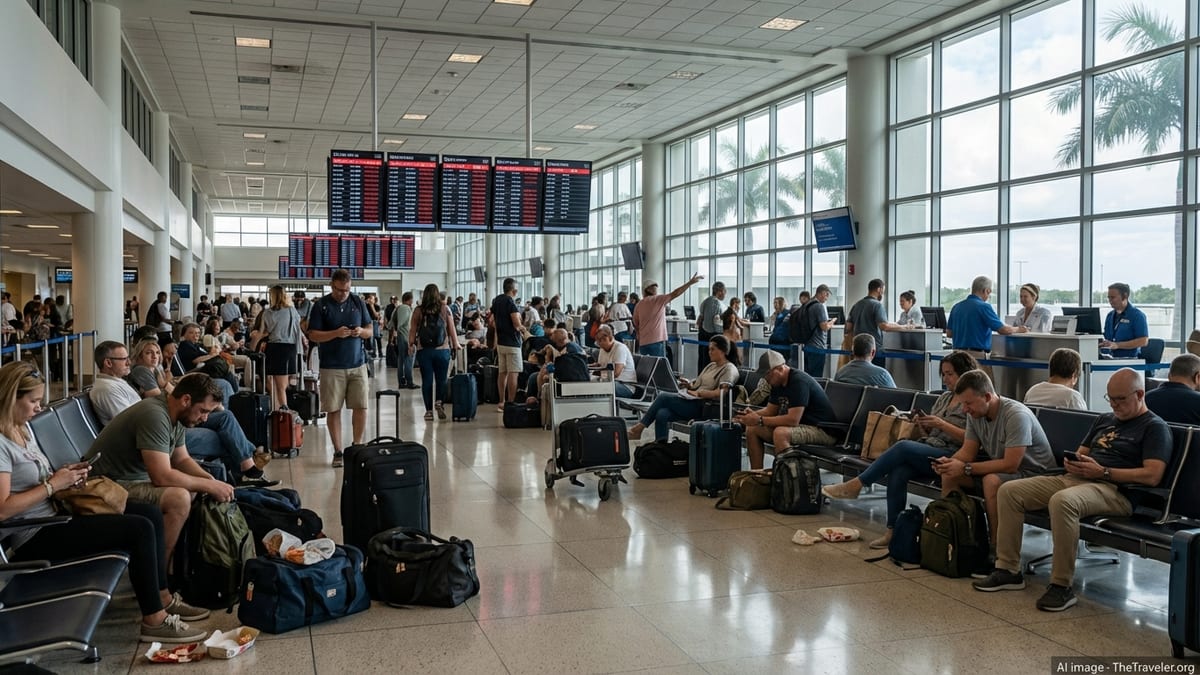
Storm Fallout Leaves Palm Beach Passengers Stranded
The disruption at Palm Beach International Airport comes as a powerful nor’easter buries key hubs in New York, Boston and Philadelphia under heavy snow and high winds, forcing airlines to slash schedules across the East Coast. Flight-tracking data and local reports show Palm Beach among Florida’s hardest-hit airports, with cancellation rates nearing one in three scheduled departures and arrivals over a 24-hour period.
By Monday afternoon, at least 125 flights into and out of Palm Beach had been canceled, alongside more than two dozen recorded delays, as carriers opted to preemptively ground services rather than risk aircraft and crew being trapped at closed northern airports. The majority of affected flights are tied to the storm-battered Northeast, but knock-on effects are now being felt on transatlantic and transborder services that rely on those same aircraft rotations.
Inside the terminal, departure boards showed long blocks of red as “canceled” notices stacked up through the morning and into the evening. Travelers queuing at rebooking desks reported limited options for alternative flights before midweek, with some airlines warning that normal operations may not resume for several days as they work through the backlog.
Airport officials urged passengers to check flight status with their airline before leaving home and to anticipate longer wait times at ticket counters and call centers. With most cancellations tied directly to the storm, carriers are generally not required to provide hotel accommodation or meal vouchers, leaving many travelers to make their own last-minute arrangements.
Major U.S. Carriers Lead Wave of Cancellations
JetBlue, Delta Air Lines, United Airlines, American Airlines and Southwest Airlines are among the carriers most heavily affected at Palm Beach, reflecting their dense networks into New York City, Boston and other northern hubs currently under winter storm warnings. Regional operators and foreign carriers including Air Canada, Frontier and several Caribbean airlines have also reported scattered cancellations and delays as the disruption spreads across the system.
JetBlue appears to be bearing the brunt of Monday’s upheaval at Palm Beach, with dozens of departures to New York’s JFK and LaGuardia airports, Newark and Boston scrubbed from the schedule. Delta and United have similarly pulled multiple rotations linking Palm Beach to New York and other East Coast cities, while American and Southwest have trimmed services to protect aircraft positioning and crew schedules.
Industry analysts note that while Florida itself is not experiencing the severe winter weather, the state’s airports function as critical endpoints for thousands of travelers heading to and from the Northeast. When snow and wind close runways in New York and New England, those effects are quickly felt in South Florida, where inbound aircraft never arrive and outbound flights have nowhere to land.
Airlines have issued broad travel advisories covering routes through impacted cities, allowing many customers to rebook without change fees. However, with seats in high demand and entire banks of flights canceled days in advance, passengers are finding that available alternatives may involve multi-stop routings, overnight connections or travel dates pushed well into later in the week.
International Links to UK, Canada and Mexico Disrupted
While the storm’s epicenter remains in the northeastern United States, its impact is now radiating outward to international routes connected through affected hubs. At Palm Beach, this is particularly evident on services that rely on tight connections via New York, Boston and Philadelphia to reach destinations in the United Kingdom, Canada and Mexico.
Canadian travelers have been among those hardest hit, as Air Canada and U.S. carriers adjust flights that typically connect Palm Beach leisure traffic to Toronto, Montreal and other Canadian gateways via storm-lashed hubs. Delays and cancellations on these feeder legs are forcing rebookings, missed connections and in some cases overnight stays on both sides of the border.
Travelers bound for London and other UK destinations are feeling the squeeze as well. Although Palm Beach does not host a large volume of nonstop transatlantic departures, many passengers rely on one-stop itineraries through New York area airports or Boston Logan. With those hubs operating at sharply reduced capacity, itineraries that once involved a short layover have turned into lengthy or even impossible connections.
Flights to and from Mexico and the Caribbean, including Cancun and resort destinations in the Yucatan and Jamaica, are also experiencing secondary effects. Some departures are delayed as airlines wait for aircraft arriving late from the Northeast, while others are canceled outright when crews or jets are unavailable. Tourism officials warn that, for peak-season travelers, even a single missed day at a prepaid resort can represent a significant financial and emotional blow.
Regional Ripple Effects Across Florida and the East Coast
The turmoil at Palm Beach International Airport is part of a much larger picture of disruption across Florida. Fort Lauderdale, Miami and Orlando are each reporting triple-digit cancellation totals as airlines slash schedules tied to the Northeast and Mid-Atlantic, diverting or grounding aircraft that would ordinarily shuttle visitors between northern cities and Florida’s beaches and theme parks.
Across the United States, thousands of flights have been canceled since the storm intensified over the weekend, with the majority clustered at New York’s three main airports, Boston Logan and Philadelphia International. As operations at those hubs slow to a crawl, secondary airports like Palm Beach, Fort Myers and Tampa are absorbing the downstream impact, even under clear skies.
Transportation experts say it may take several days for the national air network to fully recover. Once snow and ice are cleared from runways and taxiways, airlines must still return aircraft and crews to their intended positions, work through stranded passengers and reset schedules that have been upended by rolling cancellations. For airports like Palm Beach, that process can involve “catch up” days where flights are overbooked and standby lists swell.
In the meantime, local hospitality businesses are seeing a mixed effect. Hotels near Palm Beach International and in nearby coastal cities are reporting a surge in last-minute bookings from stranded travelers, even as some inbound tourism numbers soften because visitors simply cannot reach South Florida. Rental car agencies and intercity bus operators have also seen increased demand from travelers seeking alternative routes home.
What Travelers Through Palm Beach Should Expect Next
For passengers with upcoming itineraries through Palm Beach International Airport, airlines and airport officials are urging proactive planning. Travelers are being advised to monitor their flight status early and often, to accept free rebooking options where available, and to consider traveling with carry-on luggage only to maintain flexibility if last-minute changes are required.
Industry observers recommend that travelers heading to heavily affected cities build in additional buffer time for connections, or consider routing through alternative hubs in the Southeast and Midwest that are currently less impacted by the winter storm. Those with nonessential travel may find it easier to postpone trips until the middle or end of the week, when airlines expect operations to stabilize.
Inside Palm Beach International, staff have been working to manage crowds and keep passengers informed through terminal announcements and display boards. Information desks and airline counters have remained busy throughout the day as travelers seek clarity on when they might finally depart, or whether their long-planned journeys will have to wait.
With forecasts calling for improving conditions in the Northeast later in the week, airlines hope to gradually rebuild their schedules. For now, however, Palm Beach International Airport remains a vivid example of how quickly weather hundreds of miles away can plunge even sunny South Florida into sudden travel disarray.