

Alaska is often described in superlatives: bigger, wilder, emptier, more extreme. Yet many visitors leave having sampled only a fraction of what makes the state so extraordinary. Cruise ships, roadside viewpoints, and quick photo stops offer beautiful glimpses, but they barely scratch the surface. To really say you have seen Alaska, you need to feel its scale, its silence, its weather, and its wildlife in ways that are intimate, humbling, and unforgettable. These ten experiences are not about ticking off attractions. They are about encountering the Last Frontier on its own terms.
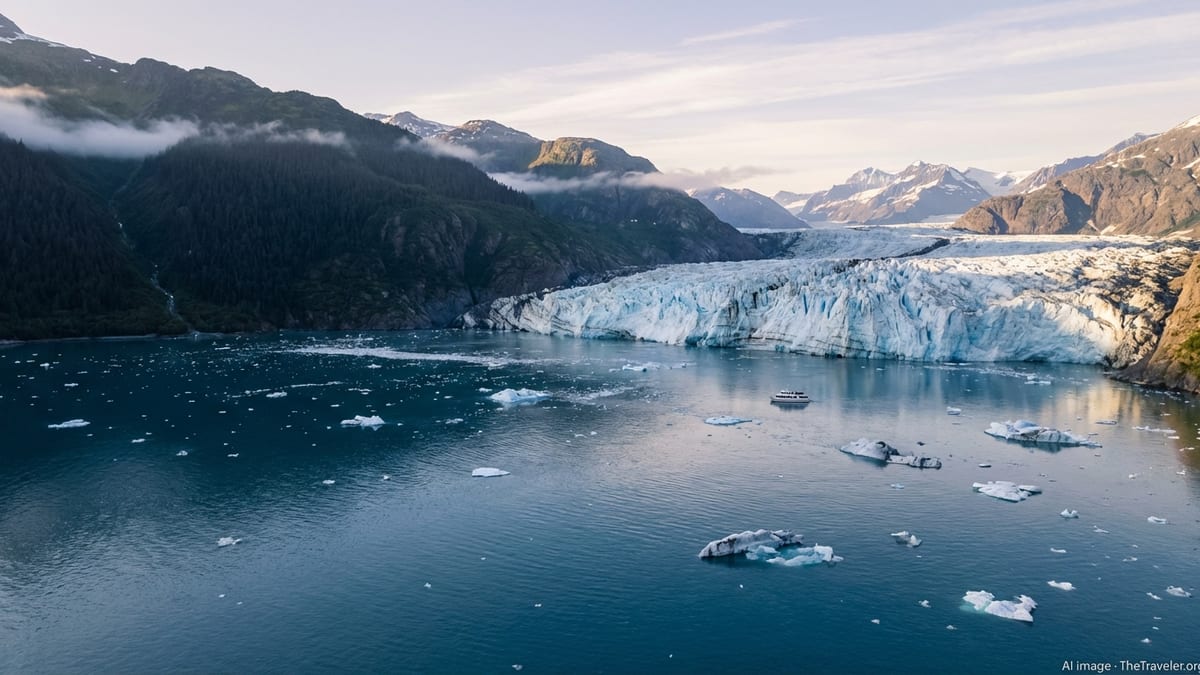
Stand Below a Calving Tidewater Glacier
Few moments capture the raw energy of Alaska like watching a tidewater glacier shed house sized chunks of ice into the sea. In places such as Kenai Fjords National Park, Glacier Bay, College Fjord, and Prince William Sound, ancient ice flows descend directly into deep ocean inlets. From the deck of a small boat, you can hear the glacier creak and groan long before anything moves. Then a crack echoes across the bay, followed by a thunderous roar as ice collapses into the water and sends a rolling swell toward your hull.
Seeing a glacier from a distance is impressive; drifting in front of a vertical wall of ice that rises hundreds of feet from the sea is something else entirely. The air is sharply colder near the face, filled with the fizz of ice fragments, seabirds circling, and harbor seals resting on floating bergs. Guides typically keep boats at a cautious distance for safety, but the sense of scale still feels overwhelming, especially when an entire section calves away and the glacier appears to rearrange itself before your eyes.
Glacier cruises operate from coastal towns such as Seward, Whittier, and Valdez during the summer months, when fjords are navigable and wildlife activity is at its peak. Weather can change quickly, with fog, rain, and wind all common in these maritime environments. Dressing in waterproof layers, including hat and gloves even in July, lets you stay outside on deck where the experience is most powerful. In Alaska, the difference between glimpsing a glacier from a heated cabin and breathing its icy air for hours is the difference between passing through the landscape and really being in it.
These trips also highlight the region’s changing climate. Many glaciers have been steadily retreating, often leaving visible bands of bare rock where ice once flowed. Guides tend to explain these shifts in measured, factual terms, but you can see the story in the landscape itself. Watching a glacier calve may be thrilling, but it is also a reminder that Alaska’s famous ice is dynamic, vulnerable, and changing within a single human lifetime.
Travel Deep Into Denali’s Wildlife Country
The paved park road and visitor center at the entrance of Denali are popular, but the true magic of this vast protected area begins when the pavement ends. Denali National Park spans more than six million acres of tundra, forest, and mountains. Much of that terrain is roadless, and even the main park road is closed to private vehicles far inside, which keeps the interior wild. To really feel Denali, you need to ride one of the official buses or join an authorized tour that ventures far beyond the entrance area.
As you rattle along the gravel road, forest quickly gives way to rolling tundra, braided rivers, and ridgelines that reveal how enormous this landscape really is. Wildlife sightings are rarely guaranteed, but it is common to see Dall sheep clinging to high cliffs, caribou crossing pale riverbeds, and grizzly bears grazing on berries. Moose browse in willow thickets, their antlers visible above the brush, while golden eagles and rough legged hawks circle overhead. Guides and drivers are skilled at spotting movement at astonishing distances, pointing out animals that your eye would otherwise miss.
Weather in Denali changes swiftly, and clouds often shroud the summit of Denali, North America’s highest peak. On clear days the mountain dominates the skyline from tens of miles away, dwarfing every other summit in view. Even when the peak remains hidden, the sense of scale is unmistakable. Long bus rides can feel daunting on paper, but many travelers describe them as meditative, with each bend in the road revealing new valleys, light, and wildlife encounters.
Staying overnight in or near the park stretches the experience beyond a day trip. Evening walks, ranger talks, and simply watching the late summer sun slide along the horizon deepen your understanding of this subarctic environment. Whether you are camping under the midnight sun or visiting during early autumn when tundra turns crimson, spending real time inside Denali’s interior transforms the park from a scenic backdrop into a living, breathing ecosystem that you have genuinely experienced.
Chase the Northern Lights Under an Interior Sky
Seeing the aurora borealis flicker across a truly dark Alaskan sky stays with travelers for the rest of their lives. Interior Alaska, especially around Fairbanks, is one of the most reliable places in North America to view the northern lights. Local researchers note that the main aurora season typically runs from roughly late August through mid April, when nights are long enough for the displays to become visible and skies can stay properly dark. Within that window, autumn and late winter often offer good balances of darkness and relatively stable weather.
Aurora activity is driven by solar conditions, so no night is guaranteed. However, staying several nights dramatically improves your odds, and many Fairbanks based operators suggest at least three to five nights for a strong chance of success. The Geophysical Institute in Alaska reports that if skies are clear in the Fairbanks region during the main aurora season, visitors who remain for multiple nights frequently see at least one display. Clear inland skies and a location under the so called auroral oval give the region a natural advantage.
Whether you head to a simple pullout like Cleary Summit, an aurora lodge outside town, or a hot springs resort with heated pools and viewing decks, preparation matters. Temperatures from November through March can fall far below freezing, and extended outdoor waiting is often required. Many tours provide warm shelters, heavy parkas, and access to hot drinks so guests can move between the night air and indoor spaces as conditions change. Cameras with manual settings and fast lenses capture the colors best, though modern smartphones increasingly handle aurora scenes well when set to night modes.
The moment the lights appear is rarely predictable. Sometimes a faint green band brightens, curtains ripple overhead, and the whole sky seems to breathe. On other nights, activity may remain low or appear briefly and then fade. The unpredictability is part of the experience. Long stretches of silence, broken only by crunching snow and distant tree creaks, are just as memorable as the bursts of color. To say you have really seen Alaska is to have stood outside in that deep winter stillness, watching for a phenomenon that answers only to the sun and the Earth’s magnetic field.
Witness Alaska’s Bears in Their Own World
Alaska’s brown bears, especially along the coast of Katmai and Lake Clark national parks, are icons of the state’s wild identity. Photographs of bears catching salmon in midair at Brooks Falls have appeared in magazines worldwide, but the reality of standing on a viewing platform while these animals move below you is far more visceral. In July and August, when salmon runs peak at places like Brooks River, dozens of bears may converge on a single stretch of water, each staking out a favored fishing spot.
Lake Clark and Katmai are primarily fly in destinations, which helps keep them remote. Visitors typically travel by small plane or floatplane from communities such as Anchorage or Homer, then land on beaches or lakes near bear feeding areas. Coastal meadows and estuaries become staging grounds where bears graze on sedges, dig for clams, and nap in the open. In some locations, guided groups move across tidal flats wearing waders, accompanied by experienced bear guides who understand local animal behavior and shifting tides.
National Park Service rangers and licensed guides focus heavily on safety and respect. Visitors learn to travel in tight groups, keep quiet, and give bears generous space. Platforms and established viewing areas exist both for protection and to minimize disturbance. Over time, bears in these high use zones have become accustomed to human presence at predictable distances, which helps reduce conflicts. Still, they remain wild animals with their own priorities, and watching them interact, compete, and occasionally display sudden bursts of speed is a reminder of how powerful they are.
Seasonal rhythms shape these experiences. In early summer, you might see family groups feeding together; later in the year, individual bears can be astonishingly heavy as they prepare for winter denning. Public events such as online “fat bear” contests spotlight this transformation for global audiences, but standing in the drizzle of coastal Alaska, with the smell of fish in the air and the sound of rushing water all around, gives you a direct, unscripted connection to the lives that define this ecosystem.
Experience the Inside Passage by Smaller Ship or Ferry
Many travelers first meet Alaska along the Inside Passage, the sheltered coastal route that threads between forested islands and the rugged mainland. Large cruise ships follow this path every summer, offering spectacular scenery from high decks. To feel the region more deeply, consider a smaller vessel or the state run ferry system, where you can linger at railings close to the water, listen to the slap of waves on the hull, and watch humpback whales surface at eye level.
The Alaska Marine Highway ferries connect communities from Bellingham, Washington, to Southeast Alaska towns such as Ketchikan, Juneau, Sitka, and Haines. Unlike standard cruises, these ferries are working transportation for residents, moving cars, freight, and families alongside visiting travelers. You can walk the decks at any hour, feel the temperature drop as you enter narrow fjords, and see how communities are built around docks that might otherwise appear as mere stops on an itinerary. Some travelers bring tents and sleep in designated deck spaces under heat lamps, creating a low key, social atmosphere that feels intimately tied to the sea.
Smaller expedition style ships and charter boats offer their own advantages. With fewer passengers, they can often maneuver closer to shore, linger near feeding whales, and stop in coves that larger ships bypass. Kayaks and skiffs carried onboard let you paddle among icebergs or land on remote beaches. Guides interpret the intricate coastline, explaining how Indigenous communities have navigated these waters for generations and how tides, currents, and storms shape daily life.
Southeast Alaska’s weather is famously variable, with frequent rain and low clouds that shift from one cove to the next. Rather than fight it, locals learn to appreciate the soft light, mist clinging to spruce covered slopes, and rainbows that appear after quick showers. Venturing along the Inside Passage with enough time to watch those moods change, rather than rushing from port to port, turns a scenic route into an evolving story of ocean, forest, and people.
Fly Into a Roadless Bush Community
Most of Alaska lies beyond the state’s limited road network. Hundreds of communities and seasonal camps depend on small aircraft, boats, and winter trails for access. Taking a scheduled “bush” flight or charter into one of these roadless settlements offers a view of contemporary Alaska that is rarely seen from highways or cruise ports. From the air, you see river systems braiding over miles of gravel, lakes peppering the tundra, and scattered cabins that hint at deep local knowledge of the land.
Destinations vary widely. Some villages sit along major rivers in western Alaska, others on coastal islands or above the Arctic Circle where permafrost and polar conditions define the environment. In many cases, gravel runways are the central lifeline, connecting residents to medical care, goods, and schools in larger hub towns. Watching mail, groceries, and passengers load and unload at these strips reveals how aviation is not a luxury here but an everyday necessity.
Visitors who arrange guided cultural experiences or stay at locally owned lodges can learn directly from residents about subsistence hunting and fishing, seasonal migrations of wildlife, and the ways climate shifts are affecting sea ice, river breakups, and berry harvests. Conversations tend to be straightforward and rooted in daily realities rather than abstract debates. Respecting local customs, asking permission before photographing people, and recognizing that you are a guest in an active community are fundamental to responsible travel in these places.
Flying in small planes also underscores how quickly weather can reshape plans. Pilots closely monitor wind, cloud ceilings, and visibility, and it is not unusual for flights to be delayed or rerouted for safety. Embracing this uncertainty is part of understanding Alaska. When you step down from a plane into a village that feels entirely removed from the road system, with river or tundra stretching in every direction, you begin to comprehend just how vast and sparsely connected the state really is.
Walk on the Tundra Under the Midnight Sun
Many visitors associate Alaska with darkness and snow, but summer in the far north is dominated by light. Above the Arctic Circle, communities experience weeks of midnight sun, when the sun dips toward the horizon late at night and then climbs again without setting. Even farther south, in places like Fairbanks and Denali, summer nights are short and dusky, with twilight stretching for hours. Taking a simple walk across tundra or along a gravel bar at midnight in June feels strangely dreamlike and perfectly normal at the same time.
Tundra environments, whether in Arctic foothills or high alpine plateaus, are far from barren. In June and July, wildflowers bloom in carpets of purple, white, and yellow between low shrubs and mosses. The ground can be spongy, patterned with permafrost features, and dotted with shallow ponds frequented by migratory birds. Caribou herds may pass through certain regions, and in coastal Arctic areas, you might see the distant backs of whales offshore or hear loons calling across lakes that never fully darken.
Because summer temperatures in northern Alaska have been trending warmer in recent decades, travelers may encounter surprisingly mild evenings, though chilly wind and sudden fog are still common. Recent weather reports have even noted occasional heat advisories in interior Alaskan cities, underscoring how rapidly conditions can swing. Even so, packing layers remains essential. A midnight hike that begins in bright, calm air can turn windy and cold before you return to camp.
What makes the midnight sun so memorable is not just the novelty of daylight at odd hours but the freedom it brings. Hikers can start a ridge walk after dinner without worrying about darkness, photographers can chase soft light in all directions, and everyday routines loosen in favor of following the weather and the mood. After you have wandered a sunlit hillside at one in the morning, listening to insects buzz and rivers run below, you carry a new understanding of how deeply light shapes life in the North.
Connect With Alaska Native Cultures and Traditions
Long before it became a destination for cruises, pipelines, and gold seekers, Alaska has been home to Indigenous peoples whose cultures remain central to the state’s identity. From Iñupiat communities along the Arctic coast to Yup’ik villages in the Yukon Kuskokwim Delta, Athabascan communities in the interior, and Tlingit, Haida, and Tsimshian peoples of Southeast, each region has its own languages, art forms, and traditional knowledge tied to specific landscapes.
Visitors can engage with these cultures in many ways, from attending cultural festivals and dance performances to visiting museums and cultural centers that highlight Indigenous history from local perspectives. Carved totem poles, bentwood boxes, beadwork, and modern regalia all tell stories of clan relationships, migration, and resilience. In some coastal communities, you can see traditional canoes and contemporary fishing boats sharing the same harbors, emphasizing continuity rather than a simple past versus present divide.
Guided experiences led by Alaska Native hosts provide opportunities to learn about subsistence fishing, berry gathering, and seasonal hunting practices. Discussions often touch on the impacts of changing sea ice, shifting animal migrations, and coastal erosion, as well as on efforts to revitalize language and cultural education for younger generations. Rather than focusing solely on historical displays, these encounters underscore that Indigenous life in Alaska is modern, adaptive, and ongoing.
Approaching these experiences with humility and curiosity is key. Asking permission before entering cultural spaces, following local guidance on photography, and understanding that some knowledge is not meant for public sharing are all part of being a respectful visitor. When you take time to listen to stories rooted in thousands of years of connection to the land, Alaska becomes more than a backdrop for adventure. It becomes a place of living memory and contemporary identity.
Follow Salmon From Ocean to River
Salmon are often described as the lifeblood of Alaska. Five major Pacific salmon species return to the state’s rivers each year, supporting ecosystems, commercial fisheries, and subsistence lifeways across vast regions. To truly understand Alaska, it helps to see this cycle up close. Visiting a clear river or fish ladder during a summer run, you might watch fish holding in pools by the thousands, their bodies shifting from sleek ocean silver to deep reds and greens as they near spawning grounds.
In coastal towns, harbors and canneries buzz with activity during peak fishing seasons. Commercial vessels offload their catch while sport anglers prepare to head out for halibut and salmon in nearby waters. Inland, small communities along major rivers time their work and celebrations around fish returns, using nets, smokehouses, and traditional drying racks that have changed little in basic design over generations.
Guided fishing trips offer one perspective, teaching visitors how to cast in fast moving streams, handle fish responsibly, and understand regulations designed to protect stocks. Even if you never pick up a rod, simply standing by a river choked with salmon or watching bears and eagles feed on carcasses reveals how many other species depend on this annual migration. Nutrients from decaying salmon make their way into forests, feeding everything from insects to moss to towering spruce trees.
In recent years, discussions around salmon in Alaska have also highlighted concerns about warming rivers, habitat changes, and the need for careful management. By seeking out conversations with local guides, scientists, and residents, travelers can gain a balanced sense of both the strength and the vulnerability of these runs. Walking away with that understanding means you have seen not just Alaska’s scenery, but the living systems that sustain it.
The Takeaway
Alaska rewards those who give it time. The experiences that linger longest tend not to be quick photo stops at crowded viewpoints, but moments of immersion: rocking on a small boat in front of a glacier, watching fog lift from a bear filled river, or waiting through a cold midnight for a faint green glow to bloom into a sky filling aurora. These are the encounters that leave your clothes smelling of sea spray or woodsmoke, your hands chilled, and your sense of scale permanently altered.
You do not need to undertake every adventure on this list in a single journey. Many travelers return to Alaska again and again, exploring different regions and seasons, knitting together glacier coasts, interior river valleys, Arctic tundra, and Southeast rainforests over years. What matters is choosing at least a few experiences that move beyond the comfortable and familiar, that ask you to adapt to weather, light, and distance instead of bending them around your schedule.
When you have listened to salmon rivers at night, flown over a trackless expanse of tundra, shared a story circle with local hosts, and stood under a sky alive with shifting light, you will know that you have seen an Alaska that many visitors miss. Not the version framed only by cruise railings and parking lots, but the one that continues on its own vast rhythms whether anyone is watching or not.
FAQ
Q1. What is the best time of year to visit Alaska if I want a mix of wildlife, scenery, and long days?
The main summer season from roughly mid May through early September offers long daylight, active wildlife, and the widest choice of tours and transportation. June and July bring the longest days, while late August and early September add fall colors and slightly fewer crowds.
Q2. When are my chances highest to see the northern lights in Alaska?
Aurora season in interior Alaska typically runs from about late August through mid April, when nights are properly dark. Many experts suggest September through March as especially reliable months, with the best viewing usually between late evening and the early morning hours if skies are clear.
Q3. Do I need special gear to visit glaciers and do boat tours in Alaska?
You generally do not need technical mountaineering gear for standard glacier or fjord cruises, but you should bring warm, waterproof layers, a hat, gloves, and sturdy footwear. Weather on the water can feel much colder than on land, even in midsummer.
Q4. How close can I safely get to bears in places like Katmai and Lake Clark?
In established viewing areas, platforms and guided walks are designed to keep both people and bears safe. Visitors follow strict rules about distance and behavior, and experienced guides or rangers manage group positions. You will often be surprisingly close, but interactions are carefully controlled.
Q5. Is visiting a roadless village or bush community appropriate for tourists?
It can be, provided the visit is arranged through local operators or community approved programs that prioritize respect and benefit for residents. Traveling with guides who live in or have long standing relationships with the community helps ensure your presence is welcome and sensitive to local needs.
Q6. How physically demanding are these “must do” Alaska experiences?
Many iconic activities, such as glacier cruises, wildlife bus tours in Denali, and northern lights viewing, can be adapted for a wide range of fitness levels. Other options, like backcountry trekking or extended river trips, require more stamina. Communicating openly with operators about your abilities helps match you with suitable experiences.
Q7. Can I rely on good weather if I travel in peak summer?
Even in July, Alaska’s weather is highly changeable. Coastal regions often see rain and fog, while interior areas can swing from warm to chilly in a single day. Building flexibility into your schedule and packing layers is more realistic than expecting consistently clear skies.
Q8. Are small ship and ferry trips along the Inside Passage suitable for families?
Yes, many families travel on state ferries and smaller expedition ships. Children often enjoy spotting whales, sea lions, and eagles from the decks. Planning for motion sickness, bringing warm clothing, and choosing routes with reasonable travel times can help younger travelers stay comfortable.
Q9. How can I engage respectfully with Alaska Native cultures as a visitor?
Seek out cultural centers, performances, and tours that are organized and led by Alaska Native people, follow guidance about photography, and approach conversations with humility. Buying artwork directly from artists and supporting locally owned businesses also contributes to community wellbeing.
Q10. Is it realistic to experience all ten of these Alaska highlights on a single trip?
It is possible only with significant time and budget, since they span large distances and different regions. Many travelers focus on a few key experiences in one or two areas, then return in another season to explore further. Spreading the highlights over multiple trips often leads to a more relaxed and rewarding connection with the state.