

Zanzibar’s coastline is a patchwork of very different beach personalities. On one stretch you find tide-free swimming and sunset cocktails, on another you walk hundreds of meters across exposed reef or watch kites swarm the sky.
For first-time visitors, choosing between beaches like Nungwi, Kendwa, Paje and their neighbors can feel confusing. This guide breaks down the main regions and individual beaches so you can match your base to the type of holiday you actually want, rather than the one glossy photos suggest.
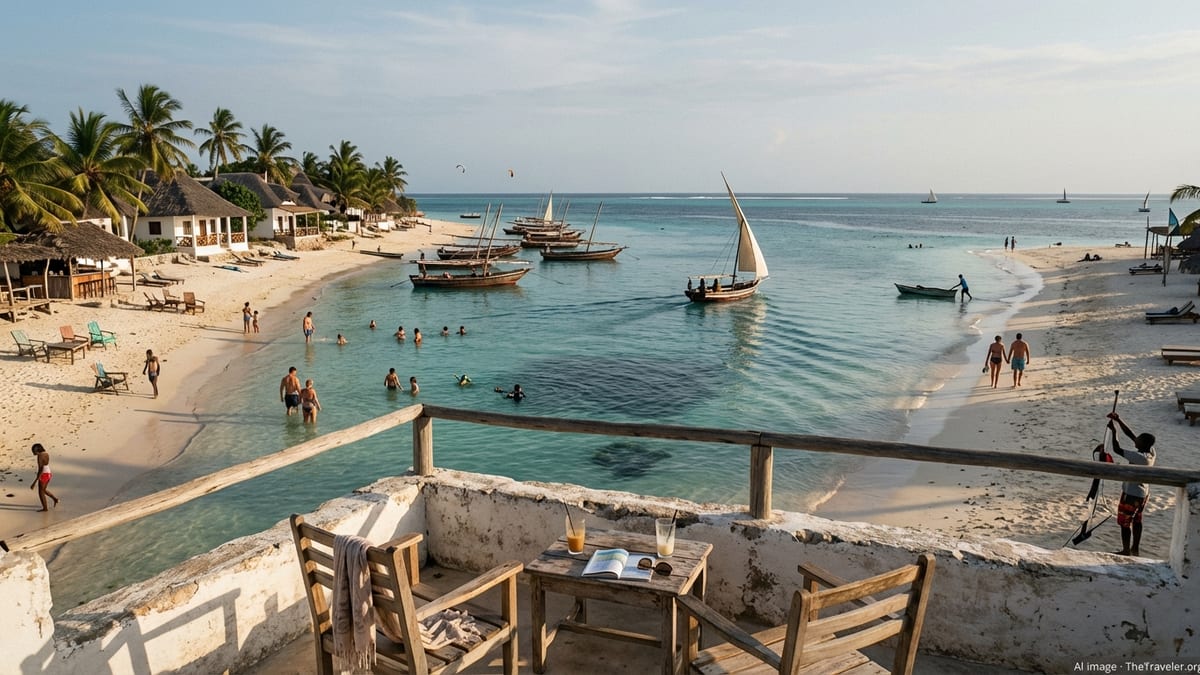
How Zanzibar’s Coasts Differ
Before zooming into individual beaches, it helps to understand the broad differences between the north, east and other coasts. The island’s shape, reef system and prevailing winds create distinct experiences, from all-day swimming to extreme tides and world-class kitesurfing. Picking the right coast is often more important than picking a specific hotel.
The northern tip of Unguja, where Nungwi and Kendwa sit, is largely protected from the most dramatic tidal shifts. That makes these beaches reliable for swimming at almost any hour, a major plus for families and first-time visitors who do not want to plan their day around tide charts. In contrast, much of the east coast, including Paje and Jambiani, experiences a large tidal range. At low tide, the sea retreats hundreds of meters, revealing a coral-studded lagoon that is shallow, calm and tailor-made for reef walks and watersports rather than deep swimming.
Atmosphere also varies by coast. The north has the busiest mix of resorts, backpacker lodges, bars and tour operators, especially around Nungwi, which is often described as Zanzibar’s most energetic beach hub. The east coast, though not untouched, tends to feel quieter and more spread out, with guesthouses and boutique hotels lining long sweeps of sand. Here, the daily rhythm follows the tides and the wind as much as the sunset.
Weather is relatively stable across the island, with the main dry season typically running from June to October and a shorter hot, dry window around January and February. These months are popular for combining a mainland safari with a beach stay. The shoulder months around the “short rains” still attract visitors, but some days can be cloudy or stormy and seaweed can drift in on certain stretches of shore.
Nungwi: Zanzibar’s Lively Northern Hub
Nungwi, at the very northern tip of the island, is the best-known and busiest of Zanzibar’s beaches. It draws everyone from backpackers and solo travelers to honeymooners who want social energy alongside turquoise water. Over the past decade, the village has evolved into a full-service resort area, but it has retained its character as a working fishing community with traditional dhow building and daily boat activity on the sand.
Nungwi is particularly attractive because its west-facing stretch is swimmable through most of the day, with only minor tidal variation compared with the east coast. The result is a classic beach holiday of waking up late, strolling a few meters to the sea and swimming without checking a tide clock.
The Beach and Swimming Conditions
Nungwi’s main beach curves around the northern tip of the island, with the most appealing stretch lying on the northwest-facing side. Here the sand is soft and pale, the water deepens fairly quickly, and the tidal range is modest enough that you can usually swim at any time. Travel specialists and recent beach guides consistently highlight Nungwi, together with Kendwa, as among the few Zanzibar beaches that remain reliably swimmable at low tide.
On the northeast-facing side of the village, the shore can be slightly more affected by tides and rocky patches, but many hotels front the better swimming sections. The sea here is typically calm, especially in the mornings, with wave action more like a lagoon than an open-ocean surf beach. Families appreciate the combination of shallow entry and quick access to deeper water, while confident swimmers enjoy long, relaxed dips and snorkeling near local reefs.
Atmosphere, Nightlife and Dining
Compared with the rest of the island, Nungwi offers one of the broadest selections of restaurants, beach bars and casual nightlife. Beachfront cafés play chilled music by day and switch to a livelier soundtrack after dark, without turning the area into a full-scale club strip. Guides published in late 2024 and early 2025 describe the evening scene as energetic yet generally relaxed, more about cocktails on the sand, acoustic sets and bonfires than heavy nightlife.
You can choose between simple seafood grills on the beach, international menus inside resort restaurants and small local eateries in the village. After dinner, many visitors wander the sand, stopping for a drink where the music appeals most. For younger travelers or social groups, this density of options is a major draw over quieter beaches where the hotel bar may be your only choice.
Activities and Excursions
Nungwi also functions as a major base for water-based trips. Tour operators and dive centers cluster along the beachfront, offering everything from introductory dives to multi-day courses and deep-sea fishing. Many of the best-known snorkeling excursions head from Nungwi towards Mnemba Atoll, an offshore marine reserve that features in almost every contemporary list of Zanzibar’s top snorkeling spots.
In addition to diving and snorkeling, you can arrange sunset dhow cruises, stand-up paddleboarding, kayaking, jet-skiing and occasional parasailing. On land, popular outings include visits to the local turtle sanctuary, walking tours of Nungwi village and dhow-building yards, and sunset walks along the sand all the way to Kendwa at low tide. Because of the concentration of operators, it is generally easy to compare prices and itineraries on the spot, though reputable agencies and hotel desks remain the safest way to book.
Who Nungwi Suits Best
Nungwi suits travelers who want a classic, active beach break with a strong social element. It works particularly well for:
- First-time visitors to Zanzibar who want convenience and choice
- Solo travelers and backpackers looking for community and nightlife
- Couples who enjoy dining out and low-key evening entertainment
- Families who value all-day swimming and easy access to excursions
Those seeking complete seclusion, ultra-luxury or a very small, boutique feel might find some areas of Nungwi busy. In that case, neighboring Kendwa or quieter regions further along the coast may be a better match.
Kendwa: Sunsets, Soft Sand and Laid-back Luxury
Just a short drive or beach walk south of Nungwi, Kendwa offers a different expression of the north coast. With a wide, gently sloping beach, fewer day-trippers and a more spaced-out resort footprint, it is often described as Nungwi’s quieter, more polished sibling. Kendwa is famous for spectacular sunsets, minimal tidal variation and a mix of mid-range and high-end resorts that appeal strongly to honeymooners and couples.
From a practical point of view, Kendwa shares Nungwi’s key advantage: you can swim almost whenever you like. Recent tide-focused travel guides continue to describe Kendwa as one of the most consistent all-day swimming beaches on the island, with calm, clear water and a soft sand underfoot. That alone makes it a top choice for travelers who mostly want to relax, read, dip in the sea and repeat.
The Beach and Swimming Conditions
Kendwa’s bay forms a broad crescent of sand that faces west and slightly northwest. The gradient into the sea is gentle, which creates a long strip of shallow, warm water ideal for wading and for children under close supervision. As you move further out, the water deepens into the rich turquoise that defines so much of the Zanzibar coast. Tour operators and hotel descriptions consistently point to Kendwa as arguably the island’s best beach for straightforward, any-tide swimming.
The sand here is often described as particularly soft and clean, with relatively few rocks in the main swimming area. Because the beach is wide, it rarely feels overcrowded, even at peak times. At low tide, the shoreline retreats slightly, but nowhere near the distances seen on the east coast; you still have comfortable swimming access without walking across exposed reef.
Atmosphere, Resorts and Full Moon Parties
Kendwa’s atmosphere balances upscale relaxation with periodic bursts of energy. On most days, it feels calm and romantic, with guests lounging under palm trees, practicing yoga on the sand or sipping drinks at low-slung beach bars as the sun starts to sink. Several well-known resorts anchor the bay, offering polished rooms, landscaped gardens and direct beach access, alongside smaller lodges and guesthouses.
Kendwa’s twist is its association with full moon parties. On selected nights around the full moon, beachfront venues host large events with DJs, live performers and dancing late into the night. Guides updated in 2025 still highlight these gatherings as among the island’s biggest regular parties, drawing visitors from across Zanzibar. The rest of the month, Kendwa returns to a gentler rhythm where evenings revolve around sunset views and beachfront dinners rather than nightlife.
Sunsets and Things to Do
Because Kendwa faces west, sunset is the main daily event. The sky often turns gradients of orange, pink and purple as traditional dhows and small boats cut silhouettes across the horizon. Many travelers consider Kendwa’s sunsets the most dramatic on the island, and resorts time happy hours, dinners and cruise departures around this spectacle.
During the day, you can arrange many of the same activities available from Nungwi: snorkeling and diving trips, dhow cruises, paddleboarding and occasional fishing excursions. Some visitors choose to stay in Kendwa for the relaxed ambiance and simply visit Nungwi by taxi or on foot for a change of scene and additional restaurants.
Who Kendwa Suits Best
Kendwa is especially well suited to:
- Honeymooners and couples seeking romance and easy luxury
- Travelers who prioritize all-day swimming and sunset views
- Families who want calm water and a quieter resort-style base
- Visitors who like the option of big parties, but not every night
If you prefer a rustic, village-focused environment or want to be at the heart of backpacker nightlife, Nungwi might be a stronger fit. For kitesurfing, surfing or dramatic tidal flats, the east coast will serve you better than Kendwa’s sheltered bay.
Paje: Tides, Trade Winds and Kitesurfing Culture
On the opposite side of the island, Paje sits on the southeastern coast and offers an entirely different experience. Instead of minimal tides and sunset views, you get expansive tidal flats, sunrise over the Indian Ocean and one of the most reliable kitesurfing spots in East Africa. In the past few years, Paje has matured from a quiet fishing stretch into a laid-back but decidedly international beach village, with a strong presence of kite schools, hostels and stylish small hotels.
The key to enjoying Paje is understanding the tides. At high tide, you can swim in a lagoon-like sea of clear, shallow water protected by an offshore reef. At low tide, the ocean pulls far back, often leaving a surreal landscape of sand ripples, seagrass and tide pools dotted with starfish. Both states can be beautiful, but they support different activities.
Tides and Swimming Experience
Unlike Nungwi and Kendwa, Paje’s swimming is very tide-dependent. Guides published in 2024 and 2025 repeatedly stress that the sea here may recede hundreds of meters at low tide, making deep swimming impossible at certain times of day. When the tide is in, you can enjoy a warm, shallow lagoon that is ideal for relaxed dips and beginner-friendly water activities. When the tide is out, locals cross the flats to tend seaweed farms or collect shellfish, and visitors wander across the exposed reef.
As a result, staying in Paje works best for travelers who do not mind planning their swims around a tide schedule or who are more interested in kitesurfing and beach walks than in long, deep swims. Most hotels can provide tide charts, and several local agencies publish tide-focused tips for timing activities.
Kitesurfing and Watersports Scene
Paje has become the island’s informal kitesurfing capital. From roughly June to September and again around December to February, trade winds often blow steadily across the lagoon. This combination of consistent wind, flat shallow water and a wide open bay makes Paje a favored spot for both beginners and experienced riders. Numerous kite schools line the beachfront, offering multi-day courses, gear rental and storage.
Even if you never touch a kite, the sight of colorful sails arcing across the sky adds a distinctive energy to the beach. Stand-up paddleboarding, kayaking inside the lagoon and occasional surfing on the outer reef are also possible, depending on conditions. Many visitors choose Paje specifically because they want an active, sport-focused holiday rather than simply lying on a lounger.
Village Vibe, Accommodation and Dining
The on-shore atmosphere in Paje blends local life with a youthful, international visitor crowd. Small lanes run between beachside hotels and the main road, where you find fruit stalls, simple eateries and minibuses connecting to other parts of the island. On the sand, beach bars and cafés serve fresh seafood, vegetarian dishes and international comfort food, with a generally relaxed, barefoot dress code.
Accommodation ranges from hostels and simple guesthouses to stylish boutique hotels with pools and direct beach access. Nightlife exists but is far more low-key than in Nungwi, often centered around specific venues hosting occasional DJ nights or live music rather than a continuous bar strip. Many visitors spend their evenings listening to music over a drink, chatting with fellow travelers or stargazing on the sand once the wind drops.
Who Paje Suits Best
Paje is a compelling choice for:
- Kitesurfers and watersports enthusiasts
- Backpackers and younger travelers seeking a social but not rowdy scene
- Photographers and nature lovers interested in dramatic tidal landscapes
- Visitors comfortable with a more tide-structured daily rhythm
If you dream of deep swimming at any hour, you may find Paje frustrating. If you are drawn to the idea of warm, shallow lagoon water, wind-powered sports and a casual beach village vibe, it can be one of the most rewarding corners of the island.
Other Notable Zanzibar Beaches to Consider
While Nungwi, Kendwa and Paje headline many itineraries, Zanzibar’s coast offers several other beaches that might match your style even better. East-coast neighbors like Jambiani, quieter bays such as Pongwe, and northern and northeastern stretches including Matemwe and Kiwengwa all appear in recent “best beaches” lists, each with its own balance of tide, tranquility and facilities.
These beaches are often considered when travelers want to avoid the busiest hubs yet still enjoy easy access, comfortable hotels and good swimming or snorkeling at the right times of day.
Jambiani
Just south of Paje on the east coast, Jambiani stretches along a series of small villages and coconut groves. It shares Paje’s pronounced tidal range, with the lagoon transforming throughout the day from shallow turquoise water to exposed coral flats. The vibe here, however, is generally quieter and more traditional, with fishing boats drawn up on the sand and children walking to school along the shore.
Accommodation in Jambiani tends toward small guesthouses, intimate boutique hotels and a handful of mid-range resorts. Dining options lean local and low-key, with a few highly regarded restaurants spread along the beach. Many travelers choose Jambiani when they want to experience the east coast’s beauty and tidal drama in a more subdued, village-centered setting than Paje.
Pongwe
Pongwe, on the central east coast, appears regularly in specialist hotel guides as a particularly peaceful bay. Sheltered by a surrounding reef, it offers a tranquil lagoon that is swimmable at mid to high tide. At low tide, the sea retreats and reveals coral flats that are attractive for gentle walks and starfish spotting, similar to other east-coast beaches but on a more intimate scale.
The shoreline here is relatively undeveloped compared with Nungwi or even Paje. A handful of boutique hotels and lodges occupy prime positions on low cliffs or directly on the sand, with most emphasizing quiet, restorative stays rather than nightlife or activities. Pongwe suits visitors who want to read, swim at the right times, and savor a feeling of escape without venturing to truly remote corners of the archipelago.
Matemwe
North of Pongwe and across the water from Mnemba Atoll, Matemwe is another east-coast favorite highlighted for its laid-back feel and access to excellent snorkeling. As with other beaches on this side of the island, tides strongly influence the swimming experience. High tide invites relaxed bathing in the lagoon, while low tide reveals long stretches of exposed seabed and intricate coral formations.
Matemwe’s main advantage is its proximity to Mnemba, one of Zanzibar’s most famous reef systems. Many snorkeling and diving trips to the atoll depart from Matemwe or nearby points, making it a strategic base for ocean lovers. On shore, you find a mix of mid-range and upscale lodges, many small in scale, appealing to travelers who want time on the water without the bustle of Nungwi.
Kiwengwa
Kiwengwa lies along the northeast coast and features in a number of recent “family-friendly Zanzibar” roundups. The beach runs in a long curve backed by palm trees and a series of sizable resorts, some oriented toward package holidays. Like Matemwe, it is affected by tides, with shallow water at certain times and better swimming at mid to high tide.
The atmosphere in Kiwengwa is more resort-focused than deeply local, with properties often offering all-inclusive options and a program of daily activities. For some travelers, especially families and groups seeking convenience, this is a benefit: you can spend most of your time within the resort complex, stepping out to the beach or joining organized excursions as desired.
Practical Tips for Choosing and Enjoying Zanzibar’s Beaches
Understanding the character of different beaches is only part of planning a Zanzibar trip. Practical details such as tides, seasons, transport and local etiquette also shape your experience. Recent destination guides and on-the-ground operators continue to highlight the importance of aligning your expectations with Zanzibar’s natural rhythms and cultural context.
Timing Your Trip
The main dry season, roughly June to October, remains the most popular time to visit Zanzibar’s beaches. Skies are generally clear, humidity is lower than in the hot months, and sea conditions are calm, especially in the mornings. This period coincides with peak safari months on the mainland, so many travelers pair wildlife viewing with a few days on Nungwi or Kendwa at the end of their itinerary.
January and February typically bring another window of hot, mostly dry weather, often with slightly fewer crowds than the mid-year peak. Shoulder periods around the short rains can be good value, though showers are more likely. If your focus is kitesurfing in Paje, you may prioritize wind seasons instead, aiming for mid-year or the turn of the year when conditions are most reliable.
Reading the Tides
On the north coast, tides are a background detail rather than a decisive factor. In Nungwi and Kendwa you can normally swim throughout the day, and low tide simply reveals a bit more of the sandy foreshore. On the east coast, tides dictate almost everything. At low tide in Paje, Jambiani, Pongwe, Matemwe and Kiwengwa, you may need to walk far out to reach ankle-deep water, and boats cannot always cross the reef.
Before you book, check typical tide behavior for your chosen beach and travel month. Many local tour operators publish simplified advice, often summarizing the north as “swim-anytime” and the east as “check the chart.” Once you arrive, ask your hotel for a printed tide table or a recommended app, and plan your deeper swims for mid to high tide windows.
Respecting Local Culture
Although much of Zanzibar’s coastline serves tourists, the island is home to predominantly Muslim communities with conservative norms, especially away from the immediate beach. Contemporary guides still emphasize simple steps that make interactions smoother. Dress modestly when walking through villages or Stone Town, covering shoulders and knees; swimwear is appropriate on the sand and in hotel grounds, but less so in local streets.
Photography etiquette matters too. Always ask before photographing people, particularly children or women, and be discreet when capturing daily life scenes. On the beach, be cautious about handling marine life, such as starfish exposed at low tide. Local operators increasingly remind visitors that repeatedly lifting these creatures for photos can cause stress and harm.
Safety and Health
In recent years, tourism reports have continued to describe Zanzibar’s main beach areas as generally safe, provided travelers follow standard precautions. Avoid walking alone on long, empty stretches after dark, keep valuables locked in your room safe where possible, and book excursions through reputable companies rather than informal touts. Swim where others are swimming, watch for boat lanes and heed local advice about currents and conditions.
Sun exposure is intense even on cloudy days. High-factor sunscreen, a hat, sunglasses and regular hydration are all essential. Reef cuts at low tide are another concern on the east coast, so consider light reef shoes if you plan to walk across exposed flats. Finally, check up-to-date guidance on recommended vaccinations and malaria precautions with a medical professional before you travel.
The Takeaway
Zanzibar’s beaches are not interchangeable. Nungwi and Kendwa in the north promise the classic turquoise-water escape, with minimal tides, all-day swimming and an easy mix of restaurants and activities. Paje on the east coast offers a more elemental experience shaped by wind and tide, perfect for kitesurfers and travelers who are happy to time their swims. Neighboring stretches like Jambiani, Pongwe, Matemwe and Kiwengwa add layers of choice, from boutique hideaways to family-oriented resorts.
The key to a satisfying trip is to match your destination to your priorities. If you want to walk from your room into swimmable water at any hour, focus on the north. If you are eager to glide across a shallow lagoon under a kite or wander for hours across exposed coral flats, the east coast will reward you. Build in an understanding of seasons, tides and local customs, and Zanzibar’s beaches repay you not just with postcard scenes, but with a holiday that moves gracefully to the island’s own rhythm.
FAQ
Q1. Which Zanzibar beach is best for swimming all day?
Nungwi and Kendwa on the north coast are widely regarded as the best choices for all-day swimming, as they are only minimally affected by tides compared with the east coast.
Q2. Is Paje a good choice if I do not kitesurf?
Yes, Paje can still be rewarding if you enjoy a relaxed beach village vibe, tidal landscapes and casual bars and cafés, but you should be comfortable planning your swimming around tide times.
Q3. What is the main difference between Nungwi and Kendwa?
Nungwi is livelier, with more bars, restaurants and backpacker options, while Kendwa is quieter and more resort-focused, known for its wide beach, romantic feel and famous sunsets.
Q4. When is the best time of year to visit Zanzibar’s beaches?
The main dry season from June to October is ideal for most visitors, with another good window around January and February; these months usually offer plenty of sunshine and calm seas.
Q5. Which beach is best for kitesurfing?
Paje on the southeast coast is generally considered Zanzibar’s kitesurfing hub, with reliable trade winds in mid-year and around the turn of the year, plus a wide shallow lagoon protected by an offshore reef.
Q6. Are Zanzibar’s beaches suitable for families with children?
Yes, especially the north-coast beaches like Kendwa and Nungwi, where tides are gentle and entry into the water is gradual; many resorts there cater specifically to families.
Q7. How important are tides when choosing where to stay?
Tides are crucial on the east coast, where low tide can make deep swimming impossible for several hours; on the north coast they matter far less, so understanding this difference helps avoid disappointment.
Q8. Can I walk between Nungwi and Kendwa along the beach?
In suitable conditions, especially around lower tides, it is usually possible to walk along the sand between Nungwi and Kendwa in around 15 to 20 minutes, though you should always check the tide and daylight.
Q9. Is Zanzibar safe for beach walks at night?
The main beach areas are generally considered safe with basic precautions, but it is sensible to avoid walking long, isolated stretches alone after dark and to use registered taxis for late-night journeys.
Q10. Do I need to dress modestly on Zanzibar’s beaches?
Swimwear is acceptable on the beach and in resorts, but when you step into villages or towns it is respectful to cover shoulders and knees, in line with local cultural and religious norms.