


More news on this day
Chicago O’Hare International Airport recorded 211 delayed flights and no cancellations, as airlines navigated operational pressures across some of the busiest domestic and international routes linking the Midwest to global hubs.
Get the latest news straight to your inbox!
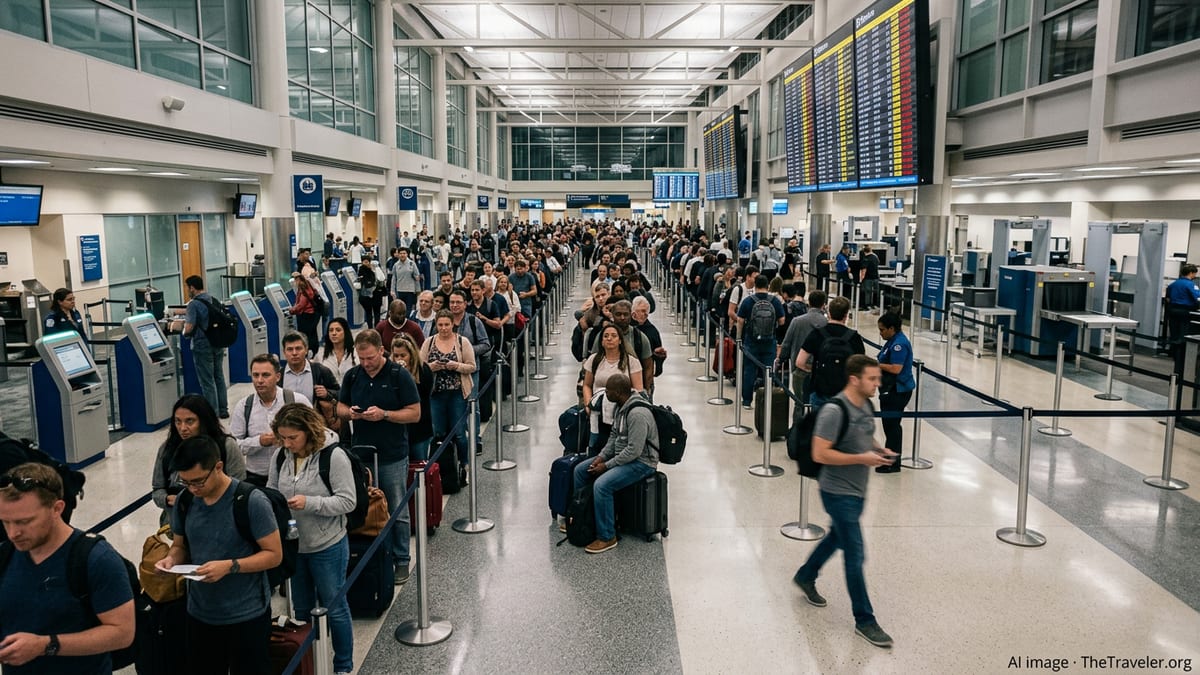
Operational Strain Without Cancellations at Chicago O’Hare
Publicly available flight data and industry coverage for June 28, 2026 indicate that Chicago O’Hare International Airport saw 211 flights delayed while avoiding outright cancellations, an unusual pattern at one of the world’s busiest hubs. Reports describe a day marked by extended wait times at gates and in the air, yet with airlines maintaining their scheduled networks on paper.
The disruption affected departures and arrivals across United Airlines, American Airlines, Delta Air Lines and Southwest Airlines, which collectively operate the majority of O’Hare’s domestic and international services. By holding the line on cancellations, these carriers kept itineraries technically intact, even as passengers absorbed delays that, in some cases, stretched well beyond an hour.
Industry trackers classify O’Hare as an airport where delays are relatively common, reflecting its role as a tightly scheduled connecting hub. Recent performance summaries show on time departure rates hovering near four in five flights, with average delays on disrupted departures frequently exceeding an hour, especially when late arriving aircraft trigger knock on effects across the system.
On June 28, airlines appeared to lean on tactical measures such as minor schedule adjustments, aircraft swaps and extended ground times to contain the operational strain. The result was a day in which travelers were more likely to arrive late than not at all, underscoring a strategic preference for delay management over cancellation heavy resets during peak summer demand.
Major U.S. Carriers and Their Key Markets Affected
The pattern of 211 delays with zero cancellations at O’Hare rippled through networks of the four largest U.S. carriers serving the airport. United Airlines, which maintains a primary hub at O’Hare, saw knock on schedule impacts on its dense corridor of flights to New York and Los Angeles, along with long haul departures to London and Tokyo. These routes are central to United’s transcontinental and transpacific strategy, making schedule integrity a priority even when punctuality suffers.
American Airlines, another key player at O’Hare, experienced delays on a mix of domestic trunk routes and international services. Its flights to New York area airports and Los Angeles are core to connecting Midwest passengers with onward long haul options via coastal gateways. While American has used schedule reductions and fleet adjustments at other hubs to regain reliability in recent seasons, public flight data show that O’Hare remains sensitive to day of operations disruptions.
Delta Air Lines, which operates a smaller but still significant portfolio of flights at O’Hare, was also part of the disruption picture. Delays affected its domestic links to coastal cities, including New York and Los Angeles, where even modest schedule shifts in Chicago can reverberate into crowded late afternoon and evening banks at Delta’s primary hubs.
Southwest Airlines, with a large Midwest presence and a point to point model that relies heavily on aircraft utilization, has historically used O’Hare as a complement to its established operation at Chicago Midway. Reports from schedule trackers suggest that Southwest flights touching O’Hare on June 28 were not immune to the broader pattern of delays, particularly on routes to major North American cities such as New York and Toronto that interface with congested airspace.
Domestic Links to New York and Los Angeles Under Pressure
The day’s disruption was particularly visible on O’Hare’s high frequency domestic corridors, notably services to New York and Los Angeles. These routes are operated by multiple carriers, creating dense competition and limited slack in schedules. When delays occur early in the day, they can cascade into subsequent rotations, leading to rolling departure time revisions.
Data from flight tracking dashboards show that, on peak summer travel days, O’Hare handles more than a thousand departures, many of them tied to connecting banks aimed at morning and evening waves on the East and West Coasts. On June 28, the concentration of delayed flights appears to have clustered in periods when inbound traffic from other U.S. regions converged on Chicago, leaving limited room to absorb schedule disruptions without pushing departure times back.
Passengers traveling between Chicago and New York, including the three main airports serving the New York metropolitan area, reported extended gate holds and revised boarding times. On the Chicago to Los Angeles corridor, longer taxi out periods and air traffic management initiatives contributed to departure slippages, even where weather conditions were considered manageable.
Despite these challenges, the absence of cancellations meant that most travelers retained same day options to reach their destinations. Airlines relied on rebooking within their own networks, rolling delays rather than outright scrubbing flights, and the use of available seats on later services to clear backlogs that developed during the busiest hours.
International Connections to London, Toronto and Tokyo Affected
O’Hare’s role as a transatlantic and transpacific gateway meant that the 211 delays extended well beyond U.S. borders. Long haul services to London and Tokyo experienced schedule pressure, with departure times adjusted to account for late arriving inbound aircraft and ground handling congestion. For airlines, protecting these flights from cancellation is critical, given their high revenue contribution and the complexity of reaccommodating long haul passengers.
Publicly accessible performance snapshots show that international operations at O’Hare often have less frequency than domestic routes, which reduces the flexibility to consolidate or cancel flights without significant disruption. On June 28, carriers appeared to prioritize operating each long haul sector, even if this meant pushing back departure times while crews, aircraft and catering were repositioned.
Regional international services to Toronto also felt the impact. These flights, although shorter, serve as important connectors into the Canadian network and onward global itineraries. Delay propagation between Chicago and Toronto can complicate customs clearance windows and misalign arrivals with local connecting banks, leaving passengers with tighter transfer margins.
For international travelers passing through O’Hare, the day’s operational pattern translated into longer layovers and, in some cases, missed onward connections at downline airports rather than at Chicago itself. Airlines sought to mitigate these spillover effects by adjusting minimum connection times where possible and prioritizing rebookings on later departures out of London, Toronto and Tokyo.
Context: Capacity Controls and Ongoing Reliability Concerns
The June 28 performance at O’Hare occurred against a broader backdrop of federal and industry efforts to rein in chronic congestion at the airport. Earlier in 2026, the Federal Aviation Administration approved summer schedule reductions at O’Hare, trimming planned daily operations from more than 3,000 flights to under 2,800 on peak days. According to published notices and subsequent media coverage, the move was designed to reduce the risk of cascading delays that have historically plagued the airport during busy travel periods.
Recent federal briefings on O’Hare have highlighted the airport’s status as the nation’s busiest by scheduled flight volume, as well as the facility’s exposure to weather related disruptions and runway construction projects that can reduce capacity. Performance reports have emphasized that limiting scheduled movements is a key tool to align demand with what the airfield and surrounding airspace can reliably handle.
Industry data aggregators tracking O’Hare’s live status continue to characterize the airport’s reliability as mixed. While day to day conditions vary, metrics published in June 2026 show that delays remain more frequent than at some peer hubs, and that late arriving aircraft are a dominant factor in departure slowdowns. On June 28, this underlying structural vulnerability appears to have translated into widespread but manageable disruptions, rather than the mass cancellation events occasionally seen during severe weather.
For travelers and airlines alike, the latest episode underscores the delicate balance between throughput and reliability at major hubs. The experience of 211 delays with zero cancellations suggests that, at least on some peak summer days, O’Hare can sustain high levels of activity without a collapse in scheduled operations, albeit at the cost of passenger time and convenience.