


More news on this day
As Philippine tourism pushes past pre-pandemic benchmarks, two homegrown P-pop supergroups are emerging as unexpected power players in the country’s travel story, drawing international fans who pair arena concerts with island getaways and city breaks.
Get the latest news straight to your inbox!
From Chart Toppers to Tourism Ambassadors
In recent weeks, both SB19 and BINI have moved formally into the tourism spotlight, adding an institutional layer to a fan movement that has already been quietly boosting visitor arrivals. Publicly available information shows that the Department of Tourism has tapped BINI for an upcoming collaboration to promote Philippine destinations, following a July 2026 courtesy visit by the group to the agency’s central office in Makati City. Separate announcements circulated across official and fan channels indicate that SB19 has likewise been named among the country’s newest tourism ambassadors.
The appointments reflect how P-pop has shifted from being a purely entertainment story into an economic and cultural asset. SB19, long dubbed “P-pop kings,” built a track record of sold-out shows at major venues and an 18-date world tour that stretched across Asia and North America. BINI, whose tropical hit “Pantropiko” topped local charts and helped them become the first Filipino act to reach number one on Spotify’s Top Artists Philippines, has emerged as a symbol of a more feminine, summer-infused version of Filipino pop.
By formalizing partnerships with these groups, tourism planners are betting that music fandom can convert into booked flights, hotel stays, and side trips to beaches and heritage towns. The strategy mirrors global trends in which concerts act as anchors for short-haul city tourism, but with a distinctly Filipino twist rooted in diaspora ties and social media–driven fan communities.
The timing is notable. Government statistics show that tourism already contributed around 8.9 percent to the Philippine economy in 2024, with international arrivals and domestic spending rebounding strongly. Industry analysts say that aligning with pop culture phenomena such as SB19 and BINI is one way to sustain that momentum and attract younger, experience-focused travelers.
Concerts as Gateways to Islands and Cities
Evidence of music-led travel has been visible around recent SB19 events, where online posts from fans document trips from Japan, Taiwan, Europe, and North America timed to coincide with concerts in Metro Manila and nearby provinces. Discussions on public forums describe international A’TIN, the group’s fandom, planning multi-day itineraries that pair a one-night show with visits to Intramuros, Tagaytay, Cebu, or Palawan.
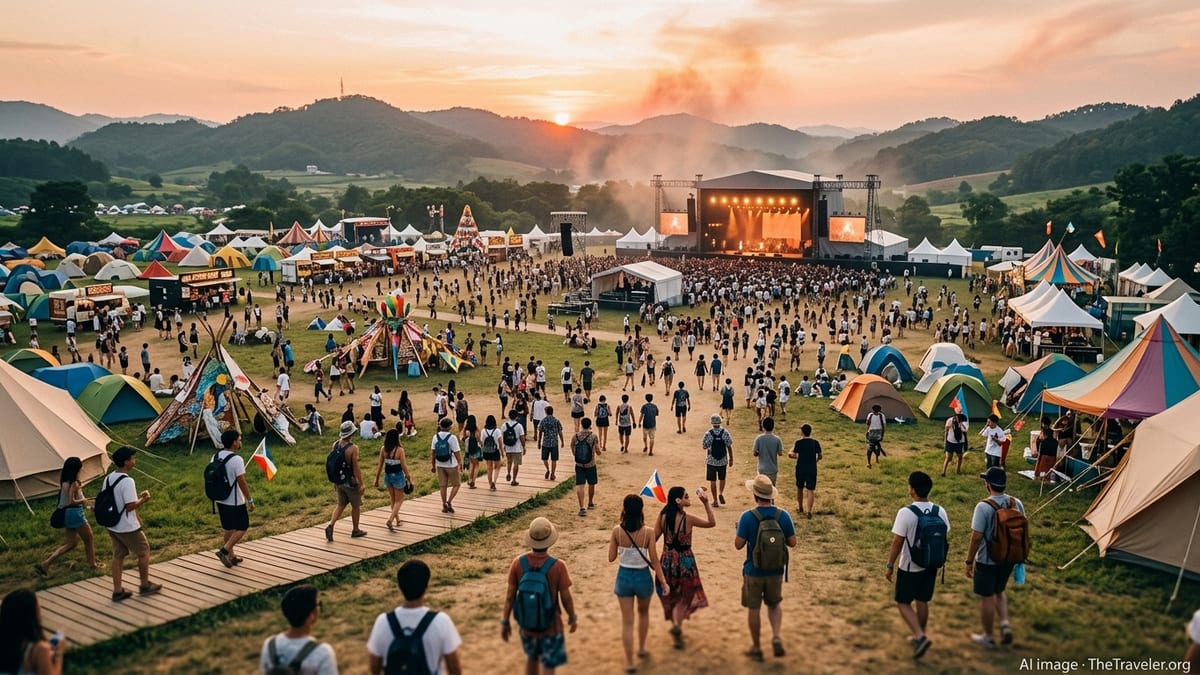
At SB19’s large-scale outdoor shows, particularly the “Wakas at Simula” concert at SMDC Festival Grounds in April 2026, accounts from concertgoers highlight not just the crowd size but also the spillover effect on nearby restaurants, transport providers, and accommodations. Hotel bookings, late-night dining, and extended operating hours at shops surrounding the venue have been cited as indicators of how a single music event can activate an entire micro-economy for a weekend.
BINI’s rise is generating a similar pattern, though with a distinctly beach-and-summer aesthetic that aligns naturally with tourism marketing. The group’s imagery and choreography for “Pantropiko,” coupled with viral dance challenges, have helped position the Philippines as a sun-drenched, youth-oriented destination in the minds of regional audiences. Travel commentators note that such cultural impressions can be as influential as traditional advertising when fans decide where to spend their vacation budgets.
Tour operators are beginning to recognize the opportunity. Industry briefings and trade show programs list more music-related packages, from day tours designed around concert dates in Metro Manila to side trips for overseas Filipino workers returning home primarily to attend P-pop events. While the trend is still emerging, tourism executives see parallels with how K-pop helped drive concert tourism in South Korea over the past decade.
“Love the Philippines” Meets P-Pop Fandom
The growing role of SB19 and BINI dovetails with the country’s broader “Love the Philippines” branding, which emphasizes both iconic attractions and lesser-known destinations. Tourism promotion documents and government planning notes describe an effort to build new circuits that go beyond Manila and Boracay, highlighting areas such as Iloilo, Bohol, Palawan, and Davao through familiarization trips and international marketing campaigns.
Within this framework, P-pop acts serve as cultural entry points rather than traditional endorsers. Fans already consume Filipino language, fashion, and humor through music videos, livestreams, and social media content. Tourism strategists see value in connecting that familiarity with concrete travel calls to action, such as encouraging fans to visit the locations featured in music videos or to explore the hometowns of their favorite idols.
Analysts point out that the appeal of SB19 and BINI spans both the domestic and overseas Filipino markets. Many international fans are part of the diaspora or have family links to the country, meaning that a concert can double as a homecoming event. In practice, this can extend the length of stay and increase spending on side trips, family gatherings, and provincial travel.
Official statistics indicate that domestic tourism expenditure in the Philippines has grown steadily since 2023, even as international arrivals recover. Integrating P-pop into tourism messaging is seen as a way to keep local travelers engaged as well, giving residents another reason to explore new cities or regions whenever a major show is announced outside Metro Manila.
BINI’s Tropical Soundtrack and the New Island Imaginary
BINI’s chart successes over the past two years have been closely tied to tropical and coastal imagery, something destination marketers are keenly watching. “Pantropiko,” which climbed to the top of local charts and dominated social media feeds, conjures a playful, escapist vision of palm trees, sunsets, and seaside romance. Culture writers argue that the song effectively soundtracks an idealized Philippine summer that is instantly legible to regional listeners.
Travel observers note that this type of sonic branding can shape perceptions just as powerfully as visual campaigns. When fans in Southeast Asia or the Middle East associate BINI’s hooks with carefree beach scenes, they are more likely to consider destinations such as Siargao, La Union, or Bohol when planning an affordable island vacation. While hard data directly linking individual songs to booking numbers is limited, music tourism researchers say that such correlations often emerge over several years as hits become generational touchstones.
BINI’s new role as a tourism partner could accelerate this effect. Promotional materials and public statements from tourism officials describe ongoing work on collaborative content that would leverage the group’s image as a “nation’s girl group” to showcase regional destinations, from heritage towns to new resort corridors. The goal is to present travel as an extension of fandom, where visiting the Philippines becomes part of supporting the group’s narrative.
For local communities in beach and resort areas, the hope is that a steady stream of music-motivated visitors can complement traditional tourist flows tied to long weekends and school breaks. Sustainable planning will be necessary to avoid overcrowding, but early discussions among stakeholders emphasize spreading visitors across multiple islands and seasons rather than concentrating them in a few already popular hotspots.
SB19’s Global Reach and the Push for High-Value Visitors
SB19’s trajectory offers a different, more explicitly global angle for tourism planners. The group’s world tours, festival appearances, and upcoming performance at a major U.S. music festival have introduced Filipino pop to audiences who may have had limited prior exposure to the country. Industry watchers say that by positioning SB19 alongside international acts, event organizers implicitly market the Philippines as a peer cultural producer, not just a destination for budget travel.
Reports from business outlets highlight how music events are becoming a significant niche within the broader Philippine tourism economy, generating millions of dollars in ticket sales and ancillary spending. Concertgoers are typically higher-spending travelers, and international SB19 fans who fly in for a weekend show often book midrange to upscale hotels, dine out in groups, and shop for local merchandise. This aligns with the government’s goal of attracting more high-value visitors who stay longer and spend more per trip.
In interviews and public appearances over the years, SB19 members have frequently framed their ambition in national terms, speaking of a desire to help the Philippine economy by elevating P-pop on the global stage. That framing resonates with fans, who increasingly discuss travel choices in terms of “supporting” local industries, from small food stalls near venues to regional tour operators.
Tourism economists caution that P-pop alone will not determine the sector’s future, which also depends on infrastructure, safety, and environmental management. Still, they acknowledge that SB19’s brand of aspirational patriotism offers a valuable narrative hook, especially for younger travelers who seek meaning and connection alongside leisure.