

More news on this day
Passengers traveling through Hartsfield-Jackson Atlanta International Airport faced mounting frustration today after about 40 flights were canceled, disrupting one of the world’s busiest aviation hubs and triggering a wave of rebookings, missed connections and overnight stays.
Get the latest news straight to your inbox!
What Triggered the Wave of Cancellations
The latest disruption at Hartsfield-Jackson unfolded as airlines and airport authorities grappled with a combination of operational constraints and wider system pressures affecting U.S. air travel. While Atlanta did not see the largest raw cancellation totals nationwide, the loss of roughly 40 flights concentrated at a single hub had an outsized impact because of the airport’s role as a primary connecting gateway.
Industry data show that severe weather sweeping through parts of the Southeast, together with air-traffic management slowdowns and tight aircraft rotation schedules, have left carriers with little slack. When conditions deteriorate or congestion builds, airlines often preemptively trim schedules to avoid having aircraft and crews stranded out of position later in the day. That strategy protects the broader network but can leave individual airports, including Atlanta, facing noticeable spikes in day-of cancellations.
Hartsfield-Jackson has contended with a series of recent weather and capacity events that have already stretched operations this month. The latest cancellations come on the heels of days marked by ground stops, diversions and rolling delays, meaning many travelers were already rebooked once or twice before the newest wave of cuts hit.
Although the airport itself remained open and runways operational, the knock-on effect from storms, earlier delays and tight crew availability elsewhere in the country meant some flights into and out of Atlanta could no longer be staffed or slotted efficiently, prompting airlines to scrub them from the schedule.
How Travelers Are Being Affected on the Ground
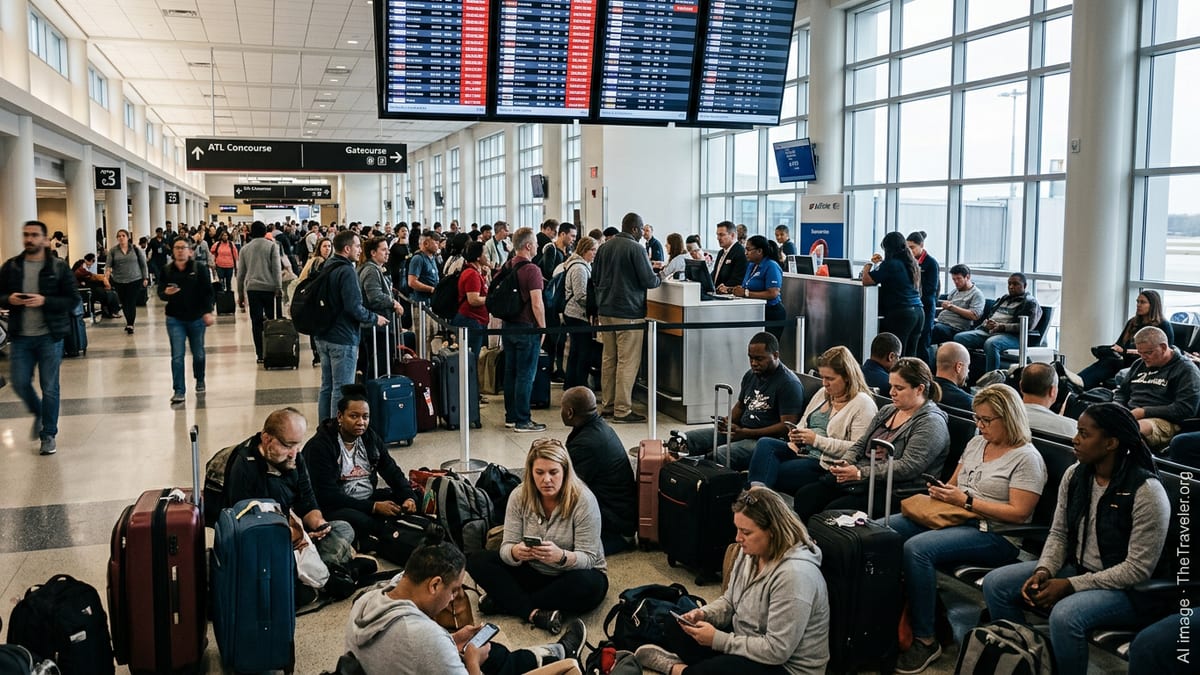
Inside the terminals, the impact was immediately visible. Departure boards at multiple concourses showed clusters of red “canceled” notices through the morning and early afternoon, particularly on regional routes and late-evening connections that airlines often target when making last-minute schedule cuts. Passengers arriving for connecting flights discovered that onward legs had disappeared from the schedule while they were in the air.
Long lines formed at airline customer service counters as travelers sought new itineraries, hotel vouchers and meal credits. Many reported waiting an hour or more just to speak with an agent, while others turned to airline apps and call centers to secure scarce seats on remaining services. Families traveling at the start of spring break season were among those hardest hit, with some facing overnight stays in Atlanta or being rebooked a full day later than planned.
The cancellations rippled far beyond Georgia. Because Atlanta is a major connecting point for routes across the United States and to Latin America, the Caribbean and Europe, missed connections there cascaded into disrupted trips in cities as far apart as New York, Dallas and Los Angeles. Even travelers whose flights were technically still operating found themselves affected by crew time limits, aircraft swaps and tighter-than-usual turnaround times.
Airport concessions and seating areas around the concourses were noticeably more crowded than usual as stranded passengers waited out long gaps between flights. Some travelers reported difficulty finding available hotel rooms near the airport, a common issue when disruption strikes unexpectedly at such a large hub.
What Airlines and Airport Officials Are Doing
Airlines operating at Hartsfield-Jackson moved quickly to reset schedules and restore some predictability for passengers. Major carriers allowed affected customers to rebook without change fees within a limited window, typically over the next several days, and in many cases honored fare differences when travelers shifted to earlier or later departures on the same route.
Operationally, carriers focused on preserving early-morning and peak-bank flights that feed the national network, trimming mainly off-peak services and some shorter regional segments. That approach is designed to keep the backbone of the schedule intact while sacrificing lower-demand flights that can be consolidated onto remaining services.
Airport authorities, for their part, coordinated closely with airline operations centers and federal aviation officials to manage gate assignments, deconflict arrival and departure banks and keep passengers informed through terminal announcements and display boards. Extra staff were deployed to help direct travelers, assist with wayfinding and answer basic questions about check-in, security and ground transportation.
Officials emphasized that safety remains the overriding priority. If weather cells, low visibility or other operational issues raise the risk profile, airlines and controllers will continue to slow or pause movements, even at the cost of additional delays or cancellations, until conditions improve.
What Stranded Passengers Should Do Now
For travelers whose flights have been canceled or are showing significant delays, the most important step is to confirm the latest status directly with the airline before heading to the airport. Most carriers update their apps and websites in near real time and allow customers to self-service rebookings, often faster than waiting in line at a busy gate or service desk.
Passengers already at Hartsfield-Jackson are being advised to use a combination of digital tools and in-person support. Checking the airline app while simultaneously queuing at a staffed counter can increase the chances of securing an earlier alternative, especially when seats on remaining flights are limited. Travelers should also keep boarding passes, receipts and any communication from airlines, which may be needed later when requesting refunds or expense reimbursements.
Those facing overnight delays should inquire about hotel and meal support at the time of cancellation, particularly if the disruption is tied to operational issues rather than unavoidable weather. Even when vouchers are not provided, booking accommodation quickly can be crucial in Atlanta, where large-scale disruptions can exhaust nearby room availability within hours.
Travel experts also recommend building additional flexibility into itineraries over the next few days, as airlines and crews work to get aircraft and schedules back into balance. Where possible, choosing early departures, allowing longer connection times and avoiding the tightest layovers through Atlanta can provide a buffer if residual delays linger.
What This Means for Upcoming Travel Through Atlanta
The cancellation of around 40 flights at Hartsfield-Jackson underscores how quickly operations at even a highly experienced hub can be thrown off balance when weather, crew logistics and airspace capacity collide. While the current disruption is modest compared with some of the large-scale shutdowns seen during major winter storms, it comes at a busy point in the travel calendar when aircraft are full and spare seats are scarce.
In the short term, travelers with upcoming journeys through Atlanta should expect conditions to remain fluid. Airlines are likely to keep a close eye on developing weather and national traffic patterns, making tactical adjustments to schedules as needed. That could mean further isolated cancellations or consolidations, even as overall operations trend back toward normal.
In the longer term, the episode feeds into a broader national conversation about the resilience of the U.S. air travel system, particularly as climate-linked weather volatility and tight airline staffing continue to test the limits of hub-and-spoke networks. For passengers, it is another reminder that flexible plans, travel insurance and a readiness to pivot itineraries can be as important as a valid boarding pass when flying through major hubs like Atlanta.
For now, officials at Hartsfield-Jackson say they are focused on clearing the backlog of disrupted passengers and stabilizing operations as quickly as possible. But with travel demand running high and the spring storm season still ramping up, both airlines and travelers are likely to face further tests in the weeks ahead.