

British food has long been unfairly stereotyped as bland, but travelers who eat their way around the United Kingdom discover a very different story. In pubs, seaside towns and market cities across England, Scotland, Wales and Northern Ireland, generations of home cooks and chefs have built a cuisine rooted in comfort, regional ingredients and quiet attention to detail. If you are planning a trip to the UK, these five traditional dishes are an ideal starting point for understanding how people here really eat, celebrate and gather around the table.
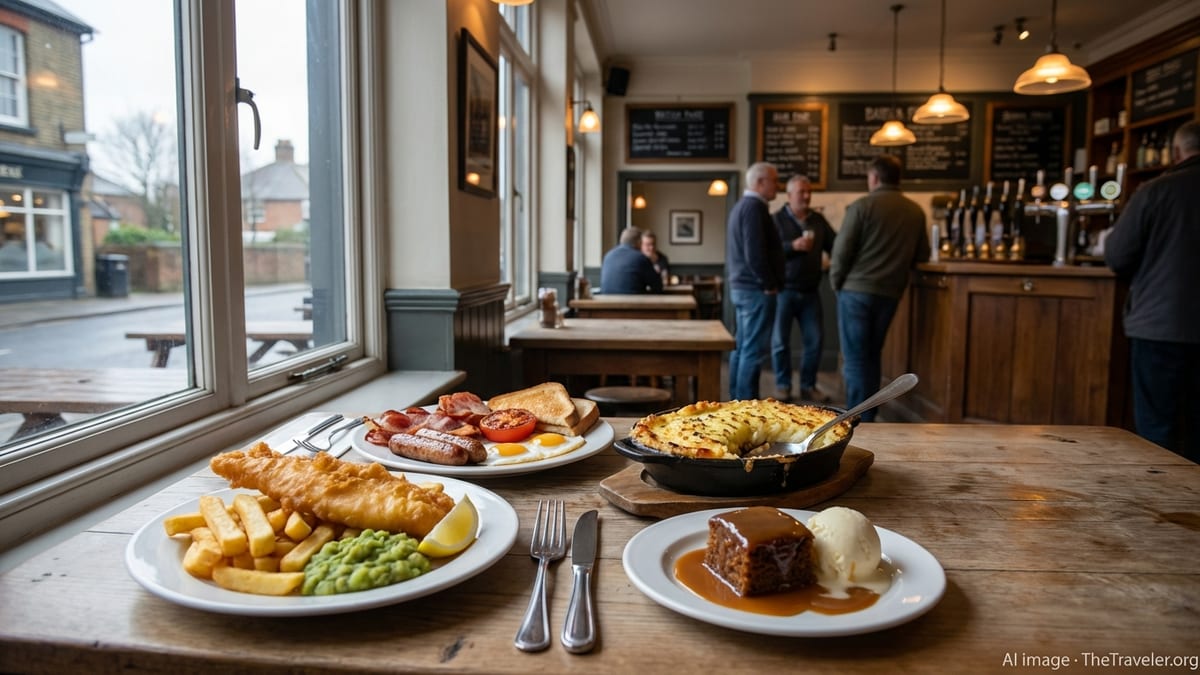
Fish and Chips
If one dish captures the spirit of everyday eating in the United Kingdom, it is fish and chips. Since the mid nineteenth century, this simple combination of battered white fish and deep fried potatoes has been a fixture of British life, from industrial towns to breezy coastal resorts. Today it is still widely regarded as an unofficial national dish and remains one of the most recognisable symbols of British food culture. Cod and haddock are the most common fish, chosen for their firm, flaky texture and mild flavour that pairs well with a crisp, golden batter.
Part of the charm of fish and chips lies in how it is eaten. Traditionally, a hot portion is handed over wrapped in paper and doused with salt and malt vinegar, sometimes with a wedge of lemon on the side. Many shops also serve mushy peas, curry sauce or pickled onions and gherkins as accompaniments. Eating it straight from the paper on a windy promenade, with seagulls circling overhead, is a classic UK travel experience that you will see locals enjoying just as enthusiastically as visitors.
The dish has working class roots and was originally a hearty, affordable meal for labourers needing serious fuel. Although many old fashioned chip shops still use traditional fryers and family recipes, you will now find more modern versions on gastropub menus and in city restaurants, where chefs may experiment with different fish species or lighter batters. Even then, the essence of the dish stays the same: very fresh fish, potatoes fried to a fluffy interior and crisp exterior, and a balance of salt, acidity and fat that feels immediately satisfying, especially after a day of sightseeing in unpredictable British weather.
Sunday Roast
The Sunday roast is not just a plate of food but a weekly ritual across much of the United Kingdom. Typically served at lunchtime or in the mid afternoon, the meal centres around roasted meat such as beef, lamb, pork or chicken, accompanied by roast potatoes, seasonal vegetables, gravy and often the famous Yorkshire pudding. Many people track their week around this occasion, whether it is a home cooked gathering with extended family or a trip to the local pub that has earned a reputation for its roasts.
The custom grew from the practice of putting meat in the oven before church on Sunday morning so that it would be ready to eat later in the day. Over time, each region and household developed its own preferences. Beef with horseradish and Yorkshire pudding is strongly associated with England, while lamb with mint sauce is popular in areas with sheep farming traditions. The supporting cast usually includes carrots, parsnips, cabbage, broccoli or Brussels sprouts, and sometimes extras like cauliflower cheese, stuffing or pigs in blankets.
For travelers, seeking out a Sunday roast in a good pub is one of the most pleasant ways to tap into local life. In cities, it has become something of an institution, and you will often need to book ahead. Outside urban centres, country inns and village pubs serve their own versions, sometimes featuring meat and vegetables sourced from nearby farms. Wherever you try it, the key sign of a memorable roast is attention to the small details: potatoes that are crisp and bronzed on the outside and soft inside, vegetables cooked just enough, and a glossy gravy that ties the whole plate together.
Because Sunday roasts are tied to a specific day of the week, planning matters. Menus often change seasonally, with lamb featuring strongly in spring and early summer, and richer roasts more common in autumn and winter. If your itinerary includes a Sunday in the UK, leaving time for a leisurely roast can be one of the most rewarding and restful culinary moments of your trip.
Full English Breakfast
The full English breakfast, often simply called a fry up, is a morning meal that has become a cultural icon in its own right. While there are regional variations throughout England, Scotland, Wales and Northern Ireland, the basic idea is the same: a generous plate designed to keep you going through a long day. A classic English version usually includes bacon, sausages, eggs, baked beans, grilled tomatoes, mushrooms and toast or fried bread. Many places also offer black pudding and hash browns, and breakfast tea or coffee is almost always served alongside.
This tradition developed from the substantial breakfasts once eaten by the upper classes and later adopted by workers who needed a high energy start to the day. In contemporary Britain, few people sit down to such a large meal every morning, but the full breakfast remains a favourite weekend treat and a mainstay of cafe and pub menus. Some venues advertise an all day breakfast, which means you can enjoy it for lunch or even dinner if your schedule is packed with sightseeing earlier in the day.
Travelers will notice that each establishment puts its own stamp on the fry up. Some pride themselves on thick cut bacon and high quality sausages from local butchers, while others cater to modern tastes with vegetarian and vegan versions using plant based sausages and grilled vegetables. In Scotland, you might find tattie scones and a square sausage on the plate; in Northern Ireland, soda farls and potato bread appear. Sampling these regional twists offers an easy and enjoyable way to appreciate how a shared culinary tradition takes different shapes around the country.
If you decide to try a full English, it is worth planning your day around it, especially if you are not used to such a substantial breakfast. Many visitors find that one well cooked fry up can keep them satisfied well past lunchtime, which can be handy on busy sightseeing days. Pair it with strong tea, take your time, and treat it as a cultural experience as much as a meal.
Shepherd’s Pie
Shepherd’s pie is pure British comfort food and a dish that speaks to the rural roots of much of the United Kingdom. Traditionally made with minced lamb cooked slowly with onions and sometimes carrots and peas in a savoury gravy, it is topped with a layer of creamy mashed potatoes and baked until the surface is golden and lightly crisp. When the same preparation uses beef instead of lamb, it is commonly known as cottage pie, and you will see both names on menus across the country.
The origins of this style of dish lie in practical home cooking, where leftover roasted meat from Sunday dinner could be stretched into another satisfying meal. Over time, shepherd’s pie became a staple in its own right, particularly in colder months when a hot, hearty bake is especially welcome. It is popular in traditional pubs, neighbourhood restaurants and family kitchens, and many people have a strong opinion about what makes a perfect version, from the correct texture of the mash to whether cheese should be sprinkled on top.
For visitors, ordering shepherd’s pie offers a glimpse into how British food often prioritises comfort and thrift without sacrificing flavour. A good pie will arrive bubbling at the edges, with the mashed potato topping lightly browned and the filling rich but not heavy, seasoned with herbs such as thyme or rosemary. It is the kind of dish that feels particularly satisfying after a day of walking in damp or chilly weather, which makes it a natural choice on many UK itineraries between autumn and spring.
Vegetarian and vegan interpretations are also increasingly common, using lentils, root vegetables or plant based mince under the potato crust. These newer versions reflect how British cooking is evolving in response to changing tastes and dietary needs while staying grounded in familiar formats. Whether you try a classic lamb based shepherd’s pie or a more modern twist, it is likely to be one of the coziest meals of your trip.
Sticky Toffee Pudding
No exploration of traditional British food feels complete without dessert, and sticky toffee pudding is the sweet that many locals and visitors would choose to end a meal. This beloved pudding is essentially a moist sponge cake, often made with dates, drenched in a warm toffee or butterscotch sauce. It is usually served with vanilla ice cream, custard or clotted cream, and appears frequently on pub menus, restaurant dessert lists and in home baking.
The dessert is considered a relatively modern classic, with many food historians tracing its popularisation to a country house hotel in the Lake District in the late twentieth century. From there it spread rapidly, thanks to its comforting texture and crowd pleasing flavour. The combination of rich caramel notes, soft cake and cool cream appeals to a broad range of palates, and it suits the cool, often damp climate of much of the UK, where warm puddings are especially appreciated.
As with other traditional dishes, sticky toffee pudding now exists in numerous variations. Some bakers add a hint of spice, such as ginger, to the sponge, while others play with different sugars or incorporate nuts. There are lighter versions with less sauce and more fruit, and indulgent versions where the pudding arrives practically swimming in toffee. Whatever the style, it is a dessert that encourages diners to slow down and savour the moment, lingering over the last spoonfuls as the sauce cools and thickens.
Travelers who enjoy exploring regional connections may want to seek out puddings from producers based in Cumbria, where the dessert’s modern story is often said to begin. However, you do not need to travel to the Lake District to experience an excellent example. In most parts of the UK, a well regarded pub or restaurant that focuses on traditional cooking is likely to have a version on the menu, particularly in the cooler half of the year.
Regional and Modern Twists on Traditional British Dishes
While these five dishes provide a solid introduction to traditional food in the United Kingdom, part of the fun of eating here lies in noticing how they change from place to place. In coastal towns, fish and chips often feature locally landed fish and may come with regional extras such as pickled eggs or specific styles of curry sauce. Inland, you might see the same dish paired with local ales on pub menus, reflecting the strong link between British beer culture and hearty, savoury food.
Similarly, the Sunday roast and full breakfast both reveal subtle but meaningful regional identities. In the north of England and parts of Scotland, portions are often especially generous, with added elements like Yorkshire puddings served alongside meats beyond the traditional roast beef, or breakfast plates padded with local specialties. In Wales, lamb has particular importance on roast menus, reflecting the country’s long association with sheep farming. Northern Ireland’s versions of these meals make space for soda bread and potato bread, ingredients that tell their own stories about local agriculture and baking traditions.
Modern British cooking has also adopted these classics as a canvas for innovation. Chefs in cities such as London, Manchester, Edinburgh and Cardiff often reinterpret fish and chips with lighter batters, unusual sauces or sustainably sourced species. Shepherd’s pie might be deconstructed on the plate or filled with slow braised shoulder instead of minced meat. Desserts such as sticky toffee pudding can appear in miniature tasting portions, paired with artisanal ice creams or regional spirits. For visitors, this means you can taste both comforting, straightforward versions of these dishes and more experimental takes in the same trip.
At the same time, there is renewed respect for tradition in many parts of the UK. Small producers focus on heritage breeds of livestock, artisanal butcher shops promote high quality sausages and bacon for breakfasts, and coastal communities work to keep independent fish and chip shops thriving. Choosing where you eat thoughtfully, seeking out local recommendations and paying attention to provenance on menus all help support these efforts and deepen your understanding of the country’s food story.
The Takeaway
For travelers to the United Kingdom, food is one of the most direct and enjoyable ways to connect with local life. Fish and chips, Sunday roast, full English breakfast, shepherd’s pie and sticky toffee pudding are more than postcard ready dishes. They are part of weekly routines, family memories and regional pride across England, Scotland, Wales and Northern Ireland. Each plate tells a story about climate, agriculture, religion, industry and the simple human desire for comforting, shared meals.
By making time to seek out these traditional foods, you will see a side of Britain that does not appear in monuments or museums. You might find yourself lingering over a fry up in a busy cafe, warming your hands on a plate of shepherd’s pie in a rural pub, or watching the tide roll in as you unwrap a portion of fish and chips by the sea. These are the moments when the United Kingdom feels most vivid and real, and they are as essential to a memorable trip as any famous landmark.
FAQ
Q1. What is the most traditional British dish to try on a first visit?
Many visitors start with fish and chips, as it is widely available, affordable and strongly associated with everyday British life across the country.
Q2. Are Sunday roasts only served on Sundays?
Most pubs and restaurants that focus on tradition serve their main roast menus on Sundays, but some offer smaller roast style plates or specials on other days, especially in cities.
Q3. Is a full English breakfast very heavy for people not used to it?
It is a substantial meal, but you can ask for smaller portions or skip certain items. Many places also offer lighter options alongside the full breakfast.
Q4. What is the difference between shepherd’s pie and cottage pie?
Shepherd’s pie is usually made with minced lamb under a mashed potato topping, while cottage pie uses minced beef. The overall style and presentation are very similar.
Q5. Is sticky toffee pudding suitable for people who do not like very sweet desserts?
Sticky toffee pudding is rich and sweet, but many versions balance this with a slight bitterness from dark sugar or a scoop of plain ice cream. You can share a portion if you prefer a lighter finish.
Q6. Can vegetarians and vegans enjoy traditional British dishes?
Yes. Many cafes and pubs offer vegetarian or vegan versions of classics such as full breakfast, shepherd’s pie and even Sunday roast, often using plant based proteins and extra vegetables.
Q7. Is tap water safe to drink in restaurants and pubs across the UK?
Tap water is generally considered safe to drink throughout the United Kingdom, and most venues will provide it if you ask for tap water or a jug of water with your meal.
Q8. Do you need to tip when eating traditional meals in the UK?
In many sit down restaurants, a service charge may be added to the bill. If it is not included, leaving around ten to twelve percent is common, while in pubs tipping is more discretionary.
Q9. Are traditional British dishes child friendly?
Many children enjoy milder dishes such as fish and chips, roast chicken with potatoes or a simplified full breakfast. Family oriented venues are usually happy to adapt portions and seasonings.
Q10. How can I find good, authentic places to try these foods?
Asking locals, reading recent regional reviews and looking for busy venues with a clear focus on fresh ingredients is often more reliable than choosing solely by price or appearance.