

France remains one of the world’s most visited countries, and for most travelers it is a safe and rewarding destination. At the same time, busy cities, large public events, and the sheer volume of visitors create conditions where petty crime, scams, and occasional unrest can affect the unwary. These eight safety tips draw on current guidance and recent developments to help you enjoy France with confidence, from Paris and Provence to the Atlantic coast and the Alps.
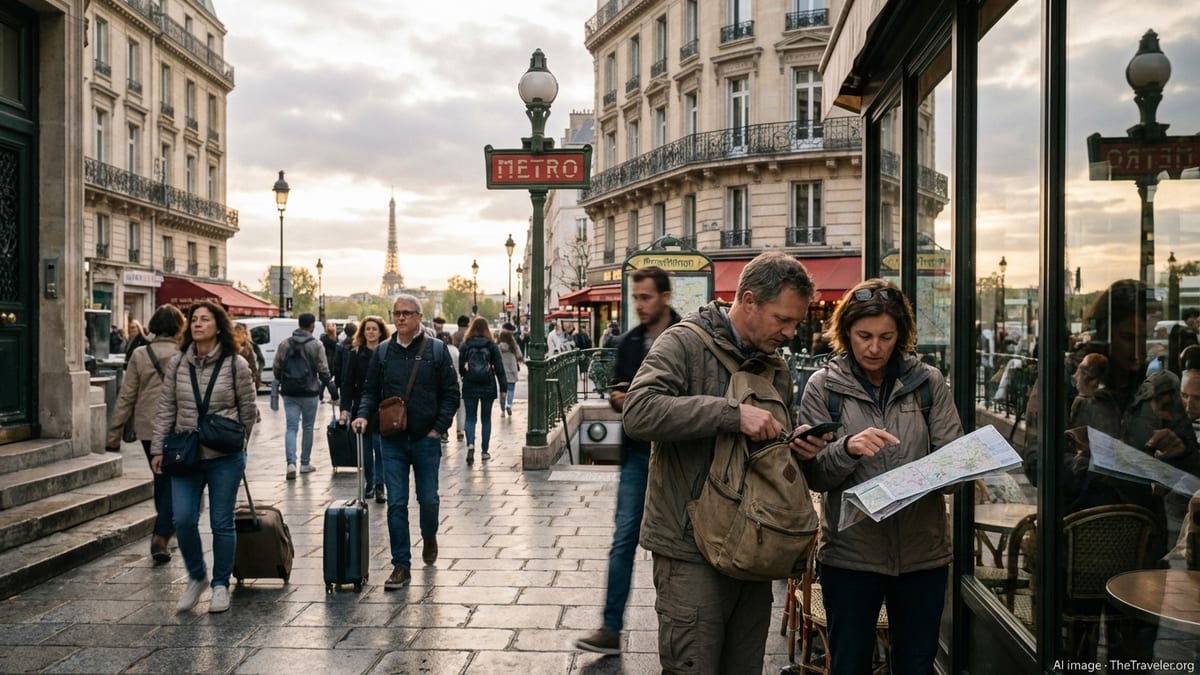
1. Understand the Current Safety Landscape
France is generally safe for visitors, but it is not risk free. The most common issues affecting travelers are pickpocketing, bag snatching, and scams in crowded tourist areas and on public transport. Major cities such as Paris, Marseille, Lyon, and Nice report more incidents of petty crime than rural regions, and busy transport hubs are particular hotspots. Violent crime against tourists is relatively rare, but it is sensible to stay aware of your surroundings, especially at night.
Travel advisories from foreign governments currently recommend that visitors exercise increased caution in France, largely because of the risk of terrorism and the potential for public unrest linked to protests and strikes. These advisories do not suggest avoiding France, but they do underline the importance of staying informed and being prepared for disruptions. Before departure, it is wise to read the latest advisory for France from your own government and to note any specific recommendations related to demonstrations, transport, or public gatherings.
France also experiences periods of organized protest, which can occasionally lead to road blockages, large marches, or clashes between a minority of demonstrators and police. Recent nationwide movements have shown that protests can grow quickly and disrupt public transport or access to certain districts in large cities. Travelers are not usually the target, but it is prudent to avoid demonstration areas, keep an eye on local news, and follow the advice of authorities and transport operators if services are interrupted.
Overall, millions of people visit France every year without serious incident. The goal is not to alarm you but to encourage practical preparation. Understanding that the main risks are opportunistic theft and occasional unrest helps you focus on realistic precautions instead of vague fears. With a few informed habits, you can reduce your exposure to problems while still enjoying France’s cafés, museums, landscapes, and festivals.
2. Protect Yourself From Pickpockets and Petty Theft
Pickpocketing is by far the most frequent safety issue for travelers in France, particularly in Paris and other large cities. Crowded sites such as the Eiffel Tower, the Louvre, Montmartre, the Champs Élysées, and major train and metro stations are prime hunting grounds for organized teams of thieves. Similar risks exist in busy tourist zones in cities like Nice and Marseille, as well as on popular coastal promenades. Thieves typically rely on distraction, sudden crowding, or physical contact to separate you from your belongings without you noticing.
Simple changes to how you carry your valuables make a major difference. Use a cross-body bag that zips fully and wear it in front of you rather than at your side or back. Keep your wallet and phone in zipped inner compartments instead of outer pockets, and never store them in back pockets. Many thefts occur when a traveler sets a phone on a café table or drapes a bag over a chair; instead, keep your bag between your feet or with the strap around your leg, and keep your phone out of sight when not in use. If you feel yourself being jostled or boxed in on a metro, bus, or escalator, assume it is deliberate and physically secure your bag and pockets.
Think carefully about what you carry each day. Leave passports, spare bank cards, and large amounts of cash in a secure place at your accommodation, ideally in a safe. Carry only what you actually need for the day and keep a note of emergency numbers and card cancellation contacts separate from your wallet. Consider using a money belt or flat pouch under your clothes for your most important documents, with only a small amount of “spending money” in a more accessible place. If the worst happens, report thefts to the nearest police station; you may need a police report for insurance or to replace identity documents.
Finally, remember that most thieves prefer easy targets. Walking with purpose, limiting obvious displays of high-value items, and maintaining awareness in crowded spots make you a far less appealing prospect. You do not need to be tense or fearful; you simply need to treat your belongings as you would in any major city and avoid lapses such as placing your bag on the ground behind you or hanging a jacket with your wallet in the pocket on the back of a chair.
3. Recognize and Avoid Common Tourist Scams
Alongside pickpocketing, various low-level scams target visitors throughout France, especially in busy areas of Paris and near major monuments and transport hubs. One well-known ruse is the petition scam, where someone with a clipboard asks you to sign for a vague charity or cause while an accomplice attempts to access your bag or pockets. Another is the “gold ring” or dropped object scam, in which a person pretends to find a ring or valuable item and offers it to you, then demands a reward. In some places, particularly around Montmartre, aggressive bracelet sellers may tie a string or bracelet to your wrist uninvited and then insist on payment.
The most effective defense is to decline all unsolicited approaches firmly but calmly. If a stranger tries to place something in your hand, tie something on your wrist, or engage you with a petition, simply say “Non merci” and walk away without stopping. Do not enter into arguments or explanations, and avoid taking out your wallet in response to any demand. Legitimate charity workers and vendors will not pressure you physically or insist that you pay for items you did not agree to buy.
Transport and ticket scams are also common. Around metro stations and major sights, individuals may offer to “help” you buy tickets or sell you “skip the line” passes at a discount. These are often fake or invalid, leaving you with worthless tickets after the seller disappears. Similarly, unofficial drivers may approach you at airports, train stations, or near busy attractions, promising cheaper or faster rides but then overcharging or taking unnecessarily long routes. To avoid this, purchase tickets only from official machines, staffed counters, or reputable apps, and use official taxi ranks or ride-hailing services rather than accepting offers from drivers who approach you directly.
Payment and currency tricks can occur at ATMs, exchange booths, or when paying by card in bars and restaurants. As a rule, use cash machines located inside banks or in well-lit indoor areas, shield your PIN, and put away your cash before leaving the machine. In restaurants, keep your card in sight when paying and check the amount on the terminal before entering your PIN. Being polite but cautious with anyone who offers unsolicited financial help will significantly reduce your exposure to these scams, allowing you to focus on enjoying your surroundings instead.
4. Stay Safe on Public Transport and in Crowded Places
France’s public transport system, particularly in and around Paris, is extensive, efficient, and widely used by locals and visitors. It is generally safe, but the very features that make it convenient also create opportunities for theft and occasional harassment. Large hubs such as Gare du Nord, Gare de Lyon, Châtelet Les Halles, and major metro interchanges see dense crowds, especially at rush hour. Thieves know that travelers here are often jet-lagged, distracted by luggage, and unfamiliar with the layout, making them easier targets.
When using trains, metros, trams, or buses, keep your bags close and your valuables secure. On the metro or RER, wear backpacks on your front in crowded cars, keep one hand on your bag, and avoid standing directly by the doors with your phone in your hand, as thieves sometimes grab items and jump out just as the doors close. On intercity and high-speed trains, store luggage in racks where you can see it or secure it with a small cable lock if it must be placed farther away. Do not leave bags unattended while you go to the café car, and avoid falling asleep next to visibly valuable items.
Late at night, particularly after the last metro or in less busy suburban stations, it is sensible to be more cautious. Choose well-lit routes, wait in areas where other people are present, and consider using official taxis or reputable ride-hailing services rather than walking long distances in unfamiliar neighborhoods. If you feel uncomfortable in a train carriage, it is perfectly acceptable to move to another one or to sit closer to other passengers. Trust your instincts; if a situation feels off, remove yourself from it calmly and promptly.
Similar principles apply to other crowded places such as markets, festivals, and major events. Large gatherings are an integral part of French life and are usually enjoyable and lively, but they demand a little extra vigilance. Carry only what you need, avoid drinking so much that you lose awareness, and agree on meeting points with your companions in case you are separated. By combining ordinary urban street smarts with a few specific habits, you can enjoy France’s public transport network and vibrant public spaces with minimal risk.
5. Navigate Protests, Public Events, and Security Measures
Public demonstrations are a regular feature of French civic life, and in recent years some nationwide protest movements have disrupted transport networks and city centers. While most protests remain peaceful, some have involved clashes between small groups of demonstrators and police, property damage, or large-scale road blockages, especially around key dates announced in advance. For travelers, the main issues are disruption, unexpected closures, and the potential for being caught in dense crowds or tense situations.
The safest approach is to monitor local news and advisories while you are in France, particularly in large cities. Your hotel, apartment host, or local tourism office can often tell you if major demonstrations are planned and which areas to avoid. If you come across a protest march or large gathering unexpectedly, it is usually best to take a side street and move away rather than stopping to watch or take close-up photos. Crowds can shift quickly, and what begins as a peaceful event can become chaotic if police or disruptive elements move in.
France also maintains a visible security presence in many high-profile locations such as airports, train stations, major monuments, and around government buildings. You may see soldiers on patrol, bag checks at museum entrances, and random security screenings on public transport. These measures are designed to deter serious incidents and are a normal part of public life. Comply with instructions calmly, allow extra time for security checks when visiting major attractions, and avoid making jokes or comments about terrorism or weapons, which authorities will not find amusing.
If an incident does occur in your vicinity, prioritize distance and calm rather than filming or remaining to observe. Move indoors or away from the scene, follow instructions from police or security staff, and contact your embassy or consulate if you need assistance. It is also wise to keep digital copies of your identification and travel documents stored securely online so that you can access them if original documents are lost or temporarily inaccessible during an emergency.
6. Look After Your Health, Documents, and Money
Health and logistical preparation are an important but sometimes overlooked aspect of staying safe in France. The country has a high standard of medical care, both in public hospitals and private clinics, and short-term visitors are usually able to access treatment when needed. However, medical costs and emergency repatriation can be expensive, so comprehensive travel insurance that covers health, accidents, and theft is strongly recommended. Before departure, check what your policy includes, how to contact your insurer, and whether any pre-authorization is required for certain treatments.
Routine vaccinations should be up to date before your trip, and travelers with existing conditions such as asthma or heart disease may wish to discuss their plans with a healthcare provider, particularly if they will be visiting cities with occasional air pollution alerts or engaging in strenuous outdoor activities. In rural areas and forests, especially in parts of eastern and central France, ticks can be present in long grass or wooded areas. Wearing long sleeves and trousers for hikes, using insect repellent, and checking your skin after being outdoors are simple precautions that can prevent unpleasant surprises.
Managing your documents and money thoughtfully also reduces both risk and stress. Store passport, backup cards, and emergency cash in a secure location at your accommodation and carry only photocopies or digital images for everyday identification needs, unless an official document is specifically required. Split your cards between at least two locations so that a single loss does not leave you stranded. Familiarize yourself with how to block your cards from abroad and keep the relevant phone numbers in a separate place from your wallet, for example in a password manager or securely stored note on your phone.
When it comes to finances, France is highly card friendly, and contactless payments are widely accepted. This reduces the need to carry large amounts of cash. Use bank ATMs rather than standalone machines in tourist zones, refuse “assistance” from strangers while withdrawing money, and review your account activity periodically during your trip to spot any unusual transactions early. These small administrative habits free you to enjoy France’s food, culture, and landscapes without constant worry about what might go wrong.
7. Be Smart About Accommodation, Nightlife, and Solo Travel
Where you stay and how you move around at night play a major role in your overall safety in France. Well-located, reputable accommodation with good reviews and responsive staff is often worth paying a little extra for, especially in big cities. Before booking, look at a map to understand the area, how close it is to public transport, and whether the streets around it are lively and well lit in the evening. Upon arrival, note how to reach your accommodation from the nearest station or stop using main streets rather than isolated back alleys.
Inside your accommodation, apply the same basic security measures you would use anywhere. Lock doors and windows when you are out or asleep, use any provided safes for passports and valuables, and avoid leaving laptops or expensive items in plain view from corridors or windows. If someone knocks claiming to be staff, do not open the door until you have verified with reception, especially late at night. In shared lodgings or hostels, keep valuables in lockers with your own lock and keep a small pouch with essentials close to you while you sleep.
France offers a vibrant nightlife, from wine bars and jazz clubs to seaside promenades and night markets. Enjoying these safely comes down to familiar principles: know your route home in advance, watch your drinks, and stay with trusted companions when possible. Avoid accepting drinks from strangers, and be cautious about leaving with someone you have just met. If you feel uncomfortable, do not hesitate to cut an evening short, ask venue staff for help, or take an official taxi or ride-hail back to your accommodation instead of walking long distances in unfamiliar areas.
Solo travelers can feel particularly vulnerable, but with preparation they can travel safely and confidently. Let a trusted person at home know your rough itinerary and check in regularly. In the city, walk with purpose, dress in a way that does not draw unnecessary attention, and step into a café, shop, or hotel lobby if you feel uneasy being followed or watched. In rural or outdoor settings, tell someone where you are going and when you expect to return. These practices are not unique to France; they are sensible strategies anywhere and help ensure that your independence is a source of pleasure rather than anxiety.
8. Use Technology and Local Resources to Your Advantage
Modern travel tools can significantly improve your safety and peace of mind while visiting France. Official transport apps for cities such as Paris provide real-time information on metro, bus, and tram services, helping you avoid long waits on isolated platforms or unexpected line closures. Navigation apps allow you to choose walking routes that stay on main streets and avoid poorly lit shortcuts at night. Hotel booking and review platforms can reveal whether previous guests have raised concerns about neighborhood safety or security at a particular property.
Government and consular services are also important resources. Many countries allow their citizens to register trips abroad so that they can receive updates about significant incidents, protests, or changes in security conditions. Enrolling before departure means you can receive timely alerts while in France and makes it easier for consular staff to contact you in a genuine emergency. It is also prudent to store the contact details of your embassy or consulate in your phone and on a written card in your wallet.
Digital security should not be overlooked. Use strong passcodes or biometric locks on your phone, enable remote tracking and wiping features, and avoid carrying unencrypted copies of sensitive documents. When using public Wi-Fi, especially in cafés, hotels, and stations, be cautious about accessing banking sites or entering passwords; a reputable virtual private network can reduce risk. Back up key photos and documents to a secure cloud service so that if your phone or laptop is lost or stolen, your memories and essential files are not lost with it.
Above all, combine technology with local human knowledge. Hotel staff, apartment hosts, and local tourism offices are often excellent sources of up-to-date advice on areas to avoid late at night, current scams in the area, and the safest ways to reach attractions. A brief conversation at reception before heading out in the evening can yield practical tips that no app can provide. Technology can guide and support you, but it is your own informed judgment, supported by local insight, that ultimately keeps you safest.
The Takeaway
Traveling safely in France is less about avoiding danger than about understanding how a busy, modern country works and adjusting your habits accordingly. The main risks for visitors are opportunistic theft, minor scams, and occasional disruption from protests or security incidents, rather than targeted violence. By protecting your belongings, staying alert in crowded places, using official transport and ticket channels, and keeping informed about local conditions, you dramatically reduce the likelihood that problems will affect your trip.
Preparation does not have to diminish spontaneity. On the contrary, taking a few sensible precautions with your documents, money, health, and accommodation allows you to relax more fully once you are on the ground. You can enjoy Parisian boulevards, vineyard landscapes, coastal villages, and mountain trails with the confidence that you have done what you reasonably can to stay safe. France rewards curiosity and engagement; with informed awareness rather than anxiety, you can experience it at its best.
FAQ
Q1. Is France safe for tourists right now?
France remains a popular and generally safe destination for tourists. The main issues are pickpocketing and occasional protests, which can be managed with normal urban precautions and by following local advice.
Q2. Is Paris more dangerous than other French cities?
Paris has more reported incidents of petty theft simply because it is larger and more visited, but most areas are safe with basic precautions. Other big cities share similar risks in busy centers and transport hubs.
Q3. How can I avoid pickpockets in France?
Use a zipped cross-body bag worn in front, keep phones and wallets in inner compartments, avoid back pockets, and stay alert in crowded metros, stations, and tourist sites.
Q4. Are protests in France dangerous for visitors?
Most demonstrations are peaceful but can be noisy and disruptive. Problems usually arise only at the margins, so it is best to avoid protest areas and follow instructions from authorities.
Q5. Is it safe to use public transport at night?
Public transport is widely used and generally safe, but late at night you should choose well-lit routes, stay in busier carriages, and consider taxis or ride-hailing for longer or unfamiliar journeys.
Q6. Should I carry my passport with me in France?
It is safer to leave your passport in a secure place at your accommodation and carry a copy or alternate ID, unless an official document is specifically required for something like hotel check-in.
Q7. How do I choose a safe neighborhood to stay in?
Check recent reviews, look for central or well-connected areas, and favor districts described as lively, residential, and well lit, rather than isolated zones far from main streets and transport.
Q8. What should I do if my wallet or phone is stolen?
Stay calm, move to a safe place, and report the theft to the police for a formal record. Immediately block your cards and contact your embassy if important documents were taken.
Q9. Is tap water in France safe to drink?
Tap water is safe to drink in most of France, including major cities, unless local authorities advise otherwise. In very old buildings or remote areas, ask your host if you are unsure.
Q10. Do I need travel insurance for France?
Travel insurance is strongly recommended. It can cover medical care, lost or stolen belongings, and trip interruptions, greatly reducing financial stress if something goes wrong.