

Tarangire National Park is one of northern Tanzania’s most rewarding but sometimes overlooked safari destinations. Known for its immense elephant herds, towering baobab trees and classic dry-season game viewing, it offers a very different feel from nearby Serengeti or Ngorongoro.
Understanding how the park works, when to go, what to pack and how to navigate logistics will make the difference between a good trip and an unforgettable one. These are the 8 most important things to know before you visit Tarangire National Park.
1. When to Visit for the Best Wildlife Viewing
Tarangire can be visited year-round, but the experience changes dramatically with the seasons. The park is at its most famous in the long dry season, when thousands of animals crowd around the Tarangire River. Outside those months, it transforms into a quieter, greener and more bird-focused destination. Your timing will determine what you see and how you experience the park.
Dry Season: Peak Game Viewing
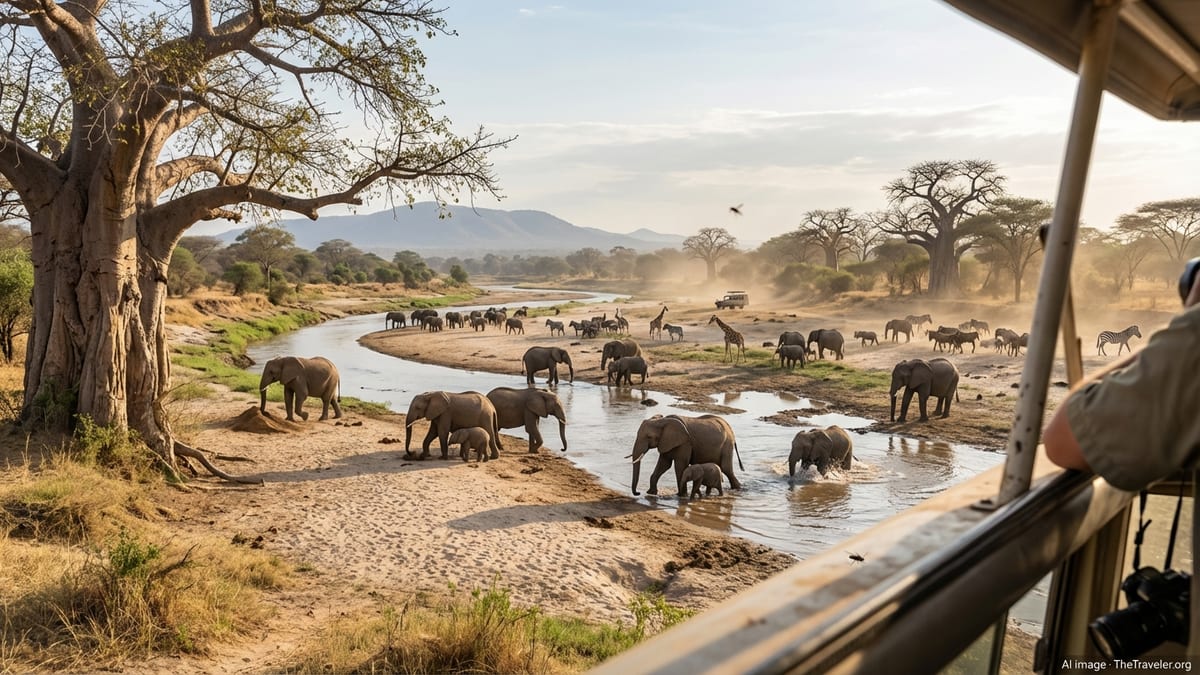
The long dry season from about June to October is widely regarded as the best time to visit Tarangire for classic big-game viewing. As seasonal waterholes across the wider ecosystem dry out, wildlife is drawn to the Tarangire River and its wetlands. This concentration creates the conditions that have made the park famous: enormous elephant herds, dense plains game and good predator sightings in a relatively compact area.
During these months the grass is shorter and the vegetation more open, which makes it much easier to spot animals. Herds of buffalo, wildebeest, zebra and giraffe gather along the river, followed by lions, leopards, cheetahs and hyenas. Dusty golden light, clear skies and low humidity also make this a superb time for photography. The trade-off is that this is also the busiest and most expensive period, when lodges fill up far in advance and park roads see more traffic.
Green Season: Lush Landscapes and Birds
From November to May, Tarangire enters its green season. Short rains usually begin in November, followed by the heavier long rains from about March to May. The bush turns lush and green, wildflowers appear and the park feels much more atmospheric. For birdwatchers this is a prime time, as migratory species arrive and many birds are in breeding plumage.
Wildlife viewing is still possible, but it is more scattered. With water available across the wider ecosystem, many animals disperse beyond the park boundaries, and tall grasses can make it harder to spot those that remain. You are likely to see fewer big herds near the river, but you gain quieter roads, lower accommodation rates and more intimate sightings. Some tracks can become muddy or impassable in the wettest weeks, so flexibility in your daily plans is important.
Shoulder Months and Trip Planning
Transition months at the start and end of the dry season can offer a good balance of wildlife density and manageable visitor numbers. Late May and early June often see improving road conditions and rising game concentrations but slightly fewer crowds and better value than the peak months of July, August and September.
When planning, think carefully about your priorities. If your main aim is dense wildlife and large elephant herds, aim for June to October and book accommodation well ahead. If you prefer quieter parks, dramatic skies and birdlife, consider November, December or late April to May. Discuss your timing with your safari operator so they can tailor your route and expectations to the seasonal conditions of the year you are traveling.
2. Entrance Fees, Payments and Park Rules
Tarangire is managed by the Tanzania National Parks Authority (TANAPA), which sets official conservation and entrance fees. These charges are substantial, especially for non-resident visitors, and they are collected under a strictly cashless system. Knowing how fees work and what rules apply at the gate will help you avoid surprises and delays.
Current Park Fees and Validity
For non-East African citizens, daily conservation fees at Tarangire are currently around 50 US dollars per adult in peak season and slightly less in low season, with lower rates for children. East African citizens and recognized residents pay significantly reduced tariffs, provided they show appropriate identification or residency permits at the gate. In addition to park entrance fees, there are separate vehicle fees and, for those using public or special campsites, separate camping charges.
Park fees are generally valid for a 24-hour period from the time you enter. If you leave the park and wish to re-enter, you will almost always need to pay for a new permit. This is important to remember if your lodge or campsite is outside the park boundaries. Most organized safaris build these costs into your package and handle the paperwork, but independent travelers should check validity times carefully when planning long game drives or transfers between accommodations.
Cashless Payments and Control Numbers
TANAPA has moved to a largely cashless system in which payments are made electronically in Tanzanian shillings. At major gates, you can pay with internationally recognized credit or debit cards, or through mobile money platforms if you have a local number and account. Many operators also arrange prepayment using control numbers issued for each booking, which your driver presents at the gate for verification.
If you are handling your own payments, do not rely on cash in foreign currency and do not assume that every gate will accept every card. Network interruptions can occasionally cause delays, so it is wise to allow extra time for entry and to have a back-up method of payment. Check with your safari company or lodge in advance to confirm how your fees will be settled and whether anything is required from you before arrival.
Key Park Regulations to Respect
Tarangire enforces standard Tanzanian national park regulations designed to protect both wildlife and visitors. These include strict speed limits on park roads, designated opening and closing hours, and a firm ban on driving off established tracks. The latter rule is especially important, as off-road driving can damage fragile soils and vegetation and disturb animals.
Visitors are not allowed to exit vehicles except in clearly marked areas such as picnic sites or viewpoints, and drivers must leave enough distance between vehicles and wildlife at sightings. Feeding animals, playing loud music, and using drones are all prohibited. Alcohol consumption is generally confined to lodges and designated campsites. Violation of these rules can lead to fines, expulsion from the park or, in extreme cases, prosecution, so treat them with absolute seriousness.
3. Wildlife Highlights and What You Are Likely to See
Tarangire may be smaller and less famous than Serengeti, but its wildlife density in the dry season is remarkable. The park’s defining features are its elephants and its baobabs, yet it also supports an impressive variety of plains game, predators and birdlife. Understanding what you are most likely to encounter will help you set realistic expectations and shape your daily game drives.
The Famous Elephant Herds
Tarangire is one of the best places in Africa to see elephants in large numbers. In the dry months, family groups and bachelor herds converge on the river and marshes, sometimes gathering in groups of well over a hundred individuals. You can often watch them digging for water in the sandy riverbed, bathing in mud wallows or feeding beneath the giant baobabs.
Because elephants are present year-round, you are likely to see them in any season, but the biggest congregations occur when outside water sources have disappeared. At these times, long, slow game drives along the river valley are rarely dull. Observing elephant behavior at close range, from playful calves to tension between bulls, is often a highlight of a Tarangire safari.
Predators, Plains Game and Special Species
The park hosts a healthy population of lions, which are often encountered near the main river and in the open woodlands that fringe the floodplains. Leopards and cheetahs are present but more elusive, with sightings more likely when grass is short. Spotted hyenas patrol the plains, and smaller predators such as jackals and servals are occasionally seen at dawn and dusk.
Plains game includes large numbers of zebras, wildebeest, buffalo, giraffe, impala and warthog, especially in the dry season. Depending on conditions, you may also encounter less common antelope such as fringe-eared oryx or gerenuk in the drier, more open sections of the park. Tarangire is also one of the few Tanzanian parks where you can sometimes see tree-climbing lions, though this behavior is not guaranteed and should be considered a bonus rather than an expectation.
Birdlife and the Baobab Landscape
For birdwatchers, Tarangire is exceptional, with more than 500 recorded species. Seasonal swamps attract large flocks of waterbirds, while woodlands and riverine forests harbor an array of raptors, hornbills, bee-eaters and weavers. The green season between November and April, when migrants arrive and many species breed, offers especially rich birding opportunities.
The park’s landscape is just as memorable as its fauna. Stands of ancient baobab trees rise above the savanna, creating striking silhouettes at sunrise and sunset. Mixed acacia and combretum woodland interspersed with open grassland and marshes ensures that short drives can bring significant changes in habitat, and therefore in the species you are likely to see. A good guide will use this diversity to plan varied routes over the course of your stay.
4. Safari Logistics and Where to Stay
Tarangire lies along Tanzania’s popular northern safari circuit and is relatively straightforward to reach, yet practical logistics still matter. Deciding whether to base yourself inside or outside the park, how many nights to spend, and how to link Tarangire with other destinations will shape the rhythm and feel of your trip.
Getting to Tarangire
Most visitors approach Tarangire by road from Arusha, the main safari gateway in northern Tanzania. The journey typically takes around two to three hours, depending on traffic and the exact location of your lodge or camp. The main entrance gates are easily accessible on paved roads, with game viewing beginning shortly after you enter the park.
It is also possible to fly into nearby airstrips using scheduled or charter light aircraft, often as part of a longer itinerary combining Tarangire with Serengeti or Selous. This approach saves time but increases costs. For many travelers, a private or shared vehicle transfer from Arusha remains the most economical and flexible option, and it allows you to see more of the rural landscape along the way.
Staying Inside vs Outside the Park
Accommodation options range from simple public campsites to high-end tented camps and lodges. Many properties are located inside the park boundaries, giving you immediate access to early morning and late afternoon game viewing, and immersing you fully in the sounds of the bush. These lodges are ideal if Tarangire is a key focus of your trip and if your budget allows for park fees for every night you stay inside.
There are also several lodges and tented camps just outside the main gates or in adjacent wildlife management areas. Staying outside can reduce overall costs and may be practical if you are combining Tarangire with other stops in a short itinerary. The trade-off is that you will spend more time each day entering and exiting the park, and your movements will be tied to official opening and closing times.
How Many Nights to Spend
Because Tarangire is relatively compact and accessible, many standard itineraries allocate just one night here at the beginning or end of a northern circuit safari. While this is better than skipping the park entirely, it can feel rushed and may limit your chances of seeing its full variety of landscapes and wildlife.
Two to three nights is a more comfortable minimum, allowing for multiple game drives at different times of day and in different areas of the park. With this amount of time, you can follow animal movements, linger at productive sightings, and include slower activities such as sundowners or guided walks where permitted. If you are particularly interested in elephants or birdwatching, or visiting in the quieter green season, three or even four nights can be very rewarding.
5. Health, Safety and Tsetse Flies
Tarangire is a safe and well-established safari destination, but it is still a wild area in a tropical country. Basic health precautions, attention to insect protection and respect for animal behavior will keep your trip comfortable and secure. A little preparation goes a long way in avoiding the most common annoyances and risks.
Malaria and General Health Precautions
Tarangire lies in a region where malaria is present. Travelers are usually advised to consult a medical professional before departure about appropriate prophylactic medication and to follow standard mosquito-avoidance measures. These include wearing long sleeves and long trousers in the evenings, using insect repellent containing an effective active ingredient, and sleeping under a net where provided.
Most safari lodges and reputable operators maintain good hygiene standards and provide safe drinking water, but you should still travel with a basic personal medical kit. Include any prescription medications you require, along with remedies for stomach upsets, pain relief, antihistamines and rehydration salts. Tap water in most rural areas is not considered safe to drink, so use bottled or filtered water supplied by your lodge or vehicle.
Tsetse Flies and Biting Insects
Parts of Tarangire, particularly its woodlands and riverine areas, are known for tsetse flies. These biting flies can be persistent and their bites are painful, though in established tourist circuits they are generally more of an irritation than a serious health threat. Their activity tends to be highest in the hotter months and in shaded bushy areas.
To reduce discomfort, wear neutral-colored clothing in shades of khaki, tan or olive, as tsetses are attracted to bright blue and black. Avoid synthetic fabrics that do not breathe well in the heat, and consider clothing treated with insect-repellent formulations. Keeping vehicle windows slightly open to allow airflow can discourage flies from lingering inside during drives. Guides are usually familiar with the worst hotspots and can adjust routes or driving speeds accordingly.
Wildlife Safety and Camp Etiquette
Wild animals in Tarangire are habituated to vehicles but not tame. Never attempt to approach, feed or touch any animal, even in camp. Always follow your guide’s instructions at sightings and keep noise levels low. Sudden movements, loud voices or leaning out of the vehicle can disturb wildlife and, in rare cases, provoke aggressive responses.
In unfenced camps and lodges, you should assume that animals can and do pass through at night. Do not walk alone after dark; most properties require guests to be escorted by staff to and from their rooms. Keep your tent or room zipped or closed, store food securely and avoid leaving items such as shoes outside overnight, as hyenas and other curious animals may carry them off. Observing these simple rules makes it easy to enjoy the thrill of sleeping in true wilderness without unnecessary risk.
6. What to Pack and How to Dress
Packing for Tarangire is about balancing comfort in a wide range of temperatures with practicality for game drives and bush environments. Airlines and safari vehicles often have luggage weight limits, so a thoughtful, minimalist packing list is more useful than multiple bags of rarely used items.
Clothing for Variable Temperatures
Days in Tarangire are typically warm to hot, especially in the dry months, but early mornings and evenings can be surprisingly cool, particularly from June to August. Plan for layers that you can add or remove easily. Lightweight long-sleeved shirts, breathable trousers and a warm fleece or jacket for dawn game drives are essential. A beanie and light gloves can be welcome on open vehicles in the coolest months.
Stick to neutral earth tones such as khaki, olive and beige, which are appropriate for the bush and less attractive to insects. Avoid bright whites, vivid colors and dark blues or blacks. A wide-brimmed hat, sunglasses and high-SPF sunscreen are vital for sun protection, as is a light scarf or buff that can double as protection from dust on longer drives.
Footwear and Useful Accessories
Comfortable closed shoes or lightweight hiking shoes are recommended, even if you will mostly be in vehicles. They offer protection from thorns, stones and insects around camp. Sandals or flip-flops can be handy for use in your room or at the pool, but are not ideal for walking between tents at night in an unfenced camp.
Other useful items include a small daypack, binoculars, a headlamp or small torch, spare camera batteries and memory cards, and sealable pouches for protecting electronics from dust. Many lodges provide charging points in rooms or common areas, but power in remote camps may be limited, so a power bank is a smart addition. If you wear contact lenses, consider bringing glasses as a backup, as dry, dusty conditions can be uncomfortable for lens wearers on long drives.
Documents, Money and Insurance
Keep your passport, visa documentation and copies of your travel insurance policy easily accessible but stored securely. Travel insurance that covers medical evacuation is strongly recommended for all safari travel. If your itinerary includes internal flights on small aircraft, keep an eye on strict weight limits and soft-bag requirements.
Although most major costs will be prepaid through your tour operator, carry some cash in Tanzanian shillings and a widely accepted credit or debit card for tips, souvenirs and incidental expenses. ATMs are usually available in Arusha and other large towns, but are rare in remote areas near Tarangire, so withdraw what you need before heading into the bush.
7. Choosing the Right Safari Style
Tarangire can be experienced in several different ways, from classic lodge-based game drives to more adventurous camping and walking options. Your choices will depend on your budget, appetite for comfort versus adventure, and interest in spending longer in one area rather than racing between parks.
Private and Group Vehicle Safaris
The most common way to experience Tarangire is on a vehicle-based safari, staying in a lodge or tented camp and heading out on guided game drives twice a day. Many visitors travel in private 4x4 vehicles with their own driver-guide, which offers maximum flexibility in timing, routes and photography stops. Others join small group safaris on fixed itineraries, which can be more affordable and sociable but less customizable.
Vehicle-based safaris suit most first-time visitors, families and travelers who want comfort and security without having to manage logistics themselves. They also work well when Tarangire is part of a longer circuit including Ngorongoro and Serengeti, allowing you to maintain the same guide and vehicle throughout your trip.
Walking, Fly-Camping and Night Drives
In certain designated areas and under the supervision of trained guides and rangers, it is possible to experience Tarangire on foot. Guided nature walks focus on tracks, plants, smaller animals and the feel of the bush at ground level, rather than on close approaches to big game. For many, this provides a deeper connection to the landscape and a welcome contrast to hours in a vehicle.
Some operators also offer fly-camping or lightweight mobile camps in or near the park, giving a more immersive wilderness experience. Night drives, where permitted in nearby concession areas, reveal nocturnal species such as civets, genets, bushbabies and, occasionally, predators on the move. These more adventurous options usually cost more than standard lodge stays and require a certain comfort with basic conditions, but they can turn a good safari into a truly unforgettable one.
Family and Photographic Safaris
Tarangire works well for family trips, especially in the dry season when game viewing is reliable and driving distances from Arusha are moderate. Several lodges have family rooms or tents, swimming pools and flexible meal times. If traveling with children, choose accommodations that explicitly welcome younger guests and ask about child-appropriate activities and guiding policies.
Dedicated photographic safaris are also increasingly common. These trips prioritize time at sightings, optimal light and vehicle positioning, often using specially adapted vehicles and guides who are themselves experienced photographers. If serious photography is a priority for you, consider booking a specialist operator or arranging a private vehicle so that your schedule and behavior at sightings can be tailored accordingly.
8. Cultural and Environmental Responsibility
Like all safari destinations, Tarangire exists within a broader human and ecological landscape. Your visit can contribute positively to conservation and local communities, but it can also have negative impacts if not managed thoughtfully. Understanding a few key principles of responsible travel will help ensure your trip supports rather than undermines the places and people you have come to experience.
Supporting Conservation Efforts
Park fees and concession charges directly support habitat protection, anti-poaching initiatives and park management in Tarangire and beyond. Choosing to visit and pay these regulated fees is itself a contribution to conservation funding. Many lodges also partner with conservation organizations or run their own projects focused on wildlife monitoring, habitat rehabilitation or anti-poaching support.
When researching where to stay, look for properties that are transparent about their conservation commitments, employ local staff and adhere to low-impact building and operating practices. Once on safari, respect rules that might occasionally feel restrictive, such as speed limits or bans on off-road driving, recognizing that they are in place to protect the very wildlife and habitats you have come to see.
Engaging With Local Communities
The areas surrounding Tarangire are home to pastoralist and agricultural communities who live alongside wildlife and bear many of the costs and risks of conservation. Some lodges and operators facilitate visits to nearby villages, markets or cultural centers, as well as opportunities to purchase locally made crafts. When these visits are well managed and genuinely benefit local people, they can deepen your understanding of the region and its cultures.
Approach such experiences with sensitivity. Ask permission before taking photographs of individuals, avoid intrusive questions and be cautious about offering gifts or money directly to children, which can encourage dependency and begging. Purchasing handicrafts at fair prices, tipping staff appropriately and supporting community-run enterprises are generally more sustainable ways to contribute.
Minimizing Your Environmental Footprint
Remote parks like Tarangire are sensitive environments. Simple steps such as carrying a reusable water bottle, minimizing single-use plastics, and turning off lights and fans when not needed can reduce your footprint. Many lodges now offer filtered water refills and use solar power or other renewable energy sources; support these efforts by adapting your expectations rather than demanding resource-intensive comforts.
On game drives, avoid littering, keep noise levels down and refrain from urging guides to pursue risky approaches to wildlife for the sake of a closer photograph. Accept that some sightings will be distant or fleeting and appreciate the broader ecosystem rather than focusing solely on ticking off a list of flagship species. Traveling with this mindset will not only reduce pressure on wildlife but often leads to richer, more satisfying experiences in the bush.
The Takeaway
Tarangire National Park rewards travelers who understand its rhythms. Knowing when to travel, how fees and rules work, what wildlife to expect and how to prepare for heat, dust and insects allows you to relax and focus on what matters most: the experience of being immersed in one of East Africa’s great dry-season wildlife arenas.
Plan for at least a couple of nights, give yourself time to explore both river valleys and baobab-studded hills, and choose operators and lodges that align with your values around conservation and community impact. With thoughtful preparation and a flexible, respectful attitude, a visit to Tarangire can offer some of the most memorable elephant encounters, golden sunsets and quietly powerful wildlife moments of any Tanzanian safari.
FAQ
Q1. When is the best time of year to visit Tarangire National Park?
The best time for concentrated wildlife viewing is during the long dry season from June to October, when animals gather around the Tarangire River and vegetation is sparse, making sightings easier. Birdwatchers and travelers who prefer lush green scenery may enjoy the wetter months from November to April.
Q2. How many days should I spend in Tarangire?
While it is possible to visit on a rushed overnight stay, two to three nights is recommended to experience different parts of the park and various times of day. This allows you to see more wildlife, adjust to the environment and enjoy a mix of long and short game drives.
Q3. Is Tarangire suitable for families with children?
Yes, Tarangire can be an excellent family destination, especially in the dry season. Several lodges offer family rooms or tents and are experienced with hosting children. Parents should ensure kids understand basic safety rules around wildlife and follow camp guidelines, particularly in unfenced properties.
Q4. Are tsetse flies in Tarangire dangerous?
Tsetse flies in Tarangire are mostly a nuisance rather than a serious health threat, but their bites can be painful. Wearing neutral-colored clothing, avoiding dark blues and blacks, and using insect repellent can help reduce bites. Guides also try to avoid known hotspots or adjust driving routes when flies are particularly active.
Q5. Do I need malaria medication for a trip to Tarangire?
Tarangire is in a malaria-risk area, and most health authorities recommend considering preventive medication. You should consult your doctor or a travel clinic before departure to discuss appropriate prophylaxis and follow general mosquito-avoidance measures such as using repellent and wearing long sleeves in the evenings.
Q6. Can I drive myself in Tarangire or do I need a guide?
Self-driving is technically possible for confident, well-prepared travelers with a suitable 4x4 vehicle, but most visitors choose to explore with a professional guide. Guided safaris remove logistical stress, improve wildlife spotting and ensure better adherence to park rules, which collectively enhance both safety and the overall experience.
Q7. What kind of accommodation is available in and around the park?
Accommodation options range from simple public campsites to mid-range lodges and luxury tented camps. Some properties lie inside the park, offering immediate access to game viewing, while others sit just outside the gates or in nearby wildlife management areas, which can be more cost-effective but require extra driving each day.
Q8. What should I pack specifically for Tarangire?
Pack lightweight, neutral-colored clothing, a warm layer for cool mornings, comfortable closed shoes, a wide-brimmed hat, sunglasses, sunscreen and insect repellent. Binoculars, a camera with spare batteries, a headlamp and a small first aid kit are also very useful. Check luggage weight limits if you are taking small aircraft between parks.
Q9. Are night drives or walking safaris allowed in Tarangire?
Standard national park regulations restrict night drives and walking to specific areas and operators. Some nearby concessions and partner properties offer guided walks or night drives under strict supervision. If these activities interest you, choose a lodge or safari company that is licensed and equipped to provide them safely.
Q10. How does visiting Tarangire support conservation and local communities?
Park entrance and conservation fees fund habitat protection, anti-poaching operations and park management. Many lodges employ staff from nearby villages, purchase local produce and support community projects. By choosing responsible operators, respecting park rules and engaging thoughtfully with cultural experiences, your visit can contribute positively to both wildlife conservation and local livelihoods.