

More news on this day
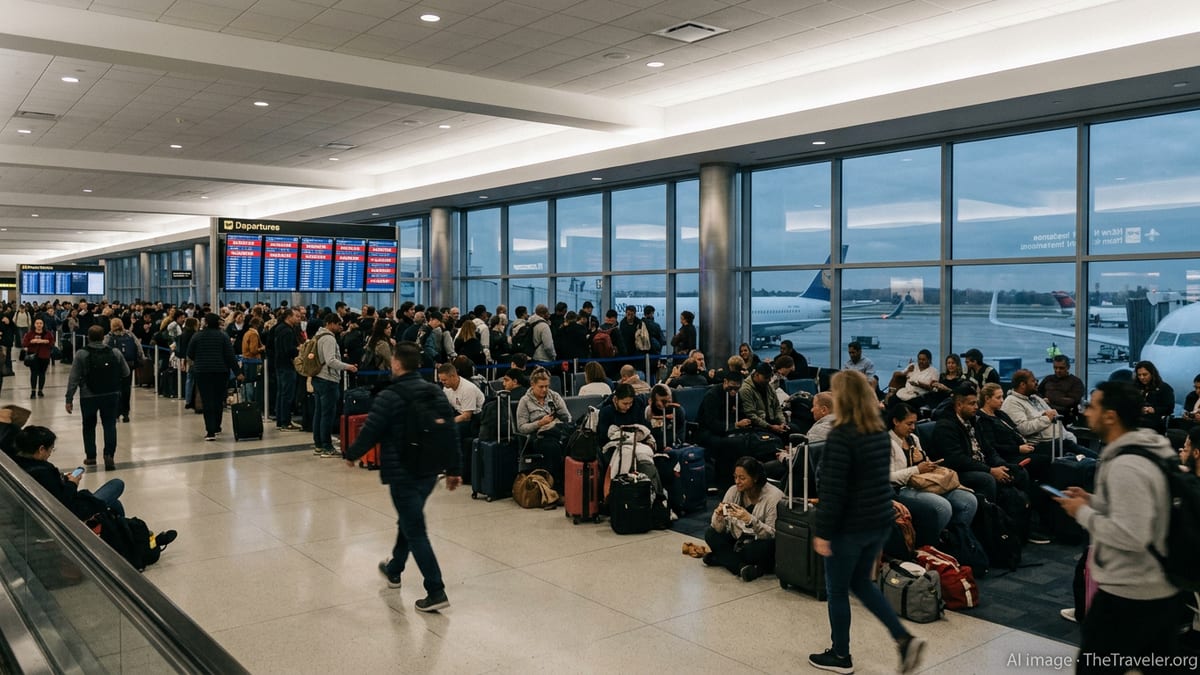
Hundreds of travelers at New York’s John F. Kennedy International Airport faced unexpected disruption as around 80 flights were canceled, leaving passengers scrambling for alternative routes and overnight arrangements amid wider turbulence across the U.S. air travel system.
Get the latest news straight to your inbox!
What Happened at JFK and How Widespread the Disruption Is
According to live flight-tracking data and recent U.S. aviation coverage, New York’s John F. Kennedy International Airport has seen roughly 80 flight cancellations within a short window, affecting both domestic and international services. The disruption comes as the broader U.S. network continues to struggle with a combination of adverse weather, air traffic control constraints, and operational bottlenecks at multiple major hubs.
Published reports on recent storms and winter systems show that large-scale weather events this season have already triggered thousands of cancellations nationwide, with New York airports frequently among the hardest hit. In this latest episode, JFK’s cancellations are concentrated across several carriers and time bands, creating ripple effects for connecting passengers heading to Europe, the Caribbean, and other U.S. cities.
While the number of canceled flights at JFK is significant, airport operations remain open, with many flights still departing and arriving. However, the uneven pattern of cancellations means that passengers on some routes face extensive delays and rebooking challenges, while others experience only minor schedule changes.
Travel analysts note that disruptions of this scale at a major international gateway like JFK can take many hours, and in some cases more than a day, to fully unwind as airlines reposition aircraft and crews and clear backlogs of stranded travelers.
Main Causes Behind the Sudden Wave of Cancellations
Publicly available information points to a mix of factors driving the latest cancellations at JFK. Recent winter storms and fast-moving low-pressure systems across the eastern United States have periodically reduced visibility, increased crosswinds, and complicated runway and taxiway operations at New York–area airports.
Beyond weather, the national air traffic control system has been under sustained strain. Recent coverage of regional equipment outages and ground stops at other East Coast airports highlights how quickly a localized technical issue can cascade through the network, forcing airlines to trim schedules, consolidate flights, or cancel services outright to avoid further knock-on delays.
Operational limitations within airlines themselves can amplify these pressures. When aircraft and crews are out of position after earlier disruptions at other hubs, carriers may be unable to restore full schedules immediately at JFK, even if local conditions improve. Industry reporting on recent mass disruption events shows that staffing constraints, maintenance backlogs, and tight turnaround times often play a role in pushing marginal flights into cancellation territory.
In short, while passengers typically see the end result on departure boards as a simple “canceled” status line, the underlying causes often span weather, infrastructure, and airline logistics far beyond New York City.
How Stranded Passengers Are Being Affected on the Ground
The immediate impact for travelers at JFK is visible in crowded check-in halls, longer-than-usual lines at rebooking desks, and busy customer service phone and chat lines. Passengers on canceled flights are competing for a limited supply of open seats on later departures, with peak-time and transatlantic services particularly constrained.
With hundreds of travelers now needing overnight stays near the airport, hotel availability in Queens and nearby boroughs tightens quickly. Travel forums and social media posts around similar recent disruptions show that room prices tend to spike as demand surges, pushing some travelers to search farther into Brooklyn, Manhattan, or even New Jersey for accommodation.
Families and long-haul travelers may face additional complications, such as missed cruise departures, tour start dates, or critical connections onward to smaller regional airports. In many cases, trip plans must be completely restructured, with new routing through alternate hubs or different airlines, adding time and cost to an already stressful experience.
Meanwhile, airport ground transport services, including taxis, ride-hailing vehicles, and airport shuttles, can become stretched as waves of passengers abandon canceled flights and attempt to leave the terminals at once. This can lead to longer waits curbside, especially at peak evening times when many international flights would normally depart.
What Affected Travelers Should Do Right Now
Travel experts consistently recommend that passengers whose flights are canceled or severely delayed prioritize direct contact with their airline through mobile apps, websites, and call centers rather than waiting only in terminal lines. Many carriers now allow self-service rebooking to the next available flight, including options from alternative airports in the New York region such as Newark or LaGuardia when seats at JFK are limited.
Publicly available passenger rights guidance indicates that travelers on U.S. airlines are generally entitled to a refund if a flight is canceled and they choose not to travel, even on nonrefundable tickets. However, separate compensation for meals or lodging depends on whether the disruption is considered within the airline’s control, such as a crew or maintenance issue, or outside its control, such as severe weather or air traffic restrictions.
Travelers who must stay overnight are encouraged to check whether their airline is offering hotel or meal vouchers at the airport. When assistance is limited, some passengers turn to travel insurance policies or premium credit card benefits that include trip interruption coverage, which can reimburse extra accommodation and transport costs tied to documented cancellations.
For those not yet at the airport, the strongest advice is to verify flight status repeatedly before leaving home, allow extra time for security and ground transport delays, and consider carrying essentials such as medications, chargers, and a change of clothes in hand luggage in case of an unexpected overnight stay.
How This Fits Into a Season of Turbulent U.S. Air Travel
The wave of cancellations at JFK fits into a broader pattern of volatile travel conditions across the United States this winter. Recent national statistics show that severe weather systems, including major blizzards and multi-day storm complexes, have already led to the cancellation of many thousands of flights countrywide, affecting travelers from the Midwest to the Northeast.
New York’s JFK, one of the country’s busiest international gateways, frequently ranks among the airports with the highest total passenger delay time due to its heavy traffic volumes and complex mix of long-haul and domestic operations. Public data compilations on delay patterns highlight that when disruptions strike here, the cumulative impact on passengers is especially large.
Analysts point out that major operational shocks in recent years, including technology outages and large-scale airline-specific meltdowns, have exposed the limited resilience of tightly scheduled national networks. Even when the immediate trigger is local weather or a regional technical glitch, the highly interconnected nature of U.S. aviation means that hubs like JFK quickly feel the effects.
For travelers planning upcoming trips through New York, this episode is another reminder that building flexibility into itineraries, allowing longer connection times, and monitoring conditions closely in the days before departure can significantly reduce the risk of being among the hundreds left temporarily grounded when cancellations spike.