

France remains one of the world’s most visited countries, yet even experienced travelers regularly stumble over its unspoken rules. From café etiquette and language expectations to new security procedures and transport quirks, small missteps can quickly turn a dream trip into a string of awkward encounters. Understanding what French residents quietly expect from visitors will help you move more confidently, avoid unnecessary stress, and enjoy the country on its own terms rather than treating it like an open-air theme park.
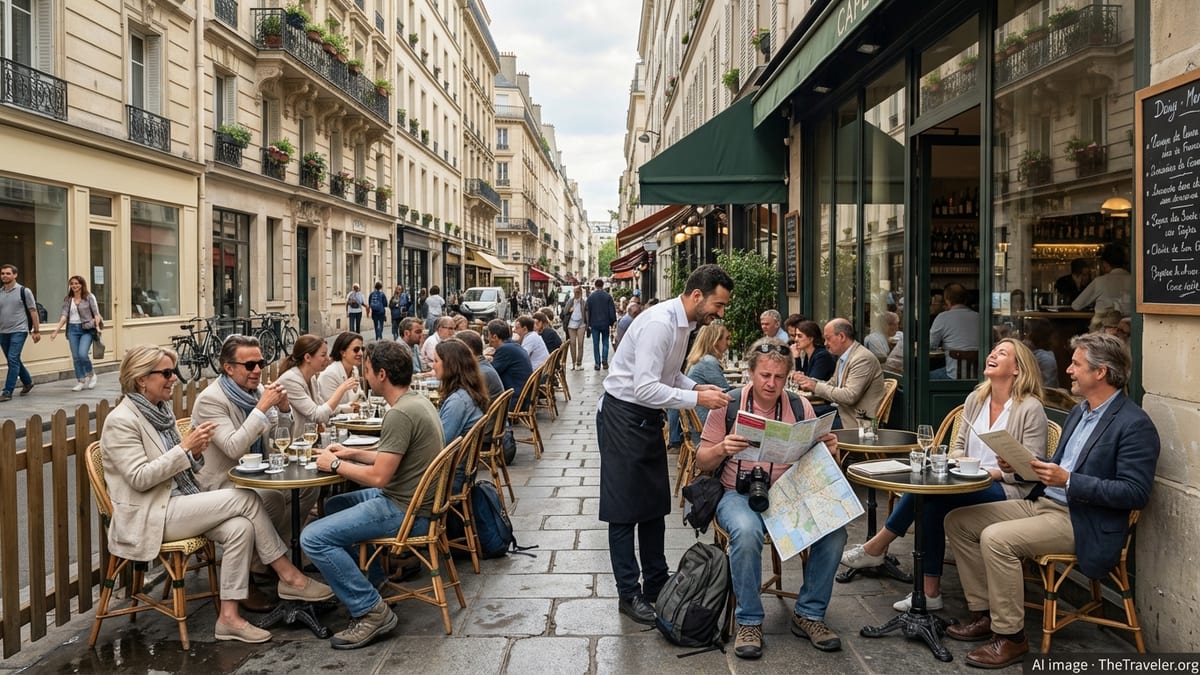
1. Forgetting Basic French Politeness
More than anywhere else in Western Europe, everyday politeness in France follows a clear script. A simple bonjour when you enter a shop, café, hotel lobby, or even a doctor’s waiting room is not optional courtesy but a social requirement. Walking straight up to a counter and launching into a request without greeting the person first can be perceived as abrupt or outright rude, even if you are smiling. Many visitors are surprised by the frosty service they receive without realizing they skipped the one word that sets the tone for the interaction.
As a rule of thumb, start every interaction with Bonjour, Monsieur or Bonjour, Madame during the day, and Bonsoir after early evening. Add s’il vous plaît when asking for something and merci or bonne journée when you are finished. These phrases are short and easy to learn, and they will instantly soften most encounters. Shopkeepers and servers are often more patient with your accent or slow delivery when they feel you recognize this basic social code.
Politeness also extends to how loudly you speak and how you move through shared spaces. French cities can be noisy, but inside restaurants, trains, and museums people tend to lower their voices. Tourists who talk at full volume, call across a room, or wave down staff from a distance stand out for the wrong reasons. Matching the volume and pace of locals around you is an easy way to show that you are paying attention to the culture rather than treating it as background scenery.
Finally, do not underestimate the power of a quick apology. If you accidentally bump someone on the metro or mispronounce a word, a simple Pardon or Désolé can instantly defuse tension. Even if your French is limited, using these basic expressions signals respect and usually earns you more tolerance from the people around you.
2. Assuming Everyone Speaks English
English is widely understood in major French cities, but assuming that every waiter, ticket agent, or passerby will happily switch to English is one of the fastest ways to create distance with locals. In smaller towns and rural regions, English competence can drop off sharply, and even in cities some people are not comfortable speaking it, especially with no warning. Many French people feel that starting in English suggests you expect the country to adapt to you rather than meeting it halfway.
The most effective approach is to open every conversation in French, even if you immediately ask whether the person speaks English. A simple Bonjour, parlez-vous anglais followed by a smile often transforms the tone of the exchange. You are not expected to deliver perfect grammar, but the attempt itself shows that you are not taking their language for granted. When the answer is non or un peu, slow down, use simple words, and be patient as both of you navigate the language gap.
Translation apps are a useful backup, particularly outside major tourist hubs. Download offline French packs so you can look up menu terms, transport notices, or basic directions without relying on mobile data. When using an app in conversation, avoid simply shoving your phone into someone’s face; instead, type or speak, then briefly show the translation and keep the interaction human. Pointing, gestures, and a few written words can work wonders when combined with a calm, respectful attitude.
Remember that language is tied to pride and identity. Rolling your eyes, raising your voice, or repeating English phrases more loudly when someone does not understand will rarely get you what you want. A little humility goes a long way: it is entirely acceptable to laugh at your own mistakes, ask for clarification, or switch to drawing a quick map on paper if words are failing.
3. Dress and Behavior That Clash With Local Norms
Contrary to the clichés, French style is not all designer labels and runway looks. However, people in cities like Paris, Lyon, and Bordeaux tend to dress more neatly and less athletically than visitors from North America or parts of northern Europe. Turning up at a restaurant or church in beachwear, gym shorts, or very revealing outfits can draw unwanted attention and occasionally lead to being refused entry, especially in more traditional venues and religious sites.
A good rule is to aim for clean, well-fitted clothing that you could comfortably wear to a casual office. Jeans with a simple shirt, modest dresses, and flat shoes are widely accepted. Reserve sports shorts, flip-flops, and bikini tops for the beach or pool. On the Mediterranean coast, local regulations in some towns restrict very revealing swimwear or shirtless strolls away from designated beach areas, and ignoring those rules can result in on-the-spot fines. Modest dress is particularly important in churches and cathedrals, where bare shoulders or extremely short shorts may be frowned upon even if staff do not say anything directly.
Behavior matters as much as clothing. In restaurants and cafés, putting bare feet on chairs, shouting to friends across the room, or treating the space like a living room is considered disrespectful to both staff and other diners. It is also poor form to seat yourself in many traditional establishments; instead, wait to be guided to a table, especially indoors. Once seated, do not call out to servers or snap your fingers for attention. Make brief eye contact or raise a hand slightly when they are nearby, and expect to move through the meal at a more relaxed pace than in some other countries.
Respectful behavior also applies to religious and historical sites. Speaking loudly during a church service, climbing on monuments for photographs, or using flash photography when it is prohibited undermines the shared nature of these spaces. French authorities increasingly enforce rules around heritage sites, and visitors who ignore security staff or custodians risk being removed or fined. When in doubt, quietly watch what locals are doing and follow their lead.
4. Misreading Dining, Tipping, and Café Culture
French dining follows rhythms that often surprise first-time visitors. Meal times are more fixed than in many other countries: lunch service usually runs from about noon to 2 pm and dinner typically begins around 7 or 7:30 pm. Outside these windows, many sit-down restaurants close their kitchens, especially away from heavy tourist zones. Arriving at 3 pm expecting a full lunch or at 5:30 pm hoping for a hot dinner is a common mistake that leads to frustration when doors are shut or menus are limited to snacks.
Another frequent misunderstanding involves the pace of service. In France, lingering over a meal is normal. Servers will rarely bring the check unprompted because that could be seen as rushing you out. Tourists sometimes mistake this for inattentive service when, in fact, it is the opposite. If you are ready to leave, simply catch your server’s eye and ask politely for l’addition, s’il vous plaît. Once requested, the bill usually arrives promptly, but it is assumed you want to savor your time unless you say otherwise.
Tipping culture also differs from places like the United States. By law, a service charge is included in restaurant prices, so leaving an additional 20 percent is unnecessary. Locals might add a euro or two per person in a café or round up by 5 to 10 percent for excellent service at a nicer restaurant, but not more. At bars and for taxis, rounding up to the nearest euro is common. Over-tipping is not offensive, but it contributes to confusion and unrealistic expectations around wages and prices.
Finally, many visitors forget that cafés and terraces are not just refueling stations but part of daily life. Ordering only tap water, occupying a table for hours without consuming anything, or spreading out laptops and chargers on a busy terrace is considered inconsiderate. Order at least a drink if you want to sit, and be mindful of peak times when locals are also looking for a place to relax. Embracing the slower pace of café culture will reward you with some of the most memorable moments of your trip, from people-watching to spontaneous conversations.
5. Treating France as a Theme Park Instead of a Country With Rules
In recent years France, like many European destinations, has tightened rules around public drinking, dress, and nuisance behavior, particularly in cities struggling with the side effects of mass tourism. In parts of Paris, for instance, public consumption of alcohol is restricted at night in specific zones, and fines can be issued on the spot to those who ignore posted notices. Along sections of the French Riviera, walking through town in only swimwear or shirtless may be prohibited, with local authorities empowered to issue penalties.
Beyond these visible rules, there is a broader frustration among residents when visitors treat the country as a playground where anything goes. Examples include leaving litter on riverbanks and beaches, shouting late into the night in residential streets, or using historical monuments purely as photo props by climbing where it is clearly forbidden. Such behavior feeds a growing backlash against overtourism and can prompt even stricter regulations, from limits on short-term rentals to tighter controls at popular viewpoints.
Respecting rules also extends to less visible but increasingly important domains, such as public transport and environmental protection. On trains and metros, placing luggage on seats, blocking doors, or ignoring quiet carriage signs can irritate fellow passengers and, in some cases, attract fines. At nature reserves and national parks, picking wildflowers, flying drones without authorization, or straying from marked trails may seem harmless but can damage fragile ecosystems or disturb wildlife. Authorities are progressively enforcing these rules more actively in response to environmental concerns.
The easiest way to avoid missteps is to read local signage carefully, even if it requires a quick translation, and to assume that rules are there for a reason rather than guidelines to be bent. If staff, police, or transport agents give instructions, comply promptly and politely, even if you do not fully understand the rationale. You are a guest in a country balancing the demands of millions of visitors with the needs of people who live there year-round.
6. Underestimating Security, Scams, and Travel Disruptions
France has strengthened visible security and border procedures in recent years, particularly following high-profile incidents and global instability. Expect more police and military patrols around major landmarks, stations, and airports, as well as occasional bag checks at museums, department stores, and event venues. Temporary border controls with neighboring countries can lead to longer queues, and many non-EU visitors are now subject to additional electronic travel authorizations and biometric checks. These measures can feel intimidating but are part of routine security rather than a sign that something is wrong.
At the same time, everyday petty crime remains one of the most common risks for tourists, especially in crowded areas such as metro lines serving the Eiffel Tower, the Louvre, and major train hubs. Pickpockets often work in groups, using distraction tactics like petitions, friendship bracelets, or sudden jostling to separate you from your wallet or phone. Leaving your bag on the back of a chair or placing a smartphone on a café table by the street makes you an easy target. A slim crossbody bag that zips closed, worn in front of your body, combined with keeping only what you need on you, drastically reduces your vulnerability.
Travel disruptions are another reality visitors frequently underestimate. France has a long tradition of strikes affecting transport, from trains and metros to regional buses and ferries. Renovation projects can also alter usual routes or timetables for extended periods, sometimes replacing train services with buses. Tourists who plan tight rail connections, last-minute airport transfers, or same-day cross-country sightseeing without contingency time can be caught out by sudden cancellations or delays.
To avoid stress, build flexibility into your itinerary. Check transport news a day or two in advance before major journeys, allow generous buffers when catching flights, and keep essential items in your hand luggage in case of unforeseen changes. When you encounter extra security checks or long lines at borders, treat them as a logistical factor rather than a personal inconvenience. Patience, preparation, and a bit of redundancy in your schedule will help you absorb these bumps with minimal impact on your overall trip.
7. Misunderstanding Opening Hours and Regional Rhythms
Many visitors arrive in France expecting shops, supermarkets, and attractions to operate on the nearly continuous schedules they know from home. While major cities and tourist hubs have slowly extended hours, much of France still runs on a more traditional rhythm. Small shops often close for one or two hours at midday, especially outside Paris, and Sunday remains a quieter day when many businesses shut entirely or operate reduced hours. Banks, post offices, and administrative offices may also keep limited public hours that vary from town to town.
Tourists frequently experience this as a series of small annoyances: arriving at a rural bakery just after it has closed for the afternoon, turning up at a museum on its weekly closed day, or assuming a restaurant will serve a late afternoon meal when the kitchen has already shut. Popular museums and monuments in Paris and other cities often close one day each week, which might be Monday or Tuesday depending on the institution, and some sites close on national public holidays. Ignoring these patterns can leave you facing locked doors at precisely the moment you had planned to explore.
The best antidote is research and realistic planning. Before each travel day, check opening hours of key sights and make note of weekly closure days. When planning road trips or stays in smaller towns, assume that you may not find open shops late at night or on Sunday afternoons and keep simple snacks and water handy. Eating closer to local meal times also helps, as restaurants are more likely to be open and better staffed.
Regional rhythms vary across the country. Coastal areas may be lively late into the evening in summer yet quiet off-season, while university towns can feel almost empty during holiday periods. Understanding that France is not a single, uniform destination but a patchwork of local calendars and customs will help you avoid disappointment and instead appreciate the charm of slower-paced days.
8. Staying Only in Paris and Tourist Hotspots
Paris deserves its reputation as one of the world’s great cities, but a common mistake is treating it as a stand-in for the whole of France. Many visitors spend all their time in the capital and perhaps a quick side trip to Versailles, then leave believing they have seen the country. In reality, France’s diversity lies in its regions: vineyards in Champagne and Bordeaux, storybook villages in Alsace, dramatic coastlines in Brittany and Normandy, and sun-drenched landscapes in Provence and the Riviera. Each area has distinct traditions, cuisine, architecture, and even variations in accent.
Overconcentrating tourism in a few famous neighborhoods also amplifies local frustration. Some Paris districts are saturated with souvenir shops, short-term rentals, and coach tours, while smaller towns struggle for visitors and revenue. By spreading your time more widely, you support a broader range of communities and often find better value for money. Accommodation, meals, and experiences outside the capital can feel more personal and less rushed, giving you a fuller sense of how people actually live.
Even within Paris, focusing exclusively on top-10 sights is a recipe for long lines and surface-level impressions. Travelers race from the Eiffel Tower to the Louvre, then to the Arc de Triomphe, without leaving space to wander lesser-known neighborhoods, sit in local parks, or explore everyday markets. When an itinerary is packed so tightly, unexpected pleasures like stumbling upon a small exhibition or lingering over a conversation with a shopkeeper rarely have room to appear.
Building in days for slower exploration and regional excursions will deepen your relationship with the country. Consider a few nights in a medium-sized city such as Lyon, Bordeaux, or Nantes, or in a smaller town reachable by train. France’s rail network makes many regions accessible without a car, and regional buses can connect you to villages and coastal spots beyond mainline stations. Trading one or two “must-see” attractions for an unhurried afternoon in a less famous place often proves the most memorable choice of all.
9. Overplanning, Underplanning, and Mismanaging Expectations
Two opposite but equally common mistakes shape many trips to France: overplanning every hour and underplanning essential logistics. Some visitors arrive with a rigid schedule that crams several major sights and restaurant reservations into each day, leaving no space for delays, weather changes, or simple fatigue. Others land with only a vague list of ideas and no advance bookings for popular attractions, then discover sold-out time slots, long queues, or accommodation shortages during busy seasons.
The key is balance. For major sights that require timed entry or regularly attract heavy crowds, such as the Louvre or prominent chateaux, advance reservations are wise. The same is true for highly regarded restaurants in Paris and major regional cities, especially on weekends. Once you have secured those anchor experiences, keep the rest of your days looser, with time for strolling, café stops, and spontaneous detours. Overly strict itineraries can transform small hiccups into major stress, whereas a flexible approach allows you to adapt.
Managing expectations is just as important as managing time. France on social media often appears as an endless string of lavender fields, empty cobbled streets, and perfect croissants. The reality includes crowds, traffic, occasional grumpy encounters, and days when the weather does not match your plans. Accepting that some lines will be long, some trains late, and some meals only average will help you focus on what is going well rather than what is not living up to an idealized image.
Good preparation includes learning a bit about current regulations and practicalities before you go, from new border procedures to local transport passes and tourist taxes. Rules and systems evolve, and relying on memories from a trip years ago or on outdated advice can lead you astray. A realistic, informed, and flexible mindset will make it far easier to navigate small setbacks and come home with memories of discovery rather than frustration.
The Takeaway
Traveling in France is at its best when visitors meet the country halfway. The most common mistakes tourists make are less about dramatic offenses and more about small misunderstandings that accumulate: skipping basic greetings, forcing English on hesitant speakers, ignoring local schedules, or treating public spaces as private playgrounds. These missteps are avoidable with a modest investment of attention and respect.
If you approach France as a real place with its own rules, pressures, and everyday routines, you will find doors opening, conversations flowing, and frustrations easing. A few phrases of French, an awareness of security and scams, and a willingness to adapt to local rhythms will pay dividends far beyond the effort required. In return, France offers what it always has: layered history, remarkable landscapes, and a deeply rooted culture of pleasure in everyday life, from morning coffee to evening light on stone facades.
FAQ
Q1. Do I really need to say “bonjour” every time I walk into a shop or café in France?
Yes. In France, greeting staff and fellow customers with a simple “bonjour” or “bonsoir” is a basic sign of respect. Skipping it can be perceived as rude, even if you mean no harm, and often leads to cooler service.
Q2. Is it offensive to speak English in France if my French is very limited?
It is not offensive to use English, but it is considerate to start in French with a greeting and a quick “parlez-vous anglais ?”. This small effort shows respect for the language and usually makes people more willing to switch to English.
Q3. What kind of clothes should I avoid wearing in French cities?
Avoid very beachy or gym-focused outfits such as sports shorts, flip-flops, and bikini tops away from the coast. In cities and churches, aim for neat, modest clothing that you would be comfortable wearing in a casual office or at a family lunch.
Q4. How do French meal times differ from what I might be used to?
Most restaurants serve lunch roughly between noon and 2 pm and dinner from about 7 or 7:30 pm. Outside those hours many kitchens close, so arriving mid-afternoon expecting a full meal is a common source of frustration.
Q5. What is the norm for tipping in French restaurants and cafés?
Service is included in restaurant prices, so large tips are not expected. Locals might round up the bill or leave a small extra amount for very good service, but a 20 percent tip is unusual.
Q6. Are pickpockets really a problem in French cities?
Yes, especially in crowded tourist areas, busy metro lines, and around major train stations. Using zipped bags, keeping valuables out of back pockets, and staying alert in crowds significantly reduces the risk.
Q7. Why is everything closed when I go shopping on Sunday afternoon?
Outside of major shopping districts and some tourist zones, many French businesses either close or keep limited hours on Sundays and during midday breaks. It reflects longstanding social habits rather than an attempt to inconvenience visitors.
Q8. Is it worth leaving Paris to see other parts of France on a short trip?
Even with limited time, adding a couple of days in another region can greatly enrich your trip. Cities like Lyon or Bordeaux, or nearby areas such as Champagne or Normandy, offer very different atmospheres and are reachable by train.
Q9. How strictly are new public drinking and dress rules enforced?
Enforcement varies by city and season, but authorities increasingly issue on-the-spot fines in areas with recurring problems. It is safest to follow posted signs, keep alcohol consumption discreet, and avoid walking far from the beach in only swimwear.
Q10. How much should I plan in advance, and how much can I leave to spontaneity?
Reserve ahead for major sights that require timed entry and for popular restaurants, especially in peak season. Beyond those anchors, allow open time for wandering, neighborhood discovery, and unplanned stops so that your trip feels like an experience rather than a checklist.