


More news on this day
American Airlines flight AA3078, a Boeing 737-823 operating the Indianapolis to Phoenix route, diverted to Denver instead of continuing to Arizona, leaving travelers to navigate missed connections, overnight delays, and questions about what options they have when a routine domestic hop suddenly changes course.
Get the latest news straight to your inbox!
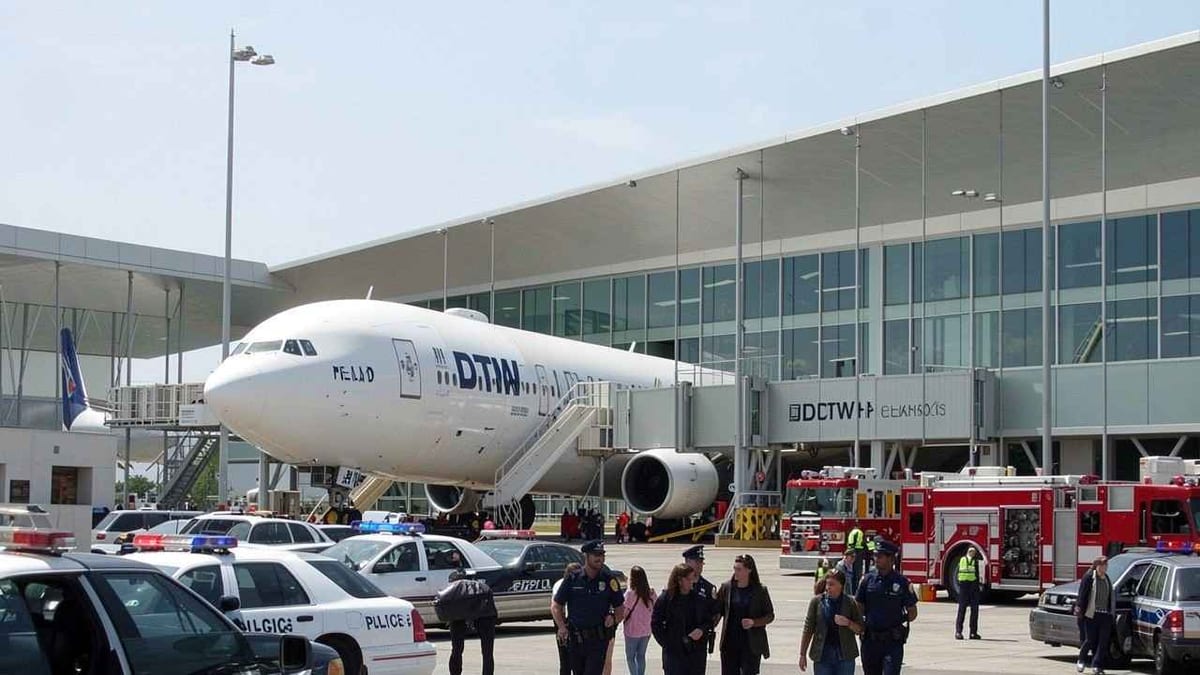
Unexpected Diversion on a Cross-Country Route
Publicly available flight-tracking data show that American Airlines flight AA3078, normally scheduled between Indianapolis International Airport and Phoenix Sky Harbor International Airport, diverted to Denver after departure instead of flying the usual westbound track into Arizona. The aircraft, a Boeing 737-823, is part of the carrier’s standard narrowbody fleet frequently used on mid-length domestic routes.
Routine schedule data list AA3078 as a roughly four-hour journey linking the Midwest to the airline’s Phoenix hub. On this occasion, however, tracking logs indicate a change of course toward Colorado, resulting in an unplanned arrival at Denver International Airport and an interruption to the planned city-pair service.
Initial listings on airport and airline information portals framed the flight as diverted rather than canceled, a classification often used when an aircraft lands at an airport other than its ticketed destination. While specific operational reasons for this particular diversion had not been detailed through public channels at the time of writing, typical causes include weather, technical concerns, medical events, or broader air traffic constraints across the region.
The diversion placed Denver in the middle of what was supposed to be a nonstop itinerary, instantly transforming a straightforward point-to-point trip into a multi-stage journey for those on board and for anyone with connecting flights onward from Phoenix.
Impact on Passengers and Their Travel Plans
For travelers, the most immediate consequence of a diversion is time. A route that usually runs directly between Indianapolis and Phoenix instead required passengers to deplane in Denver, wait for new instructions, or in some cases seek alternative routes to reach Arizona or other final destinations. For those with same-day connections, particularly from Phoenix to West Coast cities or cross-border destinations, the change can cascade into missed onward flights and unplanned overnight stays.
Reports from recent diversions across the U.S. network suggest that many travelers turn first to mobile apps and airport information screens to understand whether their tickets will be rebooked automatically or whether they need to request a new routing. American’s general customer-service plan states that when a flight is diverted, customers may be rerouted on the next available service or, if necessary, placed on partner carriers, subject to seat availability and the specific disruption scenario.
Experiences shared after similar diversions show that options can vary widely. Some travelers are offered hotel vouchers or meal credits when extended delays occur, while others receive only rebooking assistance if the cause is linked to weather or broader airspace restrictions. In all cases, diversion-related changes tend to generate long lines at service desks and high call volumes, which can add stress at the exact moment passengers most need clarity.
For those arriving unexpectedly in Denver, local ground transportation also becomes a factor. Some passengers on diverted flights in recent months have chosen to rent cars and continue overland when their final destination is within a long day’s drive, while others prefer to wait for the next flight even if it departs the following morning.
Why Airlines Divert: Safety, Weather, and Network Strain
Industry guidance and recent incident histories underline that diversions are a regular feature of complex airline operations rather than rare anomalies. Safety considerations sit at the top of that list. Carriers broadly emphasize that flight crews may choose to land at the nearest suitable airport when they identify technical anomalies, onboard medical emergencies, or conditions that warrant a precautionary stop instead of continuing to the scheduled destination.
Weather is a frequent driver of unexpected landings, especially in storm-prone seasons across the central United States. Thunderstorms along the route, strong crosswinds at Phoenix, or reduced visibility can temporarily close arrival flows and force aircraft to hold or divert to airports such as Denver, which functions as a key node in the national air traffic network. Severe weather events around major hubs regularly lead to dozens of diversions in a single afternoon as airlines work to keep aircraft within operating limits and preserve fuel margins.
Published coverage of prior American Airlines diversions to Denver highlights how quickly conditions can change. Some flights have diverted due to high engine vibration readings, while others involved precautionary returns after technical alerts or weather-related restrictions farther down route. In each case, the aircraft landed safely and passengers continued on replacement flights once the situation was assessed and operational plans were updated.
Beyond immediate safety and weather, diversions also reflect the realities of schedule management at crowded hubs. When arrival banks become saturated or air traffic control imposes spacing requirements, airlines sometimes send aircraft to nearby airports where gates and ground crews are available, then reposition planes and travelers once the bottleneck eases.
What Travelers Can Do When a Flight Diverts
While a diversion like AA3078’s shift to Denver can be unsettling, travelers have several tools to regain control of their plans. American’s own customer information outlines that rebooking options are often available through the airline’s mobile app, self-service kiosks, and website, in addition to staffed counters at the airport. In many recent disruption cases, passengers who rebook digitally reach new itineraries faster than those waiting in line for an agent.
Travel experts generally recommend documenting the disruption as it unfolds. Screenshots of the flight’s diverted status, boarding passes, and receipts for meals, hotels, or replacement transportation can be useful later when seeking compensation or travel credits. Policies vary depending on the cause of the diversion, but several passenger advocacy groups suggest that clear records strengthen any claim for reimbursement of out-of-pocket expenses, especially when a mechanical or controllable factor is involved.
Another step is to monitor onward connections independently. If the Phoenix leg of an itinerary involved a tight layover, travelers may wish to proactively search for later flights on the same route or nearby airports and then ask American to confirm changes. Some passengers on earlier diversions have also used same-day change or standby options once they reached the intermediate airport, particularly when multiple flights depart within a short window.
For those booking future trips, travel insurance and credit card protections can play a role. Several mainstream cards and policies cover additional expenses when significant delays or diversions occur, provided travelers meet documentation and timing requirements. Reading these terms in advance can help passengers decide whether to file claims if a journey like the Indianapolis to Phoenix trip unexpectedly leads to an overnight stay in Denver.
Broader Questions About Reliability on Popular Domestic Routes
The diversion of AA3078 also feeds into a wider conversation about reliability on heavily traveled domestic corridors. Routes linking the Midwest to Sun Belt hubs such as Phoenix, Denver, and Dallas are vital connections for business and leisure travelers, and any disruption on these spokes can echo across a larger network of connecting flights.
Public data on American’s Denver and Phoenix operations show that both airports handle substantial daily traffic, with Phoenix functioning as a core hub and Denver serving as a prominent spoke and diversion field. When a scheduled non-stop from Indianapolis does not reach its planned destination, the implications extend beyond those on board to include aircraft rotation, crew duty limits, and the availability of planes for subsequent departures out of Arizona.
Academic research into U.S. air traffic patterns notes that major nodes such as Denver play an outsized role in absorbing shocks to the system. By taking in diverted flights and allowing crews to reset, airports like Denver help keep broader disruptions from spreading even further across the map. At the same time, this operational flexibility can feel very personal when it turns a straightforward journey into an unexpected detour.
For now, the diversion of AA3078 stands as another example of how even routine flights on familiar aircraft can change unexpectedly. For travelers planning upcoming trips between Indianapolis, Phoenix, and other high-traffic city pairs, it is a reminder to build in buffers where possible, keep a close eye on flight status tools, and understand what options are available when the destination printed on the boarding pass temporarily becomes a waypoint instead.