


More news on this day
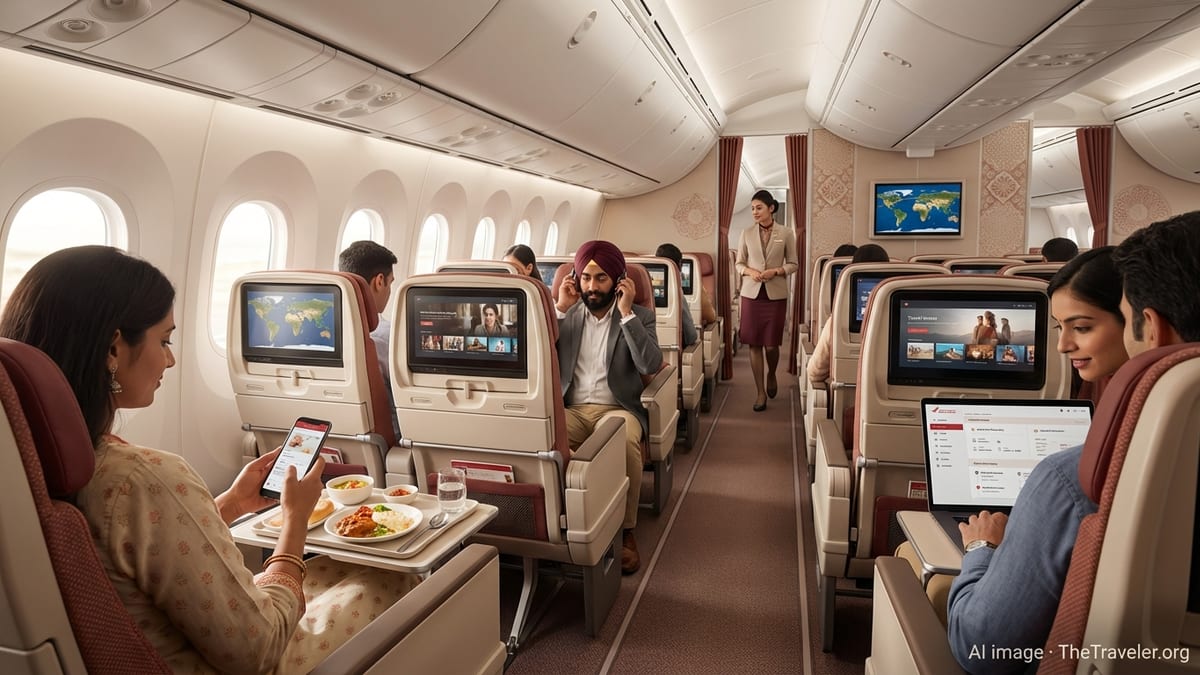
Air India is accelerating its multiyear transformation strategy with a refreshed mobile app that introduces an in-house internet booking engine, faster trip management tools and enhanced support for travelers facing delays and cancellations.
Get the latest news straight to your inbox!
New In-House Engine Targets Faster, Smoother Bookings
Recent updates to Air India’s mobile app mark a decisive shift toward owning more of its digital infrastructure, with the carrier rolling out an in-house internet booking engine that replaces earlier third-party technology. According to published coverage and product descriptions, the new stack is designed to improve reliability, speed and control over the entire booking flow.
The app now offers a more streamlined search and purchase journey, with reduced load times and fewer redirects between screens when customers select flights, fares and ancillary services. Publicly available information indicates that this has been accompanied by a back-end rebuild focused on scalability, intended to handle peak holiday and festival demand with fewer timeouts and payment failures.
Air India’s decision to bring the booking engine in-house is positioned as a strategic move to better integrate with its loyalty program and to support more complex itineraries, including multi-city journeys and mixed-cabin options. Developers can iterate on features at a faster pace, aligning the app more closely with the airline’s network adjustments and promotional campaigns.
Reports on the carrier’s broader digital roadmap suggest that this architecture is part of a new “digital core” that underpins the airline’s website, app and chatbot platforms. By consolidating these systems, Air India aims to deliver more consistent pricing, availability and post-booking support regardless of where customers begin their journey.
Payment Upgrades Aim at India’s High-Growth Travel Market
One of the most visible changes for travelers comes in the form of expanded and localized payment capabilities. Business media coverage notes that the revamped app adds India-specific methods such as popular wallets and domestic payment gateways, reducing friction for customers who previously had to rely on cards that were not always accepted or were prone to declines.
These enhancements dovetail with the app’s in-house booking engine, which can now support faster authorization cycles and clearer error messaging when payments fail. For a market where last-minute bookings are common and fare changes can be rapid, shaving seconds off the payment step can be the difference between confirming a seat or losing it to dynamic repricing.
The app also strengthens integration with Air India’s own loyalty ecosystem, enabling travelers to redeem or earn points more seamlessly in the same checkout flow. Public information from the airline highlights that the redesigned interface is intended to make fare families, add-ons and loyalty options more transparent, helping travelers understand what they are paying for and how it affects flexibility in the event of a disruption.
Industry observers view these steps as part of a wider push among Indian carriers to compete not only on network reach but on digital experience. As more bookings shift from desktop to mobile, especially among younger and first-time flyers, an app that aligns with local payment habits is increasingly central to winning and retaining customers.
Smarter Tools for Flight Delays and Cancellations
Beyond the booking flow, the latest version of Air India’s app places renewed emphasis on managing irregular operations, an area that has been a pain point across much of the global airline industry. Reports indicate that the carrier has upgraded its disruption-handling capabilities in the app, making it easier for passengers to track the status of their flights and receive timely updates on changes.
According to public descriptions of the new release, customers facing significant delays or cancellations can now access a more consolidated view of rebooking options and support channels within the app. This reflects a broader industry trend in which airlines are moving self-service tools closer to the point of disruption, reducing the need to queue at airport counters or call centers during peak stress periods.
The refreshed app builds on earlier digital initiatives aimed at disruption management. Air India previously introduced features such as e-vouchers for refreshments during extended delays and has invested in operational technology to give staff a better real-time picture of aircraft rotations and crew availability. Integrating these capabilities with a more capable front-end app is expected to shorten response times when schedules change.
Travel analysts note that such tools are particularly important on long-haul and hub connections where a missed leg can cascade into extensive re-routing. Providing clearer information and faster re-accommodation options on mobile devices can help limit the downstream impact on both customers and the airline’s wider network.
AI-Powered Assistance and Trip Management Features
The revamped mobile app forms part of Air India’s broader experiment with artificial intelligence across the customer journey. Earlier releases introduced an AI-powered virtual assistant and computer-vision-based tools to give travelers quick access to flight and booking details, and these capabilities continue to evolve alongside the new booking engine.
Publicly available information shows that the app now focuses on providing more proactive notifications for check-in, boarding and gate changes, while also enabling travelers to manage elements such as seat selection, meal preferences and baggage details from a single interface. The goal is to reduce the need for customers to switch between email, call centers and airport screens to stay informed.
Air India has described its digital upgrades as a coordinated ecosystem rather than isolated features. Alongside the passenger-facing app, the airline has developed tools for pilots, cabin supervisors and operations teams, which feed into a shared data environment. This is intended to ensure that what customers see on their devices is closely aligned with the latest operational decisions being taken behind the scenes.
Recognition from design and innovation awards for earlier app iterations signals that Air India’s user-experience focus is resonating with industry juries. The latest update seeks to build on that foundation by pairing polished design with deeper technical control over the reservation and disruption-management systems that sit underneath.
Positioning in an Intensifying Digital Airline Race
Air India’s mobile overhaul arrives as global and Indian carriers accelerate their own digital programs, racing to offer more intuitive apps and tighter integration between booking, airport and in-flight experiences. Recent moves by major international airlines to provide richer delay explanations and in-app disruption dashboards highlight how mobile is becoming the primary channel for customer communication during irregular operations.
Within India, competition from full-service and low-cost rivals is driving rapid innovation in payments, ancillaries and loyalty integration. Observers note that Air India’s decision to bring its booking technology in-house, rather than relying heavily on legacy vendors, is a statement of intent that it plans to compete on product and technology, not just on aircraft and schedules.
The success of the new app will ultimately be measured in customer adoption and ratings, as well as in operational metrics such as call-center load and airport queue lengths during disruptions. Early signals from public app store listings and company commentary suggest that customer sentiment has improved compared with earlier generations of the airline’s digital tools, though expectations are rising just as quickly.
For travelers, the latest release means a more capable pocket companion before and during their journey, with a particular emphasis on faster bookings and clearer options when things go wrong. For Air India, it represents a visible milestone in a wider aviation transformation that increasingly depends on software as much as on new aircraft or refurbished cabins.