

More news on this day
Abu Dhabi’s Zayed International Airport has been plunged into turmoil as a sweeping Middle East airspace shutdown forces airlines including Etihad, IndiGo, Qatar Airways and British Airways to cancel or delay hundreds of flights, disrupting key routes to London, Mumbai, Hyderabad, Doha, Bahrain and other global hubs.
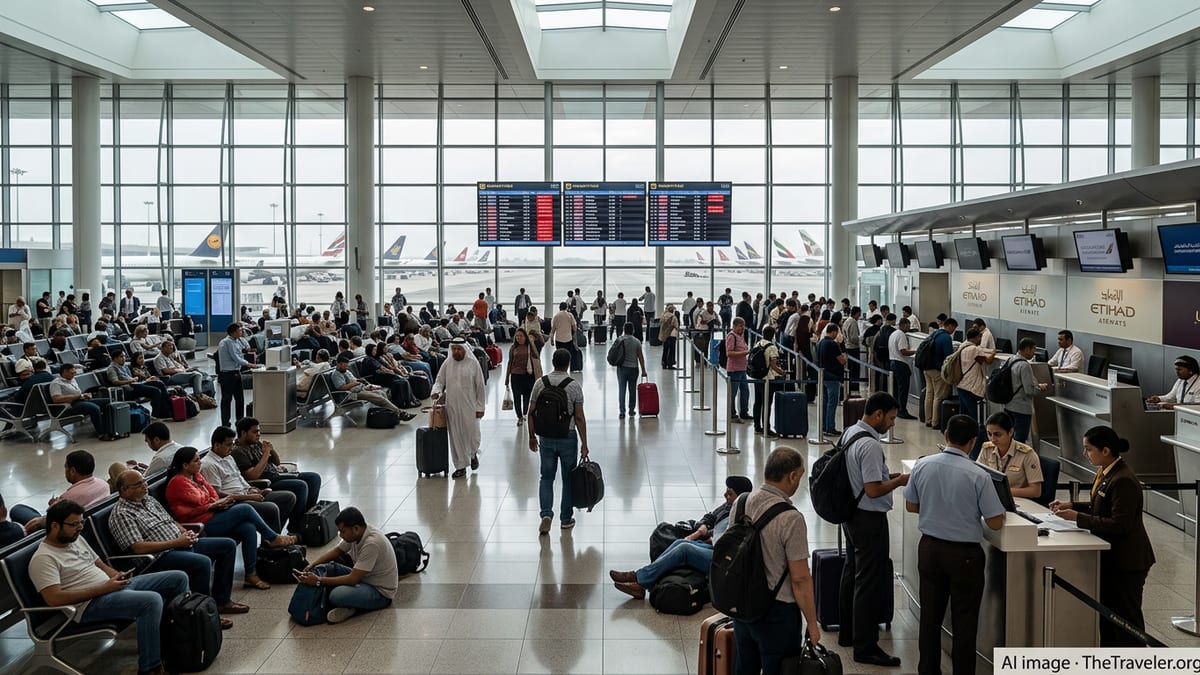
Regional Airspace Closures Bring Abu Dhabi Hub to a Standstill
The latest wave of cancellations at Abu Dhabi comes amid unprecedented airspace closures over large parts of the Middle East following US and Israeli strikes on Iran on 28 February. Authorities in the United Arab Emirates, Qatar, Bahrain, Kuwait, Iran and several neighbouring states have either fully or partially closed their skies, cutting off vital east–west corridors for both passenger and cargo services.
Etihad Airways, based at Abu Dhabi’s Zayed International Airport, has suspended all flights to and from the emirate until at least 14:00 UAE time on Monday 2 March. The airline has warned travellers that schedules remain highly fluid, advising passengers not to travel to the airport without a confirmed flight status and to expect extended disruption over the coming days as operations gradually restart and aircraft and crew are repositioned.
Industry flight-tracking data and regional media reports indicate that at Abu Dhabi alone at least 258 flights have been cancelled and a further 29 delayed since the crisis escalated, contributing to a wider regional tally in the thousands. Analysts note that as the UAE capital functions primarily as a transfer hub, the knock-on effect across international networks is magnified, with missed connections and out‑of‑position aircraft rippling across multiple continents.
Queues have built up at check‑in halls and ticketing counters in Abu Dhabi as stranded passengers attempt to rebook, secure hotel accommodation or arrange refunds. Airport authorities have deployed additional staff to manage crowds, while airlines have set up disruption desks to handle urgent cases such as medical travel, family emergencies and time‑sensitive business trips.
Major Carriers Suspend Services as Conflict Fallout Widens
Etihad is far from alone in halting its schedules. Qatar Airways has stopped flights to and from Doha after Qatari airspace was closed, while Emirates and flydubai have suspended operations at Dubai, effectively freezing traffic at the Gulf’s biggest aviation hub. The moves have left global airlines scrambling to reroute services around the Middle East or cancel flights outright when alternate paths are unavailable or uneconomical.
Indian low‑cost giant IndiGo has extended a temporary suspension of select international flights that rely on Middle East airspace, affecting links between Indian cities and Abu Dhabi, Doha and other regional gateways. The disruptions have hit routes from Mumbai, Delhi and Hyderabad particularly hard, with passengers bound for Europe and the Gulf facing last‑minute cancellations and lengthy rebookings.
British Airways has also adjusted its schedules, offering travel waivers on London services that overfly or serve the affected region. Passengers on routes between London and major Middle East destinations, as well as those connecting onwards via Abu Dhabi and Doha, are being allowed to change dates or request refunds, subject to specific travel windows.
Across the wider region, aviation analytics firms report that more than 1,800 flights have been cancelled by leading Middle Eastern airlines since Saturday, while global trackers count tens of thousands of delays worldwide as aircraft divert around closed skies. With no firm timeline for the full reopening of regional airspace, airlines are drawing up contingency plans that assume rolling disruptions for at least several more days.
London, Mumbai, Hyderabad and Gulf Routes Severely Disrupted
The shutdown at Abu Dhabi has severed some of the most heavily trafficked corridors linking Europe, South Asia and the Gulf. Travellers on London–Abu Dhabi services have faced cancellations or forced detours via alternative hubs, with British Airways and partner airlines routing some passengers through Southern Europe or Central Asia to avoid restricted airspace.
Connections between the UAE and India are among the worst affected. IndiGo, Air India and other carriers have cancelled or rerouted services linking Abu Dhabi with Mumbai, Hyderabad and other major Indian cities. Many flights that would normally use Middle East airspace to reach Europe from India have been suspended entirely, leaving passengers searching for scarce seats via Southeast Asian hubs such as Singapore, Kuala Lumpur and Bangkok.
Short‑haul links within the Gulf have also been hit. Services between Abu Dhabi and Doha, Bahrain and Kuwait have been largely grounded as those countries maintain closures or severe restrictions on their skies. Regional travellers who rely on these routes for business, medical treatment or family visits now face lengthy detours through the few remaining open corridors or must postpone their journeys.
Travel agents in India, the United Kingdom and the Gulf report a surge in requests from customers seeking alternative routings or full refunds. Fares on unaffected routes have climbed rapidly as demand surges, while some agents warn that availability on popular alternatives is likely to remain tight until Middle East hubs can safely resume normal operations.
Airlines Roll Out Waivers, Refunds and Flexible Rebooking
In an effort to manage the fallout, airlines impacted by the airspace closures have introduced an array of temporary policies to give passengers more flexibility. Etihad is allowing customers with tickets issued on or before 28 February and travel dates in early March to rebook without change fees, or to request refunds if their flights have been cancelled.
Qatar Airways and Emirates have published similar waivers, permitting free date changes and, in many cases, full refunds or travel credits for flights scheduled during the disruption window. IndiGo is offering free rescheduling and refunds on affected international services, while British Airways has broadened its change‑fee waivers for passengers due to fly to or through the region over the coming weeks.
Airlines and airport authorities are advising travellers to check flight status online before heading to the airport, ensure contact details are updated in their bookings and use official digital channels where possible rather than crowded call centres. Passengers booked through travel agents are being urged to work directly with their agents to secure rebookings or refund processing, as frontline airport staff struggle to keep up with demand.
Despite the expanded flexibility, consumer advocates caution that rebooking options may be limited for several days due to the sheer scale of the disruption and the need to reposition aircraft and crews. Travellers with non‑essential trips are being encouraged to postpone their plans where possible, to free up capacity for those with urgent needs.
Uncertain Outlook as Authorities Monitor Security Situation
Aviation regulators across the Middle East continue to monitor the security situation and reassess airspace safety, but officials have not yet offered a clear timeline for when full operations might resume. Notices to air missions remain in effect over multiple countries, and airlines say they will only return to normal schedules once they receive assurances that routes are safe.
Analysts point out that even a partial reopening of airspace may lead to a staggered recovery, with priority given to certain corridors and daytime operations before full 24‑hour schedules are restored. The complexity of airline networks, coupled with crew duty‑time limitations and displaced aircraft, means it could take days to fully unwind the backlog even after restrictions are lifted.
For now, Abu Dhabi’s role as a global hub is sharply curtailed, with the airport handling a fraction of its usual traffic and thousands of travellers still facing uncertainty over when they will reach their destinations. Industry observers say the episode underscores the vulnerability of international aviation to geopolitical shocks and the particular exposure of hub‑and‑spoke systems that concentrate traffic through a small number of strategic airports.
Passengers with upcoming itineraries through Abu Dhabi, Doha, Dubai or other affected airports are being urged to monitor airline advisories closely in the days ahead. With the situation evolving rapidly, travel plans involving the region are likely to remain subject to sudden change.