


More news on this day
Rising transatlantic and regional demand between Mexico, the United States, Canada and Spain is prompting Aeroméxico to join Volaris and American Airlines in ramping up capacity ahead of the 2026 FIFA World Cup, reinforcing North America’s status as one of the fastest-recovering long-haul air travel markets.
Get the latest news straight to your inbox!
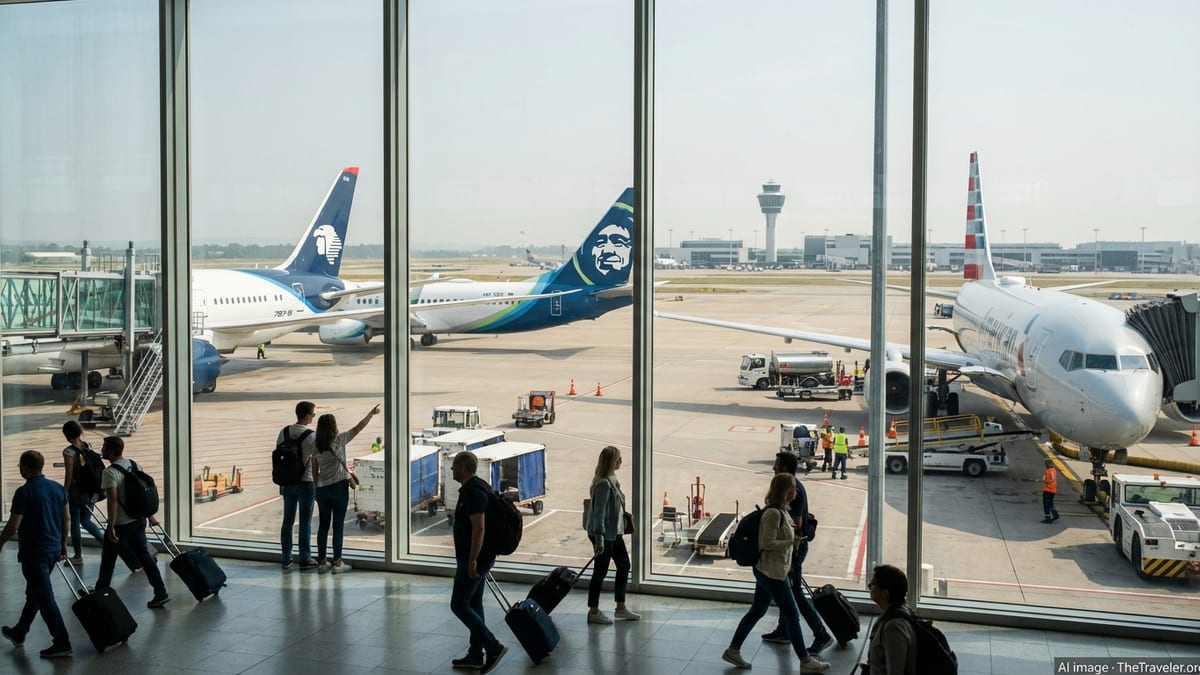
World Cup Build-Up Fuels North American Capacity Plans
The 2026 World Cup, which will be jointly hosted by Mexico, the United States and Canada, is emerging as a powerful catalyst for airline network planning. Publicly available scheduling data and airline updates show that carriers are positioning fleets and frequencies to capture an expected spike in inbound and regional traffic as fans move between host cities across the three countries.
Aeroméxico has been steadily rebuilding long-haul and regional capacity since its restructuring earlier in the decade, with recent traffic updates pointing to higher passenger volumes and solid load factors through 2025 and into early 2026. Company disclosures show that the airline continues to emphasize connectivity through Mexico City and other key hubs, a strategy designed to channel both World Cup visitors and broader leisure traffic across North America and Europe.
Low-cost rival Volaris and U.S.-based American Airlines are following similar trajectories, focusing on cross-border connectivity and high-demand leisure routes. Industry reports indicate that these carriers are boosting frequencies on Mexico–U.S. and intra-Mexico segments that will serve as vital corridors for tournament spectators and for travelers capitalizing on expanded schedules before and after the event.
Analysts point out that the World Cup is amplifying a broader recovery trend in international air travel, particularly in markets where tourism has outpaced pre-pandemic levels. Airlines are using the tournament as a focal point for long-planned fleet expansion and airport investments, aiming to lock in a larger share of transborder and transatlantic demand that is projected to extend well beyond 2026.
Aeroméxico Strengthens Its Position on Spain and U.S. Routes
Mexico’s flag carrier has emerged as a key bridge between Latin America and Europe, and Spain has become one of its most important international markets. Sector reports and tourism statistics describe Spain as a leading source of visitors to Mexico, with Aeroméxico capturing a substantial share of Spain–Mexico–Spain traffic alongside European competitors on the Madrid and Barcelona corridors.
Recent performance indicators highlight Aeroméxico’s efforts to differentiate through reliability and service. Aviation analytics firm Cirium recognized the airline for top-tier on-time performance for 2024, and subsequent sustainability and traffic reports show continued improvements in customer metrics and loyalty program enrollment. These strengths are especially relevant on long-haul routes linking Mexican hubs with major Spanish and U.S. gateways where schedule integrity and network depth directly influence traveler choice.
On North American routes, publicly available data from Aeroméxico’s investor communications point to growing international traffic and relatively high load factors through 2025. The carrier has continued to deploy widebody and narrowbody aircraft on core U.S. markets such as Los Angeles, New York and Dallas, while building out additional capacity through Mexico City’s main airport and newer facilities serving the capital region.
With fans expected to travel to matches in Mexico, the United States and Canada, these transatlantic and transborder links place Aeroméxico in a favorable position. Expanded frequencies to Spain can feed World Cup-bound passengers into Mexican hubs, while dense schedules to U.S. and Canadian cities will help distribute travelers to stadiums across all three host nations.
Volaris and American Airlines Capitalize on Cross-Border Leisure Boom
Volaris has built its business model around stimulating price-sensitive demand between Mexican cities and key origin points in the United States and Central America. Regulatory filings and traffic releases over the past year show that the ultra-low-cost airline has maintained passenger growth despite cost pressures and operational challenges, and that its network is heavily skewed toward Mexico–U.S. leisure routes that are likely to see elevated demand around the World Cup.
To support this growth, Mexican authorities recently allowed Volaris to temporarily operate aircraft with foreign pilots during peak periods, a move documented by aviation regulators that underscores tight labor markets and strong demand. The airline’s dense point-to-point network, particularly to secondary U.S. gateways with sizable Mexican and Central American communities, is expected to play an important role in moving fans and visiting friends-and-relatives travelers ahead of and during the tournament.
American Airlines, for its part, remains one of the largest foreign carriers in Mexico by seat capacity, and industry databases show it has been rebuilding and growing service to Mexican beach destinations and urban centers since 2023. The airline’s hub structure in Dallas–Fort Worth, Miami, Charlotte and other cities gives it an extensive connecting network to funnel passengers from across the United States and Canada into Mexican venues, as well as to Canadian cities that will host matches.
Travel analysts note that both Volaris and American Airlines benefit from the interplay between holiday demand and event-driven travel. Many of the routes projected to see World Cup traffic, such as those linking U.S. and Canadian cities with Mexican resort areas, are also core leisure markets that perform well throughout the year, reducing the risk of overcapacity once the tournament concludes.
Transatlantic and North American Demand Anchored by Spain
Spain’s tourism sector has posted a series of record-breaking years, providing a strong foundation for transatlantic air traffic growth. Figures released by Spain’s National Statistics Institute and summarized in international coverage show that the country welcomed roughly 97 million foreign visitors in 2025, exceeding prior highs and reinforcing its position as one of the world’s top tourism destinations.
Air transport data from Spanish and European sources indicate that passenger volumes through Spanish airports reached new records in 2024 and continued to trend upward in 2025, supported by rising demand from North American travelers. The United States has become a key long-haul source market for Spain, with U.S. travelers drawn to cultural cities, coastal destinations and increasingly to off-season travel opportunities made possible by expanded flight schedules.
This momentum is being felt on routes linking Spain with Mexico and the wider Americas. Market analyses focusing on Spain–Mexico traffic highlight steady growth in passenger numbers and revenue, with Aeroméxico and European carriers sharing the market. Spain’s growing outbound appetite for long-haul travel, combined with Mexico’s elevated profile as a leisure and cultural destination, is expected to feed additional flows into North America during the World Cup period.
North American tourism reports further show that U.S. outbound travel reached new highs in 2024, with Spain among the top-ranked overseas destinations for American travelers. As airlines on both sides of the Atlantic respond to this demand, capacity increases between Spain and North America are reinforcing hub connectivity in Madrid and Mexico City, aligning closely with Aeroméxico’s strategy to serve as a bridge between Europe and the tournament’s host nations.
Canada, Mexico and the U.S. Navigate Diverging Travel Trends
While Mexico and Spain are experiencing robust tourism growth, Canada and the United States present a more nuanced picture. Canadian statistical releases for late 2024 and 2025 show that air travel between Canada and other countries has continued to recover, but with domestic and overseas trips generally outpacing journeys to the United States and Mexico as travelers adjust to currency shifts, political dynamics and evolving consumer preferences.
At the same time, U.S. government data indicate that overall outbound international travel by Americans climbed to record levels in 2024, surpassing pre-pandemic highs and sending more U.S. residents to destinations such as Spain and Mexico. Industry commentary notes that these flows are being sustained by a strong dollar, high employment and a persistent preference for experiential spending, even as some inbound markets for the United States have softened.
Mexico sits at the center of these cross-currents. National tourism figures compiled by Mexican authorities show that the country welcomed more than 45 million international tourists in 2024 and an even higher tally in 2025, making it a standout performer in the region. Strong demand from the United States, Canada and Europe has helped offset pockets of weakness, and airlines have responded by consolidating Mexico’s role as a regional hub for both short-haul and long-haul traffic.
Against this backdrop, Aeroméxico, Volaris and American Airlines appear poised to benefit from overlapping trends: a structural rise in leisure and event-driven travel to Mexico, record volumes of U.S. outbound passengers to Spain and other European markets, and a World Cup that will rely heavily on air connectivity between the three host countries. With schedules and capacity already moving upward, the tournament is set to test how effectively North America’s carriers can translate surging demand into sustainable long-term growth.