


More news on this day
A subway train fire in New York City injured 12 people and triggered extensive service disruptions, leaving commuters facing packed platforms, diverted routes, and renewed concerns about safety on one of the world’s busiest transit systems.
Get the latest news straight to your inbox!
Fire breaks out on moving train and fills cars with smoke
According to early reports, the incident began when a fire ignited on a moving subway train, quickly filling several cars and a station area with thick smoke. Witness accounts and images shared on social media show passengers covering their faces and moving between cars as visibility dropped and alarms sounded.
Publicly available information indicates that at least 12 people suffered injuries linked to smoke inhalation, minor burns, or falls during the rush to exit the train. Most of the injuries are described as non life threatening, though medical personnel evaluated additional riders at the scene as a precaution.
Transit incident summaries and local coverage suggest that the fire may have originated near the underside or mechanical components of one car, though a full technical assessment is still in progress. Investigators are reviewing whether an equipment malfunction, debris on the tracks, or an external item brought onto the train played a role in sparking the blaze.
The affected train was brought to a stop so that riders could be evacuated to platforms and track level walkways. Emergency crews worked inside a confined, smoke filled environment, a familiar but hazardous challenge in New York’s aging, tunnel heavy subway network.
Service disrupted across lines as commuters face delays and detours
The fire and subsequent emergency response led to an immediate suspension of service through the affected section of track, with trains on multiple lines rerouted or held outside stations. Electronic alert systems and station announcements reported that service was partly or fully suspended on the line where the fire occurred, with knock on delays extending to intersecting routes.
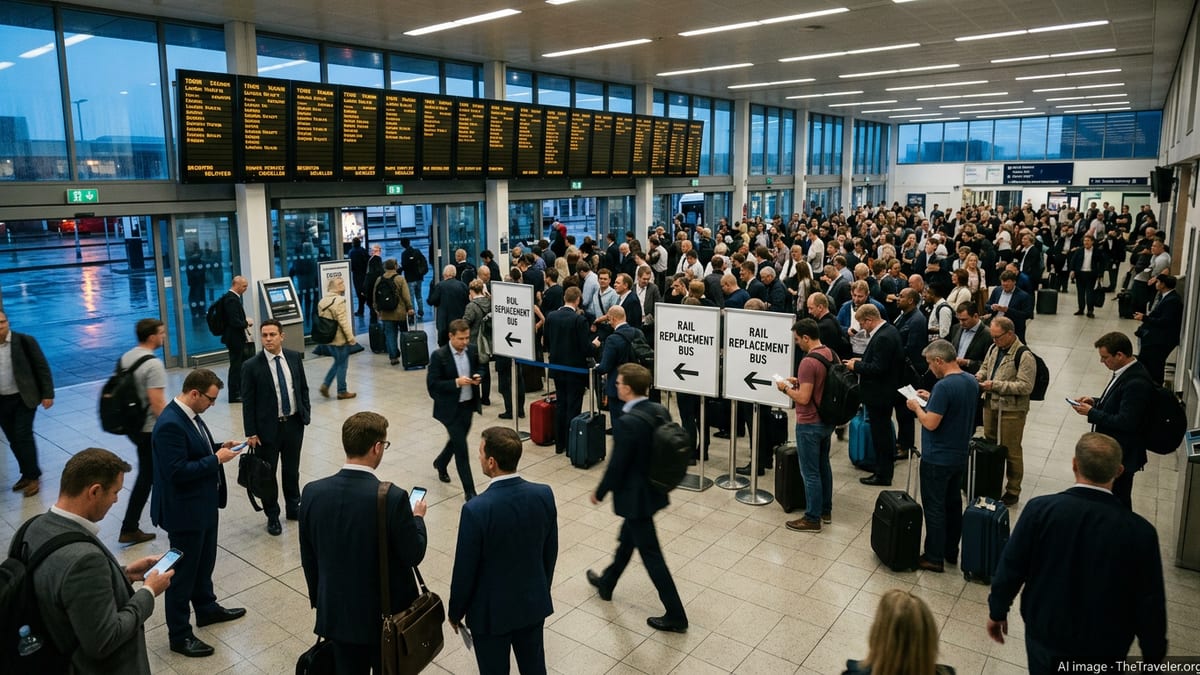
Riders reported crowded platforms, extended travel times, and sharply reduced frequency of trains during the disruption. Some trains were turned back short of their usual terminals, while others were diverted along alternate corridors to keep at least some service running through adjacent neighborhoods.
Transit service alerts show that normal operations were restored gradually, beginning with limited local trains running through the area under speed restrictions, followed by full line resumptions once track inspections and ventilation efforts were completed. Even after trains began moving again, residual delays persisted as dispatchers worked through a backlog of equipment and repositioned crews.
The disruption added strain to a weekday already marked by routine maintenance work and minor incidents elsewhere in the system, underscoring the challenge of keeping a dense, interconnected network running smoothly when a serious event occurs at a critical point.
Injuries, evacuations and response in a confined space
Incident logs and media coverage indicate that more than a dozen fire and medical units responded to the scene, focusing first on evacuating passengers from the train and station areas most affected by smoke. Stairwells, emergency exits, and connecting passageways were used to move riders to street level while ventilation fans cleared the tunnels.
Passengers described a chaotic but relatively swift evacuation, with some people guided along the tracks to nearby stations and others directed through standard exits. The majority of injuries occurred during the initial surge to get off the train, as riders jostled in narrow doorways and low visibility conditions.
Once the train was emptied, responders conducted a compartment by compartment search to ensure no one was left behind. Technical teams then began examining the burnt and heat damaged areas of the car and nearby infrastructure, documenting conditions that could help determine the cause.
Transit safety records show that while fires on trains and in tunnels are not unheard of in New York, most incidents involve smaller debris or equipment issues that are contained before causing significant injuries. The scale of this fire and the number of people affected place it among the more serious subway incidents reported in recent months.
Ongoing investigation and renewed focus on subway safety
An internal investigation into the fire is now underway, with engineers reviewing security footage, maintenance logs, and data from onboard systems. Analysts are expected to look at recent repair work on the affected train, the condition of the surrounding track and power systems, and any reports of unusual smells, sounds, or performance issues filed earlier in the day.
Transit safety advocates note that tunnel and train fires can be triggered by a range of factors, including aging electrical components, brake malfunctions, and litter or other objects igniting along the roadbed. Past incidents in the New York system have led to recommendations for more aggressive track cleaning, enhanced inspections, and additional fire resistant materials on train interiors.
Public discussion following the latest fire has quickly turned to broader questions about the resilience of the subway, which carries millions of rides per weekday. Observers point to the importance of clear communication during emergencies, accessible exits for people with mobility challenges, and backup plans when a key corridor suddenly goes out of service.
For regular commuters and visitors alike, the incident serves as another reminder that the conveniences of fast cross city travel depend on continual investment in safety, maintenance, and emergency preparedness beneath New York’s streets.