


More news on this day
Africa World Airlines has issued a public apology after passengers were left stranded at Kumasi’s Prempeh I International Airport when a Kumasi to Accra service was cancelled on October 26, 2026, intensifying scrutiny of how Ghanaian carriers handle disruption and compensation.
Get the latest news straight to your inbox!
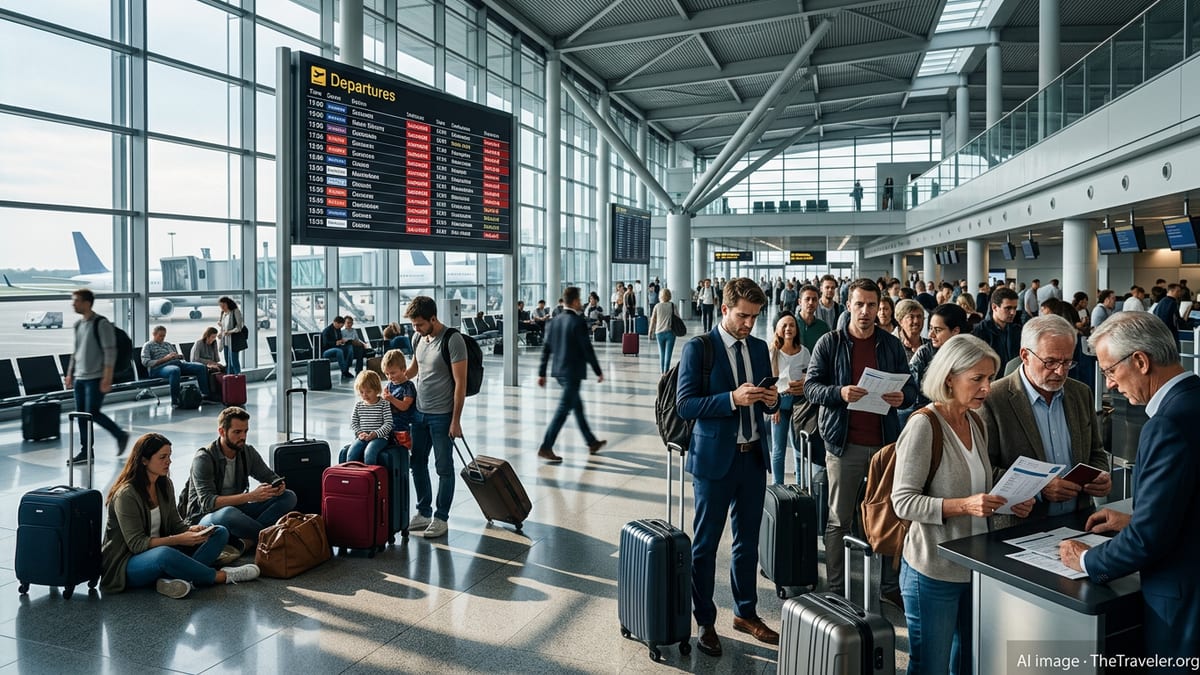
Passengers stranded on Kumasi–Accra route
According to published coverage from local outlets, passengers booked on Africa World Airlines and rival carrier Passion Air found themselves unable to travel from Kumasi to Accra on Monday, October 26, 2026, after both airlines cancelled scheduled services on the busy domestic route. Reports indicate that travellers waited at Prempeh I International Airport for hours as departure boards shifted from delayed to cancelled.
Accounts carried by Ghanaian news platforms describe scenes of confusion and frustration in the terminal, with some passengers stating that they received limited information about when, or if, they would be rebooked. Others reported additional costs for last-minute hotel stays and disrupted onward plans in Accra.
The disruption came at a time when the Kumasi–Accra corridor remains one of Ghana’s most heavily used domestic air links, relied on by business travellers, government workers, students and visitors seeking to avoid the lengthy road journey between the two cities.
Publicly available information shows that video footage and images from the terminal quickly circulated on social media in Ghana, adding pressure on the airlines to explain what had gone wrong and how passengers would be assisted.
AWA issues apology and outlines options
Following widespread criticism, Africa World Airlines released a public apology addressing the events surrounding the cancelled Kumasi service. Based on media reports summarising the statement, the airline acknowledged the disruption to travel plans and pointed affected passengers to the rebooking and refund options available under its existing policies.
Africa World Airlines’ published conditions of carriage state that, in the event of a cancellation initiated by the airline, customers are entitled to a full refund of the unused ticket or transfer to an alternative flight where space is available, subject to the fare rules that apply. The carrier’s customer commitment document also notes that it aims to provide timely updates on delays and cancellations, and to take steps to mitigate inconvenience where possible.
In this case, reports indicate that some passengers were offered rebooking on later services, while others opted to seek refunds through their original booking channels. However, several accounts shared in Ghanaian media questioned how quickly those options were communicated at the airport and whether additional support, such as ground transport or accommodation, should have been provided for those stranded overnight.
The apology has not fully quelled criticism, but it has shifted attention toward how consistently AWA’s written policies are applied in practice during large-scale disruptions on domestic routes.
What AWA’s policies say about cancellations
Africa World Airlines’ conditions of carriage and customer commitment, which are publicly available, set out in detail how the airline intends to handle cancellations, missed connections and oversales. The documents state that when a flight is cancelled by the airline, customers can request a full refund of the affected sector if they choose not to travel, or be placed on the next available AWA service on the same route at no additional fare, subject to seat availability.
The carrier notes that refund processing for international tickets purchased by card is expected within a specified period once a complete request is received, while domestic refunds and changes may be handled through travel agencies or direct sales channels, depending on where the ticket was purchased. For passengers whose tickets were issued by third-party agencies, AWA’s published guidance advises travellers to contact those agencies for refund arrangements if rebooking on another airline is not possible.
In addition, Africa World Airlines’ customer commitment refers to limited circumstances in which hotel accommodation may be arranged, particularly in cases of involuntary denied boarding when no same-day alternative is available and the passenger is away from home. The documents do not promise blanket compensation for every cancellation, and explicitly state that, beyond refunds and rebooking, the airline’s liability for consequential expenses such as missed onward connections is restricted.
The Kumasi incident has prompted renewed public examination of these terms, with commentators pointing out the gap between what is outlined in policy documents and what many stranded passengers say they experienced on the day of the disruption.
Spotlight on Ghana’s passenger rights framework
The events in Kumasi have again focused attention on Ghana’s broader framework for air passenger protection. While Ghana’s Civil Aviation Authority regulates airline safety and service standards, publicly available information indicates that the country does not yet have a unified, detailed compensation regime for delays and cancellations comparable to those in some other regions.
By contrast, many long-haul travellers are familiar with more expansive rules in other jurisdictions that specify standardized compensation levels, mandatory care such as meals and accommodation, and strict timelines for refund processing. Industry observers following the Kumasi disruption note that Ghanaian domestic passengers often rely on the individual policies of carriers such as Africa World Airlines and Passion Air, rather than on a single national benchmark.
The Kumasi cancellations have therefore become part of a wider public conversation in Ghana about what minimum protections should apply when domestic flights are disrupted for operational, technical or weather-related reasons, and how clearly those protections are communicated to travellers at the point of sale and at the airport.
Consumer advocates commenting in local media have argued that greater transparency around rebooking options, refund rights and any potential duty-of-care obligations would help build trust in the domestic aviation sector, particularly as passenger numbers grow on routes linking major cities.
Growing scrutiny of airline disruption across Africa
The difficulties faced by passengers in Kumasi form part of a broader pattern of scrutiny on African airlines as the continent’s aviation market expands. In recent months, disruptions linked to fuel shortages, crew availability, air traffic control issues and industrial disputes have drawn attention to how carriers support stranded travellers.
Regional coverage has highlighted examples where airlines in West and East Africa have arranged hotel rooms and rescheduled services after technical faults, alongside cases where passengers reported long delays with little assistance. Analysts suggest that increasing competition on key routes is likely to push airlines to refine their handling of irregular operations to protect brand reputation.
For Africa World Airlines, the public apology over the Kumasi cancellations underscores the reputational stakes involved when domestic services are disrupted. How effectively the airline now implements its own policies on refunds, rebooking and passenger communication will be closely watched by travellers, regulators and competing carriers.
As more passengers share real-time experiences from airport terminals on social platforms, operational missteps can quickly become national talking points. The Kumasi incident and AWA’s response are emerging as a test case for what Ghanaian domestic flyers can reasonably expect when flights are abruptly cancelled and travel plans are left in limbo.