


More news on this day
Hundreds of passengers who sold homes and savings to live on a so-called permanent "endless" cruise have been left scrambling for somewhere to stay after the ship’s operator halted its world voyage in Cambodia, citing surging fuel costs and ordering residents to disembark with their belongings.
Get the latest news straight to your inbox!
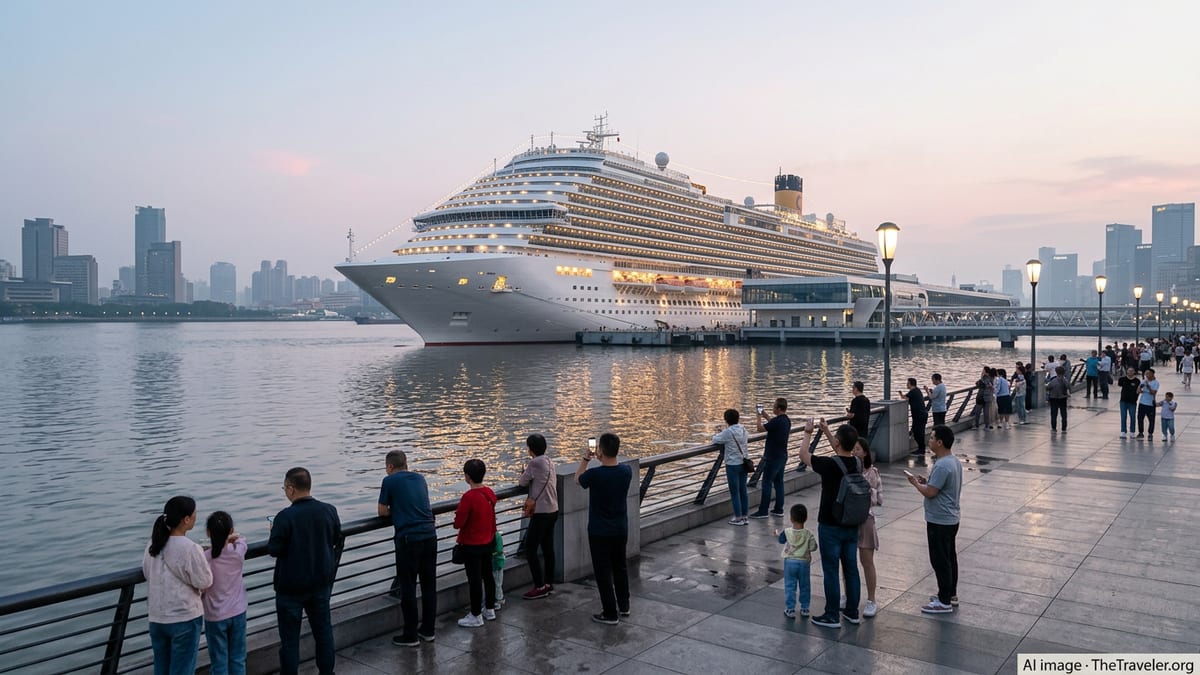
Residential cruise halts in Sihanoukville after fuel surge
Publicly available information shows that the residential ship Villa Vie Odyssey, marketed as a floating home for long term and even lifetime cruising, suspended operations in late October while docked in the Cambodian port of Sihanoukville. Reports indicate that around 200 to 203 residents and additional short term guests were given only a few hours’ notice to leave the vessel as it prepared to enter lay-up status.
Passenger notices reproduced in cruise industry coverage describe an announcement on 26 October that the company was "unable to secure the fuel necessary to continue operations" and that everyone on board had to be ashore, with luggage, by 2 p.m. local time. The message came during what was expected to be a routine port call on a multi-year itinerary marketed as a continuous, global circumnavigation.
Coverage by international outlets and cruise-specialist publications notes that the decision followed a sharp rise in marine fuel prices linked to wider oil market volatility. Company statements cited an "extraordinary" increase in fuel costs and indicated that the business could not continue sailing under its existing financial structure, leading to the abrupt halt in Cambodia rather than at a homeport with stronger support infrastructure.
Local reporting from Cambodia indicates that port authorities in Sihanoukville granted the ship a short-term docking window that would typically be used for excursions and resupply. Instead, that stay was largely consumed by hurried packing, disembarkation and the start of complex onward travel planning for residents who had treated the Odyssey as a full-time address.
Passengers who “bought a home at sea” face sudden displacement
The Villa Vie Odyssey concept was promoted as a residential-at-sea lifestyle, with cabins sold on long leases or as permanent residences rather than traditional cruise tickets. According to brochures and archived marketing materials cited in recent coverage, prices for permanent cabins were advertised from just under 120,000 dollars, with some suites exceeding 400,000 dollars, plus monthly fees for services ranging from roughly 2,000 to 10,000 dollars depending on cabin type.
Many residents structured their lives around the promise of a stable home that would circle the globe over several years, visiting all seven continents on a rolling schedule. Reports from passenger blogs and social media accounts describe individuals who sold houses and cars, shipped personal belongings to the ship and used the Odyssey’s mailing address for post, banking and medical arrangements. For those travelers, the instruction to leave with only what they could carry immediately ashore amounted to an unexpected eviction from their primary residence.
Unlike conventional cruises, where passengers return to land-based homes after a week or two at sea, residential ship guests often treat their cabins as the center of daily life. Commentaries in cruise trade media stress that this distinction has practical consequences in situations like Cambodia, where some residents are now arranging storage or shipment for household-type items that were never intended to leave the vessel mid-voyage.
Reports indicate that the operator has covered short-term hotel accommodation in Sihanoukville and some local transfers, but that residents are responsible for their own flights and long-distance onward travel. For passengers who committed most of their assets to life on board, the sudden need to fund international tickets and a new place to live is emerging as a significant financial and emotional strain.
Fuel costs expose a fragile business model
Industry analysts and recent regulatory filings for larger cruise groups highlight fuel as one of the most volatile expenses in operating an ocean-going vessel. Residential ships, which run continuous long-range itineraries with limited economies of scale compared with major cruise brands, are especially exposed when oil prices spike.
Cruise news outlets note that mainstream ocean lines often respond to rising fuel prices by adding per-passenger fuel supplements or surcharges, typically capped at a fixed daily rate and applied across large fleets. For smaller residential operators, raising fees substantially mid-contract can be difficult once residents have locked in long-term agreements based on earlier projections, particularly if contracts do not clearly anticipate extreme fuel volatility.
Published coverage of the Odyssey’s finances points to challenges even before the latest fuel shock, including the cost of refitting an older cruise ship for permanent residency, earlier delays to launch, and calls for additional funding from residents to support operations. Commentators in the cruise sector suggest that the run-up in marine fuel prices following recent geopolitical tensions may have pushed an already delicate balance into unsustainable territory.
The lay-up in Cambodia effectively transfers risk from the operator back to individual residents, many of whom had accepted higher up-front costs in exchange for predictable long-term living expenses at sea. Travel-law observers quoted in media reports note that, unlike package holidays or conventional cruises, these long-term residential arrangements may not always fall neatly under established consumer-protection regimes in the jurisdictions where cabins were sold.
Stranded in Cambodia: practical challenges for “endless” cruisers
For passengers suddenly told their "endless" cruise had ended, Cambodia is proving a complicated place to regroup. Sihanoukville, a growing port on the Gulf of Thailand, has facilities for visiting ships but limited infrastructure geared to hundreds of displaced long-term residents needing extended accommodation, storage and international air connections at short notice.
Coverage by Asian and international outlets describes residents queueing to book flights to regional hubs such as Bangkok, Singapore and Kuala Lumpur, where onward connections to Europe, North America and Australasia are more frequent. Travel arrangements are further complicated by luggage volumes, as many had wardrobes, documents and personal effects for years at sea, not a typical holiday suitcase.
Visa rules are another consideration. While many nationalities can enter Cambodia on an e-visa or visa on arrival, the permitted stay may be shorter than the time residents need to sort out new living arrangements. Legal commentators writing about the case point out that moving large sums of personal property across borders at short notice can also raise customs questions, particularly for residents who may not yet have a clear final destination.
Some passengers have reportedly booked temporary apartments in Phnom Penh or other regional cities while considering whether to wait for a potential restructuring of the voyage, seek refunds, or transition back to land-based living. Others are looking at alternative long-term travel options, including conventional world cruises and land-based digital nomad hubs, though the financial losses from the Odyssey experience may limit how quickly they can commit to a new lifestyle.
Broader questions for the residential cruise trend
The Villa Vie Odyssey suspension is the latest in a series of setbacks for the young but highly publicized residential cruise segment. In recent years, several companies have announced long-duration or multi-year liveaboard projects that were later delayed, restructured or cancelled amid questions about financing, ship availability and regulatory oversight.
Analysts following the niche say the incident in Cambodia is likely to intensify scrutiny of how at-sea residence schemes handle core risks such as fuel prices, ship maintenance and port access. Commentaries in travel and business media argue that advertising permanent or long-term homes at sea may create expectations that exceed what standard cruise contracts and marine insurance frameworks were designed to support.
Consumer advocates quoted in published reports are now calling for clearer disclosure requirements when companies sell residential cabins, including detailed explanations of fuel clauses, insolvency protections, and the operator’s obligations if a voyage is interrupted far from passengers’ home countries. Some have suggested that regulators might look to adapt existing package-travel rules or timeshare legislation to address the specific risks of life at sea.
For travelers watching from shore, the Cambodia episode serves as a reminder that even highly curated, all-inclusive travel lifestyles depend on underlying commodities and global events. Whether the Odyssey ultimately resumes sailing or is repurposed, the experience of its former residents is likely to shape how future permanent-cruise projects are marketed, financed and regulated, and how would-be seagoing homeowners weigh the promise of an endless voyage against the realities of fuel and finance.