

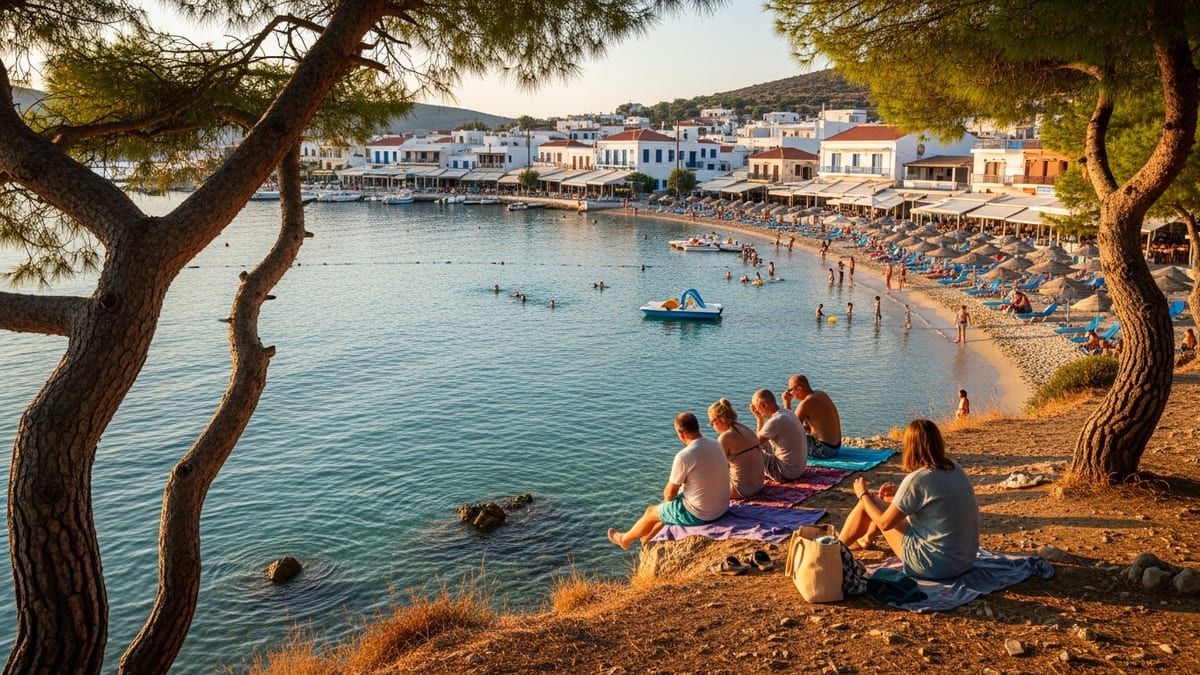
Agistri is one of those rare Greek islands that still feels like a secret. Just over an hour from Athens by ferry, this tiny, pine-covered escape in the Saronic Gulf offers clear turquoise water, laid-back villages, car-free corners, and the kind of slow rhythm that makes a long weekend feel like a full holiday.
Whether you are plotting a beach-heavy break from Athens or weaving Agistri into a longer island-hopping itinerary, a little planning goes a long way. This guide covers what to see and do, how to get there, where to stay, and everything you should know before you go.
Why Agistri Should Be on Your Greek Island Shortlist
At just over 13 square kilometers, Agistri is small enough that you can cross it in minutes, yet varied enough to fill several days. Pine forests spill down to rocky coves and sandy bays, whitewashed chapels crown low hills, and the two main settlements, Skala and Megalochori, offer a friendly village feel rather than a resort strip. The island’s modest size means you spend your time swimming, walking and eating instead of sitting in traffic or chasing long bus connections.
Location is part of the appeal. Agistri sits a short ferry hop from Piraeus, the main port of Athens, with regular year-round connections that usually take between 55 minutes and 1 hour 35 minutes depending on whether you choose a fast hydrofoil or a conventional ferry. That makes it one of the easiest Greek islands to tack onto a city break in Athens, or to use as a gentle first stop before heading deeper into the island chains.
Agistri’s atmosphere is also different from many heavily promoted Greek islands. There are bars and beach clubs, but the tone is more sunset cocktails than all-night hedonism. Families, couples and small groups of friends come for the water, nature, and relaxed tavernas. In high summer weekends the island does get busy with Athenians, yet it still feels more low-key than bigger neighbors like Aegina and Poros. If you are looking for an easy-access island with real local character and plenty of swimming spots, Agistri fits the bill.
Getting to Agistri and Getting Around the Island
Ferries from Athens to Agistri run year-round from Piraeus, with crossings serving the island’s two ports, Skala and Myli (often written as Mylos). In 2026, high-speed hydrofoils and passenger ferries operated by companies such as Hellenic Seaways, Aegean Flying Dolphins, Saronic Ferries and Magic Sea Ferries typically connect Piraeus with Agistri several times a day. A fast hydrofoil can cover the route in about 40 to 55 minutes, while a conventional ferry is closer to 1 hour 30 minutes.
Departures usually leave from Gate E8 in Piraeus, the same gate used for other Saronic Gulf islands. Schedules vary seasonally, with more crossings between June and September, and a first departure from Piraeus commonly around mid-morning. Ticket prices for a one-way crossing tend to start in the low to mid-teens in euros on slower boats, rising for high-speed options. If you are traveling in peak summer or planning a Friday departure and Sunday return, it is wise to buy tickets in advance as morning and late afternoon sailings can sell out.
You can also reach Agistri via nearby Aegina. Slow ferries and smaller boats connect Aegina Town to Agistri in roughly 20 to 25 minutes, giving you the option to combine both islands in a single trip. This can be a smart choice in high season, when you might find more flexible departure times by routing via Aegina rather than waiting for a direct Piraeus to Agistri sailing.
Once on Agistri, getting around is straightforward. The distance between the ports of Skala and Megalochori (also known as Myli village) is about 3 kilometers along the coastal road. Many visitors base themselves in one of these two settlements and walk or cycle locally. Bicycles, scooters and quad bikes are widely available for rent and are the most popular ways to explore beach areas like Aponisos and Dragonera. There is also a local bus and taxi service connecting the main villages and key beaches, although frequencies can be limited outside summer. If you plan to rely on public transport, check timings when you arrive and expect to walk some stretches.
Where to Stay: Skala, Megalochori and Beyond
Most accommodation on Agistri is clustered around Skala and Megalochori, the two compact hubs where ferries arrive, tavernas line the waterfront, and you will find basic services such as mini-markets, bakeries and ATMs. The choice is largely small family-run hotels, guesthouses and rental apartments, with a few slightly more upscale boutique options and beach-facing complexes.
Skala is the livelier of the two main villages and the better choice if you want to be within steps of a sandy beach and a broad range of tavernas and cafés. The long, shallow bay in front of the settlement is ideal for families with young children and for anyone who values being able to swim without getting in a car or onto a scooter. Many rooms here offer balconies with sea or partial sea views, and in summer the waterfront can be busy till late evening with people strolling and stopping for ice cream or drinks.
Megalochori, sometimes called Myli on ferry schedules, is Agistri’s historical core and has a quieter, more traditional feel. Built on a slight rise above the harbor, it is a tangle of narrow lanes and whitewashed houses, with views toward Aegina and the mainland. Staying here puts you a little closer to the pine-covered interior and some hiking trails, while still only a short walk or quick ride from Skala. For many visitors, Megalochori offers a nice balance between access and calm, especially in high season.
Outside these hubs, accommodations are scattered in areas like Skliri and along the road toward Aponisos. These are best suited to travelers who do not mind walking or renting a vehicle to reach shops and restaurants. The benefits are quieter nights, easier access to more secluded swimming spots, and occasional properties with direct sea access. Wherever you stay, book early for visits between late June and early September, and particularly for Greek holiday weekends when Athenians converge on the island.
Beaches and Swimming: Where to Find the Best Water
Despite its small size, Agistri has some of the clearest, most inviting water in the Saronic Gulf. The beaches vary from sandy town bays to white-pebble coves and tiny rocky inlets framed by pines. Many are within walking distance of Skala or Megalochori, while others require a short drive or cycle. The good news is that distances are short, so you can easily visit several in a single day.
Skala Beach is the main draw for families and casual swimmers. It stretches along the settlement’s waterfront, with soft sand and very shallow, calm water for a long way out, making it safe for children and non-confident swimmers. Sunbeds and umbrellas line segments of the shore in summer, courtesy of beach bars and cafés where you can order drinks or snacks. It is lively in July and August but remains laid-back rather than raucous.
A short walk from Skala, Skliri is a rocky and partly shingle stretch backed by pines and low guesthouses. Here the sea turns a vivid blue-green and the water is deeper and clearer, excellent for snorkeling. From Skliri, a path leads to Chalkiada, a more secluded pebble cove with turquoise water and a wilder feel. The path is moderately steep in places, so wear proper shoes rather than flip-flops. Chalkiada is known as a spot where nudism is common, particularly away from the main entrance area, and there are no facilities so bring water and shade.
On the western side of the island, Dragonera offers a mix of pebbles and smooth rocks lapped by crystalline water, backed by dense pine forest. There are usually some basic facilities here in summer, such as a simple canteen and rented sunbeds, but the setting still feels natural. Further along, Aponisos is more like a private beach experience, with a tiny island linked by a causeway, shimmering water and a small fee for entrance to the sunbathing area. Many visitors rate Aponisos as the most photogenic swimming spot on Agistri. If you prefer quieter places, keep exploring to find small unnamed coves where you can swim off the rocks with only cicadas for company.
Things to Do Beyond the Beach
While most travelers come to Agistri for swimming and sun, the island has more to offer if you are willing to explore beyond the sunbed. The interior is laced with pine forest and low hills, crisscrossed by trails and old paths that lend themselves to easy hikes and bike rides. The lack of major roads and heavy traffic makes outdoor activities particularly appealing.
Hiking is one of the simplest ways to experience Agistri’s quieter side. Routes include walks from Megalochori up into the hills toward the small settlement of Metochi and the chapel of Panagia, which offers wide views back toward the Saronic Gulf. Other paths lead through forest toward the southern village of Limenaria and on toward Aponisos. In summer, early morning or late afternoon hikes are more comfortable, and you should always carry water and sun protection, as shade is not guaranteed along the entire route.
Water-based activities are another highlight. Several operators on the island arrange sea kayak excursions, stand-up paddleboarding sessions and boat trips that loop around Agistri and nearby islets, with swimming stops in hidden bays. The clear water around Dragonera, Aponisos and Chalkiada makes snorkeling rewarding, particularly on calm days when visibility is high. If you prefer something gentler, simply renting a pedal boat or small motorboat for a few hours can give you a sense of freedom and access to less crowded water.
Cultural and religious sites are modest but atmospheric. Visit churches such as Zoodochos Pigi in Megalochori, Agioi Anargyroi in Skala with its distinctive blue dome, and the hillside chapels around Metochi. Timed right, you may stumble upon a local festival, with traditional music, dancing and food served late into the night. Even when there is no festival, evenings in the villages often revolve around the plateia or waterfront promenade, where locals and visitors mingle over grilled fish and carafes of local wine.
When to Go, Weather and Crowds
Agistri is a viable destination for much of the year thanks to its proximity to Athens and regular ferry connections. Your experience will differ significantly depending on when you visit. Summer, from June through early September, brings hot weather, warm sea temperatures and the fullest range of services, from beach bars to frequent ferries. It also brings crowds, especially on weekends when Athenians head over for short breaks. If you plan to travel in this period, reserve accommodation and ferry tickets in advance and expect a lively, sociable atmosphere.
Late spring and early autumn are arguably the best times for many travelers. May and early June, as well as late September and early October, often deliver pleasant daytime temperatures and swimmable seas without the intensity of peak summer heat. Ferries still run frequently, most businesses are open, and beaches are noticeably less crowded. For hikers and cyclists, these shoulder months offer comfortable conditions and quieter trails.
Winter and early spring are much quieter. Ferries continue to operate, although on reduced schedules, and some tourist-focused businesses close or keep limited hours. The island can feel quite local and tranquil, with cooler weather, occasional rain and sea temperatures that are brisk for swimming but fine for hardy bathers. If you are looking for a contemplative off-season escape and do not mind limited dining choices and early evenings, a winter visit can be rewarding. Just build in flexibility for ferry connections, as schedules can change.
Whenever you go, consider timing your arrival in Athens to allow some buffer between flights and ferries. While ferries are generally punctual, strong winds or other conditions can affect sailings. Staying one night in Athens before or after your Agistri trip reduces the stress of tight connections, especially in the busiest summer weeks or during holiday periods.
Practical Tips, Money Matters and Local Etiquette
Although Agistri feels far from the capital, you are still in a well-connected part of Greece with basic services. That said, a few practical considerations will make your stay smoother. There are ATMs in Skala and Megalochori, but it is prudent to arrive with some cash, particularly if you plan to visit smaller tavernas, hire sunbeds on quieter beaches or pay the entrance fee at Aponisos. Card payments are common in hotels and larger restaurants but not universal in small kiosks.
Prices on Agistri are generally moderate compared with some of the more famous islands. You can expect to pay typical mainland-level prices for meals, drinks and groceries rather than the inflated costs found in certain high-profile destinations. Accommodation rates vary with season, rising in July and August, but the overall feel remains that of an accessible island rather than a luxury enclave. If you are traveling on a tighter budget, consider shoulder season visits and self-catering accommodation.
Tap water on Agistri is usually not recommended for drinking, so you will likely need to buy bottled water or refill bottles where filtered water is available. This can generate a lot of plastic waste, so reuse containers where possible and dispose of rubbish responsibly. On beaches, take everything you bring back with you, particularly in more remote spots where there are no bins. The island’s pine forests are dry in summer, so avoid any activity that could cause fire, such as discarding cigarette butts.
Local etiquette is relaxed but respectful. Beachwear is fine at the shore but not appropriate in churches or when walking through village centers away from the sea. In tavernas, it is normal to linger, and staff will not rush you. Tipping is appreciated, with small amounts rounded up from the bill or adding around 5 to 10 percent in restaurants. Learning a few basic Greek phrases, such as greetings and thanks, goes a long way. Above all, treat Agistri as a lived-in community rather than a resort, and you will find the welcome warm.
The Takeaway
Agistri’s charm lies in its balance. It is close to Athens yet feels distinctly insular, small but surprisingly varied, relaxed without being sleepy. You can spend your days moving between clear-water coves, pine-shaded paths and harborside tavernas, and your evenings watching the lights of neighboring Aegina flicker across the water. With year-round ferries, a compact footprint and a friendly, unfussy atmosphere, it is an ideal choice for first-time visitors to Greece and repeat travelers alike.
Plan your trip with the seasons in mind, book ahead for busy summer weekends, and give yourself at least two or three nights to settle into the island’s rhythm. Whether you come for a quick escape from Athens or as part of a wider island-hopping journey, Agistri rewards those who slow down, explore a little beyond the main beach and embrace its easygoing pace. For many travelers, it becomes the kind of place they quietly recommend to friends while secretly hoping it stays just as it is.
FAQ
Q1: How long is the ferry from Athens to Agistri?
The ferry from Piraeus, the main port of Athens, to Agistri typically takes between about 40 to 55 minutes on high-speed boats and around 1 hour 30 minutes on slower conventional ferries, depending on the operator and route.
Q2: Do I need to book ferry tickets to Agistri in advance?
In peak season from June to early September, and especially for weekend trips, it is advisable to book tickets in advance because popular morning and late afternoon sailings can sell out. Outside these times, you can often buy tickets closer to departure, but checking schedules and availability ahead of time is still wise.
Q3: Can I visit Agistri as a day trip from Athens?
Yes, Agistri is close enough to Athens to work as a day trip, particularly if you take an early high-speed ferry from Piraeus and return in the late afternoon or evening. However, many travelers find that staying at least one night allows enough time to explore different beaches and enjoy the island’s relaxed evenings.
Q4: Is Agistri suitable for families with children?
Agistri is very family friendly. Skala’s main beach has shallow, calm water that is ideal for children, walking distances are short, and the general atmosphere is relaxed rather than party focused. Just keep in mind that some more remote beaches lack facilities, so you will need to bring your own shade and supplies.
Q5: Do I need a car on Agistri?
You do not need a car on Agistri, and many visitors get around happily on foot, by bicycle or by scooter. The island is small, with key areas connected by a short coastal road, and there is a limited local bus and taxi network. Renting a scooter or bike is usually enough to reach beaches like Dragonera and Aponisos.
Q6: When is the best time of year to visit Agistri?
The best time for most visitors is late spring and early summer, from May to early June, and early autumn, from late September into October. These months offer warm weather and swimmable seas with fewer crowds. July and August have the hottest temperatures and liveliest atmosphere but also the most visitors and higher prices.
Q7: Is the water safe for swimming, and are there lifeguards?
The sea around Agistri is generally very clear and safe for swimming, with calm conditions in many bays. Lifeguard coverage is limited and may not be present on more remote beaches, so you should always keep an eye on children, avoid swimming alone in isolated spots, and pay attention to local advice during windy conditions.
Q8: What should I pack for a trip to Agistri?
Light, breathable clothing, swimwear, sturdy sandals or trainers for walking, a hat, sunglasses, reef-friendly sunscreen and a reusable water bottle are essentials. If you plan to hike to beaches like Chalkiada, pack proper shoes and a small daypack. In the shoulder seasons, a light jacket or sweater for cooler evenings is useful.
Q9: Are there medical facilities on the island?
Agistri has basic medical services such as a local clinic and pharmacies that can handle minor issues. For more serious medical care, patients are typically transferred to facilities on nearby Aegina or in Athens. Travelers with ongoing medical conditions should bring necessary medications and a summary of their medical history.
Q10: Is Agistri a good base for visiting other islands?
Agistri works well as a base for short excursions to neighboring Aegina, which is only about 20 to 25 minutes away by ferry. From Aegina, there are further connections to other Saronic Gulf islands such as Poros, Hydra and Spetses. For more extensive island hopping, you will likely route back through Piraeus, but Agistri can serve as a relaxing first or last stop on a wider Greek itinerary.