

More news on this day
AIDA Cruises is cementing its role as the powerhouse of Germany’s ocean cruise market, reporting record occupancy, robust premium bookings and a pipeline of sustainability investments that are helping drive sector-wide tourism growth.
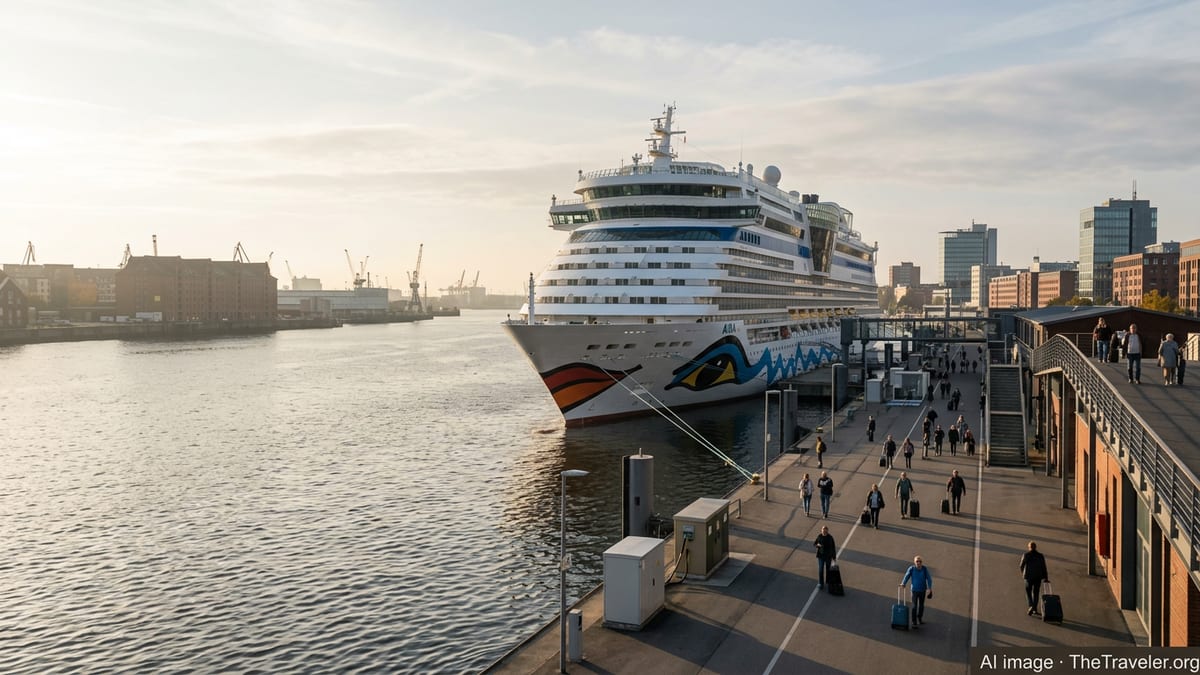
Record Occupancy Underscores Market Leadership
AIDA Cruises has emerged from the pandemic era with occupancy at record levels across its fleet, outpacing overall capacity growth and reinforcing its position as the leading brand in Germany’s cruise sector. Company executives recently reported that ships are sailing fuller than ever, with double-occupancy rates at or above pre-2019 highs across key itineraries. This surge has been achieved without a corresponding increase in berths in the near term, underscoring how effectively the brand has translated pent-up demand into filled cabins.
Industry analysts note that the German source market, already one of the largest for ocean cruising worldwide, is relying heavily on AIDA’s scale to absorb renewed appetite for holidays at sea. The line now accounts for a significant majority of German cruise passengers, with internal projections pointing toward roughly 1.5 million guests in 2025 if current booking patterns hold. That volume, combined with high load factors, makes AIDA a primary engine of growth in Germany’s wider tourism economy.
Ports along the North and Baltic Seas are feeling the impact. Rostock-Warnemünde and Hamburg have each reported rapidly rising passenger throughput in recent seasons, with AIDA ships responsible for a substantial share of calls and turnarounds. Local authorities credit the brand with extending the season and anchoring homeport operations that support hotels, transport providers and shore-excursion operators across northern Germany.
While inflation and higher travel costs remain a concern, AIDA’s performance suggests that cruising has retained its value proposition for German travelers. High occupancy in both peak and shoulder periods indicates that guests are willing to commit early and pay to secure preferred cabins and departure dates, particularly on itineraries that avoid crowded hubs and instead highlight regional coastal landscapes.
Premium Bookings and Strong Forward Demand
Beyond simply filling ships, AIDA Cruises is capitalizing on a clear trend toward higher-yield travel. The company reports that premium and suite categories are booking earlier and at stronger rates than in previous years, helped by demand from multi-generational families and couples seeking more space and privacy. Upgraded beverage packages, specialty dining and spa experiences are also contributing to a healthier on-board revenue mix.
Forward bookings for 2025 and 2026 are described as “very strong,” with Northern Europe itineraries proving particularly resilient. Sailings to Norway’s fjords, the Baltic region, Iceland and the British Isles are drawing German guests who are not only returning to cruising but trading up in terms of cabin type and onboard spending. This shift allows the line to focus on yield growth rather than relying solely on additional capacity.
Market observers say this premiumization trend aligns with broader changes in Germany’s holiday behavior. Travelers are prioritizing fewer but higher-quality trips, with a focus on comfort, curated experiences and hassle-free logistics. AIDA’s strategy of pairing contemporary hardware with familiar German-language service and pricing in euros appears to be resonating strongly, especially among first-time cruisers who might otherwise opt for land-based resorts.
The strength of the booking curve is also giving AIDA greater pricing discipline. With many peak-season sailings close to sold out well in advance, the line has been able to reduce its dependence on last-minute discounts that historically weighed on yields in the German market. That, in turn, provides more visibility for port partners and tourism boards planning for passenger flows.
Driving Tourism Value in German Ports and Regions
The impact of AIDA’s growth is most visible in Germany’s port cities and surrounding regions, where cruise traffic is translating into measurable economic benefits. Rostock-Warnemünde reported a sharp rise in cruise guests in the 2024 season, with hundreds of thousands of travelers embarking, disembarking or taking day trips on AIDA itineraries alone. Similar gains have been reported in Hamburg, which has positioned itself as a key homeport for the brand’s larger vessels.
Local tourism officials highlight the knock-on effects of this activity. Pre- and post-cruise stays in cities like Hamburg, Rostock and Berlin, along with organized excursions into Mecklenburg-Vorpommern and other federal states, are boosting hotel occupancy, restaurant revenues and cultural attractions. For many regions, AIDA’s regular turnarounds and calls provide a reliable baseline of visitors through spring, summer and autumn shoulder seasons.
There is also a strategic dimension for destination marketing organizations. German travelers who experience their own coastal regions by sea are more likely to return for future land-based trips, while international guests sailing on AIDA ships gain exposure to lesser-known coastal towns and UNESCO-listed sites. This diversification of tourism flows is particularly welcome for smaller communities seeking alternatives to traditional city breaks.
However, the rapid growth in passenger numbers is prompting renewed scrutiny of environmental impacts and local carrying capacity. AIDA and port authorities are increasingly expected to coordinate on crowd management, scheduling and communication with residents, especially on days when multiple large ships call at the same terminal. The line’s ability to pair growth with credible sustainability measures is therefore becoming central to its social license to operate.
Innovative Sustainability Measures Underpin Expansion
AIDA Cruises has positioned itself as a test bed for greener cruise technologies within its parent group and the wider European market. The company operates liquefied natural gas powered flagships such as AIDAnova and AIDAcosma, which significantly reduce local air pollutants compared with traditional marine fuels. These vessels serve high-profile North Sea and Baltic routes, where environmental expectations from regulators and communities are particularly stringent.
Alongside LNG, AIDA is expanding its use of alternative fuels, including bio-LNG blends, and investing in efficiency upgrades such as hull coatings, advanced waste heat recovery and optimized route planning. Trials of fuel-cell systems and battery-supported operations are underway on selected ships, with the aim of cutting overall fuel consumption per passenger day. Company sustainability briefings emphasize that a portfolio of technologies will be needed to align with European and international climate targets.
Shore power is another focal point. AIDA has been an early and vocal supporter of connecting ships to land-based electricity in port, allowing engines to be shut down at berth. In German and Scandinavian ports, the brand now records several hundred shore-power connections per year, a steep increase from just a few dozen only a few seasons ago. As more terminals in Hamburg, Kiel, Rostock-Warnemünde and Copenhagen come online with high-capacity infrastructure, a growing share of AIDA calls can take place with drastically lower local emissions.
The line is also working with partners to better measure and communicate its environmental performance. Updated sustainability reporting, aligned with European regulations, details progress on emissions intensity, waste reduction and plastics elimination. For increasingly climate-conscious German travelers, these efforts are no longer a niche consideration but a factor in choosing between competing brands. AIDA’s visible investments in cleaner technologies are therefore both an operational necessity and a commercial advantage.
Outlook: Capacity Discipline With Green Growth
Looking ahead to the second half of the decade, AIDA Cruises is expected to maintain a relatively disciplined approach to capacity while deepening its focus on higher-yield and lower-impact operations. Industry forecasts for Germany point to continued growth in cruise passengers through 2034, but operators are being pushed to balance that expansion with tangible progress on decarbonization and community engagement.
For AIDA, that likely means leveraging its existing LNG fleet more intensively, rolling out proven efficiency measures across older ships and pursuing partnerships with ports to accelerate shore power and alternative fuel bunkering. The company is also widely expected to refine its itinerary design, favoring ports that can provide cleaner energy and robust local infrastructure.
As German travelers keep rediscovering cruising as an all-inclusive, hassle-free holiday option, AIDA’s combination of record occupancy, strong premium demand and highly visible sustainability initiatives is setting the benchmark in its home market. How effectively the brand can scale these efforts, and how quickly ports can match them with their own green investments, will play a critical role in determining the pace and perception of cruise tourism growth across Germany in the years ahead.