

More news on this day
Air Canada and United Airlines have temporarily halted flights to the Mexican resort city of Puerto Vallarta, as a rapid escalation in cartel-linked violence triggers sweeping security alerts, strands vacationers across North America and raises fresh questions about travel safety in one of Mexico’s most visited coastal destinations.
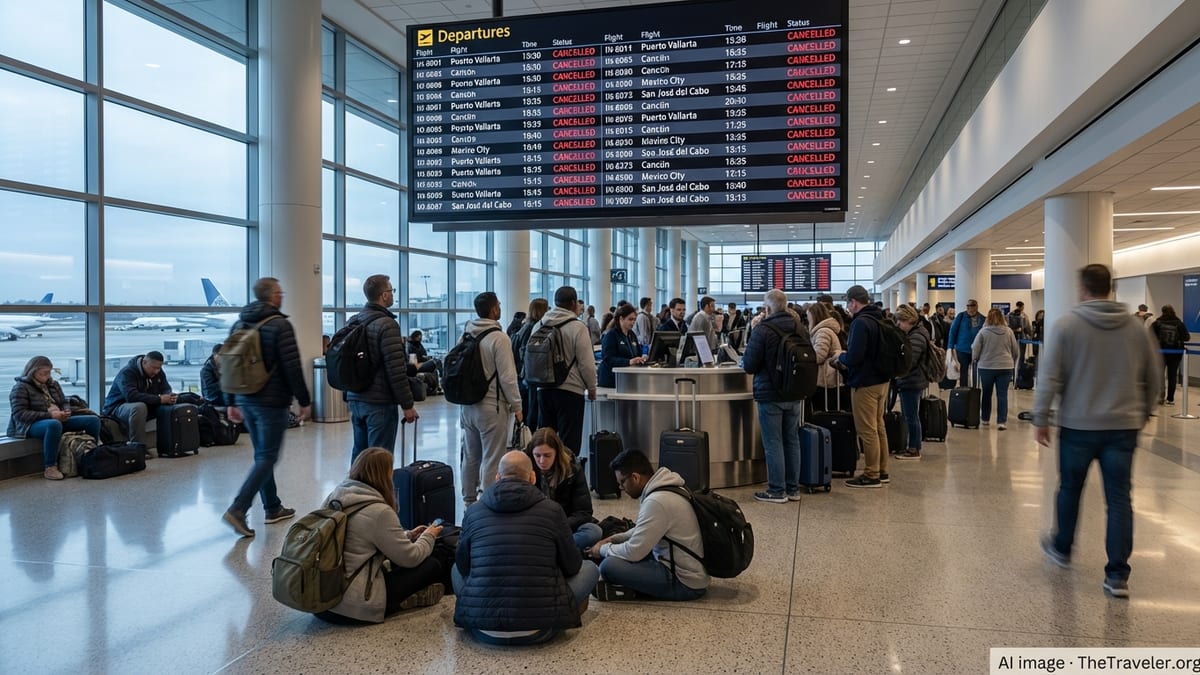
Airlines Pull Back as Violence Flares in Jalisco
Air Canada and United Airlines suspended operations to Puerto Vallarta over the weekend following reports of intense cartel-related violence across the western Mexican state of Jalisco. The disruption began after Mexican military forces killed Nemesio Rubén Oseguera Cervantes, known as El Mencho, the powerful leader of the Jalisco New Generation Cartel, during a security operation on February 22, 2026. Authorities said the operation sparked retaliatory attacks and road blockades in multiple cities, including areas around Puerto Vallarta and Guadalajara.
United confirmed that all of its flights to Puerto Vallarta and Guadalajara were canceled on Sunday, affecting services from major hubs in the United States. Air Canada, meanwhile, announced that it was suspending its Puerto Vallarta operations because of the deteriorating security situation and what it called an ongoing security incident in and around the resort city. The decisions effectively shut down a key international gateway on Mexico’s Pacific coast at the height of the winter high season, when Canadian and U.S. travelers typically flock to the region for sun vacations.
The moves by the two carriers came as other airlines, including American, Southwest, Alaska, WestJet, Porter and regional Mexican operators, also canceled or diverted flights into Jalisco and neighboring states. Airport authorities in Vancouver and Phoenix reported that all scheduled services to Puerto Vallarta had been pulled for the day, while airports in Texas, California and other U.S. states logged mounting cancellations on departure boards.
Industry analysts say the rare step of multiple airlines simultaneously halting service to a popular leisure destination underscores the severity and speed of the security downturn. Puerto Vallarta’s airport, which handles millions of international passengers a year, is well accustomed to occasional security advisories, but wholesale operational suspensions by flagship carriers are far less common and signal elevated risk.
Shelter-in-Place Orders and Government Travel Warnings
As reports of burning vehicles, blocked highways and clashes between armed groups and security forces emerged, the United States and Canada moved quickly to warn travelers. On February 22, the U.S. government issued a security alert advising citizens in Jalisco and several other Mexican states to shelter in place until further notice. Officials cited ongoing security operations, criminal activity, and road blockages as reasons for the warning, emphasizing that conditions could change quickly on highways and near law enforcement activity.
The Canadian government similarly upgraded its travel advisory for Jalisco, urging anyone in the state, including in Puerto Vallarta, to remain indoors, keep a low profile and monitor local news. Authorities highlighted reports of shootouts, explosions and burning roadblocks in several cities. The advisory noted that taxi and rideshare services in Puerto Vallarta had been suspended, and some public transportation in the state curtailed, complicating efforts by visitors and residents to move around safely.
Local officials in Jalisco called on hotels in Puerto Vallarta and Guadalajara to keep guests inside as a precaution while security forces worked to regain control of key transport corridors. Tourism businesses responded by restricting excursions, closing some beachfront facilities early and asking visitors to remain on their properties. While not all parts of the region were experiencing open violence, the patchwork nature of road closures and sporadic incidents led to broad caution.
For travelers, the conflicting signals on the ground and the fast-evolving advisories created considerable uncertainty. Consular officials urged foreign nationals to register their presence, stay in contact with their embassies and avoid attempting overland travel out of affected areas until authorities indicated that key routes were secure.
Airports Disrupted Across North America
The impact of the security crisis rippled quickly through airports in both Mexico and North America. At Licenciado Gustavo Díaz Ordaz International Airport in Puerto Vallarta, operations were severely constrained as airlines canceled inbound and outbound flights, leaving terminals crowded with stranded passengers. Some travelers reported long lines at airline counters as they sought rebooking options, while others were left waiting in resort hotels with limited information about when flights might resume.
Major airports in Canada and the United States also felt the shockwaves. Vancouver International Airport confirmed that all flights between Vancouver and Puerto Vallarta were canceled on Sunday, initially indicating that disruptions could extend for several days before revising its advisory to focus on the immediate shutdown. In Phoenix, airport authorities reported that flights to Puerto Vallarta and other affected Mexican cities were canceled amid what they described as security operations in Mexico.
San Francisco International Airport and other large U.S. hubs registered multiple cancellations of services from Puerto Vallarta and Guadalajara, particularly for United Airlines, which had suspended its Mexican west coast operations to those cities. Travelers arriving at terminals often discovered only at check-in that their flights had been removed from departure boards, prompting a rush to secure hotel rooms or alternative itineraries.
Within Mexico, flight disruptions compounded an already tense environment. Roadblocks and burning vehicles on highways in Jalisco and adjacent states complicated access to airports, making it difficult for some passengers to reach flights that were still operating. Domestic carriers weighed whether to reroute or cancel additional services as the security picture evolved and as aviation authorities assessed risks to crew and passengers.
El Mencho’s Death and the Cartel Power Struggle
The immediate trigger for the travel chaos was the Mexican military’s operation against El Mencho, a cartel boss who had long been one of the country’s most wanted fugitives. Authorities said the operation took place in the town of Tapalpa in Jalisco state and resulted in El Mencho’s death while he was being transported to Mexico City. Security forces reported seizing armored vehicles and heavy weapons, including rocket launchers, underscoring the cartel’s military-style capabilities.
El Mencho, leader of the Jalisco New Generation Cartel, was widely regarded as one of the most powerful drug lords in the Western Hemisphere. The group has been linked to trafficking heroin, cocaine, methamphetamine and fentanyl into the United States, as well as a range of other criminal enterprises such as fuel theft and financial fraud. U.S. authorities had offered a multimillion-dollar reward for his capture, describing the cartel as one of the most dangerous and sophisticated in Mexico.
Security analysts caution that while the death of such a figure may be seen as a victory for Mexican authorities, it also carries significant risks of short term instability. Power vacuums within cartels can lead to violent internal struggles as factions vie for control, and rival groups may attempt to seize territory or trafficking routes. In the case of the Jalisco New Generation Cartel, which has a deep footprint in and around Puerto Vallarta, that volatility can directly affect regions heavily dependent on international tourism.
In the days ahead, experts will be watching closely to see whether the violence remains localized or spreads further across the country, and whether the Mexican government can stabilize affected regions without prompting additional flare ups. For travelers and tourism operators, the answer will shape how quickly air links and visitor confidence can be restored.
Stranded Tourists Face Difficult Choices
The abrupt cancellations by Air Canada and United left thousands of tourists scrambling to adjust their plans. Many Canadian snowbirds and families who had traveled to Puerto Vallarta for winter holidays found their return flights suddenly unavailable, forcing them to seek extended stays at resorts or hotels already near capacity. Some reported that their tour operators and airlines were offering limited concrete information beyond advice to remain in their accommodations and wait for updates.
U.S. travelers experienced similar disruptions. Passengers bound for Puerto Vallarta from cities such as Seattle, Phoenix and Dallas saw their flights canceled with little notice, while those already in Mexico were informed that outbound services had been suspended. Social media posts from stranded tourists described crowded hotel lobbies, long waiting times for customer service and concerns over dwindling travel budgets as unplanned nights accumulated.
Travel experts advise that in such situations, safety must take precedence over speed of return. With authorities urging people to shelter in place and avoid highways, attempts to leave by road to alternative airports could expose travelers to greater risk than remaining in secure accommodations. Instead, passengers are being told to stay in close contact with their airlines and tour providers, monitor official government advisories, and keep family members back home informed of their status.
For some visitors, travel insurance may offer a lifeline, particularly policies that include coverage for civil unrest or security incidents. However, the fine print varies widely, and travelers are being urged to review their documents carefully or consult their insurers to understand what assistance and reimbursement options are available in the wake of the cancellations.
Tourism Industry Braces for a New Test
The sudden halt in flights to Puerto Vallarta represents a fresh challenge for a tourism industry still recovering from the disruptions of the pandemic years. The Pacific resort city and the broader Bay of Banderas area depend heavily on international arrivals from Canada and the United States, particularly during the northern winter when hotel occupancy and cruise calls typically peak. Any prolonged suspension of airline service risks denting revenue for hotels, restaurants, tour operators and small businesses that rely on visitor spending.
Local tourism boards and business associations have moved quickly to reassure prospective travelers that authorities are working to restore order and that violence is not occurring in every neighborhood or resort zone. Still, images of burning vehicles, military checkpoints and empty departure halls are likely to weigh on the minds of would be visitors considering trips in the coming weeks. Some travelers may delay or reroute vacations to alternate sun destinations in Mexico or the Caribbean until the situation stabilizes.
Airlines, for their part, face a delicate balancing act between safety, commercial considerations and customer service. While the immediate priority is the protection of passengers and crew, carriers will also be monitoring demand trends and government advisories to determine when it is appropriate to resume flights. A staggered restoration of service, with limited schedules and flexible booking policies, is one likely scenario once security conditions allow.
Travel advisors say the episode highlights both the strengths and vulnerabilities of Mexico’s tourism-dependent regions. On one hand, authorities and industry players have become more adept at crisis communication and contingency planning. On the other, the deep entanglement of organized crime in certain states means that even well-established destinations can experience sudden shocks that reverberate far beyond their beaches and resorts.
What Travelers Should Do Now
For those currently in Puerto Vallarta or elsewhere in Jalisco, officials and travel professionals stress the importance of following local instructions. Visitors are being advised to remain inside their hotels or resorts, avoid unnecessary movement, and steer clear of any areas where security operations are underway. Many properties have activated their own emergency protocols, providing guests with periodic briefings, restricting offsite activities and coordinating with local authorities.
Travelers with upcoming trips to Puerto Vallarta are urged to check the status of their flights frequently and review airline travel alerts. Air Canada, United and other carriers have put waivers in place allowing affected passengers to rebook without change fees, although fare differences may still apply depending on the itinerary. Those who booked through tour operators should contact their agents directly to explore options for postponement, rerouting or credits toward future travel.
Government advisories from both the United States and Canada remain key reference points. Until shelter-in-place alerts are lifted and road conditions improve, experts suggest that nonessential travel into the hardest hit areas be deferred. In the meantime, travelers considering alternate Mexican destinations should review the specific security guidance for each state, as conditions and risk levels can vary widely across the country.
Beyond the immediate crisis, the events in Puerto Vallarta serve as a reminder for international travelers to prepare for contingencies when booking trips. That includes keeping digital copies of travel documents, ensuring that mobile phones can receive emergency alerts abroad, and considering insurance policies that address security-related disruptions. As airlines and authorities work to restore normal operations, those preparations can help travelers respond more calmly and flexibly when the unexpected occurs.