


More news on this day
Beijing Capital International Airport has been hit by a fresh wave of disruption as an Air China led operational breakdown scrapped 17 flights and delayed nearly 200 more, snarling connections between China and major destinations in Asia and Europe.
Get the latest news straight to your inbox!
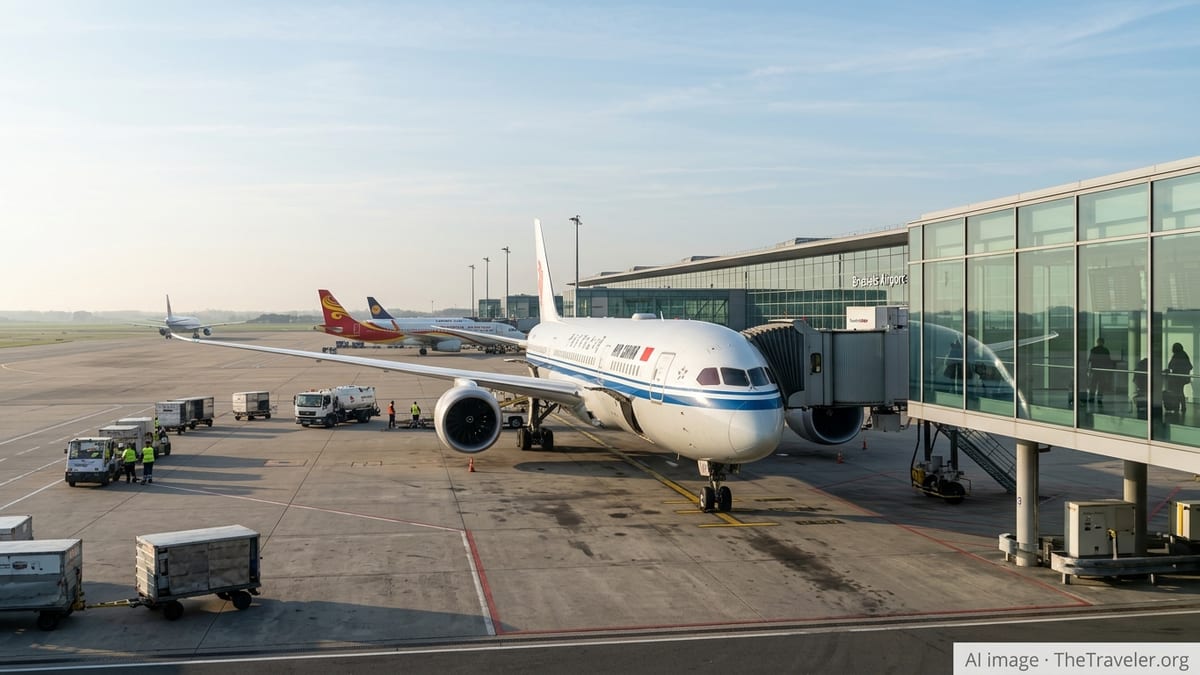
Operational Breakdown at Beijing Capital
Publicly available flight performance data for early July indicates that Beijing Capital International Airport has again emerged as one of the most affected hubs in China, with an operational crunch centered on Air China services. On a single day of disruption, 17 flights were reportedly cancelled outright while a further 199 departures and arrivals suffered significant delays, creating a bottleneck at one of Asia’s busiest gateways.
The imbalance between scheduled capacity and real time operations left aircraft and crews out of position, particularly in Air China’s core terminals, according to aggregated aviation tracking dashboards. While some competing airlines also reported schedule issues, Air China’s large footprint at Beijing Capital meant its cancellations and late running services had the greatest visible impact on overall airport performance.
Chinese language business media and aviation monitoring platforms point to a combination of convective summer storms around the capital region, air traffic control constraints and knock on effects from earlier network disruptions across China’s major hubs. Weather related arrival restrictions at Beijing Capital prompted holding patterns, diversions to secondary airports and a rolling backlog of aircraft waiting for departure slots, which in turn forced carriers to trim frequencies or consolidate services.
The situation at Beijing Capital unfolded against a backdrop of already elevated disruption levels in China’s domestic aviation system in late June and early July, when several days of heavy delays and cancellations were recorded nationwide. That prior instability left little slack in schedules, making the network more vulnerable when Beijing’s own conditions deteriorated.
Ripple Effects Across Northeast Asia Routes
Because Beijing serves as a key transfer point between mainland China and Northeast Asia, the operational breakdown quickly spilled over into routes connecting to South Korea and Japan. Published coverage of the disruption notes that Air China services to Seoul and Busan, together with flights linking Beijing to Tokyo and Osaka, were among those suffering from extended departure holds and rolling rescheduling.
Travel industry observers highlight that even a modest number of cancellations on short haul trunk routes can have an outsized impact on connecting passengers. Many travelers bound for secondary cities in Japan and South Korea rely on timed connections in Beijing. When Beijing Capital’s bank of regional departures is delayed, missed connections, overnight hotel arrangements and complex rebooking chains become common.
Reports from passenger tracking tools also show that some Korea and Japan bound flights operated with substantial departure delays but completed their sectors later in the day, while others were removed from the schedule entirely as airlines attempted to reset rotations. That pattern reflects a common strategy in disruption management, where carriers prioritize operating a reduced set of flights rather than maintaining full frequency with extreme lateness.
For passengers, the practical effect was long queues at transfer desks and customer service counters, as well as crowded gate areas in Beijing’s international concourses. In some cases, itineraries that would normally involve one or two short hops between China and Northeast Asia evolved into multi leg journeys spanning a full day or more.
Disruptions Reach Southeast Asia and European Long Haul Links
The disturbance at Beijing Capital was not confined to Northeast Asia. Flight data and network analyses cited in specialist travel coverage indicate that services to Singapore and Thailand also experienced cascading delays, affecting both point to point traffic and long haul passengers transiting through Southeast Asia.
Beijing to Bangkok and Beijing to Phuket services form a crucial part of the leisure corridor between China and Thailand, particularly during the northern summer. When these flights are delayed or cancelled, there is limited same day replacement capacity, and rebooked passengers may need to be rerouted via alternative hubs such as Shanghai, Guangzhou or even Hong Kong, increasing travel time and operational complexity.
On the intercontinental side, disruption at Beijing Capital has implications for long haul flights linking China with Germany and France. Publicly accessible flight trackers show that departures to Frankfurt, Munich and Paris are heavily dependent on inbound aircraft arriving from domestic and regional Chinese cities. When those feeder flights arrive late or not at all, long haul departures face a choice between leaving with fewer connecting passengers, operating significantly behind schedule, or being cancelled to preserve aircraft rotations.
European tourism and business travelers using Beijing as a gateway into East Asia are particularly sensitive to such irregularities. Missed connections in Beijing can force involuntary overnight stays and complicated rerouting through alternative European or Asian hubs, which in turn increases pressure on alliance partners and codeshare services operating on the same city pairs.
Wider Strain on China’s Aviation Network
The turbulence at Beijing Capital coincides with a broader period of instability across China’s aviation system, marked by repeated waves of weather disruptions and operational bottlenecks at multiple hubs. In the final days of June, several nationwide disruption reports logged more than one hundred cancellations and thousands of delays in a single day, with Beijing, Shanghai, Guangzhou and other major cities all affected.
Aviation analytics cited in those reports show that Beijing Capital has repeatedly ranked among the country’s hardest hit airports, at times recording dozens of cancellations and several hundred delays over a 24 hour period. That history meant that when the early July Air China led breakdown occurred, both airlines and passengers were already dealing with residual schedule irregularities and rescheduled itineraries from prior events.
Industry analysts note that the structure of China’s airline networks can amplify the impact of local disruptions. Hub and spoke models concentrate connecting traffic through a handful of large airports such as Beijing Capital, Shanghai Pudong and Guangzhou Baiyun. When one of these hubs experiences a spike in delays, aircraft and crew positioning issues can quickly radiate outwards, disrupting services at secondary and regional airports.
In addition, summer demand peaks and tight aircraft utilization leave carriers with limited spare capacity to absorb shocks. As a result, even short periods of airspace congestion, thunderstorms or ground handling constraints at a single airport can translate into significant national level disruption.
What Travelers Can Expect in the Near Term
For travelers with upcoming itineraries through Beijing Capital, recent events underline the importance of building additional buffer time into connections, particularly when relying on complex multi leg journeys that link China with South Korea, Japan, Singapore, Thailand, Germany and France. Travel advisories and airline guidance commonly recommend avoiding very tight self managed transfers and monitoring flight status closely on the day of departure.
Public information from airport status boards and airline apps indicates that operations at Beijing Capital typically recover gradually after major disruption days, but residual delays can persist into subsequent rotations. Passengers booked on early morning departures following a day of heavy irregular operations may still encounter altered departure times or equipment changes as airlines work to reposition aircraft.
Observers also suggest that travelers remain flexible regarding routing options. When Beijing experiences weather or congestion related constraints, airlines may proactively reroute some passengers via alternative hubs within China or through partner hubs in Northeast and Southeast Asia to keep long haul sectors operating as close to schedule as possible.
While the specific episode involving 17 cancellations and 199 delays reflects a snapshot in time, it forms part of a broader pattern of heightened volatility in China’s aviation network during the current travel season. For passengers, careful planning, real time monitoring and a willingness to adjust itineraries remain key tools for navigating an environment where even a single day of operational breakdown at a major hub like Beijing Capital can have far reaching consequences.