


More news on this day
Residents of Bucyrus, Ohio, are returning home after an evacuation order was lifted Monday morning, following a Norfolk Southern freight train derailment that raised concerns about a possible hydrochloric acid leak near a busy rail crossing on the city’s south side.
Get the latest news straight to your inbox!
Evacuation lifted after overnight chemical fears
Publicly available information from Crawford County emergency management indicates that the evacuation order, issued late on Sunday, July 5, was fully lifted by late Monday morning, July 6. The precautionary move had applied to homes and businesses surrounding a derailment site near Whetstone Street, where a set of freight cars left the tracks shortly before 9 p.m.
Initial alerts from local agencies highlighted a particular concern over one tanker car listed as carrying hydrochloric acid, a corrosive chemical that can cause respiratory problems if released into the air at high concentrations. Out of caution, residents within a defined radius of the site were urged to leave their homes or seek temporary shelter while hazmat teams and rail personnel assessed the scene.
According to published coverage, monitoring around the derailment did not detect levels of hazardous vapors that would require residents to remain out of the area. After several hours of evaluation, officials narrowed the evacuation zone and then lifted it entirely, allowing people to return and local activity to begin normalizing, even as cleanup operations continued at the tracks.
Regional news reports describe the decision to cancel the evacuation as based on inspections of the derailed cars and confirmation that the hydrochloric acid tanker was intact. No injuries have been reported in connection with the incident, and there have been no public statements indicating a confirmed leak of hazardous materials.
Details of the derailment in Bucyrus
Reports indicate that the Norfolk Southern freight train derailed at a railroad crossing on Whetstone Street in Bucyrus, a small city in Crawford County in northern Ohio. The incident occurred just before 9 p.m. Eastern time on Sunday, disrupting rail traffic along a corridor that threads through residential neighborhoods and local thoroughfares.
According to multiple broadcast outlets, a total of 19 railcars left the tracks, with several of them overturning. Among those was the tanker identified as carrying hydrochloric acid, which quickly became the focus of attention for emergency responders and rail safety personnel at the scene.
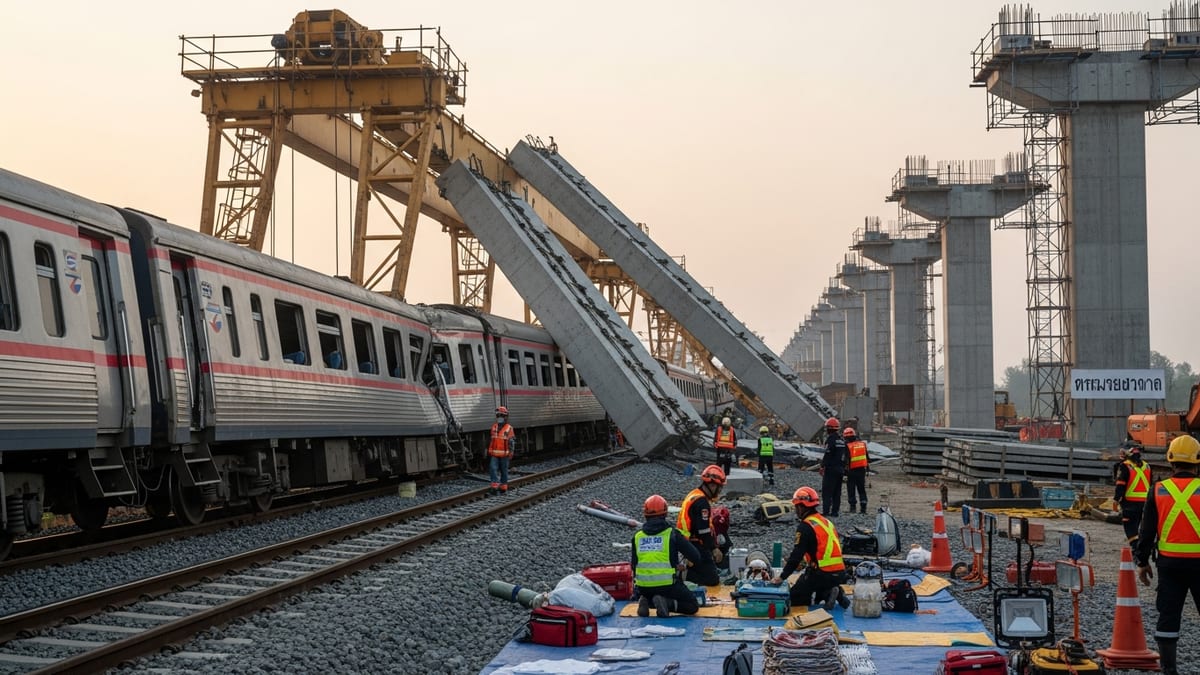
Images published by local news organizations and shared by the Bucyrus Police Department show toppled freight cars lying beside the tracks and emergency crews staging in the surrounding streets. Some roadways close to the derailment were closed overnight as responders worked to secure the area, assess the condition of each car, and plan the removal of damaged equipment.
By Monday, regional coverage reported that Whetstone Street and nearby routes remained partially restricted while heavy cranes and rail contractors began the slow process of re-railing undamaged cars and clearing overturned equipment. Transportation updates indicated that the crossing is expected to reopen once track repairs and safety inspections are completed.
Impact on residents and local travel
The sudden evacuation order on Sunday night briefly disrupted life for households around the derailment site, with some residents relocating to stay with family or friends and others using temporary shelter space arranged at local facilities. Publicly shared updates noted that a nearby high school was prepared to act as a shelter for those unable to find alternative accommodations.
For visitors passing through Bucyrus or staying in nearby communities, the most immediate effects have been localized road closures and detours near Whetstone Street and adjacent intersections. Regional travel reports advise drivers to watch for signage, follow alternate routes, and avoid trying to approach the crash site out of curiosity while cleanup continues.
Public transportation and longer-distance road travel in northern Ohio have not been widely affected, according to news summaries, but those planning road trips through Crawford County are being encouraged to check for the latest local advisories. With crews working on or near the tracks, short-notice lane restrictions or temporary closures around the site are possible during daylight reconstruction hours.
Although rail operations through Bucyrus experienced a temporary interruption, there have been no broad reports of prolonged freight disruptions across the wider region. Published information suggests that rail traffic will resume along the affected line after track repairs and inspections are completed, in line with standard safety protocols.
Safety assessments and environmental monitoring
Since the derailment, public updates from emergency management agencies and media outlets have focused on the question of chemical safety. Hydrochloric acid, while commonly transported by rail for industrial use, can pose a serious health risk if a significant release occurs in a populated area, particularly through inhalation of vapors.
According to coverage from Ohio-based broadcasters, hazmat teams conducted air monitoring around the derailed cars overnight and into Monday morning. Those reports indicate that readings remained below thresholds that would trigger sustained evacuation or shelter-in-place orders, contributing to the decision to allow residents to go home.
Environmental officials have not publicly reported any contamination of surface water or soil linked to the Bucyrus derailment. Cleanup crews are continuing to work around the site, and standard post-incident procedures typically include additional sampling and inspections to confirm that no delayed leaks have occurred as cars are moved.
Rail industry observers note that incidents involving tankers carrying industrial chemicals often lead to extended safety reviews, even when no release is detected. The Bucyrus derailment is expected to be examined by transportation and rail safety specialists to determine whether track conditions, equipment issues, operating practices, or other factors played a role.
Context within broader rail safety concerns
The Bucyrus derailment comes at a time of heightened public attention to freight rail safety, particularly regarding trains that move hazardous materials through smaller communities. In recent years, residents and local leaders across the United States have voiced concern about the risks posed by long trains passing close to homes, schools, and businesses.
According to national transportation summaries, derailments involving hazardous materials remain relatively rare compared with the total number of trains operating each day, but the potential consequences of a major chemical release have kept the issue in the spotlight. High-profile incidents elsewhere in Ohio and around the country have prompted calls for improved track maintenance, more robust tank car standards, and stronger emergency planning.
In Bucyrus, the absence of reported injuries and the lack of a confirmed chemical release are being viewed in regional coverage as a relief, even as questions persist about how similar situations can be prevented. Analysts and commentators are likely to examine how quickly evacuation orders were issued and lifted, how information flowed to residents, and what additional safeguards might reduce future derailment risks.
For travelers and residents alike, the episode underscores the importance of staying alert to local advisories when moving through rail corridors. While the immediate danger in Bucyrus has eased, the sight of overturned tank cars and emergency crews along the tracks is likely to linger in the minds of those who experienced the evacuation and watched the response unfold.