

More news on this day
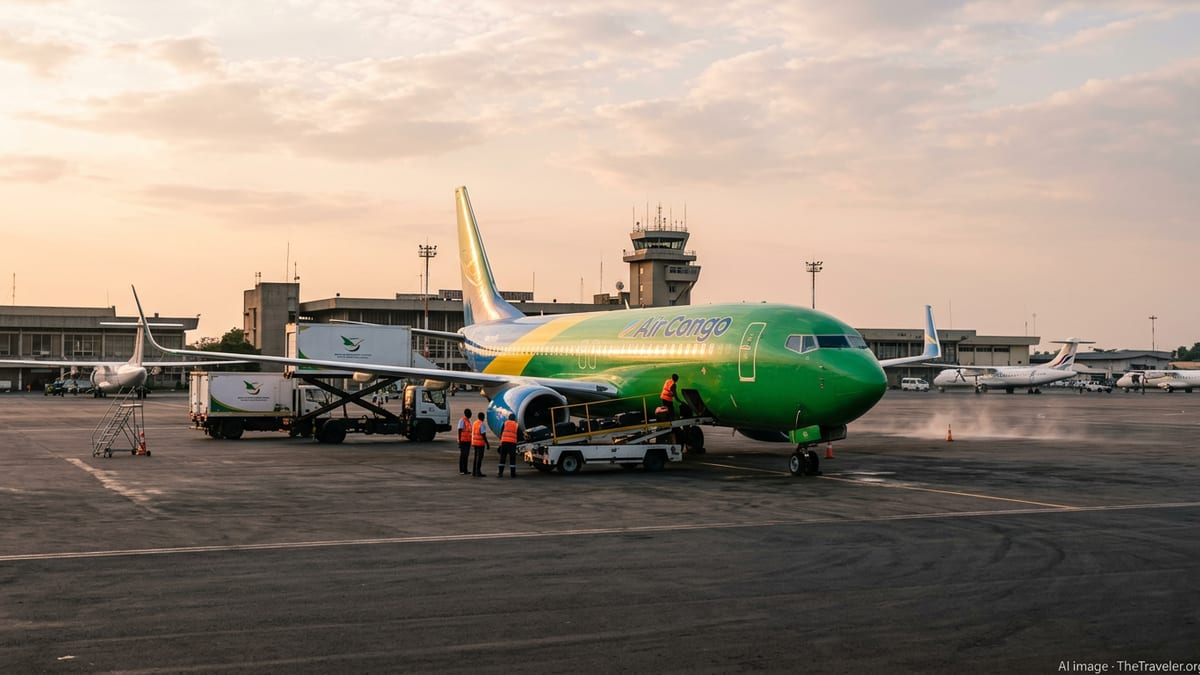
New flag carrier Air Congo is preparing to add Boeing 737-8 aircraft to its young fleet, a strategic move aimed at deepening regional connectivity and laying the groundwork for future intercontinental routes from the Democratic Republic of the Congo.
Get the latest news straight to your inbox!
New National Airline Targets Rapid Network Growth
Launched in late 2024 as the Democratic Republic of the Congo’s new flag carrier, Air Congo has moved quickly to establish itself on key domestic trunk routes from its Kinshasa N’djili hub. Backed by a public private partnership between the Congolese state and Ethiopian Airlines, the airline is positioning aviation as a central pillar of the country’s broader transport modernization agenda.
Initial operations have focused on linking Kinshasa with major provincial centers such as Lubumbashi, Goma and Kisangani using Boeing 737-800 aircraft leased from Ethiopian Airlines. Those early services have helped Air Congo build brand awareness in a market historically underserved by reliable, high-frequency domestic air links.
As traffic grows on these core routes, the carrier is now turning to the next phase of its business plan. Introducing Boeing 737-8 aircraft, a member of the latest generation 737 family, is designed to support both higher frequencies on domestic sectors and the opening of new regional and medium-haul international services.
Boeing 737-8 Brings Efficiency and Range for Regional Hubs
The Boeing 737-8, part of Boeing’s newest single aisle family, offers Air Congo a combination of fuel efficiency, extended range and passenger comfort that is well suited to the airline’s geographic position. From Kinshasa, the aircraft’s range comfortably covers much of Central, West and Southern Africa, as well as key hubs in the Middle East.
Compared with older 737 variants, the 737-8 typically delivers double digit fuel burn reductions per seat and lower carbon emissions, performance that is increasingly important as African governments and airlines look to balance network growth with environmental commitments. For a start up carrier managing tight margins, lower fuel and maintenance costs can be critical to launching and sustaining new routes.
Cabin layouts on the 737-8 also allow Air Congo to tailor capacity to demand, from a dense all economy configuration suitable for high volume regional services to a two class cabin aimed at attracting business traffic and government and corporate travelers. The flexibility supports the airline’s ambition to compete for both leisure and premium segments across its network.
Stronger African Connectivity and New International Gateways
Air Congo’s planned deployment of the 737-8 is expected to focus first on building a robust African regional network. New and upgraded routes under consideration include additional frequencies to economic centers in West and Southern Africa, as well as enhanced links to neighboring countries that currently rely on indirect connections via third party hubs.
Industry observers note that Kinshasa’s location gives Air Congo an opportunity to develop the city as a convenient one stop gateway between West, Central and Southern Africa. With the 737-8, the airline can schedule early morning and late evening departures that cater to business travelers while feeding connecting traffic across its growing network.
Beyond the continent, the 737-8’s range profile allows Air Congo to explore medium haul sectors to the Middle East and select destinations in Europe and the Indian Ocean region, particularly where traffic volumes do not yet justify widebody aircraft. Such routes could serve both point to point demand and connecting passengers from regional African cities funnelled through Kinshasa.
Partnership With Ethiopian Airlines Supports Fleet and Training
Air Congo’s strategy is underpinned by its partnership with Ethiopian Airlines, one of Africa’s largest and most experienced operators of the Boeing 737-8. Ethiopian’s existing order book and active fleet of the type provide a ready made template for technical support, training and operational procedures that Air Congo can adapt to its own needs.
The collaboration is expected to cover areas such as pilot and cabin crew training, maintenance planning, spare parts pooling and safety management systems. Leveraging this know how should help Air Congo accelerate the safe and efficient introduction of the 737-8 while avoiding many of the pitfalls that can challenge new entrants in the market.
For passengers, the alignment with Ethiopian’s standards may translate into more consistent service levels and smoother connections between the two carriers. Over time, coordinated schedules and reciprocal agreements could position Kinshasa as a complementary hub within a broader pan African network anchored by Addis Ababa.
Positioning for Long Term Intercontinental Ambitions
While the immediate focus is on reinforcing regional and medium haul connectivity, the decision to incorporate Boeing 737-8 aircraft also fits into Air Congo’s longer term intercontinental ambitions. The airline has signalled interest in eventually operating widebody aircraft such as the Boeing 787 on long haul routes to Europe and the Middle East, using a mature 737-8 network to provide feeder traffic.
In that scenario, the 737-8 would form the backbone of a hub and spoke system centered on Kinshasa, connecting secondary African cities to long haul services and improving overall access to the Democratic Republic of the Congo. For a vast country with limited ground infrastructure in many regions, reliable air links remain essential to economic integration and trade.
As Air Congo moves ahead with its fleet and network expansion plans, the performance of its forthcoming 737-8 operations will be closely watched by regional competitors, regulators and passengers alike. If successful, the strategy could strengthen the role of Congolese aviation in African air transport and offer travelers a wider choice of routes and schedules within and beyond the continent.