


More news on this day
Air France has resumed passenger flights between Paris and Dubai after a six-month suspension triggered by the conflict in the Gulf, marking a significant step in restoring European connectivity to the Middle East’s busiest hub.
Get the latest news straight to your inbox!
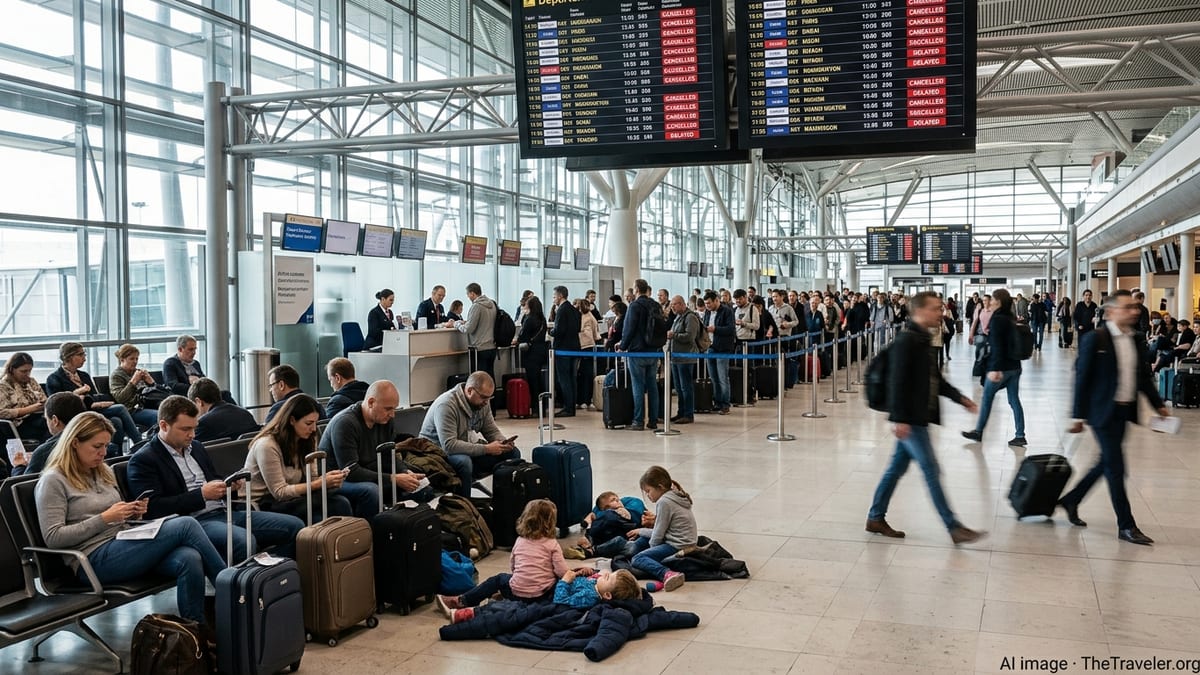
First Air France Dubai service since February disruption
According to recent coverage, Air France reinstated its Dubai route on 26 August 2026, operating flight AF655 from Dubai International Airport to Paris Charles de Gaulle shortly after midnight on 27 August. Publicly available schedules show the service returning as a daily overnight connection, using widebody aircraft configured for both leisure and business travelers.
The restart ends a six-month interruption that began in late February, when escalating tensions and missile activity around the Strait of Hormuz prompted the European Union Aviation Safety Agency (EASA) to issue a conflict-zone advisory for Gulf airspace. That notice urged carriers to avoid or carefully manage routes over the United Arab Emirates, Bahrain, Kuwait, Oman and Qatar, prompting many European airlines to halt Dubai operations altogether.
During the suspension, Air France maintained services to alternative regional gateways via partner airlines and reroutings, but Dubai itself remained off the map. Its return is being interpreted by aviation analysts as a signal that the airline now sees operational and geopolitical risks as more manageable, even as restrictions have not fully disappeared.
The carrier is also restoring flights to Riyadh on a similar timetable, while keeping services to Beirut paused into early September. That staggered approach underlines how airlines are calibrating their Middle East networks city by city, depending on route economics, risk profiles and the latest regulatory guidance.
Regional conflict and airspace closures reshaped Middle East networks
The six-month gap in Air France’s Dubai schedule reflects the depth of disruption that swept across the region following the outbreak of war involving Iran and its neighbors earlier this year. Reports indicate that the conflict, now in its sixth month, led to naval deployments and a de facto blockade around the Strait of Hormuz, along with intermittent missile launches that raised direct concerns about civil aviation safety.
In response, EASA renewed and expanded conflict-zone advisories, recommending that European airlines either avoid or exercise extreme caution in several Gulf-area flight information regions. Many carriers reacted by suspending services to Dubai, Abu Dhabi and other Middle Eastern destinations, while others rerouted via longer paths over Pakistan or North Africa to steer clear of constrained airspace.
The impact was visible in Dubai’s passenger data. Dubai Airports has reported that traffic in the first half of 2026 fell year on year, particularly in the second quarter, as regional airspace constraints limited capacity and deterred some travelers. Nonetheless, the hub still handled tens of millions of passengers and remained operational, relying heavily on Gulf-based carriers that were quicker to restore modified services through alternative routings.
Analysts have also highlighted the knock-on effect on fuel markets. With oil flows from the Gulf disrupted, European jet fuel supplies tightened, pushing up costs for long-haul operations. Some network planners cited fuel price volatility, combined with airspace risk, as a key factor in delaying or scaling back the return of certain Middle East flights from Europe.
Dubai hub cautiously rebounds as capacity returns
Dubai International Airport is now entering what local authorities describe as a stronger second half of 2026, with capacity gradually returning as airspace restrictions ease. Official traffic figures for the first six months show guest numbers rising steadily through the second quarter, from around 3.5 million in April to approximately 5 million in June, as more routes were reactivated and additional frequencies added.
Public statements from Dubai Airports emphasize that the hub remained open throughout the crisis, handling more than 32,000 aircraft movements and over 200,000 tonnes of cargo between late February and the end of April despite constrained skies. Priority was initially given to repatriation flights and essential freight, but passenger services have been expanding as conditions stabilize.
Gulf-based airlines such as Emirates and flydubai have driven much of the early recovery, reassigning widebody aircraft, adjusting schedules and in some cases down-gauging equipment while demand rebuilt. Emirates, for example, recently reported that around 96 percent of its global network has now been restored, with further growth planned into and beyond the summer season.
Dubai’s role as a global transfer hub means that the return of European carriers like Air France has an outsized significance. Additional long-haul options from Europe not only support inbound tourism to the United Arab Emirates but also restore one-stop connectivity for European travelers heading to destinations across Asia, Africa and Australasia via DXB.
European airlines still cautious on broader Middle East return
Even with Air France’s Dubai relaunch, European capacity to the wider Middle East remains below pre-crisis levels. Recent travel-industry reporting notes that while some carriers have resumed selected services following the 8 April ceasefire, others have extended suspensions through the summer and into the northern winter season.
Euronews coverage of airline schedules indicates that several European flag carriers are prioritizing restarts to cities perceived as lower-risk or more commercially critical, while maintaining pauses on routes to certain Gulf and Levant destinations. The Lufthansa Group, for instance, has signaled a broadly conservative approach to Middle East flying, keeping many routes on hold until at least October 2026.
At the same time, niche and leisure-focused airlines are taking a more incremental path back into the region. Some have restarted Dubai operations on a limited seasonal basis, adjusting frequencies month by month. Others have shifted capacity to alternative sun destinations in the Mediterranean and Indian Ocean, reflecting both operational risk assessments and changing traveler preferences during the disruption.
Industry analysts suggest that the varied pace of return underscores how airlines are weighing multiple variables: regulatory advisories, insurance conditions for flying near conflict zones, crew scheduling complexity on elongated routings and the yield impact of higher fuel costs. For many, the default has been to rebuild cautiously, starting with a handful of strategic hubs and observing demand trends.
What the Air France restart means for travelers
For passengers, the resumption of Air France’s Dubai service provides an additional non-stop link between Europe and the Gulf at a time when options remain thinner than usual. Travelers connecting from secondary European cities via Paris regain a SkyTeam-aligned path to Dubai, alongside existing Gulf carrier options through their own hubs.
Travel advisories from aviation regulators continue to recommend that airlines maintain robust risk assessments and contingency plans for flights crossing affected airspace. However, there is no blanket prohibition on operating to the UAE, and the gradual return of European services suggests that carriers believe mitigation measures and revised routings can keep operations within acceptable risk thresholds.
Consumer advocates advise passengers to pay close attention to schedule changes, as regional conditions remain fluid. Published guidance from regional media outlets stresses the importance of checking airline apps or websites before departure, since timetables can shift at short notice if advisories are updated or airspace access changes.
Booking patterns indicate ongoing appetite for travel to Dubai and the wider Middle East, particularly from leisure travelers and expatriate communities. As more European airlines follow Air France’s example and restore suspended routes over the coming months, competition on key corridors is likely to increase, potentially easing fares that spiked during the tightest phase of the disruption.
Condé Nast Traveller Middle East: Dubai and Middle East flight disruption report
Gulf News: Air France resumes Dubai flights after six-month disruption
Euronews Travel: Middle East flights update
Dubai Airports: Connectivity and airspace restrictions update