


More news on this day
An Air India Express flight from Kochi to Abu Dhabi operating as IX 415 returned safely to Cochin International Airport after the crew detected a rapid drop in engine oil quantity and shut down one engine mid-flight, altering the journey for passengers and prompting renewed scrutiny of safety and maintenance practices at the low-cost carrier.
Get the latest news straight to your inbox!
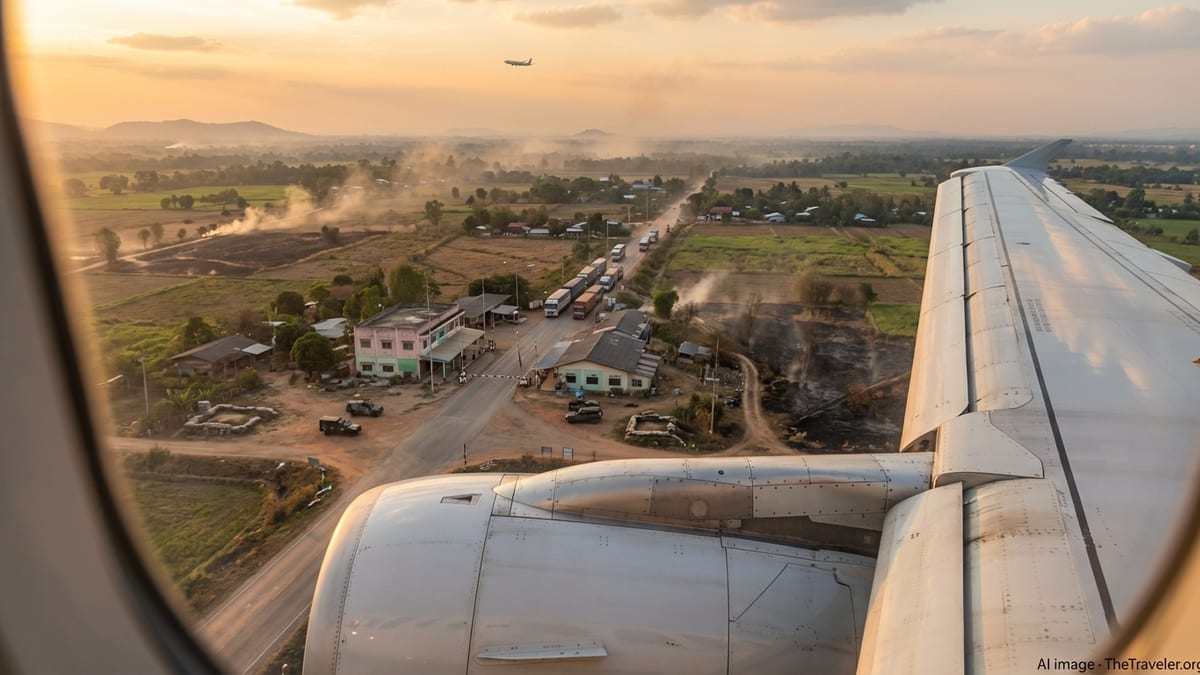
Engine Oil Alarm Forces Turnback to Kochi
Publicly available reports indicate that the incident involved a Boeing 737 operating flight IX 415 from Kochi to Abu Dhabi on Monday, September 7, 2026. Around 50 minutes after departure and cruising at approximately 36,000 feet, cockpit instruments showed a rapidly falling oil quantity in Engine 1, triggering an in-flight assessment of the emerging fault.
Coverage in multiple Indian outlets notes that as the oil quantity continued to decline, the crew followed standard decision-making procedures used in commercial aviation to evaluate the risk and options. With the abnormal indication persisting, the Abu Dhabi sector was discontinued and a return to Kochi was initiated in line with established safety protocols for potential engine lubrication failures.
Further published accounts state that as the situation evolved, the oil pressure in the affected engine entered what was described as a danger range. At that point, the crew shut down Engine 1 and continued the flight on the remaining engine, a configuration for which twin‑engine commercial jets are specifically certified under international safety regulations.
The aircraft subsequently landed at Cochin International Airport with one engine inoperative. Reports emphasise that the landing, although described by analysts as a high‑workload scenario due to the single-engine and overweight conditions, was completed safely without injuries reported among passengers or crew.
Timeline of the Flight and Onboard Experience
According to detailed timelines carried by several business and general news outlets, IX 415 had been airborne for roughly 50 minutes when the cockpit crew first noticed the falling oil indications. At that point, the aircraft was already established at cruise altitude, partway along its scheduled route across the Arabian Sea corridor toward the United Arab Emirates.
As the FORDEC-style assessment unfolded, the crew reportedly weighed whether to continue to destination or return to departure, factoring in remaining flight time, fuel load, aircraft performance on a single engine, and the trend of the oil readings. With the data suggesting a worsening condition, the decision tipped in favor of a prompt return to Kochi.
Some reports note that passengers were largely unaware of the technical seriousness until after the aircraft was back on the ground, as cabin conditions remained stable and standard safety procedures were followed. Accounts suggest that from a cabin perspective, the event manifested primarily as an unscheduled return and delay rather than a dramatic emergency sequence.
Analysts quoted in aviation-focused coverage describe the cockpit workload during such events as significant. Managing a single-engine cruise and approach, coordinating with air traffic control for priority handling, and preparing for an overweight landing while keeping passengers calm can create layered operational demands, even when procedures are well rehearsed.
Airline Statement and Safety Protocols
Subsequent reporting on the episode cites a clarification from Air India Express that framed the diversion and engine shutdown as actions taken strictly in accordance with established safety procedures. The airline characterized the decision to return to Kochi as precautionary and aligned with standard operating practices when abnormal engine parameters are detected.
Published summaries of the airline’s communication stress that the crew acted within regulatory norms, prioritising passenger and crew safety over schedule integrity. The return to base also allowed maintenance teams access to full engineering support and diagnostic equipment, which is typically more comprehensive at a main hub than at an outstation.
Aviation experts point out that jetliners are designed and certified to operate on a single engine in the event of a failure or precautionary shutdown. While such events remain relatively rare in absolute terms, they are a core scenario for which crews train in simulators, including handling asymmetric thrust, revised performance limits, and modified go‑around procedures.
Regulatory frameworks in India require detailed reporting of in‑flight engine events to the Directorate General of Civil Aviation, with follow‑up inspections and, where necessary, investigation by the Aircraft Accident Investigation Bureau. The IX 415 event is expected to feed into that oversight process, although formal findings usually take longer to emerge than initial news coverage.
Broader Context for Air India Express and Indian Aviation
The return of IX 415 to Kochi comes at a time when Air India Express and its parent group are in the midst of a broader fleet and operations overhaul, including route realignments and closer integration with full‑service carrier Air India. The low‑cost airline plays a key role in connecting Indian cities such as Kochi with Gulf hubs, where demand from expatriate workers and leisure travellers remains strong.
In recent years, India’s aviation sector has seen a series of high‑visibility technical incidents across multiple airlines, ranging from precautionary diversions to runway excursions. Industry analysts note that while such events can be unsettling for the traveling public, they often underscore the effectiveness of safety systems designed to detect faults early and bring aircraft back to the ground safely.
For Air India Express, the IX 415 incident adds to ongoing scrutiny of fleet reliability, training standards, and maintenance practices, particularly on busy Gulf routes that are operated with tight scheduling. Observers suggest that transparent reporting and clear communication around technical events are increasingly important for passenger confidence as competition in the India–Middle East market intensifies.
At the same time, the safe outcome in Kochi is being cited in specialist commentary as an example of procedural discipline under pressure. By returning to base and shutting down the engine before a more severe failure could develop, the crew’s actions are being framed as aligned with the conservative risk thresholds that underpin modern commercial aviation.
Passenger Impact and Next Steps
While technical investigations and maintenance checks continue, passengers on IX 415 faced disrupted travel plans, including missed onward connections in Abu Dhabi and rebooking requirements on later services. Accounts shared in public forums in the days surrounding the event describe frustration over delays, uncertainty around compensation, and the logistics of reorganising work and family commitments.
Consumer advocates point out that India’s civil aviation regulations provide for certain entitlements in cases of prolonged delays or cancellations, depending on circumstances and whether the disruption is within the airline’s control. How those rules apply in the case of a precautionary safety diversion is often a subject of debate, especially where the underlying fault involves aircraft systems rather than external factors like weather.
From an operational standpoint, the incident is likely to prompt a detailed engine inspection and data review to pinpoint the root cause of the oil quantity and pressure anomalies. Findings from such examinations frequently inform updated maintenance intervals, component replacements, or additional checks across similar aircraft in the fleet.
For travelers on the busy Kochi–Abu Dhabi corridor, the episode serves as a reminder that while technical issues can significantly disrupt journeys, modern air transport systems are structured so that even serious mid‑air alerts typically end with controlled diversions and safe landings, rather than catastrophic outcomes.
India Today: Air India Express flight turns back after engine oil pressure drops dangerously
Business Standard: Air India Express flight returns to Kochi after engine oil pressure drops
Economic Times: Air India Express IX 415 shuts Engine 1 after oil drop at 36,000 ft
Moneycontrol: Abu Dhabi-bound Air India Express flight returns to Cochin after engine oil drops