


More news on this day
When a long-haul Air India flight was disrupted, one traveler did what many passengers instinctively do in a crisis: followed the airline’s rebooking advice. Hours later, they were thousands of dollars poorer, having spent roughly $2,000 out of pocket on new tickets while still unsure what, if anything, they would recoup.
Get the latest news straight to your inbox!
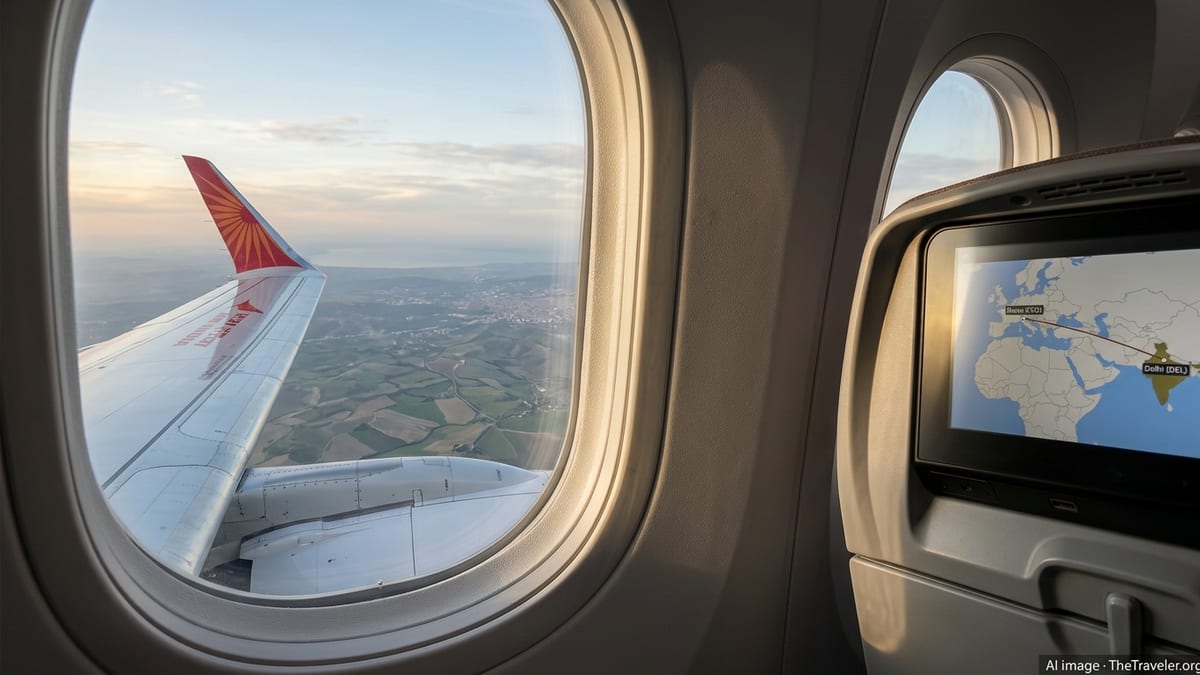
A Costly Decision Made Under Pressure
Accounts shared online by Air India passengers describe a familiar pattern during major disruptions: cancellations or long delays, limited responses from customer service, and pressure to make rapid decisions before alternative flights sell out. In one widely discussed case, a traveler whose Air India service was significantly delayed reported missing their onward international connection and paying the equivalent of thousands of dollars to rebook themselves on another carrier when airline support proved difficult to secure.
Reports indicate that the traveler was initially advised to arrange onward travel independently and pursue reimbursement later. Faced with tight timelines and rising fares, they purchased replacement long-haul tickets at substantial additional cost. Only afterward did they discover that the airline’s internal policies and applicable passenger-rights rules were more complex than the guidance they believed they had received.
Similar experiences appear across social platforms and consumer forums, where passengers say they felt compelled to act quickly, often overnight or from foreign airports, because they worried that waiting for the airline to respond would leave them stranded. The result in several cases has been unexpected, four-figure rebooking bills and lengthy disputes over refunds.
While the specific facts vary from case to case, many of these traveler accounts describe the same underlying dynamic: advice that appears to favor immediate self-rebooking, followed by uncertainty over whether those extra costs will ever be reimbursed.
What Air India’s Policies Say About Disruptions
Publicly available Air India documentation describes a range of tools for handling schedule changes and operational disruptions. The carrier’s self-reaccommodation options and disruption policy state that, when a flight is canceled or significantly changed by the airline, passengers can usually be rebooked onto another Air India service without additional fare charges within a defined time window, subject to seat availability.
These policies also outline scenarios in which travelers may instead choose a refund if they decide not to take the alternative flight offered. In some situations, including special waivers around regional disruptions or weather events, Air India statements indicate that passengers are encouraged to submit rebooking or cancellation requests through its website or contact centers, with penalties relaxed for affected dates or routes.
However, the same publicly posted rules emphasize that changes generally apply to Air India-operated flights and do not automatically extend to other airlines. When a disrupted itinerary involves separate tickets or non-partner carriers, travelers often find that the onward segment is treated as their own responsibility, even if the initial delay by Air India made the connection impossible.
Consumer complaints suggest that these distinctions are not always clear at the moment of disruption. Passengers facing missed connections report being unsure whether Air India is obliged to arrange and pay for a new routing on a different airline, or whether they must pay first and attempt to claim later, often with no guarantee of success.
Passenger Rights Vary by Region and Routing
The protections available to an Air India customer can differ sharply depending on where they are flying. For services touching the European Union or United Kingdom, Regulation 261 and its UK equivalent set out specific obligations for carriers when flights are canceled or heavily delayed. Guidance documents and legal commentary explain that, in certain circumstances, airlines operating from or within these jurisdictions are expected to provide rerouting at the earliest opportunity, which can include other airlines if that is the only reasonable option.
By contrast, flights that begin and end entirely outside those regions, or within jurisdictions with looser consumer protections, may offer fewer guarantees. In such cases, the carrier’s own contract of carriage and internal policies play a larger role in shaping what assistance and reimbursement a traveler can expect. That can leave passengers on the same airline with very different rights depending solely on where their disruption occurs.
Recent discussions on traveler forums highlight how confusing this patchwork can be for ordinary passengers. Some Air India customers believe that the airline is required to pay for any reasonable replacement flight after a cancellation, while others report being told that only a refund of the unused portion of the ticket is available, leaving them to shoulder any extra cost if they rebook with another carrier.
For travelers who end up spending $2,000 or more on last-minute alternatives, these legal nuances may only become apparent once they try to reclaim their money, at which point they may encounter lengthy investigations, documentation requests, or outright denials.
Growing Scrutiny of Airline Rebooking Practices
Globally, regulators have been paying more attention to how airlines handle disruptions and advise passengers during cascading delays. In North America, for example, new rules and consumer-facing dashboards have been introduced to clarify when travelers are entitled to refunds, vouchers, or hotel and meal coverage after a carrier-controlled cancellation or extensive delay.
Consumer reports involving Air India feed into a wider conversation about transparency in rebooking and refund practices. Complaints often center not only on the disruption itself but also on the quality of information shared in real time: whether passengers are clearly told their options, whether they are given realistic time frames, and whether staff explain the financial implications of choosing to rebook independently.
In public discussions, some travelers argue that automatically steering passengers toward self-funded rebooking without fully outlining their rights can result in costly decisions that might have been avoided with clearer guidance. Others note that call centers and airport desks are frequently overwhelmed during mass disruptions, making it difficult for even well-meaning staff to provide tailored advice.
The net effect, advocates say, is a system in which the burden often falls on individual travelers to know their rights in detail, preserve receipts, and be prepared to challenge a carrier’s initial response if it appears to conflict with published rules or local regulations.
How Travelers Can Protect Themselves
Consumer guidance around airline disruptions increasingly emphasizes preparation and documentation. Travelers are often advised to review an airline’s conditions of carriage and disruption policy before departure, particularly when flying long-haul on complex itineraries that involve multiple carriers or separate tickets.
Experts in passenger-rights advocacy recommend that, when a flight is canceled or severely delayed, passengers request written confirmation of the reason and the options available, including any rebooking on other airlines or entitlement to a refund. Keeping records of chats, emails, and on-screen messages can prove important later if there is a dispute over what advice was given.
Travel insurance with robust trip-interruption coverage can also help mitigate the risk of large out-of-pocket rebooking expenses, though policies vary widely and may exclude some causes of disruption. Frequent travelers note that booking longer connection times and avoiding separate tickets where possible can reduce the chance of being left unprotected when things go wrong.
For the Air India passenger who followed rebooking guidance and ended up paying around $2,000, the experience has become a cautionary tale. Their story, and others like it, underscores how quickly costs can escalate when flights unravel, and how critical it is for travelers to understand both airline policies and the legal frameworks that may entitle them to more than they are initially offered.