


More news on this day
Air India has issued a fresh travel advisory for journeys between 10 and 20 August, warning customers that longer airport formalities during this period could increase overall processing times before departure.
Get the latest news straight to your inbox!
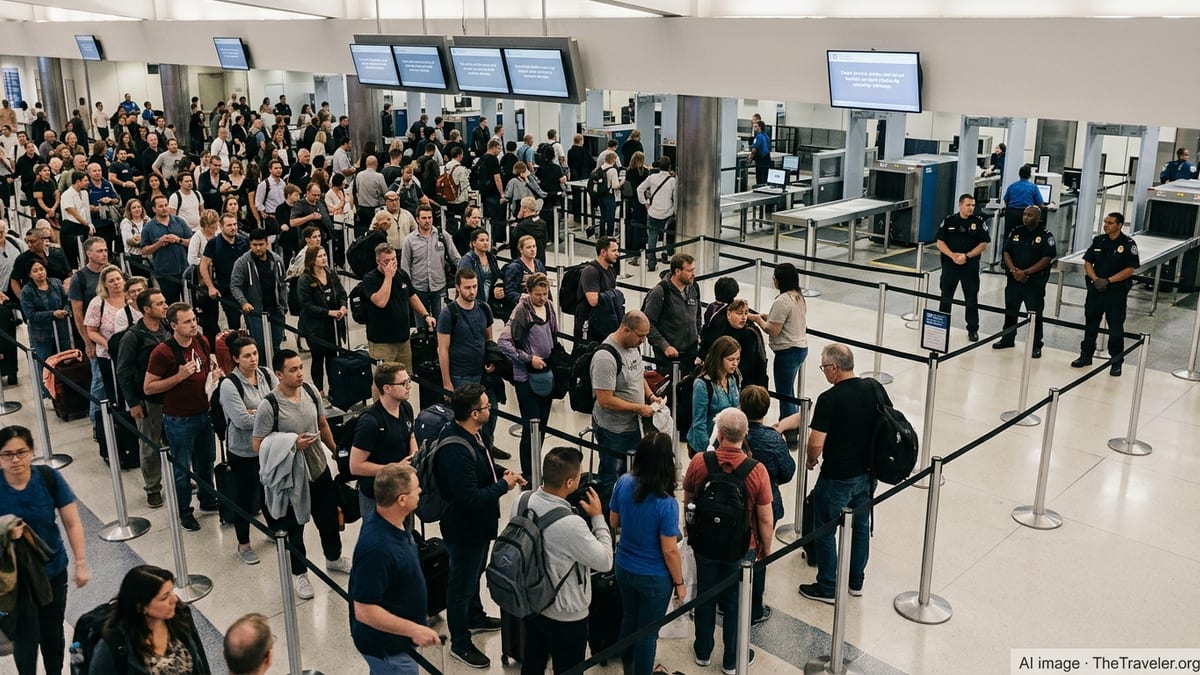
Advisory Highlights Longer Queues And Earlier Reporting
According to information published on Air India’s website and in recent public updates, the carrier is alerting passengers that airport processing between 10 and 20 August is expected to be slower than usual, particularly at major hubs such as Delhi, Mumbai and other high-traffic international gateways. The airline is asking travelers to factor in additional time for check in, baggage drop, security screening and, where relevant, immigration controls.
Publicly available guidance from the airline already recommends that domestic passengers report at least two hours before departure and international passengers at least three hours ahead. The latest advisory indicates that these lead times may no longer be sufficient for some routes in the 10–20 August window, especially at peak morning and late-evening banks of departures where airport congestion is typically highest.
Air India’s customer information materials state that check in counters generally close 60 minutes before flight departure and boarding gates close 20 minutes prior. In the context of longer formalities, the advisory stresses that passengers who reach the airport close to counter closing time risk missing their flights if security or immigration queues are significantly extended.
The updated messaging also notes that processing times can vary by airport, day of week and time of day, meaning customers on connecting itineraries should pay particular attention to minimum connection times when traveling during the advisory period.
Operational And Seasonal Factors Behind The Warning
Recent reporting on India’s aviation sector points to a combination of operational and seasonal factors that are likely contributing to Air India’s warning about longer airport formalities in mid August. The period coincides with heightened holiday and VFR (visiting friends and relatives) travel, together with an increase in student departures to overseas universities, all of which push passenger volumes higher at key Indian airports.
In parallel, airlines and airports continue to adjust to a complex international operating environment, including altered routings on some long haul sectors and infrastructure upgrades under way at several major terminals. While these do not directly extend check in or security procedures, they can intensify pressure on airport resources when traffic peaks, with knock-on effects for queue lengths.
Industry analyses also note that staffing and resource planning at security and immigration checkpoints can lag behind rapid demand rebounds, particularly at large hubs. When passenger numbers rise faster than processing capacity can be expanded, average wait times tend to grow, prompting airlines to issue more conservative guidance on recommended arrival times.
Given these overlapping trends, travel industry observers view Air India’s latest advisory as a precautionary step designed to reduce the risk of missed flights, last minute gate changes and passenger crowding at departure gates during an already busy travel window.
Revised Recommendations For Domestic And International Passengers
Based on the updated advisory, domestic passengers flying with Air India between 10 and 20 August are being urged to arrive at the airport earlier than the standard recommendation. While specific guidance can differ by airport, the airline suggests that travelers consider adding at least 30 to 60 minutes to their usual reporting time in order to complete check in and security screening without undue stress.
For international departures, particularly from Delhi, Mumbai, Bengaluru and other large gateways, Air India’s advisory points to the possibility of significantly longer queues at immigration and security. Passengers are encouraged to plan for a buffer beyond the usual three hours before departure, especially on long haul flights to North America, Europe and the Asia Pacific region, where departure formalities can involve multiple document checks.
The advisory further recommends that travelers complete as many pre departure tasks as possible before reaching the airport. These include online check in where available, advance verification of visa and passport validity, and confirmation of terminal and gate information through the airline’s digital channels. Such steps can reduce the time spent at airline counters and help passengers proceed more quickly to security lanes.
Customers with special service requests, such as unaccompanied minors, wheelchair assistance or oversized baggage, are advised to build in extra time, as these services typically require additional processing at the airport on top of standard formalities.
Guidance For Transit Passengers And Tight Connections
The updated travel advisory is particularly relevant for passengers transiting through large Indian hubs on Air India itineraries between 10 and 20 August. Publicly available routing and schedule information shows that many of the carrier’s long haul services connect through Delhi and Mumbai, where transfer passengers must often clear security again and, in some cases, complete immigration formalities depending on their routing and ticket type.
Travel experts point out that while minimum connection times are built into airline booking systems, these benchmarks are based on typical conditions. When airport formalities take longer than usual, connections that are normally adequate may become more challenging, especially for travelers unfamiliar with airport layouts or carrying substantial hand baggage.
Passengers with connections under two hours, or with separate tickets on different carriers, are encouraged to review their itineraries and consider whether a longer layover is advisable in light of the advisory. Those who keep their existing plans are being urged to move quickly between arrival and departure points in the terminal and to follow airport wayfinding signs closely to avoid unnecessary delays.
Air India’s general conditions of carriage emphasize that it is the traveler’s responsibility to comply with applicable travel and immigration requirements and to present themselves in time for all flights. The advisory reiterates this point for the 10–20 August period, underlining that extended formalities do not alter counter closing or boarding gate cut off times.
Practical Tips For Smoother Travel Between 10 And 20 August
To help offset the impact of longer airport formalities, Air India’s public guidance and broader industry advice converge on several practical steps passengers can take when traveling between 10 and 20 August. One recurring theme is preparation: travelers are encouraged to keep passports, visas, boarding passes and any required health or entry documents easily accessible to minimize delays at each checkpoint.
Light, well organized baggage can also reduce time spent at screening points. Carry on items that are easy to remove for inspection, adherence to liquid and electronics rules where applicable, and clear labeling of checked bags are all cited as simple ways to prevent bottlenecks. Passengers are also advised to monitor flight status and terminal information through airline and airport apps both before leaving for the airport and while on the way.
For those traveling with families, elderly relatives or large groups, the advisory period may be a useful moment to designate a lead traveler responsible for documents and timing. Ensuring that all group members understand meeting points and boarding times can prevent last minute rushes and reduce the risk of someone being delayed in a queue while others are already at the gate.
While the advisory underscores the likelihood of longer formalities from 10 to 20 August, it does not signal any change to Air India’s published schedules. Flights are expected to operate as planned, meaning that the burden falls largely on travelers to adapt their routines. For passengers who build in extra time and prepare carefully, the period is expected to be manageable, albeit with more patience required at each stage of the airport journey.