


More news on this day
Recent incidents on busy rail routes in the United States and the United Kingdom are drawing renewed attention to what happens when modern trains lose power, leaving hundreds of passengers stranded for hours in sealed carriages with no air conditioning, limited food and overflowing toilets.
Get the latest news straight to your inbox!
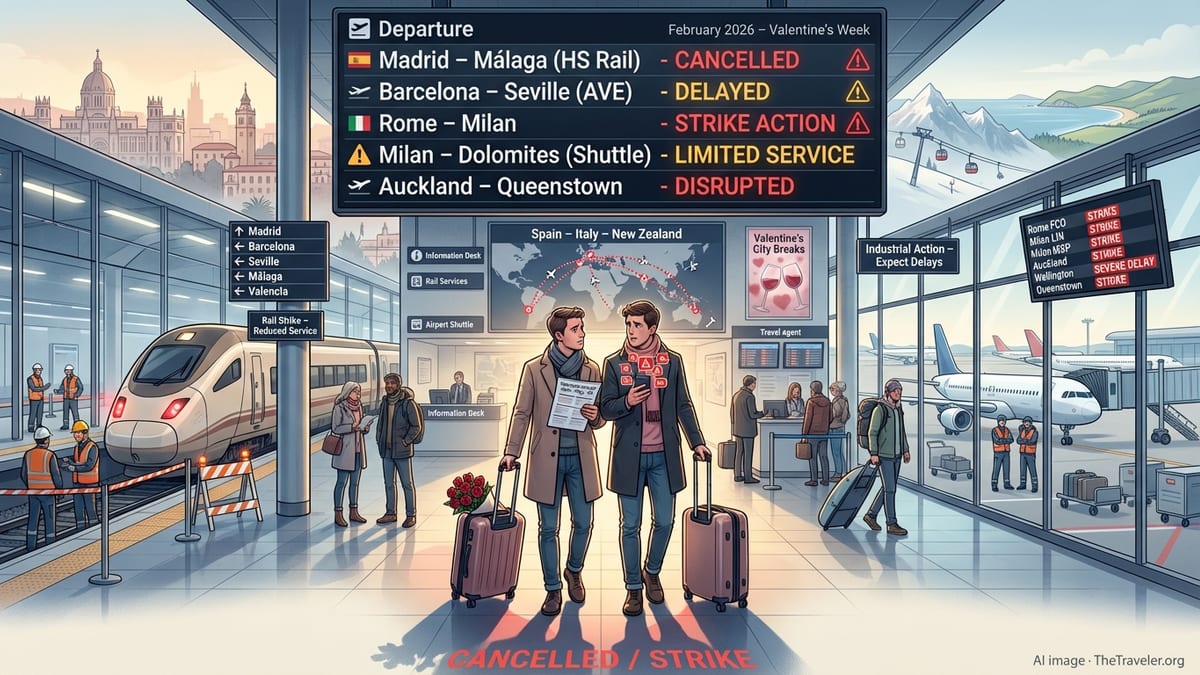
Multiple high-profile breakdowns on busy passenger routes
In late October 2026, services on Amtrak’s Northeast Corridor were heavily disrupted after an overhead power line came down near New Haven, Connecticut. Public broadcasts and regional coverage described delays of up to six hours between New Haven and Boston, with one train carrying around 600 passengers reportedly stranded on the tracks for roughly four hours without power or working restrooms before being towed away from the scene.
Earlier reports from the Chicago to Dearborn corridor highlighted a similar pattern of cascading failures. According to local television coverage and subsequent accounts compiled by passenger groups, a mechanical failure on an Amtrak service left hundreds of people stuck for around 12 hours near Battle Creek, Michigan, in carriages with no electricity, no air conditioning and toilets that could no longer flush once onboard water and battery reserves were exhausted.
These recent cases sit alongside a string of earlier incidents in which trains lost power in extreme heat. In Nassau County, New York, passengers on a stalled Amtrak train described interior temperatures rising toward 95 degrees Fahrenheit when the air conditioning and lighting failed for several hours, with several people later taken for medical evaluation according to local news reports.
Comparable scenes have been reported on congested commuter networks in the United Kingdom. London-based outlets documenting service disruptions during summer heat alerts in 2026 described passengers stuck for almost two hours on packed trains in temperatures above 35 degrees Celsius, with limited ventilation and little information about when services would resume.
When power fails, comfort systems fail with it
Rail operators routinely promote modern intercity and commuter rolling stock as offering sealed, climate-controlled environments, with filtered air, accessible toilets and onboard catering where demand justifies it. Industry guidance documents in both the United States and the United Kingdom confirm that these systems depend on a stable power supply and onboard water and waste-handling capacity designed around normal journey times.
Technical notes from rail engineering bodies indicate that, once a train loses its traction power and backup supplies are depleted, non-essential systems such as lighting, air conditioning and catering equipment are among the first to be shut down or fail. Toilets can also become unusable when waste tanks reach capacity or when flushing mechanisms depend on electrical power or pressurised water pumps that are no longer operating.
Passenger accounts from several recent breakdowns describe this sequence in stark terms: first the air conditioning switches off and windows remain sealed, then mobile reception deteriorates in tunnels or remote cuttings, followed by toilets filling or locking out of service after a few hours. On trains where catering trolleys or cafés have limited stock, food quickly runs short once departure is delayed well beyond the scheduled arrival time.
Rail safety and operational guidance published for UK operators underlines that, in the event of inoperative air conditioning and restricted toilet access, rail staff are expected to treat stranded trains as a time-critical situation, particularly during hot weather or when passengers include children, older people or those with health conditions aggravated by heat and poor ventilation.
Passenger rights, refund rules and compensation options
For affected travellers, the immediate questions after such incidents tend to focus on refunds, onward travel and whether rail companies offer any additional compensation when basic facilities fail. In the United States, Amtrak’s published customer service commitments outline varying levels of travel vouchers or refunds when significant delays are the result of factors within the company’s control, though the level of reimbursement can depend on ticket type and whether the disruption stemmed from infrastructure, weather or mechanical issues.
Published coverage following delays on the Northeast Corridor in October 2026 indicates that some passengers received partial refunds or travel credits after being stuck without working restrooms and climate control for several hours, while others reported more limited offers. Consumer advocates note that Amtrak’s policies do not treat loss of air conditioning or toilet facilities as a separate trigger for automatic compensation beyond delay thresholds.
On UK rail, passenger entitlements are shaped by a combination of the National Rail Conditions of Travel and operator-specific “Delay Repay” schemes. These usually provide a percentage refund based on the length of delay to the planned arrival time, commonly starting at 15 to 30 minutes and increasing for longer disruptions. Rail user groups point out that, although these schemes cover time lost, they do not explicitly rate the severity of being confined in carriages with no air conditioning or usable toilets, even though official regulator reports acknowledge that such conditions can quickly become intolerable.
Travel law specialists advising consumer organisations recommend that passengers keep detailed records of disruption, including train numbers, timings, receipts for alternative transport and, where possible, written confirmation from the operator about the cause of delays. These records can be important if passengers later seek higher levels of compensation or escalate complaints to national regulators or ombuds services.
Operational guidance and calls for more robust contingency plans
Behind the scenes, industry bodies in several countries have issued guidance on how operators and infrastructure managers should respond when trains become stranded. Documentation produced for the UK Rail Delivery Group, for example, stresses that preventing passengers being left for extended periods without working toilets or fresh air should be a central consideration when deciding whether to move, evacuate or rescue a stopped train.
That guidance also notes that two hours without access to a functioning toilet can be a critical threshold for passenger wellbeing, particularly on trains with families, people with medical needs or limited mobility. It encourages operators to make early, realistic assessments of how long a train is likely to remain immobilised and to consider emergency detrainment or towing options before onboard conditions deteriorate to the point of medical risk.
In the United States, advocacy groups such as state-level rail user networks have used high-profile Amtrak failures to press for better preventative maintenance and clearer contingency protocols. A recent newsletter from a New England-based passenger organisation discussed an earlier incident in which Midwest corridor trains were reportedly left for hours without heat, electricity or functioning toilets after equipment failures, arguing that such situations point to deeper issues in fleet reliability and incident management.
Campaigners also highlight the need for consistent, proactive communication. Across multiple events in both countries, passengers have reported limited or conflicting information during lengthy stoppages, with uncertainty about whether they would be evacuated, towed or transferred to alternative services, and little clarity on how medical or accessibility needs would be handled while toilets were out of service.
What travellers can do before and during disruption
While large-scale power failures or mechanical breakdowns are outside individual travellers’ control, passenger groups and consumer organisations suggest a number of practical steps that can reduce risk and discomfort. Before boarding, checking live service updates and weather conditions can provide early warning of infrastructure issues or extreme heat that might increase the likelihood of disruption on exposed or heavily used routes.
Travel advisories produced by rail operators encourage passengers on longer daytime journeys to carry at least a small supply of water and snacks, along with any essential medication, in case catering facilities become unavailable. During recent power failures, passengers who had personal supplies reported faring better as onboard stocks quickly ran out and toilets became progressively less usable.
Advocacy organisations also recommend that passengers report serious onboard welfare issues in real time where possible, using customer service channels, rail safety hotlines or, in emergencies, local emergency numbers. These reports can help ensure that rail traffic controllers, station staff and first responders understand conditions inside stalled trains and can prioritise rescue, medical support or evacuation plans accordingly.
For those affected after the event, submitting formal complaints to train operators and, where applicable, national regulators not only increases the chances of obtaining compensation, but can also contribute to official investigations. Recent letters from elected representatives in the United States to Amtrak leadership have referenced passenger testimony about being confined for many hours without working toilets, food or climate control, arguing that systematic improvements in maintenance, crew training and incident response are needed to prevent a repeat of such experiences.