

More news on this day
Air New Zealand will cancel around 1,100 domestic and regional flights through early May, disrupting travel plans for approximately 44,000 passengers as soaring jet fuel prices and conflict-related disruptions in the Middle East force the carrier to pare back its schedule, including services to and from Dunedin.
Get the latest news straight to your inbox!
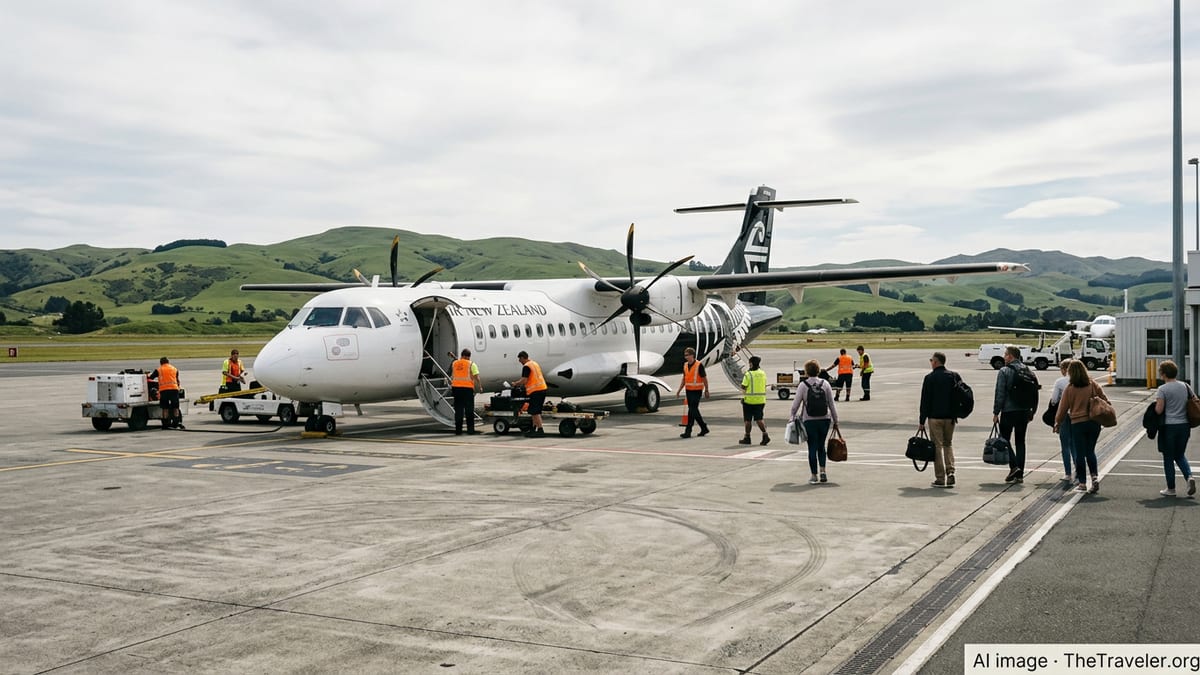
Fuel Shock and Geopolitical Tensions Hit New Zealand Skies
The cancellations, announced this week, follow what the airline has described as unprecedented volatility in global jet fuel markets since the escalation of conflict in the Middle East. With key shipping lanes and supply routes constrained, jet fuel prices have spiked from under US$90 a barrel to as high as US$150 to US$200 in recent days, putting immediate pressure on operating margins.
Air New Zealand has already suspended its financial guidance for the current year, citing the unpredictable trajectory of fuel costs and warning that further pricing actions may be needed if volatility persists. The carrier, which is partially hedged on fuel, has said those hedges are now being tested by an extreme widening in the spread between crude oil and refined jet fuel.
Chief executive Nikhil Ravishankar has framed the decision to cut flights as part of a wider set of interventions to stabilise the airline’s finances while keeping the network functioning. He has stressed that Air New Zealand is not alone, pointing to similar capacity and pricing moves by carriers across the Asia Pacific as fuel markets react to the Middle East conflict and associated airspace and shipping disruptions.
The timing is particularly sensitive for New Zealand’s tourism and regional economies, which are heading into the busy shoulder season around Easter and school holidays. Although the airline insists that most passengers will still be able to travel on the same day as originally booked, the thinning out of services is expected to reduce flexibility and increase crowding on remaining flights.
Dunedin and Regional Routes Among Those Trimmed
While the cuts apply across the domestic network, regional centres are bearing a notable share of the pain, with Dunedin singled out among the routes where capacity is being scaled back. According to local reporting, services linking Dunedin to Auckland, Wellington and Christchurch will be reduced over the coming weeks, with a series of round-trip rotations removed from the schedule.
Flights between Dunedin and Christchurch are expected to see around a dozen or more rotations cut over the affected period, equating to two or three round trips per week on average. Connections to Auckland and Wellington are also being trimmed by several weekly rotations, tightening options for business travellers, students and visitors using Dunedin as a gateway to the Otago and Southland regions.
Community leaders in the lower South Island have expressed concern that the reductions will make it harder for residents and tourists to move in and out of the city, particularly for time-sensitive trips such as medical appointments, university events and major sporting fixtures. They note that Dunedin has already grappled with periodic disruptions in recent years, from storms to aircraft availability, and fear the latest cuts could undermine confidence in air connectivity.
Elsewhere, other regional airports including Tauranga and Gisborne are also seeing services consolidated, typically in the form of a few round trips a week being pulled from peak and off-peak periods. Air New Zealand has said it aimed to preserve capacity during the April school holidays where possible, but acknowledged that some travellers will face altered departure times or less convenient routings.
What Passengers Can Expect as Cancellations Roll Out
The schedule changes will be phased in between mid March and early May, with Air New Zealand contacting affected customers as flights are removed from the timetable. The airline says its priority is to rebook travellers onto alternative services on the same day, either earlier or later, at no additional cost.
Given the scale of the cuts, however, some passengers may find that only indirect options via another hub, or flights at significantly different times, are available. Travellers with tight connections to international departures, cruise sailings or major events are being urged to check their bookings and allow more buffer time where possible.
Consumer advocates in New Zealand have reminded passengers that when an airline cancels a flight, customers are generally entitled to be rebooked or to seek a refund, although the exact remedies depend on the fare type and the nature of the disruption. The fuel-related cancellations sit in a grey area for some compensation rules, because they stem from cost pressures linked to war rather than operational failures, yet are still within the airline’s commercial decision-making.
For now, the airline is emphasising flexibility, encouraging travellers to manage their bookings online or via its app and to consider traveling with carry-on luggage only to minimise bottlenecks on the day. Airports and tourism operators are bracing for a wave of itinerary changes, with accommodation providers expecting more last-minute cancellations and rebookings as people adjust to new flight times.
Middle East Conflict Ripples Across Long-Haul Networks
The flight cancellations come on top of earlier fare increases announced by Air New Zealand this week, with domestic ticket prices rising by around NZ$10 one way, short haul by NZ$20 and long haul by as much as NZ$90. The combination of higher fares and thinner schedules illustrates how deeply the Middle East conflict is reshaping airline economics in far-off markets like New Zealand.
Global carriers have had to reroute or lengthen flights to avoid conflict zones and restricted airspace, adding hours of flying time and significantly higher fuel burn on some long-haul sectors. For Air New Zealand, services to the United States have become especially important as a bridge to Europe while parts of the traditional Gulf and Middle Eastern transit corridors face ongoing disruption.
The airline has signalled that, despite the cuts to domestic and some regional services, it intends to maintain key long-haul links to North America in order to preserve one-stop connectivity between New Zealand and major European gateways. That reflects a strategic calculation that premium and long-haul traffic, although fuel-intensive, remains critical for the country’s tourism and business ties.
Analysts note that New Zealand’s geographical isolation leaves its flag carrier particularly exposed when global shocks drive up the cost of aviation fuel or force detours. With limited competition on many routes and a relatively small local market, balancing affordability for travellers against the need to cover sharply higher operating costs is a recurring challenge.
Tourism and Regional Economies Face a New Test
The latest capacity cuts arrive as New Zealand’s tourism industry works to consolidate its recovery after the pandemic and weather-related disruptions of recent years. Regional hubs such as Dunedin, which rely heavily on domestic feeder flights to attract visitors, are seen as especially vulnerable to sustained reductions in air services.
Local tourism bodies warn that fewer flights can have a cascading effect on hotel occupancy, restaurant trade and activity operators, as potential visitors opt for destinations with more frequent or reliable air links. For business communities, reduced schedules may complicate recruitment, supply chains and attendance at national conferences and events.
At the same time, some industry figures acknowledge that airlines have little choice but to respond when fuel costs spike so sharply that previously viable routes turn marginal or loss-making. There is cautious optimism that if fuel prices ease and Middle East tensions stabilise, airlines will be able to restore some of the trimmed capacity ahead of the next peak summer season.
For now, the message from airports and tourism operators is for travellers to plan ahead, book early where possible, and remain flexible as New Zealand’s aviation sector navigates another bout of global turbulence, with Dunedin and other regional centres once again on the frontline of change.